
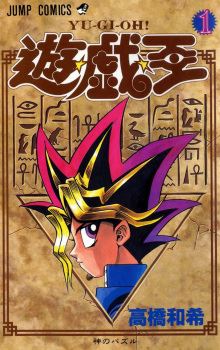
High school student Yuugi Mutou spends his days enduring bullying between classes and his nights engrossed in board games and puzzles in his bedroom. His love for games comes from his grandfather, whose game shop also serves as their home.
One night, Yuugi solves the Millennium Puzzle, a seemingly insurmountable challenge that awakens his inner darkness and transforms it into an alternate persona: Yami Yuugi. This more daring and dangerous persona emerges involuntarily during moments of extreme stress, turning Yuugi into a vengeful vigilante who challenges bullies and wrongdoers to perilous games where losing can result in fates worse than death.
Yuugi and his alter ego form unbreakable bonds with some of the very students who once bullied him. However, they must face enemies far more dangerous than high school troublemakers—villains who use games for sinister purposes, threatening the lives of Yuugi and his friends.
Yu☆Gi☆Oh! inspired the Yu☆Gi☆Oh! Bandai Official Card Game in 1998 and the Konami Official Card Game in 1999. While the Bandai version was initially popular in Japan, the Konami version became a global phenomenon, selling over 25 billion cards since its release.
The series was published in English by VIZ Media under the Shonen Jump imprint. It is divided into three parts: seven volumes of Yu-Gi-Oh were released from May 7, 2003, to December 7, 2004; 24 volumes of Yu-Gi-Oh!: Duelist from February 1, 2005, to December 4, 2007; and seven volumes of Yu-Gi-Oh!: Millennium World from August 2, 2005, to February 5, 2008. A special hardcover collector's edition and a 3-in-1 omnibus edition were later published, with the final omnibus containing volumes 37 and 38. The series was also released in Brazilian Portuguese by Editora JBC from July 2006 to February 2010.


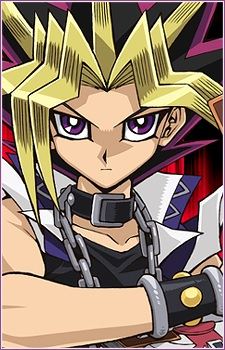






This is going to be quite lengthy as I plan to divide it into three parts, each corresponding to the arcs found in the manga.
The original Yu-Gi-Oh! was initially conceived as a horror story, something that Takahashi himself confirmed. The artwork reflects this intent—the artist aimed for more realistic character designs, which occasionally created an unsettling atmosphere. However, the execution wasn't perfect, and I'm glad he evolved beyond that style later on.
It serves as a fantastic entry point to the main narrative. On its own, its primary drawback is its episodic structure, much like the duels that follow. It's also the section where the characters exhibit the most depth; over time, they seem to lose this complexity as the focus shifts entirely onto the card games.
The initial concept of "The King of Games" feels akin to a precursor to "The Saw," and I believe it was the strongest part of the story. Once the card game takes center stage, things start to feel somewhat bland.
Yu-Gi-Oh! Duelist (Battle City arc) is the longest and most tedious segment of the series. The themes of friendship are repeated too frequently, and the rules of the matches are poorly integrated. They even change from chapter to chapter, leaving readers feeling disappointed. This arc was what led me to remove the manga from my favorites and put it on hold for over a year. Its conclusion, however, is satisfying and reveals deeper layers to both the plot and the characters, particularly Kaiba.
I was pleasantly surprised when finishing Duelist and starting Millennium World, where horror elements resurface. There’s no graphic violence, but I was caught off guard by sudden deaths in the panels—a stark contrast to everyone surviving during the Battle City arc. Takahashi didn’t revert to his semi-realistic, eerie style but adapted his current one to evoke a surreal vibe when necessary. This is also when the monster designs receive the most attention and detail, and I can't help but marvel at some of the panels.
The game of Duel Monsters is completely removed (thank goodness) in favor of its ancient equivalent. While its execution is somewhat similar to the modern version, it’s tolerable and allows for significant development of the story and the unveiling of character motivations.
In summary, the series fluctuates between being extremely cheesy and thoughtfully crafted. It has its share of plot holes and unnecessary characters. It's neither a masterpiece nor a complete failure. I primarily read it out of nostalgia from my childhood, yet I still managed to thoroughly enjoy it.
Everyone has heard the saying "the manga is better," and whether that holds true for most series or not, I firmly believe it when it comes to Yu-Gi-Oh.
So many of the things people poke fun at regarding the anime simply don't exist in the manga, or are much less prominent. The story, art, and pacing are vastly improved. The manga isn't focused on trying to sell a children's card game—even after that became a significant aspect with the introduction of the anime. The manga places far more emphasis on the story and atmosphere, so if you enjoy Yu-Gi-Oh or manga in general, I highly recommend giving this one a read.
Honestly, my only complaint is that the editing on some (a lot) of text bubbles partially overlaps with the artwork, and these bubbles with text and new boxes make it seem very amateurish, even in the official translation. It makes me wish we could get a new version with these issues fixed, but that seems remarkably unlikely.
By far, the most captivating elements of the Yu-Gi-Oh manga are found in the initial 7 volumes. These volumes uniquely blend a gambling narrative with horror, creating an intriguing cross-section that immediately draws readers in. The series starts off powerfully, engaging its audience right from the beginning. Following these volumes, the story progresses into arcs recognizable to fans of the anime, yet it offers a superior conclusion. This ending delves deeper into the backstory and lore, exploring dimensions untouched by the anime.
I wholeheartedly recommend the first 7 volumes to everyone. They serve as an excellent introduction for those who appreciate a slightly darker interpretation of the story compared to the anime. For enthusiasts who watched the anime closely and crave additional details, the Millennium World arc is particularly satisfying. It enriches the universe with more depth and intricacies, enhancing the overall experience for dedicated followers.
Long ago, in the age of Pharaohs, one of the most advanced civilizations on Earth built the pyramids in Egypt. Interestingly, ancient Egypt was also where the first games were created. This manga takes this historical fact and expands upon it to create a captivating story.
Story: When the pyramids were still young, there was a fierce war between humans and monsters. A Pharaoh, whose name has been lost to time, used the power of the Millennium Items to seal away the evil, sacrificing himself in the process. Three thousand years later, in the late 1990s, high school freshman Mutou Yugi discovers the Millennium Puzzle in his grandfather's game shop. Upon solving the puzzle, he is possessed by the spirit of the nameless Pharaoh whenever times get tough. The spirit punishes the villains with sadistic Punishment Games if they lose to him in the Shadow Games. Initially, the plot follows a villain-of-the-week format until around Volume 8, which marks the beginning of the Duelist Kingdom Saga. From then on, the story centers around the card game Duel Monsters, introduced through recurring villain Kaiba Seto, who becomes a supporting character in this arc. Although Duel Monsters is initially explained simply, its rules aren't well established until the Battle City Arc. These rules are similar to those of the real-life Yu-Gi-Oh! card game. As the series progresses, some inconsistencies arise due to the evolving rules, but overall, it remains a great story.
Art: Initially, the art quality is mediocre but gradually evolves into the iconic style associated with the series. The artwork looks fantastic and maintains consistency better than the anime. The transition can be jarring at first, but it significantly improves the visual appeal. The monster designs are exceptional, and the Punishment Games are truly horrifying.
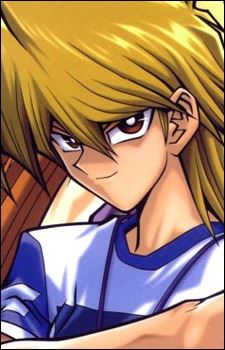
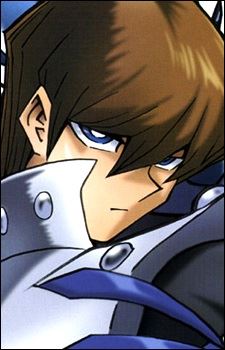
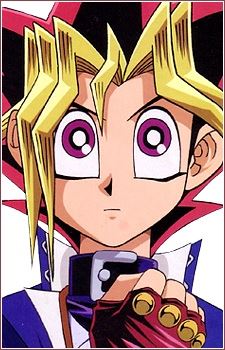
Characters: The characters are well-developed. Yugi is a kind-hearted teenager with a slightly perverted side, but he matures after solving the Millennium Puzzle. He grows more independent throughout the series. Yami Yugi, the spirit of the nameless Pharaoh, starts as sadistic but gradually becomes more like his host. He embodies Yugi’s determination and serves as an ideal for Yugi to aspire to. Jonouchi Katsuya (Joey in the anime dub) is initially rude and perverted but has a good heart. After Yugi saves him from Ushio's beatings, they develop a strong friendship. Honda Hiroto (Tristan in the anime dub) is a witty and smart guy who, along with Jonouchi, bullies Yugi initially but slowly becomes his friend. He supports Yugi during tough times. Anzu is Yugi’s love interest—a supportive and caring girl who always stands by Yugi. She has a crush on him, which he reciprocates modestly. They go on a few dates in the series. Mai is primarily known for her physical attributes and promiscuous behavior. Kaiba Seto is initially antagonistic but loves his younger brother Mokuba deeply. Despite his wealth and rivalry with Yugi, their relationship eventually transforms from hatred to alliance.
I am thoroughly enjoying reading this classic manga. I have watched the anime subtitled up to the Pandora fight and dubbed up to one of the flashback games. Though I am still reading the manga, I find that both the anime and manga are excellent, with the manga surpassing the anime so far.
I was utterly surprised by this manga.
I've never been a fan of the Yu-Gi-Oh! show, with its card battles in every single episode—it's very repetitive. So, when my father bought me four of its manga, I thought, "Oh GOD, how will I survive this? Watching it is bad enough..." The manga, unlike its anime counterpart, doesn't revolve around card playing all the time and is actually enjoyable to read! It focuses more on character development, which makes you appreciate the story as a whole. However, I'm still bracing myself, waiting for it to become like the anime and ruin its charm.
So, I applaud you, Kazuki Takahashi, the author of the story, for making even someone like me enjoy this series.
Yu-Gi-Oh! You've either watched it on KidsWB or seen kids playing the card game at school. This was my first introduction to the franchise. I never finished reading the manga until recently because I wanted to watch The Darkside of Dimensions with the manga storyline fresh in my mind, as that movie is a sequel to the manga, not the anime. A warning for those who plan to read: there are some minor spoilers in this review.
I decided to reread Yu-Gi-Oh! from the beginning. Upon revisiting the early chapters, I was still amazed by how different they were from the standard Duel Monsters anime. The initial focus was entirely on shadow games, with each chapter or arc dealing with different games. Imagine Kaiji but with magic! The early artwork was somewhat rough, but after a few chapters, Takahashi-san's art improved significantly, especially around Death-T and Duelist Kingdom.
One of my favorite aspects of Yu-Gi-Oh is how well some characters complement each other. Yugi’s friendship with Jounouchi and the Pharaoh is great, and his rivalry with Kaiba is one of my favorites overall. I’d also argue that the hair designs and clothing are some of the most appealing and iconic in manga/anime.
I understand why some people were disappointed when Yu-Gi-Oh! shifted from a shadow game survival manga to a card game manga, but since I enjoyed the card game, I didn’t mind the change. After reading, I appreciated some characters more. Initially, I didn't like Jounouchi/Joey, but seeing their friendship grow made me appreciate Yugi and Jounouchi's bond. One standout moment was their duel in Battle City. The writing during that scene was very emotional, showing how much these characters valued their friendship. It made me wish for a friendship as strong as Yugi's.
One issue I have with the manga is how forgiving Yugi is toward some adversaries. I know Kaiba is popular, but his transformation felt too quick, and Yugi forgave him rapidly. This was someone who spent millions to create a theme park aimed at killing Yugi and his friends. At least Jounouchi voiced reason, refusing to forgive Kaiba for past misdeeds. There's also Ryuji/Devlin’s dad, who nearly killed Yugi and burned down his business for revenge against his grandfather. Yet, in the DSOD movie, we see Jounouchi working for his new business. Where were the police? Shouldn’t these people be in jail for attempted murder? While Kaiba had his penalty game to recover his lost heart, the creepy clown got off scot-free for attempted murder. Though fictional, this detail bothered me.
Yu-Gi-Oh’s weakest aspect is its characters and sappy dialogue, but I enjoy how Takahashi-san gives his characters charm and chemistry. I particularly enjoy Kaiba’s rivalry with Yugi and Yugi’s friendships with Jounouchi and the Pharaoh. This likely explains the abundance of doujins involving these characters, as they sync well together. This might be why DSoD felt off; Yugi lacked the Pharaoh’s guidance, and Kaiba viewed him more as a rival than Yugi, leading Yami to step in and save the day.
Overall, Yu-Gi-Oh! is a great manga. I highly recommend it for those who grew up with the card game but never delved into the anime. Many cuts and changes were made in both anime adaptations, which is unfortunate since the manga is darker, as other reviewers noted, even during the Duel Monsters arcs. Its reputation as a kids’ anime has overshadowed its darker origins. You can see Takahashi-san’s influence from Araki and JoJo in the art and horror elements. Beyond that, it’s a classic Shonen Jump series whose cultural impact remains strong today, with new spinoffs and references in modern anime like No Game No Life and even Western shows like Family Guy. It’s one of Shonen Jump’s most beloved titles alongside One Piece, JoJo, and Death Note.
Overall, Yu-Gi-Oh! Has rightfully earned its place as King of Games.
I believe the best way to discuss Yu-Gi-Oh is by examining its three major arcs, as each offers unique perspectives on the series. The first arc, "Yu-Gi-Oh," introduces us to Yugi and his friends, following him as he solves the Millennium Puzzle. We discover that it contains a spirit using Yugi's body for revenge. This arc is my favorite but doesn't resemble what the series later became or how it made money. Instead, it's more of a gambling manga with high-stakes games where the hero punishes cheaters. It can be quite dark, which I personally enjoyed. During this original story, Yu-Gi-Oh stumbled upon card games, changing everything. The second series emerged shortly after. "Yu-Gi-Oh: Duelist" seems like the point where the series finds its footing, but I think it's the weakest part. Covering two major stories—the Island Tournament and Battle City—it struggles due to evolving card game rules. Initially, summoning was effortless, players had 2000 life points (normally 8000), and cards had random effects. This was partly because the manga needed exciting twists, while real cards couldn’t match these dramatic shifts. How many times could Dark Hole reset the board before becoming stale? Over time, the game's rules evolved, but from a manga perspective, it's odd how tournaments kept altering major rules or adding new features like field effects. This felt unfair, but reflected the card game’s growth. The third arc, "Yu-Gi-Oh: Millennium World," delves into the spirit within the Millennium Puzzle's backstory, answering questions about him. This section is mixed for me. I appreciate stepping away from the card game while still developing its origins, but a mid-arc plot shift feels abrupt. However, it's well-told and tightly constructed, providing proper closure if you've read the first two arcs. The writing is good, and despite some muddy action scenes, it brings satisfying closure. I adore the first arc, introducing me to gambling manga. The second arc, flawed but thrilling, recreates the card game experience. The third arc gives a satisfying conclusion. Throughout, Yu-Gi-Oh remains entertaining. Despite distinct arcs, I'd read all three without hesitation. My only complaint is the initial arc's maturity—focusing on shadow games and 'death' games—which disappears later. Still, the entire series is an excellent read I'll revisit often.
I finally wrapped up reading this masterpiece... All I can say is that this manga isn't just a must-read or must-rate, but a MUST-FAVORITE! You won't come across another masterpiece like this in decades. This one tops all other manga series on my favorites list, even though its anime adaptations aren't so great.
Story: 8/10
- The only thing missing is ROMANCE. At first, this bothered me, but I quickly forgot about it, completely absorbed by the duels. Also, there were times when the motives behind the duels weren't very reasonable or convincing. Nevertheless, the author did an excellent job.
- In the initial volumes, our two Yugis and their friends began by forming friendships with their ex-enemies and reforming hopeless cases through playing a lot of bizarre and EXTREMELY INNOVATIVE games. These games required both physical and mental prowess and often concluded CONVINCINGLY with Yugi's victories.
- Most of the manga focuses on Monster Card Game duels, which is widely regarded as the best and most intelligent way to resolve conflicts. Even though miracles happen occasionally to benefit the protagonists, given the countless battles throughout 343 chapters, these DRAMATIZED events are entirely acceptable! There's nothing to complain about regarding the perfect flow and ending.
- In conclusion, the plot is meticulously planned and carried out CONSISTENTLY from start to finish, even with all the ad-lib/improvisation, weaving together characters' relationships and even the cards in Yugi's deck.
Art: 9/10
- Initially, the tone was very dark and harsh. The characters looked short and bold. But as the Card Duel Games became more serious and intense, the character design gradually improved. The determined look of Yugi II and the terrifying look of all antagonists are perfect. FEMALE characters are notably lovable most of the time! Moreover, monster designs are perfect and consistent - the author successfully created a distinguishable universe for his monsters - just like in Pokémon - they aren't just a bunch of random things like in Berserk or D.Gray-man and other common works.
Character: 8/10
- The character development/growth of protagonists - Yugi I, Yugi II, Kaiba, Jonouchi - is easily noticeable. They became more mature, determined, and strong in many ways. However, all supporting characters fade into the background soon after their debuts.
Enjoyment: 9.5/10
- My enjoyment was absolute during the early volumes when Yugi played games other than Duel Monsters. Although it waned a bit towards the end, no matter how many times I read this work, no matter how many times I think about this manga, it always stands out as the most loved!
Overall: 10/10
- Despite all the minor flaws and misses, as I said, you won't find anything like this anytime soon, so you should OVERRATE it and encourage mangaka to create great works like this!