
Pocket Monsters Special was released in English as Pokémon Adventures by VIZ Media. Initially published in monthly single issues from September 1999 to 2003, bound volumes followed starting July 6, 2000. A "second edition" began on June 2, 2009, featuring a new translation with right-to-left artwork and content previously omitted. However, some edits were made for the new American audience volumes. VIZ also released mini-volumes titled Pokémon Black and White as a "Pokémon Adventures Special Edition," with full volume versions later released as Pokémon Adventures: Black & White starting July 2, 2013, with Volume 43 being the first one. The series is also published in Spanish by Norma Editorial in Spain and by Toukan Manga in Mexico, in Portuguese by Panini Comics in Brazil, and in Italian by Edizioni BD under the GP manga and J-POP imprints.
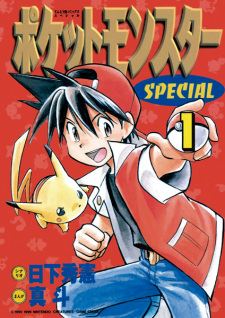
Pocket Monsters Special
- Genre: action adventure
- Author: kusaka hidenori yamamoto satoshi mato
- Artist(s):
- Year: Apr 1997 to ?
- Original Publisher:
- Status: Publishing
Associated Names
Japanese: ポケットモンスターSPECIAL
English: Pokémon Adventures
Pokémon Adventures
Official Webtoon
- Wikipedia
-
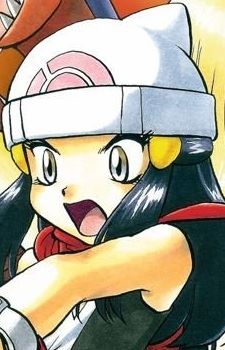
Berlitz Platinum
Main
Platinum is the female protagonist of the DP series, but she goes by the title Lady Berlitz, and her first name has been kept a secret since the beginning of the series until the story progresses to Canalave City. There were several occasions that her fir...
-
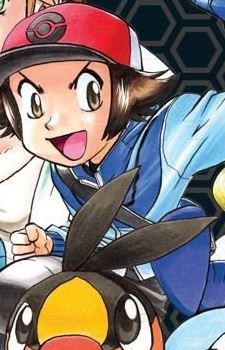
Black
Main
Black is a young man who aspires to be the Champion of the Unova Pokmon League. He has been dreaming of this since childhood, nine years to be exact. However, these dreams fill his head to the point where he cannot think about anything else and an...
-
Blue
Supporting
A wolfdog who was pet to the family of Quent Yaiden. After the destruction of her home, Kyrios (Curious), and most of her family, she travels with Quent hunting wolves. She lives her life as a pet dog, unaware of her wolf bloodlines. Upon meeting Cheza, t...
-
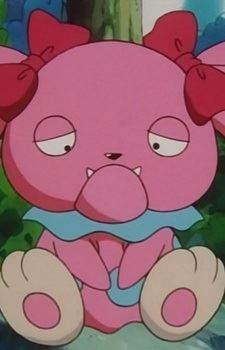
Bulu
Main
Snubbull is a pink, bipedal, bulldog-like Pokmon with blue polka dots covering its body. It has loose skin that drapes to cover the lower part of its body, giving it the appearance of a dress. There is a small, blue ruff around its neck. It has a ...
-
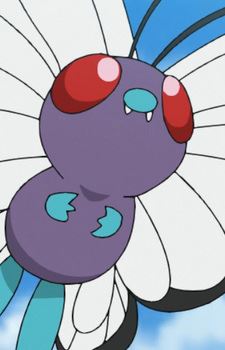
Butterfree
Supporting
Butterfree is a lepidopteran insect Pokmon which resembles a vaguely anthropomorphic butterfly with a purple body. Unlike true insects, it only has two body segments and four light blue legs. The upper pair of its legs resemble small, three-finger...
-
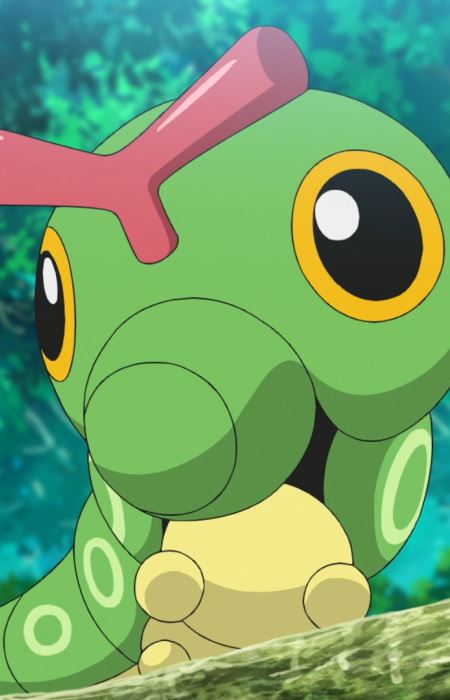
Caterpie
Supporting
Caterpie is an insect Pokmon that resembles a green caterpillar with a yellow underside and teardrop-shaped tail. There are yellow ring-shaped markings down the sides of its segmented body, which resemble its eyes and are meant to scare off predat...
-
 tkya February 13,2025442 1
 -
 MAYAVEDA February 13,2025733 1
 -
 Night_Crawler619 February 13,2025587 1
 -
 Korkyros February 13,2025437 1
 -
 Ivan87 February 13,2025850 7
 -
 MasterRiceCooker February 13,2025702 1
When you're playing the games, have you ever thought to yourself, "Wow, if only I could use my flying legendary bird to skip over this inconveniently placed tree without needing to cut it down? Or hey, why don't the villains ever try attacking the trainer instead of just battling their Pokémon?"
Well, this manga has that and much more.
Is it a masterpiece of storytelling and perfect in every way? Well, no. (Though I'll still argue it is.) At its core, it's a story primarily aimed at younger audiences. However, that doesn't detract from the narrative. Especially considering some of the darker aspects of Pokémon and people it chooses to highlight occasionally. The characters are a fun bunch too, developed far more than they are in the games, where, aside from the rivals, they mostly serve as self-inserts in an RPG. Here, they are individual, well-developed characters who learn and grow on their journeys. Even supporting characters, like the gym leaders, receive much more development here than they ever have elsewhere.
For existing Pokémon fans, whether you've played the games or watched the anime before, you'd probably enjoy Pokémon Adventures (Pocket Monsters Special) even more. It makes use of some of the facts mentioned in the Pokédex entries as more than just random trivia by incorporating them into various aspects of the Pokémon themselves. These unique qualities of the Pokémon are also used as part of battle strategies. Honestly, at times I found myself comparing these battles to somewhat simplified stand battles from JoJo's Bizarre Adventure since the trainers don't always just shout commands; sometimes they need to take action themselves to win a battle.
In conclusion, if you're not a fan of Pokémon, maybe give it a shot—you might like it despite some flaws. For a Pokémon fan, I highly recommend reading these entertaining stories.
Pokemon Special is a manga adaptation of the Pokemon games, not the anime. It features several arcs with different protagonists based on game characters, not anime ones.
Red meets Blue and receives the Pokédex from Professor Oak. Bill assists Red with his Pokémon Storage System. In the Yellow arc, Yellow sets off to find Red and teams up with various characters to defeat the Elite Four.
In the GSC arc, Gold meets Silver and they receive their starter Pokémon. The Masked Man defeats Gold and Silver, but ultimately gets defeated by multiple protagonists. Crystal gathers data on Pokémon for Professor Oak while Suicune challenges Gym Leaders.
Ruby moves to Hoenn and runs away from home, meeting Sapphire and making a bet. Norman allows Ruby to compete in Contests. Team Aqua and Magma cause chaos, awakening Kyogre and Groudon. Ruby and Sapphire stop Maxie and Archie, achieving their goals.
Red and Blue return to Pallet Town and are attacked by a mysterious shadow in the FRLG arc. Giovanni captures Deoxys, revealing himself as Silver's father. Red, Blue, Green, Yellow, and Silver turn to stone.
In the Emerald arc, Emerald arrives at the Battle Frontier and crashes the opening ceremony. Latias and Latios help him capture Jirachi. Guile Hideout captures Jirachi but is defeated by the ten Pokédex Holders.
The HGSS arc sees Gold participating in Pokéathlon competitions and chasing a Dragonite. Silver discovers Plates and Arceus. Team Rocket is stopped, and the Spiky-eared Pichu heals Giovanni.
The ORAS arc is still airing. In the DP arc, Diamond, Pearl, and Platinum meet Cyrus and Team Galactic. They reunite and defeat Team Galactic, freeing Dialga and Palkia.
In the Platinum arc, Platinum challenges the Battle Frontier and enters the Distortion World. Giratina appears and is defeated. Cyrus disbands Team Galactic, and Looker arrests Charon.
The BW arc introduces Black, Cheren, and Bianca receiving their starter Pokémon. Black meets White and joins her agency. Black learns about the light and dark stones and faces N at the Pokémon League. Ghetsis challenges Black and is defeated.
The art in Pokemon Special is superb and visually pleasing. Each character has distinct personalities and undergoes development. Supporting characters play important roles. If you get tired of the story, there are the characters, and vice versa.
Overall: 10/10
Pokemon Special/Adventures is unequivocally the best adaptation of the games. Period. I rate this manga an 8/10 overall, even though it's one of my personal favorite manga series; however, purely as an adaptation of Pokemon, it earns a solid 10/10.
This is due to its overarching continuity, much like the games, yet every game generation has its own standalone arc featuring characters, Pokemon, gameplay elements, and plot points unique to that era. It doesn't suffer from what I call "Ash Ketchum Itis," where Red and Pikachu inexplicably appear in Sinnoh, sidelining half the protagonists from Diamond/Pearl/Platinum.
Red, Green, Blue, and Yellow save Kanto. Silver, Gold, and Crystal save Johto. Ruby, Sapphire, and Emerald save Hoenn. And so on. Each game generation gets its dedicated arc in this manga, ensuring its story, characters, Pokemon, and concepts are faithfully represented.
Remarkably, despite having TWENTY-ONE protagonists, it never feels repetitive because each new generation introduces fresh perspectives that highlight the uniqueness of that period. The Black/White arc incorporates detective tropes; Ruby, as a protagonist, is a selfish brat prioritizing contests over battles; Gold excels as a Pokemon breeder; Moon is a pharmacist. I often finished a generation's story thinking, "I'll never enjoy the next one as much as this," only to be proven wrong repeatedly. This series embodies multiple distinct identities within a single framework, never losing sight of its vision.
(It's also worth noting that many characters have bizarre methods for catching Pokemon, ranging from bow and arrow to kicking and pool sticks...)
This manga made me fall in love with Pokemon I previously didn't care for. Feebas soared to the top of my favorites list thanks to the R/S chapter, and Munna did the same via B/W. The trainer-Pokemon relationships developed in various intriguing ways ensure some will resonate deeply with readers. It will alter your perspective on at least one Pokemon, guaranteed.
The series' main weakness lies in arcs based on sequels and remakes, which tend to be weak. The Fire Red/Leaf Green arc was the first to genuinely disappoint me, and Heart Gold/Soul Silver felt uninspired. By Omega Ruby/Alpha Sapphire, I knew what to expect and could appreciate it for what it was—more content in Adventures!Hoenn. However, it still wasn't the best chapter. Emerald felt less grounded compared to other arcs, making it harder to engage. These weaker stories are shorter and less prominent, preserving the series' overall quality.
Another criticism is the increasingly sexualized depiction of female characters, especially given the cute, youthful art style. There's nothing explicit, just occasional unnecessary shots or cleavage on 10-year-olds, which detracts from enjoyment.
Despite these flaws, this remains my favorite manga series. 8/10 story (10/10 for main arcs, dragged down by blander remake stories); 6/10 art (cute and fun, but marred by objectification); 9/10 characters (the heart of the series); 10/10 enjoyment—especially for Pokemon fans; 8/10. If you enjoy Pokemon games, you WILL love this manga.
Okay, so I've been a huge Pokémon fangirl since I was little. I still casually watch the anime and enjoy playing the games, but last year I stumbled upon this manga. Knowing it was based on Pokémon, I decided to give it a try. As I read, I realized it was FAR MORE amazing and epic than the anime. Why?
Story and Characters - 10/10
Let's start with the story and compare it to the anime. The anime is a children's show that has been airing new seasons for over a decade, which is why not many people know there's a manga. The manga has its own alternate storyline that has nothing to do with the anime.
First of all, the anime's seasons focus on pretty much the same plot/story and the same main two protagonists (Ash and Pikachu), going through regions, collecting gym badges, with the good guys always easily winning, making every new season predictable and dull. The manga is loosely based on the games and has arcs (named after the games) focusing on different stories and unique characters. The story isn't just about collecting gym badges and having battles; it includes extensive character development and ties everything together into an AWESOME manga that everyone—not just kids—can enjoy. In my perspective, the manga has something the anime doesn't: heart! When you read, you feel the emotions of the characters. There's much more feeling put into the manga—from a girl fighting with all her power to save the person she loves, to a boy having the biggest, most decisive battle in his life and confessing his feelings to the girl he loves. When you read, you find yourself constantly thinking, "What's gonna happen next?!" The battles are also unique and aren't annoying at all when they're not animated!
Secondly, having more main characters who are all cool and unique in their own way is another thing the anime lacks. Some of them have anime counterparts, while others don't. All their personalities are different and well thought out.
Thirdly, don't get confused when you hear 'based on the games' and imagine the game's characters running around following the game's story that you've played. They are just set in the game's world, following the locations and routes from the games. The stories are all unique, and you can start from whichever arc you want without needing to read the previous ones.
Art - 10/10
The art is superb! It's epic! All the characters, views, and places are drawn very well. Characters from the first arcs are often chibi-fied and very cute. There are tons of great facial expressions and other details!
Enjoyment - 10/10
It's enjoyable for all ages. Yes, it's a bit kid-oriented, but overall, anyone who HAS loved and IS loving Pokémon will like it. Still, it depends on your taste for genres!
Overall - 10/10
Thanks for reading my review ;D! Hope you like it! I'm giving it a 10/10 because this manga really is something unique and fresh that made me love Pokémon so much again!
Like many others, I was raised watching the Pokémon anime. Even now, I can still find it enjoyable, but it's clearly targeted at a much younger demographic. At times, this limits my enjoyment and the depth of the stories it can tell. The solution to this issue was the Pokémon Adventures manga series. While the anime is tailored for six-year-olds, the manga caters more to young teenagers, which significantly enhances the experience.
I won't claim this is a story for everyone. If you don't have any nostalgic connection to Pokémon or the franchise, at best, this is a decent manga aimed at a slightly younger audience than most manga readers are accustomed to. Though it targets an older audience than the anime, it's still not specifically aimed at late teens. However, if you do have a connection with the franchise, this is definitely worth exploring as it's arguably one of the best ways to experience Pokémon.
The Pokémon Adventures manga retells the games, generally following the key moments within them. Most of the time, but not always. It uses the games as a template but weaves in its own events, introducing a wider variety of characters and encounters. Speaking of characters, that's one of the manga's standout features. Each arc corresponds to a set of games, like the Red/Blue arc or the Yellow arc, each focusing on different sets of characters. This detail avoids common pitfalls of long-running series, such as massive power creep and repetitive character development. Moreover, each arc's characters are unique. Early characters resemble archetypes from the TV series, but later arcs feature characters with diverse personalities, including aspiring comedians and Pokémon directors as main cast members.
Another strength of the series is how it portrays battles. Battles here are perilous for trainers. Facing off against a crime boss like Giovanni isn't just about Pokémon battling; trainers themselves are directly involved, where targeting the trainer is fair game. Trainers can act as bait in darkened rooms to lure attacks away from their Pokémon, providing openings. These battles are far more intense than merely giving orders to a Pokémon.
This series isn't without flaws. Some arcs are noticeably less engaging than others, particularly the remake arcs (Firered/Leafgreen and Heartgold/Soulsilver), which leave something to be desired. Also, while it's not aimed at the same audience as the anime, it's still geared towards a younger crowd than most manga. Occasionally, plot points can get a bit silly. But for anyone who wanted more from the anime or simply craved more Pokémon, CHECK THIS SERIES OUT! You won't regret it.
Everyone is familiar with Pokemon, thanks to the popularity of its games and anime worldwide. However, the main manga series has remained relatively obscure. Does it deserve more recognition? Absolutely.
STORY
The manga follows the game events rather than the anime's storyline. With each new game release, a fresh arc begins in the manga. The standout feature here is its continuity: despite each arc telling a distinct story, they all interconnect seamlessly.
This connection means that protagonists are related in various ways. Given its singular continuity, games retelling similar stories (like Yellow mirroring Red/Blue/Green or Emerald paralleling Ruby/Sapphire) form different arcs within the manga. For instance, the FireRed/LeafGreen arc is a sequel to the original Red/Blue/Green arc, while HeartGold/SoulSilver continues from Gold/Silver/Crystal.
Overall, the story delivers the best narrative in the Pokemon universe (barring Sun/Moon games and Diamond/Pearl anime). Everything ties together beautifully, making it more epic than both the games and the anime. Some arcs even culminate in 14-chapter-long final battles, and some stories have tragic endings.
The primary flaw is the pacing. It rushes through crucial plot points yet makes arcs feel overly long. Another issue is the weakening continuity post-Generation 4, where arcs become increasingly independent. Quality varies significantly; Generation 4, for example, feels disjointed due to overuse of legendary Pokémon without adequate integration.
For other generations:
- Generation 5 offers an interesting but poorly managed story. Despite starting seven years ago, it remains unfinished.
- Generation 6 presents dark themes and strong character development initially but shifts towards action-heavy storytelling later. Lysandre’s portrayal disappoints, though ROSA ends well.
- Generation 7 combines multiple arcs into one, leading to flat characters and rushed storytelling.
In summary, quality fluctuates across generations. My favorite is Generation 3, which maintains excellent continuity and compelling arcs.
ART
I'm not primarily drawn to manga for its art, but this series' visuals aren't impressive. Characters appear small initially, and although improved later, early arcs suffer. Battles are particularly weak, often resolved in single hits, lacking depth and engagement.
CHARACTER
Characters are the series’ high and low point. They’re undeniably badass, especially villains who pose genuine threats. Protagonists shine too, many being overpowered yet captivating. Most characters have backstories, unlike in games or anime, but lack significant development. Relationships between characters exist but remain superficial. My favorites, Black and White, embody this, having intriguing dynamics that never fully develop.
ENJOYMENT
This extensive manga captivates me despite my recent discovery. While I haven’t read everything due to patience constraints, what I’ve enjoyed immensely includes engaging final battle arcs and interconnected stories. However, poor fight scenes and erratic pacing mar the experience. The anime provides steadier enjoyment, but the manga’s narrative richness, filled with twists, surpasses it—except for the disastrous Generation 4.
If you love Pokemon, reading this manga is worthwhile. Beware of incomplete online versions; opt for legal access instead. Start from the beginning to grasp the full narrative intricacies.
I've gone through the entire series up to SM, and I must admit, as the games became less engaging, increasingly rushed, and overall declined in quality, the manga continued to shine.
The narratives delve much deeper than those in the games, and at times, they can be quite emotionally moving (especially the GSC and RS arcs). Originality played a significant role in making this such an enjoyable read; it's clear that the writer had considerable creative freedom. The art style is distinctive and enjoyable, being simple yet highly expressive. Of course, if you haven't played any games in the series, you might not appreciate it as much, but if you have, I SERIOUSLY recommend giving this a read.
This marks my very first review, and I've chosen to delve into a manga that I enjoyed during my childhood. I will be covering the arcs starting from the beginning up until the conclusion of Fire Red and Leaf Green.
Pokemon Special is a shounen manga inspired by the video game series Pokemon. The world of Pokemon is inhabited by an extensive variety of creatures known as Pokemon, each with distinct attributes and potentials. People can capture these creatures and train them to evolve. Those who engage in capturing, raising, and battling Pokemon are referred to as trainers, testing their skills against other trainers. Every trainer has different goals, such as becoming the ultimate battler or excelling in beauty contests. Elements like strategy and the bond between trainers and their Pokemon make the series fascinating. With so much content to work with, does Pokemon Special succeed as a worthy addition to the Pokemon franchise?
[Story] Score: 8/Very Good
The story closely follows the video games and initially presents a linear narrative. It begins with Red, a young boy from Pallet Town, based on the protagonist from the original Pokemon Red and Blue games, embarking on adventures through Kanto. He receives a Pokedex from Professor Oak, an encyclopedia containing information about various Pokemon. Along his journey, Red meets characters like his rival Green and the enigmatic Blue, traveling with his Pokemon to explore the vast world and become the best trainer. Facing dangers like Team Rocket, an evil organization seeking power and control, Red and his friends aim to thwart their plans for world domination.
As the series progresses, it introduces new characters from subsequent generations, creating stories based on newer games like Gold/Silver/Crystal and Ruby/Sapphire. The story was enjoyable, starting simply with a young boy's dream of becoming the greatest trainer. Over time, new characters and Pokemon enrich the plot. Unlike the games, where players feel immersed, Red experiences interactions with Pokemon and people, incorporating game elements like strategy and item usage. Characters from different generations meet within the plot, adding depth.
A downside is the occasional lack of consistency in pacing, especially during action scenes. Overall, the story is good, simple yet easy to follow.
[Art] Score: 9/Great
The visuals were one of the manga's strengths. Character designs accurately reflect their video game counterparts, and Pokemon depictions mirror those from the games. Emotions are vividly portrayed through expressions, enhancing the storytelling. Stunning locations, from caves to mountains, add visual appeal.
Action sequences shine with detailed presentations of Pokemon moves, making battles feel epic. Strategy elements further enrich the battles. In summary, the art is detailed and appealing to both Pokemon fans and adventure/action genre enthusiasts.
[Character] Score: 10/Outstanding
Pokemon Special's characters stand out. While game protagonists lacked personalities, allowing player immersion, the manga compensates with unique character traits.
Red starts cocky and naive but grows into a strong leader. His Bulbasaur reflects his development. Green, Red's rival, is serious and powerful, respecting Red over time. Blue, mysterious and cunning, evolves through self-discovery. Yellow cares deeply for Pokemon, developing a unique fighting style. Gold is brash but protective, while Silver is determined, aiming to defeat Team Rocket. Crystal is intelligent and caring, aiding Oak’s research. Ruby prefers contests over battles, growing significantly. Sapphire, a tomboy, develops into a formidable trainer. Their relationships and growth make the characters outstanding.
[Enjoyment] Score: 9/Great
I couldn't stop reading this manga night after night, finding every moment worthwhile.
[Overall] Score: 10/Outstanding
This series has been a thoroughly enjoyable experience. Its continuation delights me, immersing me as a Pokemon fan. The visuals, characters, and story create a compelling chemistry, making it a great series.