
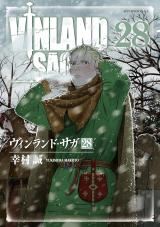
Vinland Saga
- Genre: action adventure award winning drama
- Author: yukimura makoto
- Artist(s):
- Year: Apr 13, 2005 to ?
- Original Publisher:
- Status: Publishing
...
Show More
Rating(4 / 5.0, 68 votes)
5 stars
22(32%)
4 stars
26(38%)
3 stars
20(29%)
2 stars
0(0%)
1 stars
0(0%)
Popular Reviews
Complete 10/10, this manga is highly underrated. It showcases some of the finest story and character development I've encountered in any manga. The characters come across as incredibly human, acting based on genuine emotions rather than just what might seem cool. Initially, the manga did appear somewhat cliché, but as it progressed, it proved to be much more. The protagonist significantly influences his surroundings; every action taken by him or others has a meaningful consequence. This may sound simple, yet it's surprisingly uncommon in today's manga and anime. Vinland excels at immersing readers in its narrative, characters, and world. While the art style is unique and not everyone's cup of tea, the strength of the story, world-building, and characters more than compensates for it.
10/10 Great read
Anime Recommendation and Review.
Manga - Vinland Saga
Author - Yukimura, Makoto (Story & Art)
Genres - Action, Adventure, Drama, Historical, Seinen.
MAL Rating - 8.72
Vinland Saga is a historical seinen manga rooted in real historical events. It shares thematic elements with Berserk by Kentaro Miura and Vagabond by Takehiko Inoue. If you are a fan of the Vikings TV show, Vinland Saga offers a manga equivalent with realistic art, gore, blood, tragedy, self-reflection, emotions, adventure, dreams, war, conflict, and vengeance!
Plot Summary:
Thorfinn, son of one of the greatest Viking warriors, seeks revenge after his father is killed in battle by the mercenary leader Askeladd. Thorfinn joins Askeladd’s group to challenge him to a duel, finding himself entangled in a war for the crown of England.
Art - 10/10: The artwork is highly detailed and realistic. Armor, tools, clothing, weapons—all are meticulously drawn, giving each piece an authentic Viking or Saxon merchant appearance.
Here is a photo - [ http://i3.mangareader.net/vinland-saga/91/vinland-saga-3947335.jpg ]
The Vinland Saga provides the excitement and feel of being a Viking. Despite its graphic content, it captures the essence of the era. There is plenty of slashing and hacking, with blood and gore at a moderate level, fitting its seinen genre.
Here is a photo - [ http://i2.mangareader.net/vinland-saga/91/vinland-saga-3947367.jpg ]
Story - 10/10: The story is richly crafted with drama, tragedy, occasional comedy, and memorable phrases. For example, “A true warrior needs no blade” – Thors. Each character is unique with distinct personalities and psychologies that align well with their designs. The mangaka pays careful attention to character psychology, ensuring their behaviors are consistent and believable.
The narrative is brutally honest, devoid of clear-cut good or evil characters. The Vikings, known as 'Pagans', were brutal in their raids, rape, killing, and destruction of innocent Saxon villages. Similarly, Saxons retaliated against Danish villages.
Enjoyment - 9.5/10: The high ratings stem from the realistic art with minimal mistakes, and a uniquely entertaining concept. I have thoroughly enjoyed every moment, following Thorfinn’s journey from vengeance to self-enlightenment.
I dare you to read this manga and experience Thorfinn’s adventure to the New World.
Overall - 10/10
Recently, I read "Vagabond" only to find out it went on hiatus, leaving me quite depressed. In search of something similar, I stumbled upon "Vinland Saga," and it felt like striking gold. While some might compare Vinland Saga to Berserk and Vagabond, it's actually closer in spirit to Fullmetal Alchemist.
Hatred, revenge, failure, realization, and ultimately redemption—this is what Vinland Saga is about. What fascinated me wasn't the brutality of war but the ideals and philosophy it conveys so effectively. There are no dragons or mythical beasts here; instead, it’s an alternate history of the Viking age where people strive to make the world a better place. Some use power, others love, and some flee, showing various ways individuals struggle to improve their surroundings.
A word of caution: this isn’t like "Berserk," where the main character goes on a rampage, nor does it delve into supernatural elements as seen in "Vagabond." This story focuses on humanity and love. What makes this manga intriguing isn't the protagonist but the supporting characters who influence the narrative. I won't mention specific characters to avoid spoilers, but let me highlight Thorkell. He's a ruthless savage craving for wars yet possesses a dark sense of humor that can make you laugh hysterically. Every character brings a unique presence or feeling to the story.
One potential drawback some might point out is the time-skip. Honestly, I appreciate the author for avoiding unnecessary pages by leaving those parts to our imagination rather than spoon-feeding everything. With a lot of plot to cover, it would have been just another filler arc otherwise. Often, there are moments where you hope things will turn out well, but they end up exactly as you feared. You might think it's a cheap trick to provoke emotional reactions, but if you were in that situation, you'd likely make the same hasty decisions leading to the same outcome.
The art is good, especially the fighting scenes, though it doesn't focus on unnecessary details. Don't expect the epic battle scenes from Berserk or Vagabond here, given each chapter is drawn within a month. The quality reflects that constraint.
In conclusion, Vinland Saga is the best thing I've read, and I don't regret spending my time on it, even with an exam looming tomorrow. It's worth every moment. The philosophy is easy to grasp, the story is realistic and thrilling, and best of all, we get a new chapter released reliably at the end of every month. Unlike Berserk and Vagabond, which have uncertain futures, Vinland Saga continues steadily.
Vinland Saga, a brilliantly executed manga by Makoto Yukimura, shines brightly in the genre of historical fiction. From its very beginning, the series immerses readers into the violent and mesmerizing world of Vikings, weaving together history, character growth, and breathtaking action seamlessly.
The narrative follows Thorfinn, a young and adept warrior on a quest for vengeance against his father's murderer. However, what starts as a tale driven by revenge transforms into a deep exploration of morality, identity, and the repercussions of one’s actions. Yukimura's skill in delving into the intricacies of human nature elevates Vinland Saga beyond just an action-packed saga, turning it into a compelling and emotionally resonant journey.
The character development in Vinland Saga is outstanding. Thorfinn's evolution from a vengeful warrior to someone grappling with the philosophical implications of violence feels both believable and impactful. The supporting characters are equally well-rounded, each contributing significantly to the overarching story.
Yukimura's artwork is a visual masterpiece, capturing the brutality of Viking warfare with visceral intensity. The battle scenes are not only stunningly detailed but also serve as a canvas for character growth and crucial plot developments. The landscapes are rendered meticulously, immersing readers in the harsh beauty of the Viking Age.
One of Vinland Saga's greatest strengths is its dedication to historical accuracy. The meticulous research evident in the depiction of Viking culture, society, and historical events adds an educational dimension to the manga. This attention to detail enhances the reader's appreciation of the historical context, making Vinland Saga an enriching experience for those interested in Norse history.
The pacing of the series is well-handled, balancing moments of intense action with quieter, introspective scenes. As the story unfolds, the focus shifts from the grandeur of warfare to the personal struggles of the characters, allowing for a deeper exploration of the human condition.
Vinland Saga does not shy away from tackling complex themes such as morality, the cycle of revenge, and the pursuit of a better world. The narrative's willingness to address these weighty subjects elevates it to a level of storytelling that transcends its genre, making it a standout work in the world of manga.
In conclusion, Vinland Saga is a tour de force in historical manga, blending action, character depth, and historical accuracy into a riveting narrative. With its emotionally charged storyline, rich character development, and stunning visuals, it is a must-read for fans of historical fiction and manga enthusiasts alike. Makoto Yukimura's magnum opus stands as a testament to the power of storytelling to transcend genres and captivate readers on a profound level.
"A masterpiece is always born as a masterpiece." I never believed these words until... I read Vinland Saga.
This manga is truly a masterpiece at its finest. Never in my life have I encountered something so unique and thrilling! The world it portrays is cruel and brutal, yet tender and caring at the same time. Few works of fiction manage to achieve such a balance, and let's not forget the characters!
I've read works praised for their excellent characters, like Berserk, but the characters in Vinland Saga are unparalleled. You find all sorts, from drunkards to nobles, creating a vast variety that brings the world to life in a truly realistic manner. Each character serves their purpose, making every chapter brim with vitality. It was foolish of me to delay reading this manga, having left it on my list for later. (I wasted time on mediocre isekai instead.)
Overall, this is one masterpiece of a manga or even one of the greatest pieces of fiction! Yes, it is truly worthy to be called a masterpiece!
Childhood innocence, murder, sorrow, revenge, emptiness, redemption, and aspiration. Set in the 11th century, the age of Vikings, Vinland Saga follows Thorfinn's journey of vengeance that ultimately leads to his redemption and aspiration. From the impressive storytelling to complex character development and art style, Makoto Yukimura crafts a masterfully written story of the brutal Viking era.
The narrative unfolds during the golden age of the Vikings, focusing on Thorfinn. Witnessing his father Thors' murder by Askeladd at a young age, Thorfinn is consumed by hatred for revenge. Askeladd, however, takes Thorfinn under his wing out of respect for Thors. Thorfinn joins Askeladd's group to challenge him to a fair duel, dominating his childhood. This sets the stage for exploring the historical context of the story.
Vinland Saga occurs amid the Vikings' rapid territorial expansion across Northern Europe. The author carefully selects essential details to avoid overwhelming readers, leading to occasional "time skips." These can result in drastic changes and lack of gradual character development, which some may find lacking.
The narrative isn't solely about Thorfinn; significant attention is given to other characters, especially Askeladd, enriching their personalities through events and encounters. The author also highlights the realities of the 11th century—plunder, rape, village pillaging, and murder—enhanced by well-drawn battles.
This pacing inevitably faces challenges, resulting in a slower, more character-focused arc later on. Some might find this part boring, but it offers profound character development and insight into social and political aspects of warfare, as well as expanding on Viking culture.
Character development is Yukimura's strongest suit. Characters are introduced gradually, allowing time for growth through interactions and events. Thorfinn evolves from an innocent boy to a ruthless killer, driven by his father's death. Askeladd, with his honour, pride, and mysterious past, stands out as a fascinating antagonist. Prince Canute also undergoes significant transformation, similar to Thorfinn.
Secondary characters play crucial roles in shaping the primary ones. Their ideals and interactions add realism and depth, enhancing character credibility and development.
The art style suits the historical setting, depicting brutal battles vividly and realistically. Backgrounds and landscapes capture devastation effectively. The evolution of art is noticeable, thanks to the shift from weekly to monthly releases, allowing for greater detail.
Facial expressions stand out, conveying emotions precisely, not just for main characters but also background figures. Combat scenes blend well with these expressions, adding to the intensity.
Vinland Saga was an exceptional read, thoroughly enjoyable in every aspect—from its intriguing story and incredible character development to its brutal art. It ranks among the top historical manga, highly recommended for fans of historical action genres, though not suitable for younger readers.
Thank you for reading.
(Mild spoilers ahead)
Well, it's indeed a saga.
I will start by saying that anyone who wants to read this manga must be prepared for some level of disappointment, not because it's bad, but because it's a story with many changes that can and will alienate a lot of people.
The overall story, at least without the last arc that is still in progress, can be split into three parts that are almost completely tonally and thematically different. The first one is a revenge story about a young Viking who wants to kill in a duel the man who killed his father. This part is action-packed and has some really profound characters and tension throughout, so evidently, it's the part that most people like and that becomes evident when the next part arrives.
The second part is almost a 180-degree turn from everything that had been done until then. Instead of a Viking, the protagonist ends up as a slave, and the fighting is almost reduced to zero. But the focus shifts from a historically based story about Vikings to a growth story about the protagonist searching for a purpose, thinking about what he had been doing during the past ten years, and following in his father's footsteps to become a warrior who does not need violence.
A lot of people find it boring, and some find it ridiculous considering the time it's set in, believing there's no way such a pacifist ideal can work in such a rough time. However, the story itself recognizes that fact, which is why the protagonist goes through some really hard times to stick to his ideals and still be helpful to the people around him. There are moral dilemmas, deep introspection, and lots of character growth. It's a great part, but evidently, the pace of the story is much slower, and the lack of action, added to the always present but now finally applied pacifist ideals, alienates people who started reading for the battles and war themes.
The last part is even more alienating than the previous one but for different reasons. After the events in the Farmland arc, Thorfinn ends up crossing the Baltic Sea with a certain curious group of characters and gets involved in a war for the leadership of the strongest group of Vikings of the time, the Jomsvikings. The thing is, this is clearly a seinen series, evident mostly in the second part, but even that changes when this part arrives, as it gets more and more shonen characteristics that progressively change the tone again until it's completely different from the other two parts.
I will say, it's certainly a decline. Various new characters are introduced, but they are not nearly as profound or developed or interesting as the previously presented ones. Comedy, until that point basically non-existent, becomes fairly common, and even the art starts shifting to favor it, making the serious tone it had until that point disappear completely. There's even a certain character that was pretty interesting, although half-cliche in the first part, who comes back and becomes completely cliche and basically a comedy source. In fact, with him, there are at least three characters that fill that role, and you could even say a group of characters is almost like a Team Rocket level of villains. Certainly, it's a lot cheaper, easier, less serious, less nuanced, and a way less refined story than what was being presented until then.
But, in its favor, I will say that this part is a fucking blast. It becomes basically a shonen, but I will admit that it's a pretty fun one. The comedy, although it breaks with the tone of the past stories, is actually funny. The events are interesting, the fighting and war come back, and now that the protagonist is following a pacifist ideal, figuring out how to get him and all his friends out of the war is certainly an interesting challenge to follow. There are various groups of separated characters doing different things, and at the end, they all contribute to the events, so the story and the war progress. It's certainly an inferior story compared to the others, but again, it's a fun story at least.
Overall, Vinland Saga is a really good manga. It certainly declines in the third part, and that must be taken into account considering the type of story this is. It's not perfect, and someone who is not in it for the overall story or to follow the protagonist will be disappointed at some point to some degree, but even with everything, I would say it deserves a try. It's evident the author has some real talent and passion.
To end it, I will mention that the art is really good; it improves a lot at a certain point but becomes simpler in the third part to favor the new tone. So even that is changing, kind of fitting for a story all about the changes and growth of its protagonist.
Does Vinland Saga live up to all its hype? Does it deserve the title "Masterpiece" like Berserk and Vagabond in a similar genre? No, it doesn't. It's more akin to Naruto at this point. Heck, he runs like him and even preaches similar nonsense now.
I'll go over the main issues I had with Vinland Saga.
The first problem: Thors, who preaches about his pacifism in a Viking setting which, for those critical of the historical/Viking setting, will be a huge turn-off because it doesn't fit the setting at all. The second issue for some is that he defeats his enemies with his fists, which is pretty silly and comical overall. One thing I did appreciate was how Thors foreshadowed what was to become of this series—an anti-war message. The phrase "a true warrior needs no sword." Despite my dislike for how Vinland developed later on, it was nicely foreshadowed.
The second problem: Thorkell, basically just a Zodd rip-off from Berserk turned into a comedic buffoon. In all seriousness, his character is quite funny, and his strength is very exaggerated. He hasn't served much purpose other than being comic relief with slight development hints.
The third problem: Thorfinn, your typical edgelord thirsting for revenge. To begin with, some might be put off by how annoying that archetype already is and drop it instantly. However, he does get some good development later in the story but becomes another generic archetype—a pacifist. Even though I enjoyed the farm arc, this change has made his story rather boring, predictable, and generic.
The fourth problem: Canute, his character development felt far too sudden and drastic, coming across as forced. BUT, he is the only reason I will probably keep reading to see what becomes of Vinland Saga. I think his story will perhaps be the only redeeming quality Vinland Saga has left and might change my mind later on in the story.
Would I recommend Vinland Saga after criticizing it? Yes, surprisingly, and the reason is Askeladd. His character is definitely one of the best characters in anime/manga and makes AT LEAST the first arc well worth the read.
I absolutely adore Vinland Saga, holding it to the pinnacle of fictional excellence in every conceivable way. Thorfinn stands as one of my all-time favorite characters. As of May 2022, I believe it boasts the greatest prologue in all of anime, but the Ketil's Farm arc elevates it even further.
This is the sole manga that has ever moved me to tears, which speaks volumes given how difficult it is for me to form an emotional bond with stories in literature and written media.
The artwork is simply mind-blowing. It's so damn good that it sends shivers down my spine during action scenes or whenever the author showcases the scenery of a location.
OVERALL - 10/10
*Non-spoiler*
While the story features some of the most thrilling moments from the first season of the anime, the manga's ending remains frustratingly vague, offering no clear direction.
In my view, the art in the manga is as refreshing as a cold glass of water; every panel is meticulously sized, consistently clean, and the action sequences are sharply executed throughout.
The characters are the primary reason I enjoyed the story, especially since the plot itself is quite mediocre. The character development of Thors, Askeladd, and Thorfinn is outstanding. Thorfinn’s growth is the sole redeeming factor in the latter parts of the story, aside from the expertly illustrated action scenes that provide some mindless entertainment.
This isn't a bad story by any means, but it falls significantly short of expectations following the initial two arcs.
TL;DR - For those seeking violence but interested in something new and introspective, this manga is for you. The author masterfully explores mature themes and questions morality in fascinating ways. For those who prefer intense action and violence only, I recommend the first arc ending at chapter 54, which has been animated into season one by WIT Studio. Then, consider moving on to Tokyo Ghoul or Attack on Titan because Vinland Saga debates violence strongly throughout.
Vinland Saga is truly epic - and I don't give it a 10 lightly. Many people come into this show/manga loving the gruesome action of the first arc. I loved it too - the epic fight between Thorfinn and Thorkell is beautiful, and the vividness of the action scenes is remarkable. Many agree that the first arc centers around Askeladd, who shines as the best character, even overshadowing Thorfinn. Spoilers, his death was one of the best endings to an arc I've seen in a long time.
Many get into the show for the fights and are thrown off by the next arc when Thorfinn becomes a slave and seeks peace. I was captivated by the art style and stuck with it, finding some of my favorite moments during this arc despite the shift in attitude toward violence. Some reviews argue that the nonviolence ideal Thors embodies as a "true warrior" is Japanese in nature and doesn't fit, or that he's just being a "beta pussy." But this personally affected me as I realized I had become obsessed with violence, action, killing, taking it all at face value. When Thorfinn reflects on the 11 years with Askeladd's gang and the hundreds killed, he realizes most didn't deserve to die. His father made the same realization, wanting his child to grow up in peace. In a late chapter, Thorfinn takes 100 punches and replies eloquently, saying he "has no enemies," referencing an early chapter with Thors. We readers miss the violence, realizing we were as bad as Thorkell or Jomsvikings living to fight.
Thorfinn’s transformation into someone wanting to protect the weak doesn’t make him weaker, proven in the Baltic War arc (I LOVE THAT ARC!!). He wants to protect the weak after helping Vikings kill innocents and soldiers, then befriending the weak as a slave himself. He doesn't want to cause that pain anymore, realizing those killed had no reason. These nonviolence themes contrast with the rest of the world where innocents are killed.
I empathized with Thorfinn as a character, changed by experiences but haunted by his past trying to pull him back into violent chaos from childhood. This conflict is the heart and soul of the series, unlike anything I've experienced. After catching up, all I could do was reread chapters and daydream about the show because it was that special. This may not be for everyone, but the show has a great cast with questionable morality and fantastic art. As I write this, the show enters its final major arc, and I can't wait to see how the author wraps up this fantastic series.
This is truly excellent, and I created this account just to write this review for Vinland Saga. It started off strong, with the protagonist initially filled with hatred, transitioning to someone who had given up on life, and finally evolving into someone earnestly seeking a new beginning and eternal peace for everyone. The characters are not your typical archetypes seen in some other anime/manga; instead, they undergo significant development in a commendable way. I highly recommend that everyone sticks with it and reads through to the end, even if some parts may seem boring. I am confident you won't regret it.
Leave a Review