
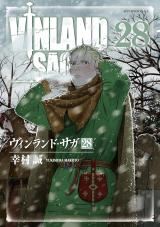
Vinland Saga
- Genre: action adventure award winning drama
- Author: yukimura makoto
- Artist(s):
- Year: Apr 13, 2005 to ?
- Original Publisher:
- Status: Publishing
...
Show More
Rating(4 / 5.0, 68 votes)
5 stars
22(32%)
4 stars
26(38%)
3 stars
20(29%)
2 stars
0(0%)
1 stars
0(0%)
Popular Reviews
The prologue of Vinland Saga is filled with spoilers.
As Marcus Aurelius said, "The best revenge is to be unlike him who performed the injury." This quote encapsulates the transformation from a tale of vengeance to one of compassion and redemption. Set in the 11th century, during the Norse invasion of England, Vinland Saga follows Thorfinn, whose life is consumed by revenge and hatred towards the man who killed his father. Makoto Yukimura's masterpiece combines rich storytelling, complex character development, and stunning art, creating a work that stands alone in its brilliance.
Story and Characters
Vinland Saga unfolds during the Viking era, focusing on Thorfinn, who aspired to be a warrior until witnessing his father's murder at a young age. His dreams were replaced by an all-consuming hatred for Askeladd, the murderer. Thorfinn joins Askeladd's crew, hoping for opportunities to avenge his father honorably, spending his childhood fueled by this anger.
This narrative transcends simple revenge; it delves into humanity and self-discovery. Besides Thorfinn, other characters play significant roles. Askeladd, despite appearing in only 54 out of 189 chapters, leaves a profound impact. He acts as a surrogate father figure to Thorfinn—cruel yet influential. Despite Thorfinn's intense hatred, Askeladd becomes his mentor, pushing him to become the best warrior possible. Thors, Thorfinn's father, preached nonviolence and true warriorhood, lessons Thorfinn embraces in adulthood, evolving into a better person rather than just a warrior.
Art
The artwork is a standout feature, continually improving with each chapter. Makoto Yukimura's dedication shines through, depicting the grim realities of war-torn lands alongside moments of beauty amidst chaos. Characters are distinct and faithful to their historical period, each possessing unique traits. The landscapes—from snowy tundras to bustling forests—are breathtaking, showcasing the effort and skill invested in every panel.
Overall Enjoyment and Conclusion
Vinland Saga offers a thrilling ride from start to finish, blending intense battle scenes with serene moments in Vinland. It's an unparalleled experience in media, ranking among the best manga ever written. If you seek a historical manga or a story of revenge and forgiveness, Vinland Saga is highly recommended.
Thank you for reading.
Vinland Saga is such a compelling series that it made me realize how fortunate most of us are to live in an era free from war and where life isn't constantly threatened. Previously, I had a vague notion of wanting to witness or experience war or something similar. However, after finishing the manga up to the latest chapter (198), it became abundantly clear that I have no desire whatsoever for anything involving even the slightest bit of violence. Only a select few manga have ever motivated someone as lazy as me to write a review like this, and it stands as my testament that this manga is truly worth recommending.
The artwork at the start is rather lackluster, and the storyline seems simplistic without a clear, compelling endpoint. However, I must admit that the character development is commendable. Unfortunately, enjoyment was somewhat lacking.
The protagonist became quite off-putting in the recent chapters; nevertheless, I'm glad he has found his happiness and moral compass. It's disheartening, though, to see him become so fixated on avoiding conflict or any form of killing, regardless of the situation. Aside from this, the character growth is impressive. Additionally, I noticed that the story took on a lighter tone as Thorfinn transformed into a better person, which diminished my appreciation for this otherwise realistic and occasionally dark manga.
Vinland Saga presents mythology in a strikingly realistic manner. You might be repulsed by the horrors of war depicted, but before you put down the manga, you'll realize it has captivated you deeply. At its core, the manga deals with themes of war and slavery. However, its true appeal lies in its exploration of revenge and forgiveness. The story follows Thorfinn, who swears vengeance after witnessing his father's murder. The impact of this on a six-year-old is almost unfathomable.
The manga illustrates gory scenes with an unsettling beauty. It unflinchingly reveals the brutal reality of war—pillaging villages, raping, and selling victims into slavery. It also delves into the psyche of warriors, showing how they justify killing in the promise of Valhalla. The first half focuses on warfare and successfully draws readers in with vivid action scenes and a rich Viking fantasy world. This perspective can lead readers to inadvertently glorify war. The geographical details are accurate and educational, enhancing the reader’s understanding of the Viking era.
As the story progresses, the manga offers more than just bloodshed; it shatters the illusion of war's glory and tells the tale from the viewpoint of victims and slaves. This mature and bold approach contrasts with many mangas that glorify violence for commercial success. Thorfinn's character development is remarkable. However, this focus comes at the expense of secondary characters, who could have been better developed with more attention.
The manga delivers a profound message. Thorfinn, once an assassin, takes up farming instead of fighting, realizing the devastation he caused. War brings destruction, while agriculture fosters growth. Understanding the consequences of atrocities committed by power-hungry leaders, Thorfinn vows never to fight again, embodying a Gandhian philosophy. This reflection sends a powerful message to readers. Similarly, King Canute’s actions mirror George Orwell’s "1984" theme of "WAR IS PEACE," using brutal force to create utopia.
Vinland Saga is an ongoing series with significant potential for character development. I hope future installments focus more on secondary characters, which would elevate the series to masterpiece status. Until then, it remains a compelling read, just shy of perfection.
Story - Not your typical revenge narrative. It has a bizarre, almost comedic edge if it weren't for its brutal nature. The revenge storyline is intriguing, mainly focusing on the character development of Askeladd and later Canute, with some attention given to Thorkell. Thorfinn received minimal character growth during this arc, only truly evolving after becoming a slave. Surprisingly, the farmland saga felt refreshing and engaging compared to previous arcs, despite the reduced action.
Art - Exceptional. Comparable to Berserk, but cleaner and slightly less intricate.
Character - Thorfinn's personality is peculiar; "edgy" might be an apt descriptor. His hostility seems almost inhuman, and his transformation from a seemingly ordinary person into someone harsh over one event is perplexing. Perhaps he was always that way. He didn’t inquire about his mother after years away, which is strange. Later, as a mindbroken slave, he’s more like a silent, macho guy. Was he always this way? Maybe he just isn’t used to kindness – though there were plenty of instances where he was treated well. He becomes more talkative and friendly during the farm arc, perhaps signaling the end of puberty. His comment on the heavy plow seemed out of place. This all happens without much explanation, leaving me curious about its plausibility. Askeladd is complex, revealing different facets to those he meets. His methods of testing people are straightforward, though I question their reliability. He claims to see through people instantly, which feels implausible. Thorkell embodies the classic Blood Knight trope, better written than most, yet immature considering his life experiences. Does he really need to know what makes a true warrior? Just start a family! Canute’s swift transformation from a weakling to a heartless individual was surprising, though mental instability can swing both ways.
Enjoyment - The characters felt genuine and real, a rare experience. The dialogue wasn’t idle chatter; it revealed crucial information about backgrounds or personalities. The action was balanced, not excessive nor lacking, fitting perfectly within the "farmland saga." I genuinely marveled at the world crafted by Vinland Saga.
Overall - An absolutely remarkable series. If you seek well-developed, relatable characters, thrilling action, and a fair dose of historical accuracy, this is the series for you.
Fan of series such as Berserk or Vagabond? This is for you. Be warned, the following text might contain some spoilers as I go on.
Story & characters:
Whew, this one is NOT for the faint of heart, for it has a very realistic and unromantic set-up. There is no lack of extreme violence, betrayal, murder, rape, and all the filth mankind has come up with. Set in the golden age of Vikings, the story focuses on Thorfinn, son of Thors. His father was considered the alpha Viking, the most badass of badasses during his life. However, a lad named Askeladd came along and cunningly - albeit somewhat dishonorably - killed Thors in front of Thorfinn's eyes. Unsurprisingly, this caused Thorfinn to become a murderous madman, following Askeladd wherever he went in hopes of dueling him to death. Askeladd, with years of experience, skill, and intelligence, was however far too overwhelming a foe. He cut Thorfinn a deal: do what Askeladd says, and he shall have an attempt to duel him for every deed done.
Thorfinn had the perfect genes and the perfect attitude for any mission: without a care for his life and skills to cut down an army, he succeeded at every command. However, Askeladd proved to be a far more talented man than what he expected. Throughout the story, Askeladd and Thorfinn have developed this twisted sort of adoptive father-adoptive son-type of relationship. While Thorfinn absolutely detests Askeladd, he is impressed by his immense skill and intellect. Not only that, but when a certain Canute (who tends to remind me of Griffith from Berserk) and Askeladd have a fateful encounter, his mixture of hate and appreciation for Askeladd comes to surface.
While Thorfinn is undeniably the main character, there is no lack of interesting side characters. The previously mentioned Askeladd could be considered the deuteragonist - having a great backstory behind him that could be deserving a series of its own - and a plethora of other characters add great depth to the story. We find out about Canute, the king-to-be who has to change his naive worldview in order to survive. We find out about Thorkell, who has the strength to PUNCH A FUCKING HORSE TO DEATH and history with Thorfinn's father. We find out about Thors himself, him being somewhat shrouded in mystery throughout the series.
By far, though, Thorfinn's story is the most intriguing. Unlike many main characters in series of this type, he never stays completely the same. He feels like an actual person, with his hopes, views, and thoughts changing as he encounters different situations. One of the most praiseworthy aspects of him is his ascension to adulthood, as he matures and begins questioning his thoughtless slaughter and sins committed during his voyage with Askeladd. He has to face consequences of his rash actions and learn to deal with situations in a completely different way compared to his previous efforts.
Art:
Great. Not much to add to that. While for a time this was a weekly release, if my memory serves right, after becoming a monthly one, the quality had a clear upgrade. You will not be left wondering what the fuck is going on - unlike many action series like to do, with some lackluster response like "use your imagination" - and you really get immersed in the cruel, dirty, and violent world of Vikings. While not insanely detailed, it is very well drawn and deserves at the very LEAST a nine out of ten in my opinion.
All in all, it's amazing how Yukimura has managed to create a manga that is both very intelligent and knowledgeable but an action-packed adventure with no shortage of interesting moments. I have a hard time thinking of who not to recommend this manga to, unless we're talking about children or those who get shivers from the sight of blood. This is one of my favorite manga ever, and I promise to torture myself by watching Sailor Moon from start to end, if you ever find me a better Viking series.
I'll just come out and say it. Vinland Saga is my all-time favorite manga, surpassing both Berserk and One Piece in my opinion.
While One Piece offers an epic adventure and Berserk shares thematic elements, Vinland Saga dives deep into reality, questioning what it takes for the world to truly change. Through its exploration of history, violence, human nature, and even friendship, this manga holds nothing back. Makoto Yukimura has crafted something extraordinary, perhaps inspired by his experiences as a father. He takes emotions like hatred and anger and instead of glorifying or condemning them, he simply asks the audience to consider their consequences.
I won't give away any spoilers, but trust me when I say that reading Vinland Saga is worth your time. Even if Vinland can only be found in stories, isn't it intriguing to ponder whether there might be some truth to it?
STATUS: 187 chapters read.
Prologue Arc: 9/10
Slave Arc: 9/10
Eastern Expedition Arc: 4/10
Vinland Arc: (In Progress)
Overall: 6/10
----------
REVIEW CONTAINS MILD SPOILERS - DO NOT READ ARC DESCRIPTIONS IF YOU WISH TO AVOID THEM
----------
"You either die a hero, or live long enough to see yourself become the villain." This quote applies to the writing of Vinland Saga, which became its own villain.
I'm scratching my head over this one. This is the longest review I've ever written, and I'm devoting this much time and effort to it because I truly care about Vinland Saga. I want the series to continue being good, because it was good. I've binge-read nearly 190 chapters of manga in a week, and the question left on my mind is:
"What happened?" (I)
Vinland Saga had a strong start. The first two arcs were well-written, defining what would become the 'Vinland Saga' feel, including the theme, tone, characters, etc. The plot was grounded, grand, and constantly moving forward - there were very few spots of stagnation where the reader feels like they're crawling along, wanting to page flip to get past it. The manga had the feel of a legendary epic or some mythological tale. Then, that feeling vanishes. Everything I've just mentioned goes up in a puff of smoke. The world, the characters, the politics... they all become flat, uninteresting tropes.
...What happened?! (II)
The tone of Vinland Saga changes. The characters and how they are written and defined diminishes. The quality of its arcs dips hard. If I were to show you the first five chapters of this manga, and then provide you a selection of five further chapters in the later half of the Eastern Expedition arc, you would probably think it is some spinoff series. The tonal shift is that drastic. The tone of the manga, its very spirit, flatlines in the third arc - and the Vinland Saga that you started with is not the Vinland Saga you will come to read. The shift is gradual but too severe to go unnoticed. I'll be discussing it in detail below.
---------- SPOILERS BELOW ----------
I'm going to take a step back and explain my gut feelings regarding the arcs, as this will provide insight into my claim, and my lamentations about Vinland Saga falling from grace:
+ + + + + Prologue Arc (War Arc) + + + + +
This is the arc that has been turned into an anime. This arc is VERY solid, with a solid introduction, a great body, and an iron-clad conclusion. This arc is a fantastic prologue. Perhaps this is funny, because the worst part about this arc is our supposed main character, Thorfinn! All he can do the entire arc is brood over his loss, and his only motivation to do anything is the chance of dueling and defeating Askeladd, the villain of the arc. And what a fantastic villain Askeladd is, so much so that many would consider Askeladd to be the protagonist of the series, or even to think of him as an anti-hero (he is a villain through-and-through, just a very well-written one).
If there's one thing that stands out in this arc, it's the constantly moving plot. The plot is well-written, well-paced, satisfying, and above all: it sets the mood and tone of Vinland Saga. This will become important later on, as I've already revealed that the series, unfortunately, loses its shine later on. Thorfinn's desire for revenge is contrasted by his former father's peace. His rage and mercilessness as part of Askeladd's band is contrasted by his desire to have an honorable duel with Askeladd. Akeladd practically assumes the role of father, of Thorfinn's dad, who he ordered the death of. Major plot points are established and touched upon throughout this arc, keeping it consistent and not leaving the audience feeling like they have missed out.
The payoff is ... fantastic. Just when the manga starts to slow down, it floors the accelerator, drawing the reader back into the wider plot and context of the world the characters find themselves in. The conclusion of the prologue arc is one of the best I've seen in a manga, and the anime conclusion is fantastic as well. It's a great springboard to launch Thorfinn away from his past, and into his future.
+ + + + + Slave Arc + + + + +
This arc takes place several years after the Prologue arc, with Thorfinn being sold into slavery as punishment for his crimes against the king. We are introduced to Einar, a slave who, along with Thorfinn, shares the main character spotlight. This arc is jokingly referred to as the 'Minecraft' arc by some fans, and ... well, you'll see why. Like the previous arc, we have a great introduction, a fantastic body of events, and a solid conclusion. Importantly, the tone of Vinland Saga remains; it's just the setting and characters that change. The characters are well-written and consistent. Their interactions are genuinely interesting because they do not all get along, and like in the prior arc, there is conflict between them, their personalities, their morals .. you name it. I'm not the most adept at defining characters, but the writing here of them is very good.
The subplots in this arc are meaningful, and like the prior arc, contribute to and shape the story in meaningful ways. It still feels like a manga set in the 1000 AD, in the land and era of Vikings. Perhaps most importantly, it still feels like Vinland Saga.
+ + + + + Eastern Expedition Arc + + + + +
You may note that I will be explaining this arc in detail, more so than the prior two arcs. This arc is the turning point in the series' quality. Understanding this arc, the setup, and the very poor payoff is critical, in my eyes, to understanding why the series has taken a nosedive in quality, and why I've given it an overall 6/10 score.
This arc starts strong. Thorfinn is now no longer burdened by a corrosive sense of revenge, and is free from slavery. He has reunited with his family and village, and the stage is set for him to prepare to undertake the journey to Vinland. But, before this vast undertaking can occur, Thorfinn has a set of goals that he knows, and that the reader knows:
1. He must obtain money to fund his venture.
2. He must obtain manpower to assist in the journey & country-building in Vinland.
3. He must prove he has the motivation and capacity to do steps 1 & 2, and the ability to deliver.
This is some strong stuff, great groundwork for what should've been a great third arc.
If this isn't the climax of the entire series, with Vinland being the conclusion, this is surely the direct rise to the story's climax.
So, how will Thorfinn accomplish the 3 goals above? First and foremost, we're introduced to our first new crewmember: Gudrid. She's not a fantastically interesting character, but a pretty decent side character. Most of her background revolves around her wanting to explore and see the world, but being locked in her place on account of Gudrid being a female character. Realistic, given that the series is set in the 1000 AD.
In addition to gaining a new crewmate, Thorfinn's team gains a commodity that they must sell: narwhal horns, which can be passed off as horns belonging to unicorns in the south. By south they mean Miklagrad, the capital of the Byzantine Empire. They will get there by traveling through the Atlantic Ocean, the North Sea, the Baltic Sea, then down through the rivers of Russia, into the Black Sea, and back. At this point, we've now established the journey of the arc, the goals, and that it will probably take them two years to complete the journey there and back (this is stated by a character). The setup is golden, makes sense, and will be interesting to tag along in. The scope is a natural expansion in the lead-up to the titular journey to Vinland.
The group journeys out with their commodity and their destination, coming across two new crewmembers. A dog, and Karli, the lone survivor of a village destroyed by warfare. Neither of these characters are of particular note, and Karli is an infant, though thankfully, a decently comical one. His role is small, like he is, and thankfully - he does not get in the way too much and is just along for the ride.
Next up, the group, now with a four-legged friend and an infant, arrives in Norway. We're making pretty good progress on this journey. Here we run into Hild, who I will declare: is the last decently-written, interesting character that will join Thorfinn. Hild has history with Thorfinn, and her life was changed because of his past atrocities he committed when a member of Askeladd's Army. Her backstory is interesting, well-written, and meaningful, and she'll make a great addition to the team as a skilled hunter and creative inventor. She wields a crossbow with a built-in goat's foot lever, which while fictional is at least grounded somewhat in reality for the time period.
Unfortunately, her backstory and value as a character are diminished by the fact that she's ... well, she's Thorfinn from the first arc. Though she's far less pissed, her entire personality largely revolves around her being emotionally dead inside once she confirms Thorfinn's identity and relation to her past, and her primary character trait is following Thorfinn around. Why? Because she wants to be the cause of his death if Thorfinn slips up. If you were getting major deja vu vibes here, you weren't the only one. This sure sounds a fair bit like Askeladd and Thorfinn's relationship. It's a shame too, Hild could be a significantly better character if she was given the time of day to actually develop, as opposed to remaining some sort of always-watching-you, permanent-grudge-holding character ... like Thorfinn was in the first arc. Unfortunately, for the entire duration of this arc, she receives ZERO development, despite having such an interesting premise and important set of skills.
Alright, we've picked up a useful, if vengeful character! Time to head further east, and then south to Miklagrad, meeting other useful characters along the way, and running into sub-arcs!
BZZT! WRONG! Here, have a THIRTY SIX (!!!) CHAPTER ARC about the Jomsvikings! It is WAY too long, FAR too drawn out, and at the end: it's totally worthless to the main cast.
(To the readers who kept up with this when it was releasing in live time, you have my sympathy. This SUB-ARC lasted for THIRTY EIGHT (38!!!) MONTHS! I would have absolutely quit this series if I was keeping up with it in real time at this sub-arc.)
Let me summarize it:
There's a power struggle between two sub-factions of the Jomsvikings, each following a different leader.
Thorfinn wants no part of it. Thorfinn gets dragged into it.
One of the Jomsvikings sides has its leader killed.
Thorfinn still wants no part of it. Thorfinn & crew get dragged into it.
Siege is then laid to the other side of the Jomsvikings.
Thorfinn still wants no part of it. Thorfinn & crew get dragged into it.
The conflict comes to a conclusion after an excruciating THIRTY SIX chapters.
Thorfinn is appointed leader of the Jomsvikings, despite his insistence he didn't want to be a part of it since the start.
Thorfinn, now leader, disbands the Jomsvikings, refuses to explain, and leaves.
Wow, that was an awful sub-arc. It's made even worse by the fact that FUCKING BIG FOOT SHOWS UP. OUT OF NOWHERE. If you think I'm joking, I'm not. Look up Ymir. You can't make this shit up people.
Thank God. It's finally over. We're past it, we can finally get back to Thorfinn's epic adventure to Miklagrad, securing both crewmates and gold to launch his journey to Vinland...
BZZT! WRONG! Yeah that's right, FUCK YOU READER!
We. Get. None. Of. That. The manga completely timeskips. We go straight from the War in the Baltic Sea sub-arc straight back to Iceland. A year and then some of character development and growth, gone. A grand adventure, gone. Potential to recruit interesting new additions to the cast, gone. The whole setup of the arc, gone with the snap of the fingers.
My breath was taken away from me. After the absolutely awful War in the Baltic Sea sub-arc, the LITERAL TITLE OF THE ARC, "EASTERN EXPEDITION ARC," is ripped out from beneath us. It's boiled down to they got to Miklagrad, sold the horns, made gold, the end. Nothing else happened.
What. A. Waste.
From here on out the story nose-dives. The War in the Baltic Sea was the turning point, but the remainder of this arc only solidified that what had happened in sub-arc we had just escaped from, was going to continue to happen. Like the arc we just got out of, chapters drag on. Gone are the days of interesting, well-developed discussions and interactions in meaningful chapters from the first two main arcs, and the start of the third arc. The tonal shift we saw in that 36-chapter long arc is here to stay.
Vinland Saga no longer feels like Vinland Saga.
+ + + Vinland Arc + + +
-----
IMPORTANT NOTE: This is the final arc, and is not complete.
-----
What should've taken part during the travel to Miklagrad instead happens in some crammed chapters leading up to their departure to Vinland. On top of being significantly less interesting than discovery on the way to Miklagrad, it's poorly written and still missing the 'Vinland Saga' feel.
We're introduced to the son of Thorkell, who is either inserted to be the de-facto gender confused character found in many comedic mangas, or as some sort of cruel comedic gag. Thorkell was never stated to have any children in any of his chapters prior, and this character is literally dropped on our heads out of the blue, in a fashion that reminds me of the Bigfoot from the previous arc. There's no context or reason behind it, and the quality of this character makes Hild (our last named crew addition from 58 CHAPTERS AGO!) look like Askeladd in terms of writing quality. Not a great addition to the cast, and the character design is ... well, I think it missed the mark big time. I struggle not to see this character as some sort of cruel comedic gag with how ridiculously they are presented. What could've been an interesting character is tarnished by poor writing, and a character design that does not mesh with the series.
Thorfinn goes from using a knife purely for defense, as his own father instructed him immediately prior to his death, to wanting Vinland to be totally without weapons. He will not let people join his expedition with swords, spears, etc. Yes, this brave venture to uncharted lands with the hopes of building a country will go totally unarmed. Oh, but weapons that are used for hunting? Or building? Yeah, those are fine. You can keep your crossbow Hild. You definitely have not used it against people in multiple prior instances. Axes? No problem. Knives are fine too, fuck it! Seems like the only things that are banned are swords and spears!
{EDIT: Later on we see farmers in Vinland with spears, I guess swords are the only banned weapon?!}
...Inconsistencies aside, they finally depart. Okay, we've had a terrible 36-chapter arc, we totally missed out on the Eastern Expedition, the titular arc, SURELY we'll have some development and drama on the high seas, on their journey to Vinland.
THEY CROSS THE OCEAN AND REACH VINLAND ... IN ONE CHAPTER.
I'm cutting my review off here, as the next sub-arc of the series has not concluded. I don't want to judge an incomplete sub-arc. At this point, I think you can imagine my level of enthusiasm whenever a new chapter is released.
----------
CLOSING THOUGHTS
I'm remorseful that the series I fell in love with for the first and second arcs, and some of the third arc, has flatlined. Vinland Saga has now entered its fourth and final arc, and I truly hope that it ends well. However, given the current downward trend of the manga's quality, I, solemnly, have my doubts that a quality ending will be achieved.
Revenge, murder, sorrow, emptiness, redemption, and aspiration. The story of Vinland Saga unfolds in the 11th century during the Viking era. This narrative follows Thorfinn on his journey from revenge to redemption and aspiration for a different life. Makoto Yukimura masterfully crafts an immersive tale through captivating storytelling and stunning art, depicting the brutal reality of Viking times.
Let's start with the story. I'll avoid spoilers but here's the gist: Thorfinn joins his father Thors on an overseas expedition. Thors' crew encounters Askeladd’s group, hired to kill Thors due to his formidable strength. Witnessing his father's brutal murder by Askeladd, Thorfinn is taken under Askeladd’s wing instead of being killed. Askeladd promises that when Thorfinn grows up, he can seek vengeance. Thorfinn endures harsh wars to face Askeladd, filling his childhood with regret, anger, revenge, and murder.
One issue with the story is the time skips. While they prevent information overload, some arcs skipped could have been fascinating. Nonetheless, I understand the author's need to manage the vast amount of content.
Now let's discuss the characters. Unlike many manga and anime, the focus isn't solely on the protagonist. We learn extensively about side characters and their development. The author doesn’t shy away from the brutality of the era, depicting rape, plunder, pillaging, and colonization vividly through exquisite art.
The art style deserves special mention. It’s magnificent, arguably more gory than Berserk or Vagabond. The detailed depiction of the brutal Viking era is remarkable, with realistic war scenes and beautifully drawn backgrounds. Character faces are especially impressive, conveying emotions clearly through intricate details. The art style is truly beautiful and must be experienced firsthand.
The characters are the highlight of Yukimura’s work. Each character is introduced thoughtfully, allowing for significant development through interactions. Thorfinn’s transformation from a vengeful boy to a man seeking redemption and peace is compelling. Even Askeladd undergoes substantial development and remains pivotal throughout. Side characters are equally important, contributing to the main character's growth and the story's progression.
In terms of enjoyment, this is one of the best manga I’ve ever read. From start to finish, it kept me engrossed, leading me to binge-read until the latest chapter. I highly recommend this manga to everyone. Experience it yourself to see its brilliance.
Vinland Saga is a masterpiece for numerous reasons. Its target audience, primarily young men who may lack a strong father figure, aligns well with its Seinen classification. The narrative stands out by offering life-changing insights that separate it from other animanga.
Story -
A seemingly straightforward tale of revenge gradually unfolds into a profound exploration of morality through Thorfinn's journey. Yukimura skillfully transforms the brutal image of Vikings into a rich narrative filled with revenge, sorrow, redemption, brotherhood, and guilt. Thorfinn relentlessly pursues his paradise, believing only there can he find peace for those he has wronged.
Art -
The artwork evolves impressively throughout the series, maintaining expressive characters that contrast vividly against violent scenes and detailed backgrounds. Battles are depicted brutally, while moments of peace are warm and inviting. The art beautifully captures Thorfinn's pain and anguish, significantly enhancing character development.
Characters -
The characters truly shine in this series. Askeladd, a character you love to hate, imparts twisted yet valuable lessons to Thorfinn. Thorkell, on the other hand, is admired for his simple love of battle. Thorfinn stands out as the most relatable character, struggling with rage and anger but ultimately learning to break free from his chains. The female characters also add depth and diversity to the story, avoiding stereotypes despite the historical context. Each female character brings a unique dynamic, enriching the narrative.
Themes -
Key themes include religion/paradise, freedom, love, revenge, redemption, pacifism, masculinity/fatherhood, slavery, brotherhood, and violence. Religious discourse permeates the story, particularly through Canute's rejection of Christianity and Norse mythology. Both Canute and Thorfinn seek to create their own paradise without divine intervention. Freedom is explored via Stoicism, emphasizing personal virtue over external influences. Love is portrayed as biased, with true love found only in death. Revenge is a central theme, with the message that forgiveness leads to being forgiven. Slavery is critiqued, highlighting societal constraints and personal aspirations.
Criticisms -
Some argue Vinland Saga isn't historically accurate regarding Norse life. However, Yukimura chose Viking culture to emphasize their acceptance of violence. The manga's pacifist philosophy contrasts sharply with Viking culture, serving as its core message.
Conclusion -
I could endlessly discuss the characters, themes, and motifs that make Vinland Saga exceptional. It surpasses other Seinen works like Vagabond and Berserk in terms of redemption. This manga resonates with those who've faced adversity yet maintain a positive outlook. Thorfinn embodies an indomitable spirit, making him an unforgettable protagonist.
Revenge, compassion, humanity, love. Pointy weapons turning people into minced meat.
Vinland Saga shares almost nothing with Makoto Yukimura's previous acclaimed work, Planetes, except for his dedication to technical realism. He grounds his stories in research while allowing creative freedom. It’s neither dry nor lifeless, yet it doesn't fully dwell in fantasy. Vinland Saga balances this line finely, blood-soaked and razor-thin.
This manga is brutal, more so than Berserk or Vagabond. Not to belittle those works, but one is a fantasy, the other an adaptation of a romanticized novel. Vinland Saga's brutality stems from reality-based atrocities, not romanticized violence. Other manga often present clear divisions between good and evil, right and wrong, black and white, or simply 'root for the protagonist'. Not here, in Yukimura’s tribute to old-fashioned beheadings, set among Vikings.
Vikings pillage villages, rape, and plunder. There's no mercy, no survivors if they can help it. No Viking embodies the positive traits mentioned at the start. If Vikings invade your village, you'll be killed or enslaved, regardless of age, gender, or status. Based on reality and unflinching, our young protagonist, Thorfinn, observes atrocities passively and engages in violence when it serves his goal: revenge for his father.
Yukimura addresses Thorfinn's backstory early, a wise choice as the boy's innocence and pure love for his father make his current state shocking. The flashback provides motivation but leaves gaps; we don’t see his gradual loss of humanity, which would make great drama. As of now, we haven’t seen his transformation from child to killer, but I trust Yukimura will reveal more about his journey.
Thorfinn is a jaded, efficient killer. Silent and moody, he rarely speaks bluntly. He watches the world burn without blinking because he’s already burnt inside. He walks past horrors without care; this is our protagonist. Yukimura avoids having Thorfinn inflict misery on innocents, which keeps the story accessible while maintaining its edge.
Vinland Saga centers on revenge, exploring the concept rather than a straightforward mission. Yukimura occasionally shifts focus to explore revenge through random characters, humorously with a Christian priest trying to teach Vikings about ‘love’. This subplot ties into Thorfinn’s dilemma, forcing him to reflect on his path.
The main story follows Thorfinn’s target, whom he stalks relentlessly, ready to challenge him to a duel. The target, Askeladd, seeks power through complex means, avoiding clichés. His design is almost amiable, hiding his ruthless nature. He’s multifaceted like other characters, blending historical facts into his arc, offering readers political insights.
The art is fantastic, improving significantly from the first volume. Memorable action sequences are perfectly staged, with scope, perspective, and visceral composition. The violence is graphic and disgusting. Weapons land awkwardly, fingers plunge into eyesockets, making you squirm but enjoy it safely in your 21st-century home.
The violence is remarkably gross, sometimes gratuitous, mostly disgusting. Gore-lovers will appreciate it, others might feel repulsed, but it fits the 11th-century war setting. What did you expect, bloodless combat?
The story spans Europe, from Denmark to the UK, Wales, Iceland. We witness England’s invasion affecting various players, drawing them together through intriguing means. Sieges, manhunts, duels, chases, explosive action, tense moments, betrayals, unexpected alliances—Vinland Saga has it all, educating readers about an ancient way of life through detailed depictions of clothes, weaponry, customs, and traditions.
Yukimura uses manga to offer something reflective of life beyond the pages. Vinland Saga mirrors a violent past, showcasing a passionate ancient race: Vikings. Seriously, don’t mess with them.
My review is entirely based on the plot up to the farm arc.
So, what should you expect from this series? Expect a slow burn. The prologue lasts around 15 chapters into the series before the main story kicks off. For the first arc, if you enjoy repetitive (not in a bad way) expedition fights with some intriguing characters, this might be right up your alley. However, give it at least 30 chapters before deciding to drop it, as by then you'll get a sense of the series' rhythm.
If you compare the initial part of the main story to something like Berserk, there are similarities. Nevertheless, Vinland Saga lacks the pronounced political intrigue seen in Berserk. It's a more character-driven narrative with some cool fights (do watch the anime from Wit Studio). Be prepared for the story to take a turn. I must emphasize that this is primarily a story about character development rather than political intrigue or adventure. To be honest, it can get dull at times. Yet, some of the payoffs are fantastic. Overall, Vinland has its great moments, but compared to other stories, its overarching narrative isn't as compelling in my opinion.
Now, onto the bigger problems. There are instances where deus ex machina is employed, even in character development. This bothers me since these moments seem to come out of nowhere and feel quite nonsensical. Additionally, I find it irksome when a character talks for an extended period after being severely wounded. These elements don't significantly detract from the story, though.
Leave a Review