

In the quaint town of Tokeizaka, there stands an old, weathered boarding house named Maison Ikkoku. For several years, it has been home to a lively group of tenants, including 20-year-old college hopeful Yusaku Godai, its newest resident. Recently, however, Yusaku has grown frustrated with the noisy antics that disrupt his studies and has resolved to move out. Just as he is preparing to leave, a beautiful woman named Kyoko Otonashi introduces herself as the new property manager. Falling in love with her at first sight, Yusaku changes his mind and decides to stay in hopes of winning her heart.
At first, Yusaku believes he is making headway with Kyoko. However, he soon learns that she is a widow still grieving the loss of her late husband. Despite developing feelings for Yusaku, Kyoko makes it clear that she has no intention of remarrying or even dating, as she still cherishes the memory of her late husband. Understanding her pain, Yusaku seeks to help Kyoko overcome her sadness with the support of the other residents of Maison Ikkoku—all in the hope that one day she will see him as more than just another tenant.
Maison Ikkoku was published in English by VIZ Media from October 24, 2003, to February 14, 2006. The publisher later rereleased the series as 10 collector's edition volumes. It was also released in Spanish by Glénat España from May 2004 to January 2013, and in France by Tonkam Edition from January 2001 to January 2003.
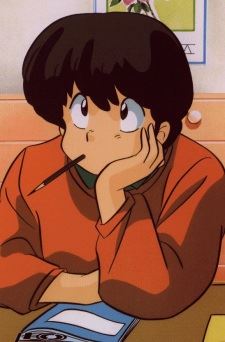
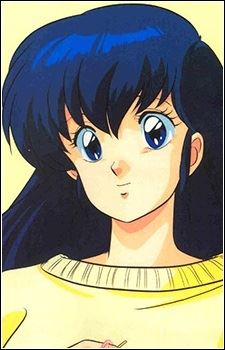
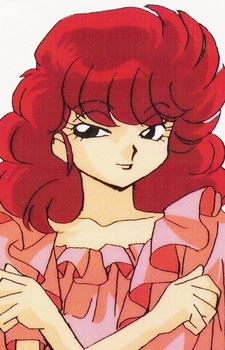
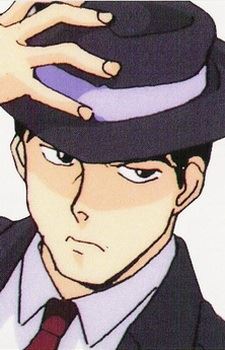





I've finally finished the manga. It was great! Not perfect, though; here are my issues.
Everyone's an idiot. It made me incredibly frustrated so many times. Not because I wasn't getting what I wanted from the story, but because it’s just plain random, easily solvable, forced conflict derived from misunderstandings and often insane one-in-a-million chance coincidences. They do this over and over. Now, it's not like they don’t have a reason to be upset over whatever problem they have, but there is a total lack of basic communication. Kyoko is a stubborn, dumb lady who refuses to hear anyone's explanation. Godai is an idiot for jumping to conclusions over the tiniest things, getting depressed and angry at Kyoko for stuff she never did. This problem permeates the entire damn manga, which made it pretty frustrating to read when these conflicts were happening.
That being said, it's always charming. The romantic moments are believable and cute. The characters are all well-developed and likable (when Kyoko and Godai aren't being idiots). The presentation is excellent. The humor isn't laugh-out-loud funny, but it's so endearing. The most important part is the ending. While it felt a little rushed, it's pretty satisfying and almost brought a tear to my eye. Everyone gets an ending that most will be satisfied with. Despite my gripes, I really enjoyed this, and I'm excited to read more of Takahashi's work. 8/10 (edited)
TL;DR: Maison Ikkoku is the perfect romance comedy to make your heart race and feel a bit less lonely. A definite must-read for fans of the genre or Rumiko Takahashi's work.
L;DR
When I started Maison Ikkoku, my expectations were low. Despite being a huge fan of Rumiko Takahashi, the art style and plot didn't initially appeal to me. However, always craving a good romance, I decided to give it a shot.
Then, I kept reading. And reading. And reading some more.
Maison Ikkoku brims with emotion. The characters' feelings leap off the page, making it incredibly easy to immerse yourself in their world. Watching these lively characters interact is pure joy. Sure, it's a romantic comedy manga, so not every situation is realistic. But their emotions are so genuine that it doesn't matter. Kyoko's intense jealousy while clinging to her past, Yusaku's constant struggle to prove himself and his ensuing depression—these elements are deeply relatable. Each character is meticulously developed, forming a unique and cohesive group of tenants at Maison Ikkoku.
Falling in love with Maison Ikkoku is effortless.
The story, like many of Takahashi's works, revolves around jealousy, misunderstandings, and love triangles. If these tropes don't appeal to you, this might not be your cup of tea. But if you're a sucker for a well-crafted romance, Maison Ikkoku will tug at your heartstrings while maintaining its light-hearted tone.
I particularly loved how time progressed naturally throughout the series. Years pass without abrupt jumps, allowing characters to grow and develop. This makes you care for them even more. The difference between Yusaku from chapter 1 and chapter 160 is striking, as it is with everyone else. The relationships evolve organically, which is delightful to watch.
Maison Ikkoku is structured episodically. Most conflicts resolve within a chapter or two before moving on to the next event. It's best enjoyed in small doses rather than binge-reading.
And the ending? It's satisfying. So if unresolved endings frustrate you, rest assured, Maison Ikkoku delivers a fulfilling conclusion.
Go read Maison Ikkoku.
Maison Ikkoku will make you experience a wide range of emotions, from laughter to tears, from anger to peace, and from contentment to craving for more. Takahashi Rumiko has crafted the perfect recipe for a successful romantic comedy.
Many complain that the series drags in the middle, which might be true. It could have been about 100 chapters shorter and still been as compelling, or it could have been 100 chapters longer and retained its charm. This is the magic of Rumiko. You may get frustrated with the endless misunderstandings that seem to arise out of nowhere, but by the end of each chapter, you'll feel immensely satisfied. She manages to give purpose to everything in this manga, and looking back, it's truly remarkable. Credit must be given to her for making the length of the series just right, culminating in a powerful ending. I dare say this is the best conclusion to a romantic story I've ever encountered. The finale is undoubtedly the highlight, made all the more impactful by her dedication to character development and making readers genuinely care for them.
This brings me to my next point: the characters. Some criticize the characters for their indecisiveness, failing to see that this is precisely what makes them human. There is significant development, and it's profound. One of Rumiko's strengths lies in her characterization. She presents who these characters are without drastic changes; it's the small things that contribute to their growth. Ultimately, these characters remain true to themselves, and never before have I encountered such believable personas. Kyoko is simply a widow terrified of loneliness, and Godai is an ordinary guy lacking self-confidence. That’s all there is to them. Even at the end, when they finally come to terms with their realities, they remain fundamentally unchanged. And that's what gives them their power. Their journey is about accepting their flaws and trying to move on, and while they do achieve acceptance, their flaws persist because that's who they are. Rumiko does an excellent job conveying this to the reader, reminding us that these characters are just like everyone else.
If there's one flaw in this otherwise wonderful manga, it would be the art style. Don't get me wrong—the characters and their expressions are beautifully rendered, adding layers of emotional depth. However, the background imagery often falls short. The sky is frequently depicted as a weird dark smudge, detracting from the overall experience. At one point, Kyoko remarked on a "beautiful day," but the way the sky was drawn suggested an impending storm, which had me laughing. While not a major setback, it occasionally strikes the reader and detracts from an otherwise flawless read.
Overall, Maison Ikkoku is a fantastic read—one of the best I've come across. It's an emotional roller-coaster that will have you reaching for tissues, laughing loudly enough to annoy your neighbors, and experiencing events that leave you speechless. All leading up to one of the most powerful endings ever. If you're searching for a superior romantic comedy, look no further. Maison Ikkoku will take you on a memorable journey you won't forget.
"You take my place in the showdown
I'll observe with a pitiful eye
I'd humbly ask for forgiveness
A request well beyond you and I"
- Joy Division in the song "Heart and Soul" from "Closer"
Maison Ikkoku may not be on par with Citizen Kane, but it resonates deeply within me. It elicits powerful emotions, almost driving me to tears at times. This classic romantic comedy features a male protagonist who appears even more ordinary and lackluster compared to others of his kind. Yet, we witness a profound transformation in their relationship, quiet and subtle but profoundly impactful. Godai could have easily dismissed Kyoko as a fleeting teenage crush, unattainable and unrealistic. Kyoko could have continued to wallow in resentment or found another suitor merely out of convenience. But that didn't happen. Their immature infatuation and Kyoko's lingering trauma evolved into something beautiful, something indescribable, making life's little nuances seem precious and rich, like aged wine.
At first, I appreciated the raw and harsh comedic twists without complaint, even finding them refreshing as they reflect real-life probabilities. However, the last 20-30 chapters are an emotional rollercoaster, shifting rapidly between wholesome humor and intense second-hand embarrassment or pain, making you want to throw the book against the wall. Godai's circumstances might appear exaggerated to some, but they felt believable to me, having seen people who endure repeated setbacks yet remain resilient. People often overlook that change takes time, sometimes years, to become apparent. Godai transformed from a ronin driven by societal pressures and teenage infatuations into someone who found stability and love, thanks to Kyoko's passive influence, however long it took.
Some might argue that Mitaka's arc was resolved messily, but he got what he deserved. Mitaka invested heavily in appearances and superficial charm, ending up entangled in a relationship based on false pretenses, including adopting a poodle purely for show. In the end, he didn't fall into despair but led a seemingly happy, albeit artificial, life. That's life. You can be manipulative and driven by superficial ambitions, but your actions lead to unforeseen consequences, yet you don't dwell in bitterness.
Kozue and Yagami's arcs might seem underdeveloped at first glance, but from a pragmatic perspective, they feel natural. Kozue matured and distanced herself from Godai due to life's minor upheavals. Yagami had to face reality and put an end to her romantic fantasies. These developments might seem implausible in simple terms, but as The Jazz Crusaders' track suggests, "Little Things Mean A Lot."
What I loved most about this manga is how it portrayed Kyoko's resentment and its resolution. Kyoko didn't overcome her possessiveness and emotion-driven actions, but she found someone who could tolerate her flaws. Flaws make us human, and calling them such can be flawed itself. Kyoko never fully moved past her late husband's death, but it evolved into something warmer. Soichiro's image remained undefined until the end, symbolizing his enduring presence as a loving husband rather than just a teacher. The final monologue between Godai and Soichiro transcends conventional boundaries, expressing pure, unconditional love.
My descriptions might seem overly romanticized, or you might think I'm drunk or high on weed. But right now, I'm just hyped on caffeine, my thoughts racing and blending into an emotional haze. To conclude, Maison Ikkoku left a deep personal impression, changing my perspectives on certain matters. Despite being sad it ended, I'm glad it happened.
"I wouldn't even trust you
I've not got much to give
We're dealing in the limits
And we don't know who with
You may think that I'm out of hand
That I'm naive, I'll understand
On this occasion, it's not true
Look at me, I'm not you"
- New Order in "Regret" from "Republic"
There were moments when I adored this story, and other times when I despised it. You could say my relationship with this tale is one of love and hate. Honestly, the characters are among the worst and yet also the best humanity has to offer. This manga is a paradox—it's both terrible and terrific. It's a challenging read that you can't seem to put down.
I'm not a fan of Shoujo, but I gave this a go because it's a renowned manga. I don't regret reading it, and now that I have, I hope to erase it from my memory and never think about it again. It's a narrative worth experiencing once. But never again.
While not the worst manga I've ever read, Maison Ikkoku is certainly the one I despise the most. This opinion might seem inconceivable given the numerous glowing reviews and recommendations it receives. Those reviews often praise aspects of the manga that I find utterly abhorrent, or they acknowledge its glaring flaws yet still give it high ratings. Here’s my attempt to dissect why I find this manga so unbearable, though I understand some of my grievances might stem from differences in taste. However, much of what irks me about this work feels fundamentally backward and nonsensical.
To summarize my issues before diving into specifics: Almost all characters are either hopelessly stupid or parasitic, exploiting those less fortunate or too naive to resist. For 85% of the manga, there's no meaningful progress, which is particularly problematic for a story centered on budding relationships. Now, let's delve deeper into the story and characters, as these are the primary sources of my frustration.
The story begins with Yusaku Godai, a college student living in a rundown boarding house managed by Kyoko Otonashi, a young widow. The plot revolves around the eccentric residents who torment Godai, causing misunderstandings between him and Kyoko, whom he fancies. These residents add stress to an already pressured Godai, burdened by schoolwork, exams, and finances. They further exacerbate his financial struggles by forcing him to pay for alcohol and food, something he's too naive to refuse. Occasionally, there are hints of progress or half-hearted confessions, but these are promptly ignored, reverting to the initial state.
A significant issue with the story involves Godai's inexplicable luck with women. Despite being described as neither attractive nor particularly desirable, he attracts romantic interest, notably from Kozue, a girl his age. Over 140 chapters, spanning several years, Kozue believes she and Godai are dating, while he never clarifies his intentions. This prolonged deception strikes me as cruel rather than comedic. Leading someone on for years without any intention of reciprocating their feelings is deeply unsettling.
Now, let's analyze the characters individually, starting with the most contemptible and moving toward more functional individuals.
Mitaka, Godai's rival for Kyoko, is a wealthy, handsome man in his mid-twenties. He embodies privilege, constantly pressuring Kyoko into dates despite her ambiguous feelings towards him. His interactions with other characters reveal his superiority complex, especially towards Godai. Mitaka revels in making Godai suffer, using his wealth and charm to manipulate situations. His behavior borders on predatory, particularly when he tricks Kyoko into a dinner date, essentially kidnapping her. His actions, including encouraging her to drink excessively and implying sexual advances, are disturbing and indicative of psychological torment.
Next is Yotsuya, Godai's middle-aged neighbor. A voyeuristic creep, Yotsuya exploits Godai financially, blackmailing him into buying food, alcohol, and throwing parties. His presence disrupts Godai's studies and sleep, adding to his woes. Throughout the series, Yotsuya exhibits nothing but manipulative behavior, making him a despicable character.
Ichinose, another resident, is a neglectful mother who drinks excessively and spreads misinformation. Her parasitic nature mirrors Yotsuya's, though she lacks his voyeurism. She's a disgraceful figure, contributing little beyond chaos and neglect.
Akemi, a beautiful waitress, adds complexity with her occasional assistance to Godai and Kyoko. However, her attraction to Mitaka and participation in parties at Godai's expense diminishes her redeeming qualities. Still, she occasionally acts benevolently, setting her apart from the outright villains.
Godai himself is an idiot, leading Kozue on for years without clarification. He lets others exploit him, fails to resolve misunderstandings, and often succumbs to temptation. While not malicious, his incompetence makes him frustratingly unreliable.
Kyoko, the main heroine, shares similar flaws. She doesn't firmly reject Mitaka's advances, leading to dangerous situations. Her jealousy towards Godai's interactions with other women, despite having done the same, is hypocritical. Her emotional volatility overshadows any positive traits, making her an unreasonable character.
The only reasonable character is Ichinose's son, Kentarou. Surrounded by dysfunction, he displays surprising maturity, trying to curb his mother's drinking. As the sole functional individual, he highlights the failures of the adult characters.
In conclusion, Maison Ikkoku suffers from flat characters lacking development, clichéd comedy at others' expense, and endless misunderstandings. The story's superficial ending fails to provide satisfactory closure. Overall, I rate this manga a 2/10 due to its numerous shortcomings. If you seek self-loathing and disdain for fictional characters, consider reading this series; otherwise, avoid it like the plague.
"The woman you love... hey, what's she like?"
"The woman I love...
burns with jealousy
leaps to conclusions
cries
and turns to ice
but
when she laughs...
... the world is mine"
So I finally managed to complete Maison Ikkoku (manga). Better late than never, I suppose.
It's a classic and you can instantly see why. Honestly, Takahashi Rumiko really has something that no other mangaka possesses. And I'm not talking about her bank account, mind you. The woman is amazingly talented, period.
Maison Ikkoku is a wonderful story that you can fully enjoy even 30 years later. Even if Maison Ikkoku did age in certain aspects. Even if it can be seriously frustrating to read at times. Even if it's far from perfect, the "heart" is undoubtedly still there. Rumiko's very unique style is still there and you can easily recognize it. No one in the world has quite the same sense of humor, the same art style, the same wittiness and nonchalance she so effortlessly applies in her storytelling, the sheer silliness and nonsense in the borderline absurd situations she often creates, and let's not forget the lovably idiotic characters she brings to life in her manga. It's as if she vibrantly unleashes her inner baka as she writes and draws, and the final result is a gleeful mixture of her own childishness and innate talent for drawing manga. The paneling, the pacing, the character expressions and the way they express their feelings and emotions, the patterns you can clearly recognize in each character's behavior and how human and relatable they feel to the reader. Her officially stated lack of planning ahead and her carefree method of just making things up as she goes along, it's all very idiosyncratic. In many ways, I think she's like an open book, and you can read her just fine if you want to.
The way I see it, Maison Ikkoku is the result of all her virtues and (annoyingly lovable, in my opinion) flaws. Truthfully, I think to enjoy Rumiko's manga, you gotta be as much of a baka as her characters. You gotta be someone who does stupid things (quite often). You have to be someone who acts on impulse only to regret it some minutes later. You gotta embrace the silliness in everyday life and smile about it. You gotta accept the avalanche of misunderstandings that hinder the story from progressing right until the very end. And above everything else, understand why they happen. To grow up and face the mistakes you make, accepting your good and bad points, to find someone you love; and last but certainly not least, be willing to share with him/her your miso soup every morning.
In other words, to be like Kyouko and Godai, our two protagonists in this wonderful story. This is a long journey of two people through the many hardships one can find in life, and at its core, a coming-of-age narrative of two people who had to learn how to communicate with each other, who had to battle against their own ghosts and their many shortcomings. It's a story of acceptance. Of two people who had to grow, but could not possibly do it alone and never without the other. Not without the one they have grown to know and love and accept and trust. Such is Maison Ikkoku, a love story that knows no age and will always remain timeless for any person with a human heart beating inside of them.
“What we've got here is... failure to communicate.” - Cool Hand Luke
Misunderstandings arise from a lack of effective communication, leading to situations that can range from trivial to devastating. Relationships can crumble, families can turn against each other, friendships can dissolve into enmity, and even wars can ignite due to misunderstandings.
Maison Ikkoku stands as one of the most renowned and influential romantic comedies in manga and anime history. Created by the celebrated Takahashi Rumiko in 1980, it was serialized in "Big Comic Spirits" for its entire seven-year run. The story inspired a 96-episode anime in 1986, along with a movie, three OVAs, and a music special.
The narrative introduces Godai Yusaku, a student eager to leave the Maison Ikkoku boarding house, believing its residents hinder his studies and cause exam failures. His plans change when Otonashi Kyoko arrives, announcing she's the new manager.
Many view Maison Ikkoku as a straightforward romantic comedy featuring indecisive protagonists, which is a fair assessment on the surface. However, what truly struck me wasn't the romance or comedy—both decent—but rather how misunderstandings drive characters' behaviors over time.
While the storyline flows well overall, some criticize the middle section for lacking significant events. Though I understand this perspective, I found it cleverly illustrated how time could pass without meaningful occurrences. Fans of Takahashi Rumiko's works know her storytelling isn't conventional.
Despite feeling the middle section dragged somewhat, I remained engaged thanks to the comedic elements. Regarding artwork, the series shows its age through drawing style and character design, especially noticeable at the beginning. Yet, the latter half reflects Takahashi’s evolution, resembling her later work.
Though flawed, some visual gags were ingenious, and characters displayed surprising expressiveness and emotion for an older series.
A common criticism centers on the characters’ indecision. Some argue the series could have been half as long if Yusaku and Kyoko made quicker decisions. While true, habits form rapidly; Kyoko's indecision between Yusaku and Mitaka mirrors real-life scenarios. The middle section highlights how relationships can stagnate when merely going through motions.
Takahashi attempts to justify their indecisiveness, adding depth to their characters. Character development primarily focuses on Yusaku and Kyoko, but others receive attention too, showcasing Takahashi’s ambition to give every character significance.
Maison Ikkoku elicits mixed feelings. Its romance and comedy are well-handled, but the numerous misunderstandings exacerbating Yusaku and Kyoko’s indecision can frustrate. Despite testing my patience occasionally, working through these flaws reveals a charming series with unique characters.
Interestingly, many later romantic comedies bear similarities to Maison Ikkoku, understandable given its influence. After all, imitation is the sincerest form of flattery. :P