
...
Show More
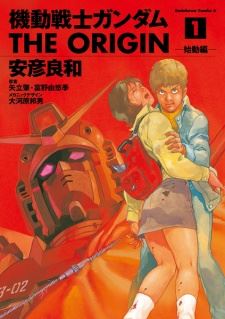
Zeon's ace pilot, Commander Char Aznable, believed he could thwart the Federation's plan to develop a mobile suit by attacking their research base on colony Side 7. However, he was mistaken. With a prototype already operational, the besieged Federation forces retaliated using their new weapon, the mobile suit Gundam, leading to devastating consequences. Amidst the chaos, young electronics prodigy Amuro Ray is determined not to let his friends and family perish in the crossfire. But how can one boy fend off an invasion of mobile suit-wearing attackers?
(Source: VIZ Media)
Kidou Senshi Gundam: The Origin won the 43rd Seiun Award in the Best Comic category in 2012.
The series was partially published in English as Mobile Suit Gundam: The Origin by VIZ Media in 12 volumes from March 6, 2002, to August 17, 2004, before it was discontinued. VIZ Media's version does not align with the Japanese volumes, and only approximately the first six volumes were translated. Vertical Inc. later published the complete series based on the 12-volume aizouban reprint from March 26, 2013, to December 15, 2015. It was also published in Spanish by Norma Editorial from November 2005 to July 24, 2015, and in Italian by Edizioni Star Comics from October 1, 2004, to May 24, 2012.


Coming from the anime, I must say it's not for those who appreciate its finer aspects but rather its more juvenile side. The Origin relies on a dual-faceted logic; we see one or the other throughout the story, and sometimes these facets intersect. This should be advantageous, but their interaction is disastrous.
You have the "evil" part where characters are somewhat developed, though often lacking depth in their motivations. We get personalities and strategies that aren't bad, yet they frequently skirt around key points, leaving much unsaid. Unfortunately, these unresolved elements never return, which is disappointing. These characters intrigue us enough to want to know more about them, although it’s understandable in a war scenario that not everyone can receive equal attention.
The "good" side, however, is shallow. Almost none of these characters leave a lasting impression. The main character (MC) is just a brat, which might be acceptable since he is young, but he stands out as the deepest character among the good guys, making the rest seem even worse. They win all their fights due to some sixth sense, Gundam, kids, miracles, or just because. And when the "good" side wins, they mock the "bad" side.
This dynamic is the most disappointing aspect of The Origin: the more interesting characters, who actually engage in war, use strategy, and have motivations and personalities, are defeated by bland ones thanks to some sixth sense, overpowered mecha, kids, or whatever. Once you grasp the formula, their determination and fight-to-the-death spirit become mere comic relief. They lose without reason, so how can we take them seriously?
Consider there's no logical basis for these miracles. The Gundam is a prototype mobile suit, while enemy research is further advanced, so they shouldn’t be able to create something so overpowering. Adding to this, revolutionary engine and alloy advancements can't happen spontaneously. The New Type sixth sense is supposedly developed by humanity in space, yet our MC, who comes from Earth, has it. Most New Types come from his crew, while the enemy, actual space dwellers, almost don't have any. Despite the opposing side having more advanced research, this advantage is always used against them. As for the kids, let's just say it was awful.
So what is The Origin? A story where the good guys win. Simple, right?
That said, it isn't high-level writing. Many questions remain unanswered, important dialogues feel like monologues, there's no real character development, only fight after fight. Love stories appear suddenly to highlight war's cruelty, with no foreshadowing. Characters mostly lack genuine origins, and lessons about solo warfare are contradicted throughout.
I probably wouldn’t have been interested if the animation had adapted the beginning of the manga. It captures the spirit of the story, with the past arc merely serving as a spin-off.
In my view, this is truly a masterpiece. I can't find any reason not to give it a perfect 10. The story is incredibly rich, and the art—from the character designs, color schemes, camera angles, action sequences, to the dialogues—is all top-notch. The development of the characters is also exceptional; everything about it deserves a 10 in my book. I've always wished for many anime series to have a manga adaptation as outstanding as this one. Words fail me when trying to describe how immersive reading this was. The intricate storyline, political drama, battles, context—everything is explained so well and presented in such an epic manner!
Even supporting characters like Garma receive more background development. We get glimpses into the daily lives of characters like Char, learning how he became the Red Comet, what motivated him, his backstory, and much more. I adore how this manga has made Gundam 0079 even richer. The way the characters are portrayed as human and realistic is remarkable. Seeing individuals with their own interests, dreams, struggles, and ambitions is simply awe-inspiring. This is a fantastic introduction to the franchise, and I love every single volume.
Mobile Suit Gundam: The Origin is the best entry point into the Gundam universe. I fell in love with every aspect of this masterpiece by one of the anime and manga industry's gods, Yoshikazu Yasuhiko. It retells the original 1970s anime, adding significant backstory about the conflict's origins and characters' motives. Let’s dive into the review.
~ STORY = 9 ~
The story is straightforward but excellently executed. We start right in the middle of the war between Zeon and the Earth Federation. Zeon's Zakus invade Side 7 for espionage, suspecting a secret operation involving the new Gundam Mobile Suit. Indeed, they find it as the Feds were developing it. The Principality of Zeon had declared independence months earlier, making conflict inevitable. The manga gradually reveals more details, completing the puzzle.
~ ART = 10 ~
The artwork is stunning, created at the peak of Yasuhiko-Sensei's career and consistently impressive throughout. I’ve spent countless hours admiring his panels, whether showcasing various Mobile Suits and aircraft, conveying characters' emotions, or depicting beautiful landscapes and cities. The detail level is remarkable.
~ CHARACTERS = 10 ~
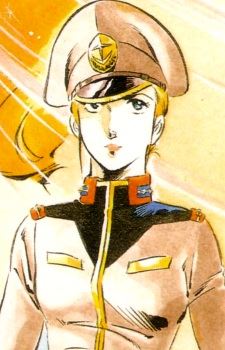
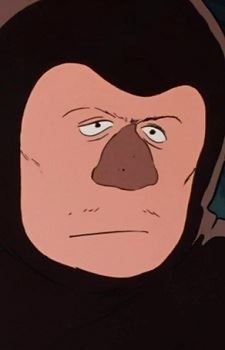
The character roster is outstanding. Even minor characters play crucial roles. I grew attached to the White Base crew (including Ramba Ral and Hamon) and enjoyed hating the Zabi family. Let me highlight two protagonists: Amuro Ray and Char Aznable.
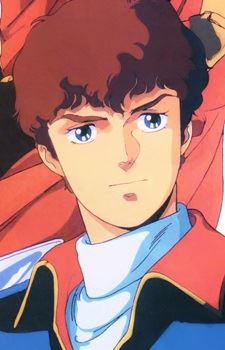
Amuro, just 15, finds himself piloting the Gundam against trained Zeon soldiers. He not only survives but proves adept at controlling the Gundam, joining White Base’s crew. His burden often leads to impulsive actions, but his development is excellent.
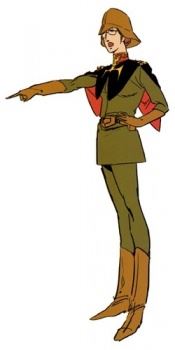
Char, the Red Comet, fights for Zeon but secretly opposes the Zabi family. He's my favorite character and the true protagonist. Despite his questionable actions, I sympathized with him multiple times.
~ ENJOYMENT = 10 ~
This manga never bores. Spectacular battles, conspiracies, and missions keep you engaged. The pacing is perfect, always leaving you curious about what’s next.
~ OVERALL = 10 ~
I recommend this manga to everyone, regardless of age. When I reached the last page, I was sad, wishing I could forget the story to experience it anew. It's truly unforgettable.
Gundam stands out as one of the legendary series, a narrative that began in 1979 and has now evolved to include contributions from those who grew up with it, enriching rather than destroying its legacy. Unlike its contemporary, Star Wars, which has been tarnished by untalented narcissists into an unrelated monster, Gundam remains true to its roots.
The story follows Amuro Ray, a young man who finds himself in possession of the prototype mecha, Gundam, amidst a war. Forced into service to protect a warship carrying both this weapon and civilian refugees, he must battle against one of the universe's most dangerous men: Char Aznable, the Red Comet.
This manga was illustrated by Yasuhiko Yoshikazu, the original Gundam animation director. A legendary mangaka himself, every panel was hand-drawn using art brushes, without modern technology, all done solo. This means tasks typically requiring a team—storyboarding, panel arrangement, character positioning, and penciling without guides—were handled by one elderly Japanese gentleman. The result is excellent art, distinctively recalling the original anime but surpassing it with cleaner lines and compelling action. The layout flows naturally, akin to an anime, making the art as integral as the story.
Regarding the story, it’s a retelling, but not in the way Western remakes often are, where the original is forgotten for some unoriginal fanfic. Instead, Yasuhiko-sensei repositions events to improve the narrative flow over the original Gundam. The broad strokes remain, but timing changes make the story more rapid, fitting in lost backstory.
For old Gundam fans and new readers alike, this is a must-read. A masterpiece by a master who worked on the original series, it represents Gundam at its finest. Volumes are still being published in the West, so collect them all and immerse yourself in timeless storytelling. Despite recent cracks like Witch from Mercury, the franchise continues to be loved by its heirs.