

During the Edo period, Japan is suddenly invaded by alien creatures known as the Amanto. Despite the samurai's valiant efforts to fend off the extraterrestrial threat, the Shogun soon realizes that their resistance is futile and opts to surrender. This capitulation leads to an uneasy alliance between the Shogunate and the Amanto, resulting in a nationwide ban on swords and the gradual erosion of the samurai spirit.
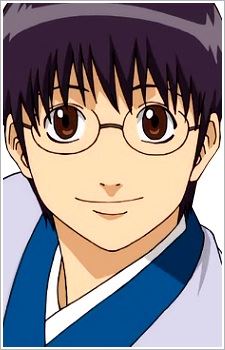
However, there is one peculiar individual who wields a wooden sword and refuses to let his samurai heritage fade away. Gintoki Sakata, now finding himself in a world where his skills are no longer needed, takes on various odd jobs around town to make ends meet. Alongside him are his self-proclaimed disciple Shinpachi Shimura, the formidable alien Kagura, and their giant dog companion Sadaharu. Together, they operate a business called Yorozuya, often getting embroiled in a myriad of wild and humorous escapades.
Included one-shots:
Volume 1: Dandelion
Volume 2: Shirokuro (Black and White)
Volume 24: 13
Volume 38: Bankara-san ga Tooru
Gintama was nominated for Best Manga under the comedy category at the Society for the Promotion of Japanese Animation in 2008. As of December 2023, over 58 million copies of the manga are in circulation.
VIZ Media published the first 23 volumes of the series in English as Gin Tama under the Shonen Jump Advanced imprint from July 3, 2007, to August 2, 2011, before discontinuing it. It has also been published in several languages: in German by Tokyopop since December 28, 2006; in French by Kana from March 16, 2007, to March 31, 2023; in Spanish by Glénat, with 16 volumes released from October 2007 to May 2010; and in Italian by Edizioni Star Comics from April 25, 2015, to December 22, 2021.






Gintama is like a toilet seat.
(I don't know if this applies to women.... please tell me...)
When you need to go, where do you prefer to do it?
Most likely at home, right? Where your body is already familiar with the shape of the toilet seat, and it just feels... indescribably right.
I mean, when you use a public restroom or someone else's toilet, it often feels odd and even uncomfortable.
But once you get used to a new toilet seat (which might not happen frequently since you're not going to be using it all the time), it starts to feel great again. Like your home toilet, you can sit on it for an extended period, and it just starts feeling right once more.
The same logic applies to Gintama. People often don't take the time to get accustomed to its unique style, but once they do, and they embrace it, there's almost nothing that can compare. You can watch or read Gintama practically forever without getting bored because the characters are so unique and fun.
If no one else gets this analogy, I'm probably just weird.... I would just replace everything with farts and apply the same logic.
I wrote a lengthy Gintama review, but it got deleted. If I find it, it'll most likely be on my profile or posted sometime in the future when I add more to it.
I'll be on my toilet if anyone needs me.
I can't express how much Gintama has changed me and my surroundings. I love this series from the very bottom of my heart. To me, the characters felt real, truly alive, with their own hearts and souls.
No series is perfect in every aspect at every moment, and Gintama is no exception. However, it comes incredibly close many times and in many ways. Yet, Gintama isn't a series that aims to appeal to objective criteria. Instead, it seeks to touch the heart and soul of its audience. The meaning behind "Gintama" as "silver soul" is no joke.
Just as I can't fully express how much it has changed me, I also can't adequately describe what Gintama is like as a series in its entirety. All I can say is that there is no other series more real and simultaneously absurdly crazy than this one. No other series makes you react in such contradictory ways or plays with your emotions as a reader. No other series penetrates your soul as deeply as Gintama does.
Ah, Gintama. One of the best and most complete current manga in Jump. Its premise is intriguing and unique—aliens in historical Japan? Who would have thought it? The characters are fantastic, ranging from the diabetic lazy samurai Gintoki to the mayo-addicted Hijikata and the stalker ninja Sa-chan, among others. They all blend together seamlessly without feeling out of place or flat. No matter where Sorachi places them, they always manage to get at least one huge laugh from me.
The comedy isn't just repetitive and sometimes obscure references; it's also a satirical commentary on Japanese society reflected in feudal Edo. While Gintama is primarily a gag manga, with each chapter merely snippets of the Yorozuya's different interactions with themselves and other people in the Amanto (Gintama's term for aliens)-filled Edo, Sorachi Hideaki manages to slip in a few serious action arcs to show a semblance of an actual plot. And when he does, he brings his A-game.
All serious arcs in Gintama are great, either keeping you on the edge of your seat eagerly anticipating what happens next or reducing you to a bawling little girl with every sudden sad twist. Sorachi Hideaki is definitely a master at balancing hearty laughs with testosterone-laden action and heartwarming drama without it feeling forced into the story. Gintama is already an awesome manga but could use some improvement in the art department. Don't get me wrong; I'm no art connoisseur, but sometimes the characters look stiff and hastily done. Other than that, there really is nothing to complain about.
Comedy and action rarely mix well, but in Gintama, they do so perfectly. With well-written storylines and an almost uncanny comedic sense, Sorachi Hideaki's Gintama should not disappoint. GO. READ. IT. NOW.
Easily the best animanga of all time, I might even say it's my favorite piece of media overall. Nothing has impacted my life as much as the lessons I've taken from this story (next to Mob Psycho, One Punch Man, Ping Pong, Bobobo-bo Bo-bobo, Great Teacher Onizuka, Cromartie High, Mashle, and various Nichibros titles, as well as Berserk, Golden Boy [the OVAs], Saiki K, etc.). That's quite a list, but hey, it just shows my deep love for manga, which truly began with this series. But don't close the tab yet! Daijoubu, while I will briefly touch upon my personal connection to this series, I'll primarily focus on the series itself, not just me. Because I want you to develop your own personal bond with this series, just like I did. Although I started with the anime, my focus will be on the manga, as I prefer that medium but encourage you to experience both. So what makes me call this the greatest manga and anime of all time, one that had such a profound impact on me that I turned my life around for the better?
Much like my Nichibros review, I'd say half of what you get from this series depends on your sense of humor. Unlike Nichibros, which does have its emotional moments, Gintama presents a style of humor that ticks all my personal boxes and is filled with heart-tugging tales featuring great characters and pearls of wisdom that are undeniably well-written. With over 700 chapters, there's more soul in this series than silver in the world! Or rather, more than just gags and goofs. I discovered this series while looking for something similar to another all-time favorite, Bobobo-bo Bo-bobo! While some may see it as absurd, to me, it taught me not to take life too seriously and to stay true to my values. But I'll save that for my Bobobo essay. So, what about Gintama?
At one point, Bobobo was in my top three favorite animanga of all time. Convinced no other series could match its sheer absurdity! However, one series kept getting recommended to me: Gintama! I'm convinced there isn't a single anime or manga fan who hasn't had this series recommended to them. Like comedy? Gintama! Drama? Gintama! Battle shounen, Dragon Ball, One Piece? This series earned its reputation for a reason! Initially, I was drawn to it because of its toilet humor. Sold right then and there. A series as insane as Bobobo with toilet humor and an interesting character on the cover? I gave it a shot, but did it live up to Bobobo in terms of humor and over-the-top insanity?
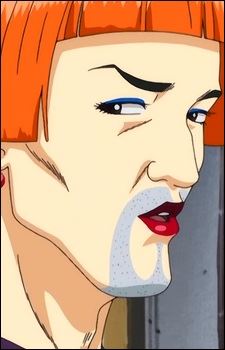
In short, yes. But in detail, not immediately. This series is often described as a "grower," and I agree. The art, the world-building, and the humor are fantastic, but initially, I found some character designs off-putting. For instance, Otose seemed insatiably ugly to me at first, but she became one of my top five favorite characters. Over time, you develop a kinship with the series like no other. The saying goes, "The only person who says Gintama isn't their favorite series is someone who hasn't read or watched it." Or it's just not their style of humor. For me, it fits perfectly. Besides comedy manga, I love Shonen manga. No wonder I adore this series so much.
I won't give you a synopsis but an essay on my thoughts about this impeccable series. In short, we follow an odd jobs trio in a land of Edo-era samurai taken over by aliens called Amanto. We're treated to crazy trials and tribulations in a world combining sci-fi and Edo-era Japanese culture, creating the wildest, hijinks-filled landscape known to man, surpassing even Samurai Champloo's anachronisms!
The character designs, initially simple and blobby, become more refined and gorgeous as the series progresses. You slowly develop a fondness for these characters. Giant dogs, tiny dogs, and even the most based prince with a penis on his head and a theme song that makes you spew out whatever liquid you were drinking! It has it all! And it was all drawn by a gorilla who just wants to be a steamed cheese bun. As the series progresses, especially towards the final arcs, you'll encounter stunning spreads and art demanding all your admiration. These pieces are beautiful, not even counting the phenomenally illustrated, funny, and creative volume covers or the random bits of extra art.
So who created this incredible story? The man in question is Sorachi Hideaki. Beyond his obsession with dragons and monsters, he's a compelling individual. His reader's corner in the volumes shows his blunt, literal, and annoyed nature, contrasting with Oda's composed replies. Gorilla Senpai couldn't care less about others' opinions and will bash his own series, fans, himself, his editors, and its popularity. Yet, he writes and illustrates life-changing stories that have impacted me deeply and written humor that transcends my consciousness. This man, who seemingly hates life, also sees its beauty and taught me that lesson.
For every fart, poop, and ball sack joke, there's a life lesson worth learning. Stand tall and live by your own rules, chase your dreams, keep a child-like heart, change for the better, learn from mistakes, and see the good in others. These messages come from this unabashedly vulgar series, surprisingly when you least expect it.
Gintama is an incredible series, perhaps my favorite piece of media ever made. It maintains its integrity with both silly and serious sides, making you laugh your ass off and cry over 700+ chapters with marvelous art and unique characters. If you made it through my ramble, thank you! You managed something more absurd in your free time than me! You might as well read 700+ chapters of a Samurai Sci-Fi romp written by a lazy gorilla. ANPAN!
After finishing the anime, I couldn't let the story end, so I turned to the manga. Boy, was I unprepared for the emotional rollercoaster.
How do you sum up Gintama? It's nearly impossible. From comedy to drama, action to tragedy, and triumph, this story and its characters have left me in awe from start to finish. Not every chapter is perfect—some aren’t even close—but the bonds formed through this manga are an incomparable reward that I haven’t found elsewhere.
Gintama has set a new precedent for comedy, blending insults towards the mangaka, parodies of other stories, and breaking the fourth wall into its unique brand of humor. No other medium pulls off comedy like Gintama. There’s so much care put into it, yet it never takes itself seriously. I never grew tired of experiencing it. Through this comedy, the manga allows readers to become deeply attached to the characters, making us love them beyond their humorous antics.
This makes Gintama's story all the richer. Despite being primarily comedic, I am continually amazed by how it manages to tell a cohesive and compelling story. The narrative never felt lost or nonsensical. The way characters developed, changed, and had motivations that wavered yet resolved with strength was astounding. This story didn’t leave any character behind; it used its time wisely to build each one into an invaluable member of the Gintama family. The characters you bid farewell to were given the best send-offs possible, and through it all, the bonds only grew stronger.
I didn’t expect this story and these characters to affect me as much as they did, but they’ve burrowed into my heart, and I couldn’t be happier about it. If you need a story that will make you ache when it ends and characters that feel like family, Gintama is the best place to go. Thank you, Yorozuya, for letting me into your family.
This review was originally for Bankara and has consequently been merged into Gintama.
This is a one-shot, written as such, so I will try to be concise.
Bankara is a parody of society and other elements, penned by one of my favorite mangakas, Sorachi Hideaki. It discusses the direction in which our world is heading and its "growth." The depicted society is riddled with problems, many of which people don't fully comprehend. Most individuals are searching for their path to freedom, while delinquents are often seen as rebels. In this manga, they are portrayed as foolish rebels, while regular students represent the established societal norms. Our protagonist, a girl, is tasked with protecting the morals, laws, and peace of this society, though she doesn't truly understand it herself; she is simply compelled to do so. In such a society, someone like our hero emerges. He comes from the past, from a society with similar problems that have only worsened over time. Despite this, he has become who he is... He's not a great man trying to revolutionize the world or anything like that... No, no... He simply destroys with brutal strength. He dismantles all the nonsense around him. This message is directed at us, the younger generation, because we are the future. He wants us to stop believing in the hypocrisy of our society and break free from its constraints when our sense of true freedom (if we really want to call it that) is at its peak.
P.S. Sorry for my poor writing skills in this language, and of course, you always have the right to think of me as an idiot, because I believe this manga is actually good. But you're human too, so you're an idiot as well.
"At its heart, Gintama is a science fiction human pseudo-historical comedy. The bottom line is that this is a nonsense manga. But I don't believe in telling readers what to think, so read it any way you like." - Hideaki Sorachi.
Gintama is a fantastically creative work with endless appeal; as consistent, funny, and compelling now as it was five years ago. The story, for the most part, is told in an episodic manner, with each chapter presenting a different plot. These chapters are largely comedic and follow a large cast of characters finding themselves in various hilarious situations. Author Hideaki Sorachi employs many ingenious gags and plot devices to avoid repetition, while also exploring a variety of story arcs that add heightened drama to an otherwise predominantly humorous series. These arcs expand on the characters in ways standalone chapters cannot, adding more variety and narrative depth to the series. While some chapters are better than others, Sorachi rarely falters—he maintains momentum after all these years and still manages to present consistently brilliant stories, ideas, characters, and concepts.
Sorachi rarely uses sketchy effects or displays much shading in his artwork. His lines are very bold, and he almost never makes use of double-page spreads. However, Gintama does not require such extravagance. It is a dialogue-heavy manga, and while it contains action, it is primarily a comedic series. Sorachi pays close attention to panel placement and timing to best communicate his comedy to the reader. Artwork is half of that communication, and Sorachi never misses the mark. His artwork has steadily improved since the series' inception, and his character designs are a standout element.
Over the years, Sorachi has built up a phenomenally large supporting cast, along with three unforgettable main characters. Some supporting members have become almost as integral as the main cast itself, with Sorachi ensuring no one goes amiss. He frequently uses even minor supporting characters in the story. While some characters are more well-rounded than others, this is typical for a gag-based series. Gintama's characters needn't be intricate, complex beings. The story arcs greatly expand on the cast, however, adding background and soul to characters who might otherwise exist solely for comedic relief, opening up new directions and opportunities for them.
The comedy in Gintama has a fantastic range—from toilet humor to meticulously executed gags to parodies of popular culture, both Japanese and Western. The series displays a rich assortment of genres and fully embraces its imaginative setting; creativity and imagination run wild. Despite being predominantly comedic, Gintama offers so much more—in its characters, setting, sheer originality, and inventiveness. It's a manga that keeps on giving and one not to be missed.