

In the distant future, humanity has transformed Mars into an oceanic paradise, now called Aqua. This new world serves as a haven for those dissatisfied with life on Manhome—the former Earth. Neo-Venezia, a town modeled after Venice, retains all the quaint charm of its namesake. Gondolas glide through the waterways of this dreamy town, while nostalgic alleys beckon to pedestrians.
Akari Mizunashi, originally from Manhome, has recently settled in Neo-Venezia. To fulfill her dream of becoming a gondolier tour guide—known as an Undine—Akari joins the prestigious Aria Company. Embracing a simpler way of life not found on Manhome, she cheerfully navigates her daily routine in Neo-Venezia, a place where magic and miracles are commonplace.
The manga Aria was first published in English by ADV Manga, releasing the initial three volumes from April 1, 2004, to November 1, 2004, before relinquishing the license. Tokyopop subsequently published the first six volumes from January 8, 2008, to December 28, 2010, but also discontinued publication. The series was later rereleased by the publisher as Aria: The Masterpiece, combining two volumes into one omnibus. Additionally, the manga was published in Spanish by Ivrea España from July 2006 to April 2010.



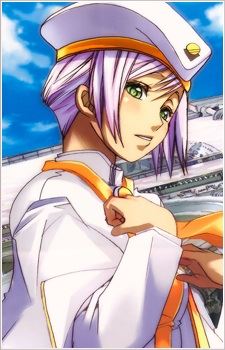
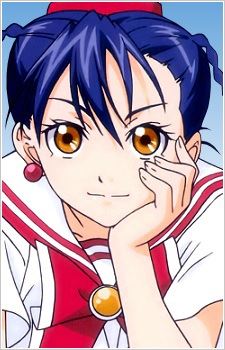





Fresh, pure, magical! That's how it feels to take Aria's journey. (And Aqua too :P)
Hey everyone, so I just finished reading Aria today and felt the necessity to write some kind of review since it's a piece that deserves it. Absolutely.
If you normally read reviews when unsure whether to start some manga, it's simple: just go ahead! This is something so worth reading, an experience so worth having. I myself am really glad, proud, and thankful I found it and could go through it. So yeah, GO for it! :)
First of all, let's talk about the art. Amano uses a very soft and flexible style which enables her to easily express emotions, and in a manga of this kind, this is very important because the story flows through frames full of emotions. But this stays behind the way of drawing the backgrounds and choosing the points of view, which is key to describing the exact feeling at the exact circumstances. All this work is led magnificently. And we may not forget that the whole "scenery," the whole world the characters live in, is simply beautiful and mostly breathtaking. No, seriously - you'll just fall in love with it and the way everybody on it interacts with it because it's just amazing.
This leads me to talk about the story and the characters. As you'll see, it can't be told it's perfect since there are some clichés too, but the way it's narrated is, in general, pretty original. As I mentioned before, it all lays around interactions - and if it's not between the main characters, it would be between each one of them and the environment, which would let you get a really high identification, and you'd just stay there and let the power of imagination guide all these brilliant sensations to you. (At some cases, it may be memories too). No loss to it. Characters may not be something so outstanding, but you got to love them from the first moments. REALLY LOVE. They're all "special" in their own way, and it's something you'd easily find out. And once you add to them all the good flow and all the magic and all the mystery elements and all the peaceful moments and combine it with all the enjoyment of life they all are having... you just obtain this huge LOVE.
I said it at the beginning, but FRESH is the best way to describe the way you enjoy this manga. Fresh and powerful, fresh and peaceful, "a breath of fresh air," the fresh breeze coming out of the sea, the fresh sea always present in the story. Fresh and unique, fresh and adorable.
Fresh and lovely.
Fresh and lay down, open the book, and just enjoy this masterpiece :)
To describe Aria merely as a slice-of-life story about gondolas would be an understatement. In reality, Aria is a working-class fable about leaving home at 15 to learn a trade and join the daily grind, but it's presented within a captivating fantasy set in a future version of Venice, recreated on terraformed Mars.
Through the protagonist's perspective, the challenges of arriving in an unfamiliar place, meeting new people, handling inexperience, dealing with boredom and loneliness, and facing the pressures of competition and responsibility are always portrayed in a positive and uplifting manner.
Reading Aria is both relaxing and heartwarming. The gondolas serve merely as a MacGuffin; they aren't the true focus. Instead, Aria is about how life can be pure bliss and beauty.
“Because wonderful things are infinite.”
Aria is widely recognized as a relaxing manga, often remembered by many readers as a boring one. Let me be clear from the start: there are no mesmerizing action scenes, no thrilling moments, and no cool sequences here. Only scenes that bring relaxation exist in this world.
Beyond just being relaxing, it imparts valuable life lessons. It teaches you to appreciate what you have, what you cherish, friends who will stand by you, the wonders that occur daily in your life, and even small things like "How useful your left hand is." The amazing part is, if you have a wonderful heart, you won't feel rushed or forced to read it.
“The world appears wonderful only to wonderful people.”
In short, it tells you how wonderful your life is. If you open your mind and heart, you'll be grateful for reading this manga.
Thankfully, all the stories are told through great artwork. Kozue Amano's Neo-Venezia represents Venice with a futuristic touch that doesn't detract from Venice's essence. Instead, it enhances the story's atmosphere.
The characters aren't numerous like in other manga. This makes every character worth your time. Akari’s open-mindedness and appreciation of life, Alicel’s childlike nature, Aika’s strict demeanor masking her inner crybaby – their development feels natural and easy to absorb, yet still surprises you with their actions.
I've never read a manga so relaxing, so adorable, that when it ends, I don’t want to let it go. I want to embrace the twelve volumes tightly and not let them go. But then, I remember a final quote to end this review:
“If you're stuck in the memories of those times, you won't be able to appreciate all the wonderful things that are happening right now, so don’t be thinking 'That time was fun' because you should be thinking 'That time was ALSO fun.' Yeah, I think that really wonderful things can't be compared with one another, but being able to find the fun that's happening right now is the best way to enjoy the present. That's why you should try your best to value the present since it’s going to change sooner or later.”
One final piece of advice from me: read it. Read it and start finding new wonderful things happening around you right now.
P.S.: After you read this, enjoy the anime. It offers a certain sensation that I believe surpasses the manga.
"Today, with the same smile as always, with the same outfit as always, with the same partners as always, I'm happily heading off to the same training as always."
These words, spoken by none other than Akari Mizunashi, the protagonist of Aria, encapsulate the essence of Kozue Amano's tranquil and serene narrative about three young undine apprentices.
In a world that often champions constant action, adventure, and excitement as the ideal way of life, Aria offers a refreshing breath of calm air. Set in Neo Venezia, where the manga unfolds, one's daily dose of thrill might simply be a leisurely stroll through town rather than a series of adrenaline-pumping activities. While traveling around the world may define an adventure in "real life," for Akari Mizunashi and her friends, exploring shadowy sidewalks or venturing into the underground world suffices just as well. And if action typically evokes images of car races, copious alcohol, and wild escapades, for the girls in Aria, a simple day at the beach or a gondola practice session brings equal joy.
It should be clear by now that Aria is not your typical Saturday night action flick meant to relieve stress. Instead, it serves as a gentle breeze that purifies your mind, washing away the burdens accumulated from hectic days. While society sometimes suggests that "life" requires perpetual motion and never stopping to appreciate your surroundings, Aria takes the opposite stance.
Through her creation, Kozue Amano gently leads us to value and cherish what we have and our everyday surroundings. A breathtaking sunset from the town's highest point, sharing precious moments with loved ones, the crisp morning air filling your lungs—Aria venerates these seemingly ordinary things. If you've overlooked them before, Aria will make you question why.
However, Aria isn't merely about watching girls sip tea and chat. Though appreciating quiet moments forms the backbone of the series' atmosphere, there are enough fantasy elements to engage all types of readers. Cats intelligent enough to interact with humans on some level, vivid dreams filled with otherworldly magic, both real and imagined. These elements add spice without overpowering the story, enhancing its mundane magic—a balance lost if Aria were a relentless parade of typical fantasy tropes.
As a visual work, Kozue Amano's artistic achievements deserve mention. Her artistry is stunning, featuring clear and smooth character designs, meticulous sceneries, and overall fluid drawings, avoiding the cluttered panels common in many mangas. The serene visuals align perfectly with the series' tranquil vibe, making perfect sense.
I might have overstated the scarcity of fantasy elements in Aria. It is indeed a fantasy fiction, even without dragons and wizards. Most of the time, the manga highlights how magical everyday occurrences can be, albeit in a highly romanticized manner. Whether through meticulously crafted scenes or actual fantasy elements, there's always a dreamlike quality. Knowing real life won't match this simplicity adds a touch of melancholy. But if you accept it, embracing the childlike naivety throughout the series, Aria has valuable, genuine lessons to teach within that dream.
Poets and travel agencies often describe places as having their own unique character; books and anecdotes frequently consider cities to be living entities. A place, therefore, is something one can come to know better, something familiar that seems to share—and have a stake in—one's own life.
Aria has often been described as being fully character-centric, focusing primarily on the lives of its characters within their setting. While it's not the only manga with this description, few fit it as aptly—provided the reader understands what 'character' might mean in this context.
-= Characters =-
The story introduces a small group of three young girls and their wider world, who have gathered to apprentice themselves and learn a profession. There's no grand goal or overarching deed that needs doing, allowing the manga to focus on their everyday lives as they strive towards graduating from their apprenticeship. While showcasing daily life isn't particularly innovative or endearing, Aria’s characters at least exhibit a sense of purpose, giving them room to work towards something and grow.
At first glance, the depiction of the characters focuses mainly on the wonders and tribulations of everyday life. Their lives are untroubled and unhurried, leading to a somewhat generic portrayal of most characters. Akari, the main character, is sweet and a bit of an airhead, delighting in almost everything. Her friend Aika remains boisterous while hiding a hint of uncertainty. Alice, the third member of the group, balances a somewhat childish mentality with a more mature work ethic and intellect. Overall, their thoughts, actions, and emotions are less extreme than typical in anime and manga, making tranquillity a major selling point of Aria. However, the uniformity of their actions and reactions can become predictable and eventually uninteresting.
Despite this, the slow but steady development of the characters over time is highly satisfying. Over several years, the protagonists gradually mature, becoming more steadfast and certain without losing their personalities or undergoing inexplicable changes. Their mentors slowly fade from their guiding roles, coming to stand on a more equal footing with their protégés. This development reflects the actual maturation process convincingly, without resorting to sudden influxes of disaster and trauma.
Most of the time, however, the characters remain somewhat flat, reacting more to their environment than acting out of themselves. This is expected, as Aria clearly emphasizes depicting life in a fictional world. The real star of the manga is the world of Aqua, particularly the city of Neo Venezia.
And what a world it is! Each chapter showcases different parts of the city and its surroundings, yet still leaves hundreds of nooks and crannies to explore. It's a rich, vibrant, and very much alive city, with a new 'wonderful encounter' around every alleyway. Temporal change plays a significant role in enhancing this sense, with seasons shifting, festivals coming and going, and people returning in slightly different roles. This contributes to the city's dynamic nature, making it feel truly alive.
This fairytale aspect makes Aqua delightful to explore. With no visible crime or squalor, Neo Venezia becomes a child's adventure site, filled with moments of discovery and mystery. Every chapter features native Aquan cats, enhancing the feeling of benign otherworldliness.
-= Visualisation =-
The manga captures all of this in gorgeous panoramas, using black and white and many shades of grey to depict both the human and the mysterious. The drawing style is often beautiful, making splendid use of different greys. Aria excels in its graphical style representing the story's focus.
It achieves this by employing differences in scale between chapters and panels. Most panels focus on the characters, but occasionally the view widens to show entire buildings, streets, or cityscapes. Angles shift, showing views from below or above, emphasizing the bustling city and its surroundings. The difference in scale is even more pronounced than in the anime, as a page of small panels may suddenly be followed by a two-page panoramic spread.
There's always at least one human figure present, but rarely at the center. The small human person is usually at the sides, forming only a small part of the bustling city or pristine grounds commanding attention. Backgrounds emphasize the present focus: when the story focuses on characters, backgrounds become more generic, while focusing on Aqua enhances detail and contrast, displaying every nook and cranny.
Beyond these tricks, the design of the setting itself adds to its appeal. Neo Venezia appears as a sun-drenched city, filled with scenic buildings, quaint alleys, and stairs leading to bright spots. Fog rises from fields to enhance mystery, clearing when needed. Tools, transport, and accoutrements are deliberately outdated, evoking a leisurely age. It has all the charm of a tourist brochure without the downsides.
The presentation of Aqua as a world of exciting vistas and friendly people mirrors the graphical design of the characters. Rarely does anyone appear more than mildly annoyed, and when they do, a deformed style takes off the edge. Character designs are devoid of extremes and angles, giving a soft, curvaceous look. While feminine attractiveness is present, it avoids sensuality or sexuality.
-= A note on the anime =-
Comparing the manga to the anime, I consider the manga superior. Initially, it seems strange: shouldn't the anime better visualize Aqua's splendour through color and movement?
No. For much of the first two seasons, the palette was garish, lines weren't strong, and perspective distortions detracted from the city's depiction. Adding color lost much of the play with light and shadow, relegating Neo Venezia to the background. As animation quality improved, the focus shifted to characters, reducing attention to the setting. Thus, the manga is superior in integrating characters with their setting.
Much of this results from pacing. Some of the best manga chapters, like 49, depend heavily on single shots, challenging adaptation into anime episodes. Yet, such chapters best show how characters form a part of their world, illustrating how 'wonderful encounters' result from both giving and taking, not just searching.
-= Final consideration =-
Aria is peaceful, charming, and a joy to read—a manga to be cherished with contentedness and satisfaction. It matches a simple premise and lovely setting with a mostly flawless presentation integrating character and world, which by the end has become a living character itself.
Aria is set in a distant future where Mars has been terraformed, melting the polar ice caps and covering much of the red planet with water. The capital of this new world is Neo-Venezia, a city meticulously modeled after Venice on Earth. The story revolves around three apprentice gondoliers, known as undines: Akari, Aika, and Alice.
Each episode highlights seemingly ordinary activities undertaken by the characters. For instance, in the second episode, the rising waters (Acqua Alta) compel Akari to wear boots while she goes out to buy cat food. She gets caught in the rain and ends up spending the night at her friend's house. That’s it.
This is exactly why Aria isn’t for everyone.
Both the manga and anime perfectly embody the slice-of-life genre, with not much happening throughout the series.
And that’s precisely its charm.
Aria gently nudges you to slow down and appreciate everyday moments that most people might find mundane or ordinary. Fetching cat food becomes more enjoyable when you get caught in the rain. Life takes on a different hue when viewed from an ancient café filled with cats.
These small, unexpected events counter the notion that "nothing" happens in the anime/manga. In fact, quite a lot happens; you just need to pause and observe.
The art of Aria is lush and natural, reflecting the namesake of the anime's second season. Kozue Amano illustrates the manga's backgrounds with such realism that they still convey the ethereal, otherworldly essence of Neo-Venezia, making you wish you could reach through the page and touch it. The anime is beautifully animated too, particularly the water scenes—you can almost feel the sea spray against your face as Akari and her gondola serenely guide you down a narrow canal in New Venice.
Aria taught me to cherish even the smallest things in life that make it wonderful.
That’s why I love it.
So, is it recommended? Yes. Even if slice-of-life isn't your cup of tea, watch one episode, read one chapter—because we all need a moment to unwind. And that’s what Aria offers!
While Aria isn't my usual type of manga, I still found it enjoyable. I borrowed a few volumes from a friend, then moved away and didn't finish it right away. I even cosplayed one of the characters and thought I should at least complete the series. Twelve volumes isn't too much to tackle. I found it online and finished it.
I kept reading, hoping something interesting would happen. But hold on, this is a Slice of Life series; nothing dramatic or overly exciting occurs! Still, I found myself continuing to read. The art is undoubtedly captivating and charming. The characters are endearing and amusing. Slice of Life series often move slowly and lack strong plots, which is why I didn't give it a higher rating. Most of the time, I felt bored and was reading mainly to appreciate the art and see if it would impress me more than just being "an okay read." It wasn't until the last volume that I truly enjoyed what I was reading rather than just mechanically clicking to the next page.
This series can be categorized as cute, sweet, sugary, girl-power content that you might borrow from a friend or read online when you're bored. If you're looking for something thrilling and fast-paced, steer clear of this one.
ARIA is not a manga I'd describe as "exciting," but neither would I call it boring. Without knowing what to anticipate, however, one might easily dismiss it as the latter, particularly since the manga takes a few chapters to find its rhythm (and the prequel, AQUA, while having its moments, isn't as well-crafted).
The premise revolves around Akari's aspiration to become a full-fledged undine—a tour gondola operator—in Neo-Venezia, a city on the terraformed Mars now known as Aqua. We saw the beginning of her journey in AQUA, and in ARIA we see her more settled into Neo-Venezia, though still with much to learn.
The setting of ARIA, comprising various islands and towns on Aqua, blends multiple cultures and eras seamlessly, incorporating both European and Asian influences (most notably Italian and Japanese). Despite Aqua's habitable areas being artificial constructs, there are hints at their age: an abandoned train car; a staircase adorned with torii gates and flanked by kitsune statues; narrow streets winding confusingly for non-locals. Add mysterious occurrences that may be holograms, mirages, or supernatural, and you have a place teeming with new discoveries in each chapter.
This, I believe, is the true beauty of the story. If Akari's job requires one-third physical ability and one-third charisma, the remaining third involves her knowledge of Neo-Venezia and her ability to convey it so others fall in love with the place. ARIA meticulously explores both structural and cultural aspects of Neo-Venezia, delving into the origins of these influences and how they've been adapted.
Akari may seem like a bland protagonist, lacking truly negative traits: she's cheerful, optimistic, polite, and always sees the best in everyone. Alicia, her mentor, embodies even more maturity and lacks Akari's occasional clumsiness. However, the other undines-in-training, Aika and Alice, provide contrasting perspectives, breaking up any monotony with their down-to-Earth or critical approaches. Ultimately, it's Akari who brings everyone together, helping them appreciate the hidden beauty in the mundane—and as readers, we're along for the ride, just as eager to discover everything about Aqua.
The art, especially the 2-page spreads highlighting Akari's wonder at various locations, is another aspect I enjoyed. There's a strong emphasis on living harmoniously with nature, despite everything being man-made, showcasing the inhabitants' special bond with their environment. Detailed architectural panels from different angles further enrich the environmental storytelling, avoiding generic representations.
So, after all this praise, would I recommend ARIA? Absolutely. Just expect a slow-paced story focused on exploration and reflection. It's far from action-driven or fast-paced, and I wouldn't want it any other way.