
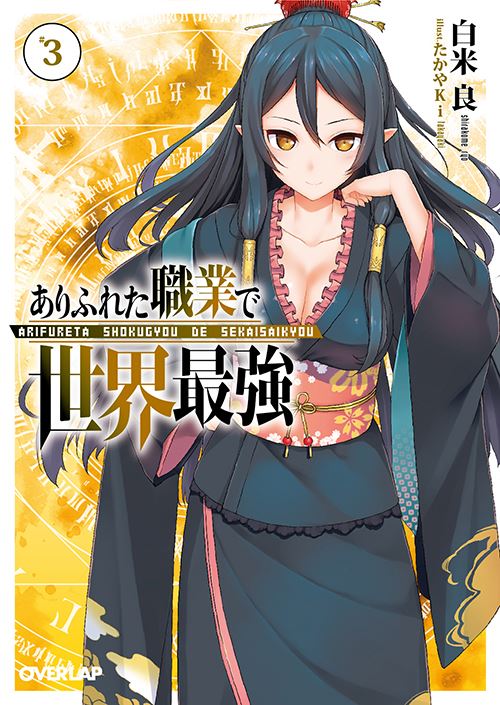
Arifureta Shokugyou de Sekai Saikyou (WN)
-
Author:
Chuuni Suki,Ryo Shirakome,厨二好き,白米良,
- Status: Completed)<br /> 306 WN After Story Chapters (Ongoing
Rating(3.9 / 5.0, 196 votes)
5 stars
58(30%)
4 stars
69(35%)
3 stars
69(35%)
2 stars
0(0%)
1 stars
0(0%)
Popular Reviews
The plot takes a nosedive when our protagonist meets the first女主角, marking the beginning of clichéd, generic tropes that plague many similar novels. It transforms into an overly dramatic, angst-filled harem tale, with the main character constantly bemoaning and fumbling around with his growing cast. The supporting characters, including the stereotypical lolis, busty characters, and demihumans, serve little purpose beyond boosting the MC's ego.
The story becomes predictable, with the MC effortlessly overcoming any obstacles thanks to contrived Deus Ex Machina plot devices. As of now, my persistence in reading stems from stubbornness rather than enjoyment. Here's my assessment:
- Story: 2/5
- Characters: 2/5
- Originality: 2/5
- Overall: 2/5
I'd advise giving the first volume a try, but then promptly discard the series like a nightclub bass drop – a clear indication that it's not worth the investment."
Despite the story being considered "peak of its genre," I genuinely adore this Web Novel (WN), and while the Light Novel (LN) is fantastic too, I lean more towards the WN. It's undeniably a wish-fulfillment tale that boosts the protagonist's ego, and that's precisely why I love it. The author doesn't hide the fact that it's not aiming for literary greatness; it's a novel that delivers exactly what it promises – an entertaining read.
The beginning hooks you in, and the first volume sets up our anti-hero protagonist and the captivating leading lady, leaving readers eager for more. However, opinions start to diverge when the MC's character arc takes unexpected turns. The introduction of Shia causes a divide, as she influences the MC's decisions and has her fair share of critics.
As for the characters, I personally don't mind Shia, even though she fits into the "sun" archetype in harem stories. Others might compare her to characters like Aqua from KonoSuba, but I think there's enough differentiation for me. Some might find flaws in character development, especially for supporting characters like Remia, who don't get as much screen time.
The plot isn't groundbreaking, but it executes well and moves at a decent pace. There are flaws, like inconsistencies in the timeline, but they don't detract too much from the overall experience. The harem development is a highlight for me, with its surprising twists and the emotional journey the characters undergo.
While I acknowledge that the story glorifies the MC and lacks depth in terms of plot twists and serious themes, I enjoy it as a guilty pleasure. It's like indulging in junk food – not nutritious, but satisfying. If you're looking for a lighthearted, feel-good read without taking things too seriously, this might be perfect for you.
In conclusion, Arifureta may not be a masterpiece, but it stands tall as a pinnacle of wish-fulfillment in its genre. Give it a chance if you're in the mood for a fun, escapist read. Remember, everyone's preferences differ, so respect others' opinions, but for me, it's a peak of its kind. Enjoy!
The protagonist's character evolves gracefully throughout the series, reflecting the growth that anyone would experience under similar circumstances. The harem members develop and transform alongside him, making it a genuine harem romance, not just an MC with a harem for show. My only critique would be that I wished the relationships progressed at a slightly faster pace, but their development is evident throughout the main storyline.
A spoiler follows:
I would have appreciated more scenes showcasing Hajime's complete acceptance of his new companions, particularly during the month after the battle, to see how Kaori, Shizuku, Remia, Lilliana, and Aiko reacted.
What I particularly admire about the MC's combat skills is his adaptability and resourcefulness. Although he relies heavily on guns, he doesn't struggle with smaller weapons when a different approach is needed. He strategizes, executes plans, and adjusts both offense and defense on the fly, which sets him apart from other books where characters often overthink their tactics.
The "idiot" antagonist, surprisingly, plays more of a hindrance role rather than a significant threat, often serving as a plot point for the MC to overcome effortlessly.
The relationships within the harem exhibit depth, with intricate connections like Yue and Shia, Kaori and Shia, All and Myu, Remia and Tio in the after-story arcs, and even Kaori, Shizuku, and Lilliana's dynamic. I'm also intrigued by Yukka's potential.
The after-story arcs, including Brutal Shia, Tio, Shizuku, and Travel Journal, were just as enjoyable, if not more so, than the main narrative.
Overall, this book stands out for its character development, strategic combat, and engaging character interactions.
While the central storyline might be considered clichéd, it's executed neither poorly nor impressively - more like a middle ground. My primary objective was entertainment, and I found myself fully engaged in the narrative despite its familiar tropes.
What I particularly enjoyed was the way the harem dynamic was handled. It wasn't over-the-top or突如其来的; each member had a logical reason for supporting the protagonist. To put it simply, the harem served as both emotional and moral support for the main character, assisting him in his journey back from the brink.
The afterstory, which was a refreshing departure from the main plot, was exceptional. With a greater degree of freedom and no constraints, I believe it surpassed the main narrative in terms of storytelling. However, starting with the main story is still essential for a cohesive experience.
Shirakome has masterfully crafted a myriad of fascinating characters, each with their unique quirks that are both absurd and entertaining. They are placed in scenarios that allow their personalities to truly shine. Virtually every supporting character gets a chance to leave a lasting impression, even when their arc concludes.
Nonetheless, opinions may differ, as some characters like Aiko and Lily, the wives of Hajime, felt superfluous to me. They might have been better left as supporting roles. Despite this minor critique, the novel stands solid overall. To get a comprehensive understanding of the characters, delve into the main storyline first, and then immerse yourself in the uproarious side tales for an enjoyable experience.
Constantly posturing as tough and callous, he utters lines like, "I don't give a damn about this world or its inhabitants," and "I couldn't care less about my peers." Yet, predictably, he transforms into a self-righteous, hypocritical tsundere, putting himself in danger to save others and uphold justice. He employs non-lethal force, even when facing threats, insisting, "It doesn't matter if you live or die," while risking his life in a Superman-like manner. The name "Hajime" alone irks me for some inexplicable reason.
This character belongs to that irritating archetype – pretending to be cruel and brooding, only to reveal a heroic side and save the day. The author's attempt at humor falls flat, making the narrative even more unbearable. It baffles me how this book garners a rating above four.
1. The protagonist is a major issue. While anti-heroes can be compelling, the main character here comes across as an edgelord, whose actions lack depth and genuine thought. A well-written anti-hero, like in Dungeon Defense, would have been more effective.
2. The harem dynamic feels forced and unconvincing. It's unclear why everyone is attracted to the protagonist – his charm is practically non-existent, akin to a prickly sea urchin. Yue's affection might be justified due to saving her, but the other women's interest seems to stem from lack of alternatives rather than genuine connection. A single heroine, like Yue, might have made the story stronger, as the conflicting values between the harem members and the edgelord MC create tension.
3. The protagonist's overpowered abilities contribute to the problem. While it's possible to balance strength and tension, as demonstrated in Mushoku Tensei, this book fails to achieve that balance. Every battle is one-sided, lacking excitement and leaving readers unsatisfied. What should be the high point of action turns into a bland and anticlimactic sequence.
In conclusion, the book has a promising concept, but the execution is lacking coherence and fails to create a compelling narrative. The author could have benefited from refining the main character, deepening the relationships, and providing more substantial challenges for their protagonist's growth.
Leave a Review