

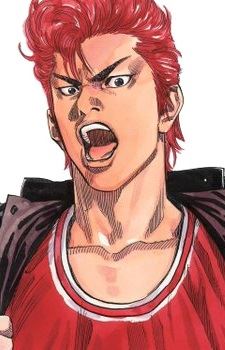
Hanamichi Sakuragi, a towering and boisterous teen with striking red hair and exceptional physical strength, is determined to break his streak of 50 rejections and finally get a girlfriend as he starts his first year at Shohoku High. However, his reputation for being a troublemaker and his destructive tendencies precede him, causing most students to steer clear of him. By the end of his first day, two thoughts dominate his mind: "I hate basketball" and "I need a girlfriend."
Haruko Akagi, unaware of Hanamichi's history of misbehavior, notices his impressive height and innocently approaches him, asking if he likes basketball. Overwhelmed by the fact that a girl is talking to him, the red-haired giant impulsively answers "yes," despite his true feelings. At the gym, Haruko asks if he can perform a slam dunk. Although a complete novice, Hanamichi grabs the ball and leaps, but overshoots and hits his head on the backboard. Impressed by his nearly superhuman physical abilities, Haruko promptly informs the school's basketball captain about his feat. Thus, Hanamichi is unexpectedly thrown into the competitive world of basketball, all for a girl he barely knows, but soon discovers there might be more to the sport than he initially thought.
Slam Dunk won the 40th Shogakukan Manga Award in the Shounen category in 1994. As of 2017, over 170 million copies of the series are in circulation. The manga's immense success significantly boosted the popularity of basketball among Japanese youth. In 2010, Takehiko Inoue received special commendations from the Japan Basketball Association for popularizing the sport in Japan.
The series was published in English by Gutsoon! Entertainment under the Raijin Comics imprint for five volumes from July 2, 2003, to May 5, 2004. After Gutsoon's shutdown, VIZ Media acquired the publishing rights and republished the series under the Shonen Jump imprint from September 2, 2008, to December 3, 2013. It was also published in Spanish by Ivrea España from February 2003 to September 2005.
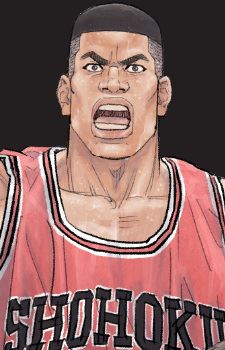
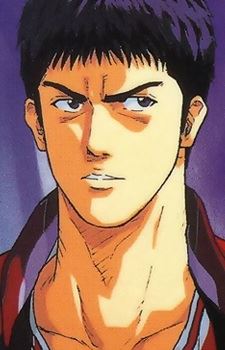
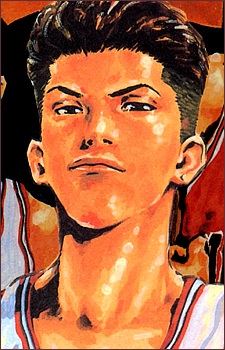
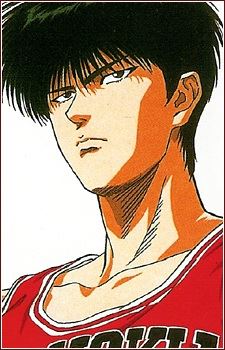






Before I begin, there's something crucial to mention. If you're anticipating a narrative similar to Kuroko no Basket, featuring elements like the Zone, 100% shooting accuracy, perfect copying abilities, and other supernatural powers, you might want to stop here because Slam Dunk lacks these aspects. Moreover, Slam Dunk emphasizes the entire team's dynamics rather than focusing solely on two characters, as in Kuroko no Basket. Now, let's dive into the recommendation.
The story revolves around Sakuragi Hanamichi, a delinquent smitten with a girl named Haruko. To impress her, he decides to join the basketball club. Initially driven by his infatuation, he soon discovers a genuine passion for basketball and begins working harder than anyone else. Starting from the basics such as dribbling, layups, and defense, you witness his gradual improvement with each passing match.
The artwork may appear simple at first glance but evolves beautifully over time. The matches, in particular, are exceptionally well-drawn. Shots, dunks, passes, player movements—everything is illustrated clearly, making it easy to follow the action.
The characters are arguably this manga's strongest asset. Sakuragi is one of the most meticulously developed protagonists I've encountered in manga or anime. The same can be said for Shohoku's other team members. Even rival teams are so well-crafted that choosing whom to root for becomes a challenge. My favorite non-Shohoku character is Ryonan’s ace, Sendoh. He's an amusing and delightful character who wins your heart effortlessly.
As a sports manga, it's incredibly beginner-friendly. Even if you're unfamiliar with basketball, this manga will educate you comprehensively about the sport. From basic skills like dribbling and shooting to advanced techniques such as rebounding, setting screens, and avoiding fouls (double dribble, traveling, pushing), it covers everything. Fouls are common in this manga, unlike in Kuroko no Basket where contact was minimal. Five fouls result in disqualification, adding tension and enjoyment to the matches. When players are tired, their performance declines, mirroring real-life exhaustion—a testament to the manga's realism.
I must also highlight the final game (no spoilers, promise). This manga boasts perhaps the best final game ever. It hit all the right emotional notes, leaving me barely holding back tears during the last four to five chapters. No other sports manga has made me feel as emotionally invested.
Slam Dunk offers the closest thing to a realistic basketball series. The humor in this manga is priceless, rivaling even Gintama's level. It also references real-life elements, primarily from the NBA, which is rare among anime/manga.
Highly recommended for fans of Hajime no Ippo (consider it the basketball equivalent), Kuroko no Basket (though I love Kuroko, Slam Dunk deserves recognition), Haikyuu, and sports enthusiasts in general. I also recommend this manga to those interested in getting into basketball; it's an excellent resource for learning the game.
I was reading this manga in class once and sneezed really hard. I started crying as I wiped a pound of snot off Rukawa's face with my sleeve. My psychology professor kept asking me what was wrong and if I needed to step outside, but I started scream-crying, thinking of how sad Rukawa would be if he knew what I had done to him. Overall, the manga is a fantastic emotional work about a guy playing basketball, so really, the title gives you what you need to know. Basketballs are orange and round, and the main character has red hair, so he evokes the image of a basketball when you look at him. There is a somewhat large cast of several teams' worth of guys all wearing basketball shirts and shorts, so it's easy to tell them apart, especially on faraway shots that show the whole court. The art is also really good; I like it when they do funny faces. I point at the page on my phone and turn to the stranger closest to me, "Ahahaha, he is a funny gorilla this time, weeheehee," I say to them... Then I get to wondering who I was talking to because the feeling of being on the court with them is so real I forgot I am alone in my room.
This manga is quite old and has received critical acclaim, so it's no surprise that it has plenty of positive reviews. However, I felt compelled to gather my thoughts and ended up writing all this, so please bear with me.
This is one of the best things I've ever read. I'll also mention that I've never been interested in basketball, yet even someone like me had a blast reading this. Honestly, it has one of the best endings I've seen in modern times. What Takehiko Inoue-sensei achieved with Slam Dunk is nothing short of phenomenal. This manga is flawless, and everyone, whether they like basketball or not, should give it a read.
I first started watching the Slam Dunk anime on a whim because I randomly bought a shirt featuring the main character, Sakuragi Hanamichi. I then decided to watch the anime and ended up really liking it, but unfortunately, it never had a complete run. Fast forward a few years, and I finally decided to read this manga after putting it off for years, and boy, was it worth every single minute. Without spoiling much, all I can say is that while this is a story about an underdog, it has several layers to it and isn't as simple as readers might think when they start. I certainly was pleasantly surprised when I read the final chapter.
Let's start with the story here. Sports manga don't need to have a good story, in my opinion. All they need to do is portray a realistic impression of the sport they're based on, and Slam Dunk does exactly that. It's one of the best depictions of basketball you can find in anime/manga. It's a grounded story, filled with heart and charm. It follows the antics of Sakuragi Hanamichi, who is a newbie to basketball, just like I was when I started this manga. But the journey he goes through to learn and play basketball is absolutely breathtaking. Won't spoil much, but it's a simple story done to perfection.
Now let's talk about the art of Slam Dunk. You won't find any crazy or wacky stuff here. Instead, what you'll find are simple panels that portray human emotions filled with so much detail that it's honestly mind-blowing how good the art is. The art is one of the highlights of this series, surely. A little information about the author of this manga: if you don't know who Takehiko Inoue is, you should because he's one of the most revered and popular mangaka of modern times. He is still currently publishing a series at the time of writing this post.
What Slam Dunk truly excels at is the portrayal of humans trying their absolute best at what they love. How Takehiko Sensei uses his main character to express emotions and thoughts is really worthy of credit. The main character is one of the goofiest and savage I've seen in any shounen. He's basically the opposite of how shounen main characters are supposed to be, but this story truly uses him to the max. What Takehiko Sensei teaches us via this manga and his main character is the lesson of persistence, determination, willpower, and courage. Even at our absolute worst, what do we have? We have ourselves and our efforts that can once again take us to the peak of our lives.
I think the message of this manga is very beautiful and inspirational. I can't even imagine its impact on people who play or enjoy basketball, but even to an average Joe like me, his message came across wonderfully.
Keep trying, day after day. One day you'll surpass the people you look up to because, at the end of the day, they too are humans, just like us. So it's all about not giving up and how well you handle your mental state and perspective.
This was no short of a masterpiece, and I had so much fun reading it that I finished it a bit too fast, lol. It was an exciting and thrilling read all the way through and had some really exciting games as well. The last match was jaw-dropping, and I actually felt the emotion conveyed at the end of it.
This one deserves nothing short of a 10/10.
This basketball-themed manga is a true classic. I first watched the anime back in 2010 and then decided to read the entire manga in one go. Here I am, writing this review three years later, having already read it four or five times. As I said, it's a classic—it never gets old! Once you start, you can't stop reading. The manga is better than the anime due to the anime's slower pacing, but it's still a good watch.
Story: 8/10. This story revolves around Sakuragi Hanamichi, a delinquent who starts playing basketball because of a girl. She, obviously, likes his supposed rival. As the story progresses, his love for basketball grows beyond just trying to win Haruko's affection. It might seem like a familiar plot, but since this was one of the earliest basketball mangas, it can't be called cliché. Its charm lies in the small scenes and parts that elevate it.
Art: 9/10. The art in this manga is excellent. When the characters get serious, the artwork becomes particularly impressive, showcasing the emotions felt by the players. The chibi drawings also add a comedic touch when needed.
Character: 9/10. I adore Sakuragi's character development, from being an immature beginner to a refined player who truly appreciates and enjoys basketball. His journey from nothing to someone important or finding value in life is captivating. Besides, Tensai Sakuragi's humorous comments and personality make him stand out. The characters feel realistic and memorable.
Enjoyment: 8/10. Although some parts are quite long, every time something amazing happens, it keeps you hooked until you finish the manga. XD
Overall, 9/10. No need to say more; everything above says it all.
Nooooo... Why does it have to end? I want more! More Tensai Sakuragi, more Rukawa, and basically anything or everything. But the Shohoku vs Sannoh match is just peak material. The art is incredible; you can see the significant improvement in the artwork. This is simply amazing, and I read it all in 2-3 days because of how good it is. Tensai Sakuragi is just an iconic character. I don't want it to end, but this is Takehiko Inoue we're talking about—an artist known for not finishing his work. Still, overall, I super enjoyed it, and I think this is one of the best sports manga I've ever read.
Slam Dunk is undoubtedly one of the most influential pieces of Japanese media ever. It sparked a basketball craze in Japan, transforming a sport once viewed merely as putting a ball in a basket into a nationwide phenomenon embraced by both adults and youths. Two decades later, Slam Dunk has not aged poorly at all; it continues to attract readers and fans. What makes Slam Dunk such a cornerstone in the manga world, and in my opinion, the progenitor of modern sports manga?
Firstly, Slam Dunk can be enjoyed by anyone. Its protagonist, Sakuragi Hanamichi, joins the high school basketball team to impress a girl despite never having touched a basketball before. To win his crush's heart, he claims to be a basketball genius and even challenges the team captain, Takenori Akagi. Like many readers, Sakuragi is a beginner at basketball, unfamiliar with its rules. Author Takehiko Inoue introduces basketball terms and concepts through Sakuragi's learning process, making it easier for readers to understand the game. This approach prevents readers from losing interest, unlike if they were forced to read a sports manga without knowing the basics. As Sakuragi improves, we learn more about basketball techniques like lay-ups and screen-outs.
While Slam Dunk's themes are not as deep or dark as those in Berserk or Monster, it delivers a simple yet powerful message: never give up and always fight. "If you give up, the game is already over." This quote encapsulates many of Slam Dunk's ideas. Despite its simplicity, these themes are executed masterfully. Inoue's stunning art, amazing pacing, and beautiful storytelling combine to create a masterpiece that inspires perseverance even in the harshest situations.
As one of the oldest shounen manga, Slam Dunk has inspired many other series. The power of friendship trope, often ridiculed nowadays, feels genuine in Slam Dunk because we understand the characters' backgrounds. When a character suddenly becomes motivated and performs better, it doesn't feel contrived. Another well-executed trope is when two main characters who don't get along must work together to win. Haikyuu uses this with Hinata and Kageyama, but Slam Dunk takes it further. Rukawa Kaede, Sakuragi's rival and teammate, excels in every aspect compared to Sakuragi. The girl Sakuragi likes has a crush on Rukawa, and the team captain prefers Rukawa due to his basketball skills. Initially, Sakuragi dislikes Rukawa, but they eventually become trusted allies on the court. By the end of the series, they have become friends who joke around and banter with each other.
Every character in Slam Dunk feels human and relatable. For example, Akagi seems like a reliable captain, but he also has moments of self-doubt. Mitsui Hisashi, a former delinquent, once had a promising basketball future until an injury derailed his career. Although he reforms, he struggles with confidence issues. Even secondary characters like Jun Uozumi, the center of the Ryonan basketball team, are well-developed. He trains hard to prove himself after being belittled for only being tall. These character arcs make the story compelling.
The matches in Slam Dunk are more exciting than battles in other shounen manga involving actual fighting or powers. What makes a simple basketball game captivating? The answer lies in the pacing. The games are fast-paced but not too fast for the reader to keep up, nor too slow to lose interest. The hype is real; when a team makes a comeback, readers genuinely feel excited. Both teams can rally and fight back harder, and our main characters do not always win. Just like in real life, things do not always go as planned. Sometimes, the opposing team wins, adding realism to the story. We root for both teams, feeling sadness for the losers and joy for the winners.
Last but not least, the art is phenomenal. Since this is one of Inoue's earliest works, we see his art style evolve and improve throughout the series. While his initial cartoonish style is impressive, it pales in comparison to the hyper-realistic art style at the end. His art enhances the characters' emotions, making readers empathize with them.
Slam Dunk has proven its timeless appeal, remaining relevant and enjoyable today. It has laid the groundwork for many sports manga and sparked a cultural craze in Japan. People of all ages can enjoy it and take away valuable lessons, whether it's resilience or self-confidence. Overall, Slam Dunk rightfully stands as one of the greatest manga of all time, setting the benchmark for not just sports manga but shounen in general.
Slam Dunk is the highest-rated sports manga on MAL, surpassing others like Haikyuu, Ashita no Joe, and Hajime no Ippo. It has sold 126 million copies, making it the ninth best-selling manga of all time. Does it hold up today? Does it deserve a top 10 spot on MAL?
The series' story is essentially a straightforward "we're going to the Nationals and we're going to win" narrative. Its unique hook and surprising ending set it apart, with the victory at the nationals being for everyone, not just their graduating seniors. The characters and basketball shine the most here. One aspect worth noting is its realism; you won't always get the matchups you want, and hyped teams in different brackets could lose—it's just how sports work.
The main character, Hanamichi Sakuragi, undergoes significant growth. Initially portrayed as a delinquent who doesn't even know the rules, he evolves from someone playing basketball to impress a girl to someone who genuinely loves the sport. Sakuragi fights desperately for victory and matures with each match. The manga excels at making you invested in his growth and emotions. He starts with basics like dribbling and passing, and author Inoue develops his character with excellent pacing and gradually increasing love for basketball. Sakuragi's overconfidence gives way to maturity throughout the four months of the story.
Sakuragi’s rival, Rukawa, has been playing basketball for a long time and is one of Japan's top scorers. Everyone pays attention to him because of his ability to score around 30 points per game. Rukawa is hardworking, always showing up to practice. However, he and Sakuragi don't get along, refusing to pass to each other and hating working together, but they must overcome this to win games.
The rest of Shohoku is also well-written. Captain Takenori Akagi is the team's pillar, raising spirits with his strong spirit. His bond with Sakuragi grows constantly, as Akagi relies more on him. Mitsui and Miyagi, the other key members, are also former delinquents. Miyagi, the point guard, is short but agile, overcoming obstacles with his speed and high jumps. He passes extremely well and makes the right calls.
Mitsui quit basketball after a leg injury, leading him to hate the sport and join a gang. When he returns, he grows into someone strong, able to consistently shoot threes. Mitsui and Miyagi had a rough past: Mitsui's gang attacked Miyagi, who focused on beating up Mitsui.
These five characters unite to become one of Japan's strongest basketball teams. They grow and bond together, attempting to conquer Japan. Their growth through Sakuragi strengthens them collectively. The basketball in Slam Dunk is somewhat realistic. While everything done is possible in real life, it wouldn’t be feasible for high school players. The fouling responses are well-written, and the rules are accurate, as Inoue is a big fan of basketball.
In Slam Dunk, teamwork is emphasized. The entire team plays basketball, focusing on the bond they build rather than individual stars. The art is good, especially impactful moments that show extra effort by Inoue.
Overall, Slam Dunk is a well-written piece of art with amazing characters, good art, and well-crafted matches. It gets better with each match, and the author knew when to end it, making it a legendary manga about basketball and the characters who grew to love it.
Slam Dunk Review - This marks my first review, and I'll strive to highlight the essential points.
Initially, I'm not one to review anything since it's not something I particularly want to do. However, I decided that if a manga or anime series has a rating of 9 out of 10 or 10 out of 10, I would commit to reviewing it. This is my inaugural review following this principle, and I will try to keep it concise while covering all necessary aspects. Nevertheless, expect a lengthy review as I aim to express my thoughts comprehensively.
Sports manga is something I genuinely enjoy reading or watching. I've watched numerous sports-oriented animes (excluding martial arts-based ones, which remain my favorites). I appreciate them for entertainment purposes. My favorite sports series might be Haikyuu, an incredible series from start to finish. Yet, I discovered a basketball manga that surpassed even that, arguably becoming one of my top sports series ever (excluding martial arts/sports series like Hajime No Ippo, still my absolute favorite). Slam Dunk epitomizes realism in sports manga, whereas Kuroko No Basket, though with great characters and intriguing power concepts, pales in comparison regarding teaching basketball. It inspired many to play basketball. Made by the legendary Takehiko Inoue, who also created my favorite manga Vagabond, Slam Dunk deserves a detailed, spoiler-free review. Here goes.
Story - 9.0/10
The story in Slam Dunk is engaging and well-constructed. It introduces Sakuragi, the main character, as a delinquent trying to get into basketball but hating it due to others doubting his genius status. The premise sets up the main storyline effectively. Other characters share the goal of making it to nationals and becoming Japan's top basketball team—an ambitious feat. Beyond basketball and shonen tropes, the story teaches about basketball and player dynamics. Takehiko wanted to make people more invested in basketball while enjoying its humor and excitement, succeeding admirably. The story is packed with thrilling moments and a rich cast of characters, making it highly engrossing.
Characters - 9.3/10
Slam Dunk excels most in character development. My favorites are Sendoh, Akagi, Miyagi, and Sawakita. Rukawa almost made the cut until the final match, but these characters stand out due to their development. Sendoh, the court's ace, is charming with exceptional skills and an interesting backstory. Akagi, the center and leader, is amazing with significant character depth. His relationship with Sakuragi and other players makes him my top pick. Miyagi is cool and hardworking, striving to win on the court. Sawakita surprised me; his character showed growth during the last game, revealing prodigious skill. Overall, the characters are fantastic and fun.
Pacing - 7.5/10
The pacing starts slow, gradually improving as you progress. Some moments felt unnecessary, but the story picks up around volume 12 or 13. The forced fighting scenes, typical in shonen, slightly detract from the experience. Still, once past the halfway point and nearing the end, the pacing becomes excellent.
Artstyle - 9.5/10
Takehiko Inoue's art is outstanding, evident from Vagabond. While the beginning of Slam Dunk's art didn't immediately captivate me (given it was made in the '90s), it improves significantly around volume 13. The art becomes fantastic, with detailed characters, backgrounds, and depth—a near-perfect 10/10 for me. The series' ending showcases Inoue's finest work. I appreciated the art style more than the games themselves due to its quality. Although the initial art wasn't entirely to my liking, given its age, it's understandable.
Negatives - Not so many but a few
Haruko and the Judo character were underutilized. Haruko initially motivated Sakuragi but became less impactful as she favored Rukawa. She remained a spectator, occasionally helping Sakuragi but ultimately unimportant. The pacing and early art style were the only negatives, but they improve significantly after volume 13. Matches sometimes dragged, but it didn't bother me much as I enjoy long battles. Haruko occasionally frustrated me, and Sakuragi and Rukawa's constant arguments grew tiresome initially, though they later respected each other.
Recommend? - Yes
I recommend Slam Dunk even if you're not into basketball or sports. Reading it made me appreciate basketball more, teaching rules and techniques. The story is great, characters brilliant, and humor enjoyable. Whether for the sports aspect or shonen thrills, it motivates readers to pursue their goals harder. Highly recommended for its motivational value.
Overall - 9.2/10
This was a fun ride, leaving me eager for the next moment or match daily. Key moments were fantastic, with stunning art and exciting sequences. It had me on my feet several times. Genuinely enjoyable, it's my current favorite sports manga, though Hajime No Ippo remains my all-time favorite. Despite loving Slam Dunk immensely, it's not a perfect 10/10. Some series are better, but Slam Dunk is unique, deserving a fair 9.2/10 rating.
I hope you enjoyed my spoiler-free review.