

...
Show More
Shamans are remarkable individuals who possess the unique ability to communicate with spirits, ghosts, and deities that remain invisible to ordinary people. Every five hundred years, the prestigious Shaman Fight tournament is held, where shamans from around the world compete for the title of Shaman King. The winner gains the power to summon the Great Spirit and reshape the world according to their will.
One night, Manta Oyamada, an average middle school student, finds himself running late for class and decides to take a shortcut through the local cemetery. There, he encounters a boy sitting on a gravestone who invites him to stargaze with "them." Realizing that "them" refers to the boy and his ghostly companions, Manta panics and runs away. Later, the boy introduces himself as Yoh Asakura, a shaman in training, and demonstrates his powers by teaming up with Amidamaru, the ghost of a six-hundred-year-old samurai, to save Manta from a group of thugs. Manta's ability to see spirits leads to a friendship with Yoh, and together, with the help of Amidamaru, they embark on Yoh's quest to become the next Shaman King.
Note: This entry pertains to the original print edition of Shaman King. For additional chapters not included in this edition, please refer to Shaman King (Kanzenban Edition).
Shaman King was published in English by VIZ Media under the Shonen Jump imprint from August 6, 2003, to January 4, 2011. Kodansha USA later republished the series digitally in 35 volumes starting on October 6, 2020. Additionally, it was released in Brazilian Portuguese by Editora JBC in 64 volumes from July 2003 to July 2006.
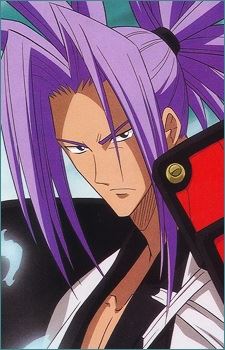
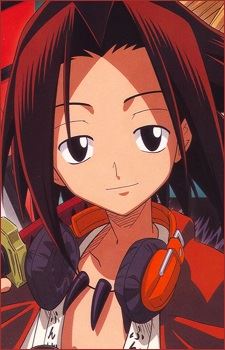
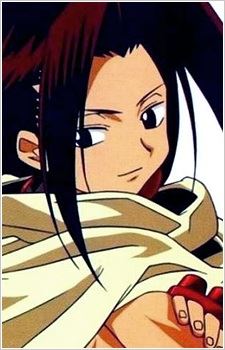
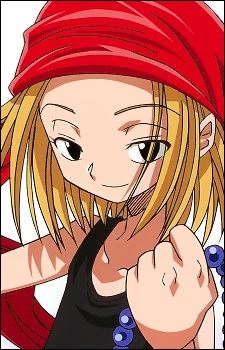



I really liked this manga. It's basically your standard shonen fare, with not much to set it apart. What I found intriguing was the strange undertone of evil that occasionally surfaced. There's a doctor who seems almost necrophiliac and is implied to be addicted to morphine, and then there's a boy named Lyseig Diethel, which sounds suspiciously like Lysergic Acid Diethylamide.
Additionally, many scenes were incredibly emotional and moving. The characters were well-developed and diverse, each with distinct personalities, goals, and backstories—some tragically so, especially in the case of that doctor. The cast hails from various countries and ethnicities, which is refreshing compared to other series where everyone inexplicably ends up being Japanese despite coming from all over the world. You have English, Chinese, African-American characters, and more—it’s quite nice. Best of all, the villain here stands out from typical antagonists; they're a breath of fresh air compared to the usual 'evil for evil's sake' types you often see in some manga.
So, if you're looking for another shonen manga to read when you're bored, I'd recommend this one over most others.
Shaman King is a manga I stumbled upon one day while searching for some action, and boy, was I delighted. In my opinion, Shaman King stands out as a truly unique shonen, with its innovative power system and character dynamics setting it apart within the genre.
Story 8/10: The story kicks off in a cool and engaging manner but takes a bit to hit its stride. It draws you in initially with its characters, though the plot doesn't solidify until the shaman fights are introduced. The narrative then shifts focus to tournament-style battles, yet even this common trope feels fresh due to the intriguing characters and evolving storyline.
Characters 10/10: The characters in Shaman King are phenomenal, starting with one of the best shonen protagonists, Yoh. Yoh's laid-back demeanor and initial goal of becoming the Shaman King eventually evolve into something deeper, making him a lovable main character who keeps the story fresh. Unlike some shonen protagonists who can drag down their stories, Yoh elevates it. The entire cast sustains the narrative during slower moments, creating a deep connection that makes you feel like you're right there with them.
Art 10/10: The art style may not appeal to everyone, featuring a cartoonish flair that I personally adore. The unique character designs enhance the reading experience and make it enjoyable for me.
Power System 10/10: The power system can be described as simplified versions of 'stands,' but with enhancements that make it superior. It allows for new characters to seamlessly integrate into the story while providing diverse and interesting combat styles.
Overall 10/10: Shaman King is one of my all-time favorite mangas because its characters, fights, and story combine to create an immensely enjoyable experience. If you ever find yourself with some free time, pick up this manga and give it a read—you might just fall in love with it.
I purchased the entire Shaman King series at a low price. Having watched the anime previously and enjoyed it, I decided to read the manga plus the kanzenban edition. (SPOILERS)
Story: 5
The initial volumes up until the background story of Yoh and Anna were quite good. It's a typical shounen tale about a young boy aspiring to become the ultimate "Shaman King." He finds loyal friends, grows stronger, gets some ridiculous power-ups. A decent start... but it deteriorates rather than improves. The story became chaotic - killing and reviving characters repeatedly, random fights followed by relaxing scenes, fighting one boss after another (Patcheen). The overall plot got overly complex and boring towards the final volumes. And what was with that ending? Seriously... Hao gets slapped by his mother and decides not to destroy humanity, giving Yoh and the others a chance to save the earth... That ending was terrible... NO COMMENT!
Art: 5
The artwork is solid; you can see Hiroyuki Takei improving in the later volumes. The expressions and some body parts of the characters are occasionally off, but generally acceptable.
Characters: 7
The characters are probably the best part of this manga. I truly enjoyed the scenes involving Yoh and Anna as well as those between Ren and HoroHoro. Those were genuinely delightful parts of the manga. The growth of some characters was noticeable - Ren, Ryu... The only issue was Manta; he didn't get many scenes in the last volumes and became more of a minor character.
Enjoyment/Overall: 5
It's an enjoyable manga, nothing extraordinary. It starts strong but disappointed me towards the end. I never experienced goosebumps or strong emotional moments throughout the series. The best part was undoubtedly the background story of Yoh and Anna, which I really liked. But the rest of it was mediocre...
My review might be biased. Shaman King was one of the first manga I ever read.
What I deeply appreciated about this manga is that the protagonist doesn't fit the typical mold of a Shonen main character—loudmouthed, foolish, easily angered by minor things, and prone to rushing headlong into situations despite being outmatched.
No, Yoh is calm. He knows he isn't the smartest person around, but that doesn't stop him from being incredibly mature. His dream is simple, yet he understands the responsibilities he bears and knows he must address them before pursuing his aspirations.
What sets him apart the most, something the other characters come to realize over time, is his apathy. Yet, this trait doesn’t hinder his development or growth in any way.
Shaman King holds a special place in my heart from my early childhood, so I decided to write this review after finally finishing the manga. I am very fond of the series, but setting aside nostalgic memories, the manga is good, though not deserving of my deep affection. The story is somewhat bland; it revolves around a tournament, as its title suggests, but there are moments where the plot lacks dynamism. The characters are the strong point of the manga, as they typically are in tournament mangas, but unfortunately, their potential was wasted in Shaman King.
The major issue with the characters is their spirits. As the story progresses, the spirits become mere weapons with bland personalities. While I admired the flashy weaponry as a child, I now prefer watching the early episodes when the spirits and their partners were close friends. My favorite parts of Shaman King are when the characters simply enjoy being with their partners, battling, and then, between acts, just being together. The relationships between Ana and Yoh, Manta and Yoh going to school, Ryu and his group trying to find their best place – these moments are precious. However, these enjoyable segments do not last long, and the characters soon find themselves trapped in an endless tournament that becomes increasingly boring. Sometimes, the story picks up, only to grow dull again, and these constant ups and downs are, I believe, why the manga got canceled.
Shaman King is not bad, but it isn’t great either, and that’s what makes me sad about it since I loved it so much as a child.
This will be a combined review of the original Shaman King manga and the Kazenban ending.
SPOILERS--
Introduction--
Reading this series for the first time is probably the best reading experience I've ever had. The characters, the comedy, and just thinking about the series and analyzing each little detail was an amazing experience for me.
Side Characters--
Each important side character could have had their own show. One of my personal favorites is Horohoro or Usui Horokeu. Around three-quarters into the series, it's revealed that he was hiding things from everyone else. He wasn't showing his true self. What he was hiding was that he killed his girl. His selfish acts caused her death. He has been carrying the burden of that for his whole life since it occurred. It's like a nightmare that doesn't end because you can't simply not feel such a guilty burden.
Yoh Asakura--
Yoh Asakura, the main character of the Shaman King franchise, is my personal #1 MC OAT. From the get-go, Yoh was burdened with defeating Hao Asakura (the main villain, more on him later). Yoh and Hao are twin brothers, by the way. Yoh's parents and grandparents knew Hao was going to reincarnate as an Asakura. So, the decision they had to make was whether they were willing to kill both twins right after they were born just to eliminate the chances of Hao coming back. The thing was that they were identical twins, so you couldn't tell them apart as babies. Once Hao was born, the grandfather hesitated, and Hao got away with his spirit. Yoh was left as the only hope for the Asakura family. That's what makes Yoh's life so important: if they hadn't hesitated to kill the twins, Yoh wouldn't exist. This whole story of Hao and Yoh wouldn't exist. But since they didn't kill the twins, eventually at the end of the series, Hao did become the Shaman King, not meaning Yoh failed. They made up, or rather, they showed Hao the truth. Yoh ended up being a dad, and Hao became the Shaman King, which I think are more fitting roles.
Hao Asakura--
Hao Asakura, the main villain of the Shaman King franchise, is Yoh's twin brother. I freaking love this dude; he is such a cool and interesting character. Here's why I think that: He is the twin brother of Yoh, but since he can reincarnate, he's also approximately Yoh's great, great, great, great, great, great, great, great, great-grandfather. His first life was 100 years ago before he was in his third life during the series, being able to reincarnate every 500 years.
Getting more into his character.
All good villains usually have a reason or goal for doing the things they did. Hao committing genocide and wanting to wipe out humanity, his reasoning was somewhat acceptable. In his first life, his mother was killed because back then shamans were portrayed as demons. But in actuality, demons and humans in the world of Shaman King and in Hao's eyes, humans and demons are definitions rather than races. Humans or rather mankind, is the cause of the world being so wicked. Demons are created from mankind's cruelty. The reason Hao's mother was killed was because she could see ghosts, and she was portrayed (by the public) as a demon.
So Hao's reasoning to commit genocide and destroy mankind and to make a world of only demons was because his mother, the only one who even cared about him, was killed for something she couldn't control. It's not like this isn't happening in real life (to some extent). If you look at the youth, even in a middle school, kids are being bullied because of a medical condition, "being ugly," or uncontrollably obese. These kids at such a young age have to go through that just because some kids think they're above other people. It is a bit different from Hao's perspective though. Hao's perspective is from one who is suffering the most from this type of conflict, even more than his mother. That's because Hao cared so much for his mother that he would do anything to avenge her. Hao wanting revenge is what makes him human, a type of human he hates. He is making other people suffer greatly because of his own actions, just like the people who killed his mother, making him the biggest hypocrite lmao.
Make sure to read Shaman King if you haven't already.
Discord: zero.#3063
A YouTuber who inspired me to read Shaman King and someone who makes great videos and a better interpretation of Hao Asakura.
https://www.youtube.com/rashplays
This review will be brief and to the point, so I recommend anyone thinking about giving this a try to read my review. The following paragraphs go into more detail, but whether you choose to read them is up to you. I highly suggest checking out this review if you're interested in this manga.
Imagine a car climbing a steep hill on a treacherous one-way slope. Just as it's about to reach the peak, it suddenly stops. Yes, it completely halts. The engine dies, the headlights turn off, and it plummets backward into the ravine, causing a massive explosion.
That’s exactly what this manga feels like.
Hao remains unchanged from when he first appeared. He's still that guy who wants to eradicate all non-believers of shamanism, with minimal character development even after making peace with his mother, which was supposed to be the root cause of his actions.
If he had shown some growth, it would be different, but no. He's still the same. It's almost as if Hiroyuki's message was that nothing ever changes. And given how things ended, that seems to be the case. This is why I can't accept the ending. For a manga that wasn't as long as the Big Three (in both manga and anime), yet managed to outsell or rival them, the way it concluded was just poor in my opinion.
So, I wouldn't recommend this manga to anyone, but remember, this is just my opinion. Don’t take it too personally.
Shaman King, much like many other shonen manga, is crafted to appeal primarily to children. Despite this, I've chosen to dedicate my time to writing a review of this 20-year-old manga, which isn't specifically aimed at me.
I appreciate Shaman King despite its imperfections. The first half of the story was exceptional and held up as a worthwhile read within the shonen genre. However, things begin to falter plot-wise when resurrections are introduced into what initially seemed like a straightforward narrative.
In Shaman King, if you have a near-death experience, your power level, known as mana, increases. This allows you to control your ghost partner and enhance your abilities depending on how you utilize your mana. What's more frustrating than a shonen manga with no sense of risk versus reward? Perhaps terrorism, but that's not the topic here. What bothers me is the numerous fake-out deaths experienced by the main and supporting characters, all justifying their subsequent power-ups.
The battles, character interactions, artwork, and setting had enough charm to lull me into a false sense of security. It wasn't until I finished the manga that I realized it had turned into a trainwreck over the last 100 or so chapters. Characters are initially killed off with dramatic buildup, leaving uncertainty about whether they'll survive their near-death state. Yet, the author kept delivering one fake-out after another. As a reader, you quickly realize this becomes the norm. For instance, a character named Horohoro has a foreshadowed tragic backstory due to his reluctance to reveal his true name. A few chapters later, Horohoro and some other main characters are found face-down in a hot bath, seemingly drowned to death offscreen. Since there wasn't any closure, you can safely assume he'll be back—and indeed, he does return.
At a certain point, deaths become more frequent than actual battles. Characters capable of resurrecting the dead become less rare as more "Jesuses" appear alongside the frequency of death. Consequently, it becomes challenging to track who stays dead and who gets resurrected. Some characters have very emotional deaths, only for readers to be repeatedly reminded that "THIS CHARACTER IS DEAD AND WILL STAY DEAD FOR THE REST OF THE SERIES," only to find out they can easily be revived, thus losing impact.
Alright, that's my review. Good art, very good characters—I fairly enjoyed the first half—but overall, it's not good.