
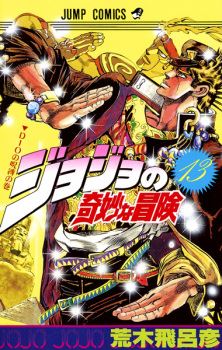
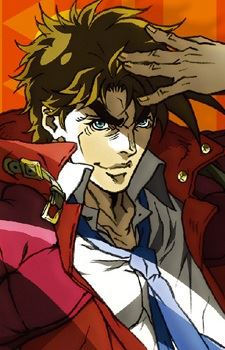
In 1989, Joseph Joestar travels to Japan at his daughter Holly's request to meet her son, Joutarou Kuujou, who has locked himself in a jail cell out of fear that an evil spirit is possessing him. Joseph explains to Joutarou that this "spirit" is actually a "Stand," a physical manifestation of one's fighting spirit. Joseph and his companion Mohammed Avdol have learned to control their own Stands.
Joseph also brings news that an old family enemy has returned from the grave, causing the Joestar family's Stands to awaken. Unfortunately, Holly cannot cope with her Stand, leading to severe illness. This spurs Joutarou and Joseph into action.
Their journey takes them from Japan to Egypt, where their adversary resides. Along the way, they encounter various Stand users, both allies and enemies, as they strive to save Holly and defeat their foe once and for all.
A 17-volume kanzenban edition titled JoJonium was released in Japan from December 4, 2013, to March 4, 2015. This edition covered the first three parts of the Jojo no Kimyou na Bouken series, featuring new cover art with character redesigns by Araki Hirohiko. Volumes 8-17 of JoJonium focus on the third part.
JoJo no Kimyou na Bouken Part 3: Stardust Crusaders was published in English by VIZ Media from November 8, 2005, to December 7, 2010 under the title JoJo's Bizarre Adventure. Initially, it wasn't labeled as Part 3 since it was the first part of the series to be published in English. VIZ Media later released the series uncensored following the JoJonium format from November 1, 2016, to February 5, 2019. The series was also published in Italian by Star Comics from March 1995 to March 1997.
Several minor changes were made for the English release, including alterations to copyrighted Stand user names and scenes involving violence towards animals and children. Additionally, an online group of Muslim protesters halted the manga's release for a year due to a scene in the OVA where Dio Brando is seen reading pages from the Qu'ran, which was not present in the manga. Shueisha requested that scenes featuring fights around buildings resembling mosques be redrawn.
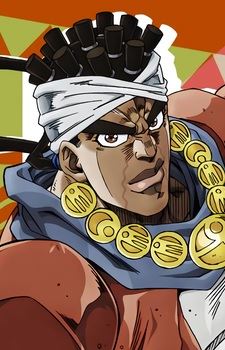
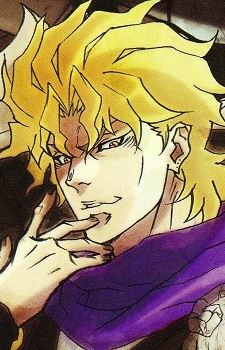
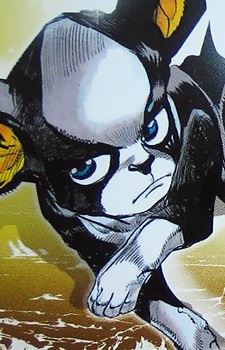





JoJo’s Bizarre Adventure Part 3: Stardust Crusaders
Story: The narrative this time around is exceptional. It's thrilling to see Araki bring back the original villain. Unlike the previous two parts with non-Japanese main characters, this one introduces game-changing Stands instead of plain Hamon.
Art: The art style remains consistent with other parts, featuring inhumanely buff men. This time, we also have even buffer Stands. I particularly loved the panel where Jotaro appears super buff with a small head.
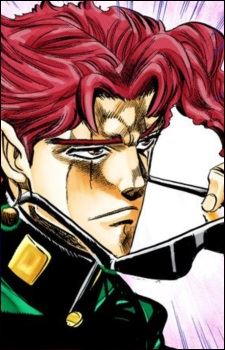
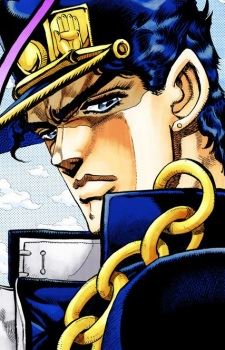
Characters: Kujo Jotaro is my favorite character in the entire franchise. This part presents Jotaro as the most badass JoJo yet. We also see an aged version of Joseph Joestar from "Battle Tendency." Additionally, well-written characters like Kakyoin, Avdol, and Polnareff add depth.
Enjoyment: This part stands out as my favorite so far due to its excellence. The introduction of Stands, a staple of the JoJo franchise, along with Dio's return and his own Stand, creates suspense.
Overall: This is one of the best mangas I've read. It has everything: Jotaro, Stands, funny characters, and the original scumbag villain.
DISCLAIMER: JoJo's Bizarre Adventure is a currently ongoing series with (at the moment of writing), 7 complete parts and one ongoing one. It's important to first make the distinction that this is NOT one ongoing story split into parts, but rather 8 stories in the same universe following the Joestar bloodline, that share similar elements, plot points, and even motivations in some cases.
Due to that, this and my other JoJo reviews will follow a unique JoJo rating system, since in my opinion it cannot be easily compared to other manga, done in a beginner-friendly way so as to illustrate whether or not it is worth getting invested in the series, and how it compares to other parts of it.
~~~~~~~~~~~~~~~~~~~~~~~~~~~~~~~~~~~~~~~~~~~~~~~~
Stardust Crusaders is THE most recognized JoJo part, and honestly, that's not because of the story.
This is also the first real "adventure" in the JoJo series, where the characters have to travel to Egypt to stop Dio, who, yes, is still alive somehow and remains powerful.
It's one of the first manga to create what is now generic shonen story beats, à la Monster of the Week format, and the progress feels akin to moving in a board game.
Beat a stand user -> Move a few spots -> Beat another stand user -> Move a few spots
And so on until they reach Dio. It can get tedious very quickly if you're not invested in the characters or the fights, which are 90% of it. And speaking of fights...
Stardust Crusaders introduces the concept of stands, a manifestation of the user's psyche as essentially a punching ghost with an added ability. Magician Red punches and has fire, Emerald Splash punches and shoots green energy, and so forth.
The core of Stardust is watching how the main cast uses their stand abilities to defeat other stand users, and unfortunately, since this is the first time the concept was used, Araki was still figuring out what to do with them, resulting in some good fights, but many boring ones ending up as "who can punch first" or "who can punch harder".
Most of the stand abilities aren't too wild, but some are really annoying and sometimes seem to make no sense at all, at which point they get punched into oblivion, usually by Jotaro and his Star Platinum.
But most infuriatingly, this marks the start of a meme known as "Araki Forgot," where Araki simply forgot that some stands can do certain things or forgot previously established plot points. The most notable one being that in Phantom Blood, Dio was somewhere. Now he says he was ACTUALLY somewhere else, and this serves merely to bring him back as a villain, albeit much less charismatic, and without much screen time outside of the last few volumes.
The art is a significant improvement from Phantom Blood and one of the most iconic art styles in manga ever. It's still frequently referenced in anime, 30 YEARS LATER, and for very good reason. Nothing ever looks stale or confusing, and the stand designs are all mostly awesome to look at.
The "stand user of the week" villains have mostly unique designs, which is really hard to accomplish for a long series like this (larger than previous parts), but I can't say the same for their personalities.
The main cast is decent. Jotaro is closer to Kenshiro than Jonathan and Joseph were, with his stoic attitude and constant punching of things via his Star Platinum, but without any of their emotions other than "I'm angry." The rest of the main cast is okay, even if underused, reminiscent of how Z fighters would lose until Goku came in to defeat the villain.
It also features an old Joseph Joestar, who is still a trickster but VASTLY underused.
The main villain is once again, Dio Brando, this time not only is he a charismatic vampire, he's also a charismatic vampire with a STAND. Chances are you already know what it does, but I won't spoil it if you don't. The final fight with him is similarly iconic and still referenced to this day, in multiple other manga and anime, again, for good reason. You probably already know why and you probably already saw dialogue of it somewhere.
So if you like shonen battle manga and you don't mind a seemingly emotionless protagonist that only wants to punch things with his punching ghost as hard as he can, this is a pretty solid read. You might get bored around the halfway point, but it's thankfully not a manga with a lot of dialogue, so you can still just enjoy the awesome fighting. And if you liked this, then you'll probably like the following parts.
It's a very iconic entry into the shonen genre, but if you're already used to the genre, you will probably notice 90% of the most common tropes might affect your enjoyment of this manga, which is due to the fact that it largely STARTED those tropes. So whether you can accept that or not varies from person to person, but I would say it's at least worth a try.
The most popular and renowned part of Jojo, Stardust Crusaders is often regarded as one of the most iconic and influential manga ever created. But is it truly THAT good?
STORY: 5/10
Stardust Crusaders begins 48 years after Battle Tendency. In this installment, an elderly Joseph Joestar teams up with his grandson Jotaro Kujo and others to thwart a resurrected DIO, who has cursed the Joestar family and is hiding in Egypt. They embark on a 50-day journey to Egypt, battling DIO's army along the way with newly developed Stands—spiritual forces that grant unique powers or abilities.
This adventure is indeed lengthy. Stardust Crusaders is... long. It drags on excessively. There are more fights than ever before, but many of them, especially in the first half, aren't particularly engaging. Two specific battles (Wheel of Fortune and The Sun) rank among the worst. From here on out, all fights in Jojo involve Stands and Stand Users, moving away from fistfights. Hirohiko Araki doesn’t fully grasp the potential of Stands until halfway through Stardust Crusaders.
While half of it is underwhelming, the other half delivers some of the greatest action sequences in graphic fiction. People say, "It isn't the destination, but the journey that counts." Well, not quite. Stardust Crusaders proves otherwise. Everything leading up to Egypt is generic villain-of-the-week fare with predictable punch-ups. Things get interesting in Egypt, but they reach divine levels at DIO's Mansion, featuring some of the best shounen action in manga history. The 18-chapter final showdown against DIO, known as DIO'S WORLD, is one of the most dramatic, epic, intense, and satisfying climaxes ever crafted. It justifies the manga's lengthy runtime. It's that good.
ART: 9/10
The art style remains largely unchanged since Battle Tendency, but why fix what isn't broken? One improvement is in facial expressions and movements. There are plenty of excellent reactions. Proportions are also much better. The artwork during DIO'S WORLD is especially impressive.
CHARACTERS: 7/10
There are significantly more characters in Stardust Crusaders compared to previous parts. Initially, most villains are forgettable, though some, like Hol Horse, are enjoyable and thankfully reappear. Most of the Egyptian villains are well-crafted. Oingo and Boingo, Pet Shop, Vanilla Ice, and both D'Arbys are particular favorites. Among the main characters, Joseph remains fun despite his weak Stand, Hermit Purple. Avdol is great but his Stand's power is somewhat dull. Kakyoin is my favorite, although he’s sidelined for a portion of the Egypt arc. Iggy the dog is terrible, yet he features in my favorite minor fight, Iggy vs. Pet Shop, and isn’t around for long. Polnareff serves as comic relief and does so effectively, though he also has his dramatic moments.
Jotaro, the protagonist of this part, is, well, boring. He's too "badass" and lets his actions speak louder than words, making him a great fighter but not a compelling character. The real standout is DIO. He’s an exceptionally formidable villain. Though mostly absent until DIO'S WORLD, his presence looms throughout, and the buildup pays off magnificently as DIO revels in his villainous glory with flamboyance and might.
ENJOYMENT: 7/10
Reviewing Stardust Crusaders is challenging. The second half, especially the Cairo fights and DIO'S WORLD, is extremely entertaining, and I thoroughly enjoyed those segments. However, little before that is as engaging, making it a slow and tedious read overall. Yet, the payoff is worth it. Regardless, Stardust Crusaders possesses something special—it truly feels like a "bizarre adventure," slow parts included.
OVERALL: 7/10
Stardust Crusaders isn't the best part, but it is among the most significant and influential. Its popularity continues to grow even after nearly 30 years. The introduction of Stands is arguably the most significant addition to the Jojo canon, officially concluding the first trilogy—the battle against DIO and his vampire minions. The next trilogy focuses on the next generation of Joestars, the children of Parts 1-3's Jojos. Though independent stories, they're connected to the events of Stardust Crusaders. A slow read, but well worth it.
SPOILERS AHEAD
By now, almost everyone is acquainted with the third installment of JoJo's Bizarre Adventure, and rightfully so. This segment marks the point where Hirohiko Araki truly found his niche, notably through the introduction of "stand" abilities, a concept that would persist throughout subsequent parts. Later on, we encounter wild powers like erasing time, traveling between dimensions, or creating zippers and such, but in Stardust Crusaders, things are straightforward. You've got fire, fists, swords, emeralds, and some vines that can read technology, or something—I'm not entirely sure. Part 3 keeps things simpler, but simplicity doesn't equate to making sense.
Including Joseph was a masterstroke, effectively bridging part 2 to part 3. For the first time, JoJo ventured into the modern era (the late 80s at publication), and Joseph's presence helped ease the transition brought about by the new stand abilities. He serves as both a mentor and comic relief, roles perfectly suited for him. Speaking of humor, it's what truly carries this part. Polnareff and Joseph's antics are balanced by the more serious Jotaro and Avdol, with Kakyoin somewhere between quirky and dull. There are also fantastic side characters like Hol Horse, Oingo, Boingo, and the D'Arby brothers. While some fights may seem superfluous (to the extent you could skip them without losing much plot-wise), skipping them means missing out on great moments. The numerous absurd battles and comedic scenes make the final showdown with Dio all the more impactful. Araki smoothly shifts tones between fights; one moment we're laughing at the gang forcing a baby to eat its own poop, and the next, we're watching Polnareff seek vengeance for his sister or mourn a friend he blames himself for losing.
Jotaro might be the main character technically, but Polnareff steals the show, being genuinely one of my all-time favorite characters. Jotaro's calm demeanor and overwhelming power sometimes make him less intriguing. I still love him, but story-wise, it's good he takes a backseat often. Araki soon realized Avdol's fire abilities and Kakyoin's Emerald Splash lacked versatility, pushing Polnareff and his sword to the forefront for most arcs. Some best arcs transcend typical stand battles. Favorites include those involving Oingo, Boingo, and the D'Arby brothers. Oingo and Boingo bring hilarious moments, while the D'Arbys provide psychological mind games giving Jotaro a chance to shine.
I won't delve too deeply into the final fight, but let's say the buildup pays off handsomely. From the start, we know Dio is our target, and even though we don't face him until the last arc, it's worth the wait. Mystery, suspense, death, steamrollers, plot twists—you name it, the finale has it. Jotaro vs. Dio might just be my favorite series climax.
This review has largely been me rambling, but the essence is that JoJo's Bizarre Adventure part 3: Stardust Crusaders is unique. So much went unmentioned because there's simply too much to cover. I couldn't possibly discuss everything I adore about part 3 since nearly every arc holds something memorable. With fun globe-trotting, varied fights, and comedy only Araki can deliver, there's an abundance to appreciate.
Have you ever had the eerie sensation of being followed or watched? Hirohiko Araki certainly did, and from that unsettling feeling, he crafted Stardust Crusaders. This new chapter in the JoJo saga introduces us to a fresh set of characters alongside some familiar faces as they embark on an epic journey across the East towards Egypt, facing relentless adversaries along the way.
Stardust Crusaders stands out as the definitive part of JoJo's Bizarre Adventure that comes to mind whenever the series is mentioned. With its sharp lines and peculiar proportions, Araki's artistic style during this period is unmistakable, often causing viewers to do a double-take.
This segment of the story weaves snippets of various Asian cultures into its narrative, featuring a cast of bizarre allies and enemies alike. Part 3 of JoJo's Bizarre Adventure is an entertaining ride packed into one cohesive tale, evoking empathy for a group of eccentric individuals united by their mission to save someone they cherish.
Stardust Crusaders is the third and most renowned part of JoJo's Bizarre Adventure, for various reasons. It introduced Stands, the core mechanic that has persisted throughout the series for 25 years. It also marked the return of Dio Brando, JoJo’s most recognizable character, and starred Jotaro Kujo, the iconic face of the franchise. Until recently, it was the only arc with an official English translation and inspired multiple games.
Considering this, it's somewhat surprising that Stardust Crusaders isn't one of the better parts of JoJo's Bizarre Adventure. While it set the template for future arcs, its flaws can't be overlooked.
When Stands were first introduced, Araki hadn’t fully grasped their mechanics, leading to some plot holes and irrational elements later ignored. Early Stand abilities were often generic or uninteresting, despite some fantastic battles, particularly in the Egyptian arc. For every standout like Cream or Bast, there was a forgettable Tower of Grey or Wheel of Fortune.
The plot itself isn’t very engaging. The premise—Dio is in Egypt, we need to get to Egypt, stand users are obstacles—is simple but lacks depth. The monster-of-the-week format grows tiresome, especially after the dynamic Battle Tendency arc.
Despite these criticisms, I rated it 7/10. JoJo's relies on strategy rather than brute force, and even flawed Stands offered more variety than Hamon. The new team structure allowed flexibility; six protagonists meant different characters could shine. However, Jotaro and Polnareff dominated screen time, leaving others underdeveloped.
Jotaro’s stoic demeanor contrasted Joseph’s style, allowing him to maintain cool indifference with occasional badass lines. Polnareff filled any gaps left by Jotaro’s reserve, balancing wit and idiocy with genuine development.
Many fights from the latter half (and some from the former) rank among JoJo's best, including the epic 16-chapter "Dio's World." Still, Judgement stands as the worst moment in JoJo history, no exaggeration.
Final Words: Flawed but entertaining.
Story/Plot: 5/10.
Characters: 7/10.
Art: 8/10.
Overall: 7/10.
For fans of: Fist of the North Star, Shaman King.
Stardust Crusaders is the third installment of the JoJo series, so please read or watch parts 1 & 2 first. After the events of Phantom Blood and Battle Tendency, Jotaro Kujo makes his debut as this arc's Joestar, discovering his new STAND power. His grandfather, Joseph Joestar, visits him to warn him about the threat posed by DIO Brando. When Jotaro’s mom, Holly Joestar, falls ill due to DIO’s curse, Jotaro, Joseph, Avdol, Kakyoin, Polnareff, and Iggy embark on a journey to Egypt to end the feud between the Joestars and the Brandos.
Part 3 is the most hyped arc of the series, but newcomers should be prepared for certain changes. The RIPPLE martial art is no longer in use and has been replaced with the iconic STANDs, which later inspired Persona. Stardust Crusaders takes advantage of its road trip setting, paying homage to various horror elements found in films and novels. However, this also serves as its weak point. As great as the main cast is, there are perhaps too many enemies in this arc. What can be expected from Part 3 are ongoing fights and almost constant "villain of the week" scenarios, with DIO as the final boss. Some villains, like Vanilla Ice and The Darby Bros., leave an impression, but overall, they don’t match the Pillar Men in terms of character depth. While future parts of JoJo follow a similar formula, it's more noticeable and repetitive in Part 3.
The charm of Stardust Crusaders lies in its STANDs and heroes, featuring arguably the best roster of any JoJo part. Fans may have different opinions on JoJo as a whole, but there will undeniably be a favorite character among the group. A major flaw in Part 3 is how inconsistent Araki can be with his writing, a trait that persists in later parts as well. This inconsistency can affect enjoyment, especially when some fights end anticlimactically. But then again, this is JoJo, where anything can happen. The structure of Stardust Crusaders became the main formula for later JoJo parts, offering a grand conclusion to its long-standing nemesis and putting the Joestar family curse to rest.
Enjoy Part 3 and look forward to Part 4, Diamond Is Unbreakable, which will be the last with a masculine art style before things get FABULOUS in Part 5, Vento Aureo.
The shounen fighting manga genre is perhaps the most popular and widely distributed today, making it tough for any single title to stand out. Yet, "JoJo's Bizarre Adventure: Stardust Crusaders" manages to rise above the competition with its unique visual style, high entertainment value, and relentless creativity, positioning itself as a standout among shounen adventures.
Set 40 years after the events of "Battle Tendency," this part introduces Jotaro Kujo, the grandson of Joseph Joestar, as the protagonist. When Dio's coffin is unearthed off the Canary Islands, his awakening triggers mysterious powers called "Stands" in Joseph, Jotaro, and Jotaro's mother Holly. Unfortunately, Holly cannot control her Stand's power and becomes gravely ill. To save her, Jotaro, Joseph, and their companion Avdol embark on a journey to Cairo to defeat Dio, encountering new allies along the way. However, Dio's army of Stand users constantly obstructs their path.
Though the premise might not astonish everyone, the creative combat sequences certainly will. The term "fight" here is loosely applied since many encounters are more about wit and quick thinking than brute force. This is due to the diverse array of enemy abilities, which demand both intelligence and strength from our heroes. As the series progresses, the action becomes increasingly intense, suspenseful, and intriguing, especially when more bizarre enemies appear. Emotionally charged moments further elevate the story's intensity, culminating in a memorable adventure that excels beyond mere flashy action.
The characters of "JoJo" are simple yet charming. Jotaro embodies coolness with his strong and reserved demeanor, while Joseph provides comedic relief with his quirky attitude. Many villains lack depth, falling into categories of psychotic or greedy, but this is forgivable given the fast-paced narrative structure. "JoJo" doesn't pretend to offer deep plots or complex characters; instead, it focuses on pure entertainment, and it succeeds brilliantly.
The art in "Stardust Crusaders" remains a major selling point, characterized by bold and detailed visuals that defy the weekly production schedule. Characters retain their muscular builds, though slightly less exaggerated than in previous parts. Their fashion sense is equally wild, adding to the outrageous style. Author Hirohiko Araki uses his distinctive artwork to create dynamic and impactful action scenes that captivate readers.
In conclusion, finding significant flaws in "JoJo" proves challenging. Its intentional lack of depth positions it as a thrilling ride filled with style, creativity, and excitement. For fans of shounen fighting manga, "JoJo's Bizarre Adventure: Stardust Crusaders" is a must-read. Even those unfamiliar with the genre will find plenty to enjoy, thanks to the numerous positive aspects of this highly influential work.
Pros:
-- Endlessly creative
-- Outrageously stylish
-- Superb action, enhanced by stunning bold art
Cons:
-- The initial encounters may not match the later ones in quality, though still respectable.
-- Overly muscled characters might deter some readers.