

The legendary dollmaker Rozen crafted several unique dolls during his lifetime, but what made them extraordinary wasn't the materials he used. Known as Rozen Maidens, each doll was endowed with a Rosa Mystica—a precious gem that grants them life. These dolls have a specific purpose: they must battle each other in a contest called the Alice Game. The victor becomes Alice, the perfect girl who will get the chance to meet their father and creator.
Jun Sakurada, a middle school recluse, encounters the Alice Game firsthand when one of these dolls arrives at his home. After winding her up with the provided key, she comes to life and introduces herself as Shinku, the fifth Rozen Maiden. Despite Jun quickly becoming annoyed by her haughty attitude, they find themselves working together when attacked by another doll. At Shinku's request, Jun becomes her medium, allowing her to use his life force to defeat their enemies.
Following the fight, more Rozen Maidens appear and decide to live at Jun's house. However, can there be any peace when their very existence means they must fight each other?
Rozen Maiden went on hiatus due to the sudden illness and hospitalization of the Peach-Pit duo and was subsequently canceled by Gentosha. It was later picked up by Shueisha as an alternative setting story.
Rozen Maiden was published in English by Tokyopop from May 9, 2006, to May 1, 2008.











Rozen Maiden is a deeply moving series that also features numerous amusing and humorous elements. It excels in its character-driven narrative, presenting a diverse array of characters to captivate the audience's interest. The dolls are peculiar, entertaining, and endearing, while the human characters are among the most realistically developed I've encountered in manga. There are no simplistic, two-dimensional characters here.
A solitary boy surrounded by living dolls, depicted as little girls in gothic lolita dresses, irritated by their child-like traits. Sounds like a silly lolicon fantasy? That's exactly how Rozen Maiden struck me at first glance. I disliked the characters, the scenario, and nearly everything about it.
Allow me to share more about these living dolls dressed in gothic lolita fashion, their adventures within the sea of unconsciousness, and how my opinion transformed:
- The Story:
The narrative may seem familiar, reminiscent of numerous other tales where a boy gets entangled in supernatural affairs, much like Shiro from Fate or Yuji from Shana. Such stories can be enjoyable but often lack depth. What sets Rozen Maiden apart is its richly developed characters. As you progress, you delve into their subconscious, understand their emotions, and grow attached. Eventually, I realized these weren't just typical shounen plot devices but complex characters. Once acquainted with them, you'll experience moments of sadness, humor, mystery, and excitement centered around the Alice Game and its participants.
- The Atmosphere:
Initially, it feels like a standard shounen adventure, with the unique aspect being the 'Guardian Beasts' or 'Summoning Creatures' portrayed as dolls in gothic attire. The engaging atmosphere of poignant and humorous scenes unfolds gradually. However, some scenes might disturb you, as they did me. Mostly, the manga presents the dolls in a charming way, appealing even to non-lolicon readers. Yet, there are ecchi moments featuring the dolls that felt inappropriate. Thankfully, these fan service scenes are few and don't detract from the overall work.
- The Design:
This is Peach-Pit's second creation. Comparing Rozen Maiden's art style to their debut, DearS (which was visually and content-wise poor), you'll notice significant improvement. Another distinctive feature of Peach-Pit's style is the use of scribble-like drawings between larger panels. While this technique was overused in DearS, making serious illustrations rare, in Rozen Maiden, it's used sparingly, enhancing the humor.
- The Final Conclusion:
Rozen Maiden defies initial expectations. If you enjoy supernatural plots mixed with psychological elements, mysterious backgrounds, and cute humor, give this manga time. It takes patience but eventually draws you into the twisted world of the Alice Game.
Note: There's a brutal cliffhanger at the end, so be prepared to read the second series too!
Despite its age and the somewhat off-putting concept for readers accustomed to typical shonen stories featuring muscular heroes, Rozen Maiden remains a delightful read full of charm. This is partly because it isn't strictly a shonen manga; instead, it cleverly embeds a NEET rescue story within a shonen framework.
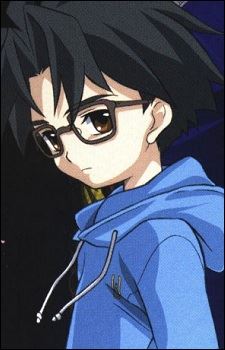
The main character, a young average boy, breaks the mold of typical adventure manga protagonists by being socially withdrawn, a hikikomori with an internet addiction rather than powerful or heroic. The action, sparse as it is, is handled by the titular Rozen Maidens, which unfortunately constitutes the weakest part of the manga (aside from its regrettable ending). While the fight concepts, character designs, rose motifs, and projectiles are all cool, the actual happenings during these fights often remain unclear.
However, I don't think this ambiguity is as detrimental as it might be in other works since the fighting isn't really the focal point. There's plenty of silly, puerile humor (in a good way), and the relationship dynamics among the characters are well-crafted and often quite touching.
Perhaps this complexity was too much for its original audience, leading to its notoriously bad conclusion. Fortunately, this was later reconciled in a follow-up manga, but when consumed in isolation, the disappointment is hard to ignore. Several intriguing plot threads are dropped in favor of setting up a "final battle" scenario that never materializes. While this may be better than attempting to depict such a battle in limited space, it’s unlikely anyone who enjoys the manga wouldn’t find this outcome disheartening, even though it was beyond the creators' control.
That said, Rozen Maiden is often regarded merely as a relic due to its impact on early internet culture, which is a shame because it truly is great. Readers will find the manga superior to its animated adaptation in almost every aspect, except for its unsatisfying conclusion.