

Manji is a notorious swordsman in feudal Japan, known as the "Hundred Man Killer" for having slain one hundred innocent men. However, his most terrifying trait is not his fearsome reputation but his immortality. This was bestowed upon him by Yaobikuni, an eight-hundred-year-old nun, who implanted bloodworms into Manji's body that can heal almost any wound.
To atone for his past crimes, Manji vows to kill one thousand evil men. Yaobikuni agrees to lift his curse of immortality if he succeeds. Shortly after making this promise, Manji encounters Rin Asano, a 16-year-old girl seeking vengeance for the murder of her parents. Initially hesitant, Manji eventually agrees to protect Rin for four years, despite her obvious lack of strength. Together, they embark on a perilous journey filled with bloodshed, vengeance, and redemption, each pursuing their own path.
Mugen no Juunin won the Excellence Prize at the first Japan Media Arts Festival in 1997. The series was published in English by Dark Horse Comics as Blade of the Immortal, starting with monthly comic issues from June 1, 1996, until November 14, 2007, before ending after 131 issues. Dark Horse also released the manga in 31 volumes from March 1, 1997, to April 1, 2015. To accommodate left-to-right reading while respecting Hiroaki Samura's request not to flip the pages, the publisher adopted an unusual method of cutting out and rearranging panels. Later, Dark Horse republished the series in 3-in-1 omnibus volumes, with the final omnibus including Shousetsu Mugen no Juunin: Ninjuu Ibun. In Brazil, the first 19 volumes were released in Portuguese by Conrad Editora from February 2004 to February 2007. The entire series was later published by Editora JBC in 2-in-1 omnibus volumes from December 2015 to May 2018.





I approached this backwards, having first fallen in love with the 2019 anime adaptation of BOTI before diving into the original material. Revisiting the story a second time was an amazing experience, and surprisingly, it felt fresh all over again. This freshness, I believe, stems from the advantage of telling the story across hundreds of chapters rather than just a few 20+ minute animated episodes. I encountered many scenes that weren't adapted in the anime, allowing me to gain more insights during this second read.
What really surprised me this time around was how attached I became to many of the villains. There were moments when I found myself rooting for the Itto-ryu, which was bizarre considering their actions throughout the story. Even stranger, I started feeling pity for Habaki. Samura did a fantastic job crafting a cast of memorable characters who could be disliked at one moment and then liked in another, creating complex dynamics.
This manga has everything: beautiful art, a memorable story with unforgettable characters, great action sequences, and a very satisfying conclusion. I highly recommend it.
Revenge is a subject that has intrigued many philosophers, each with their own perspective. Beyond philosophers, this theme resonates in various forms of media, including manga. Readers might even contemplate revenge in certain scenarios. "Blade of the Immortal" is no exception; it centers around revenge but offers much more, allowing readers to explore this theme while enjoying an engaging storyline, memorable characters, and stunning art. What makes it so compelling?
~Story~
The narrative begins by introducing Rin Asano, whose parents were killed by the Itto-Ryu sword school led by Kagehisa Anotsu. Vowing vengeance, Rin hires Manji, an immortal swordsman who seeks redemption by killing 1000 "bad" people after having slain 100 "good" ones. The use of quotation marks for "good" and "bad" hints at the manga's nuanced approach to morality, challenging readers to ponder the true nature of justice through its diverse characters and political intrigues.
Rin and Manji embark on a quest filled with obstacles: from confronting the Itto-Ryu, dealing with economic issues, to avoiding Manji's capture. Despite seeming generic, the story remains fresh with unexpected plot twists and new characters. The narrative also delves into the Itto-Ryu's motivations and the era's political landscape, adding depth to Rin's journey and the Itto-Ryu's rise.
However, the extensive depiction of gore, particularly dismemberments, can be overwhelming. Almost every chapter features such scenes, which may detract from the enjoyment for some readers. Additionally, the pacing can feel unnecessarily slow at times, risking reader interest.
~Characters~
"Blade of the Immortal" boasts a rich cast beyond Rin and Manji. Secondary characters are well-developed, whether they're Itto-Ryu members, political figures, or Rin's relatives, each with unique backgrounds and arcs. Rin undergoes significant growth as she grapples with the consequences of her revenge, evolving from naive to mature, albeit occasionally irritating due to her youth.
Manji's character arc is equally compelling. Initially a mere bodyguard, he becomes deeply invested in Rin's fate. His immortality isn't portrayed as invincibility; instead, his suffering and existential struggles humanize him. Secondary characters also shine, offering intriguing backstories and interactions that drive their development. I found myself more engaged with these secondary narratives than the protagonists'.
~Art~
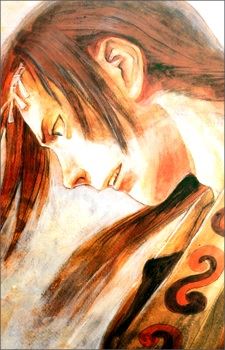
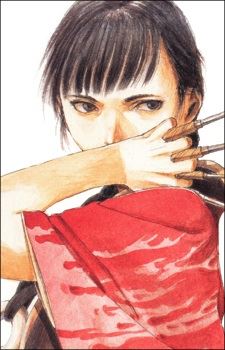
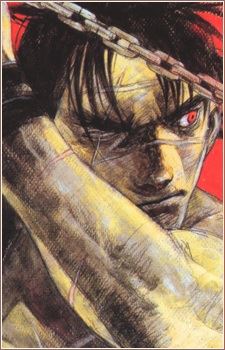
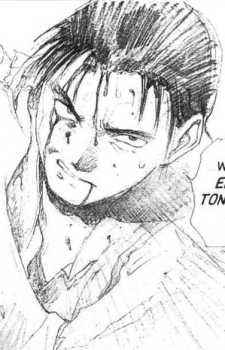
The artwork in "Blade of the Immortal" is striking despite its sketchy style. Each character design is distinct, making them easily recognizable. The detailed backgrounds effectively convey historical Japan. While the sketchiness might not appeal to everyone, it suits the gritty tone of the story.
Fight scenes are impressively illustrated and easy to follow. The art evolves throughout, improving shading and enhancing the dark atmosphere. This progression adds another layer of immersion to the narrative.
~Enjoyment~
Overall, "Blade of the Immortal" delivers an exceptional reading experience with captivating side stories and superb storytelling paired with fantastic art. Though it starts slowly, it blossoms magnificently. The excessive gore might deter some, but it's a minor flaw in an otherwise fantastic tale with richly developed characters. Thank you for reading.
"I just want you to know one thing... I might be the one confronting them. I might be the one cutting them down. The one standing on their graves. But you will be the one who truly kills them."
Many stories revolve around revenge, with numerous writers expressing varied sentiments about it. Some glorify it, others ridicule it, and some tell more sympathetic tales. However, "Blade of the Immortal" simply tells it as it is. The author never forces his beliefs onto the story, preferring readers to reflect and draw their own conclusions. It's an engaging, exhilarating, yet quietly contemplative quest for vengeance, making it one of the greatest seinen manga ever created. Let me explain why I believe this is true...
The story centers on young Rin Asano's journey to avenge her parents' deaths at the hands of the growing Itto-ryu sword school in Japan. Feeling powerless against her formidable foes, she seeks out Manji, a swordsman cursed with immortality. Manji has his own aims and beliefs, making him more than a simple bodyguard. Throughout the series, we see Manji act as a mentor to Rin, and witness their relationship evolve.
The premise may seem basic, and the mention of immortality could appear silly to some. However, don't dismiss the series because of that. The story is an amazing journey filled with blood, violence, and complex emotions. It’s also rife with political intrigue and rival factions vying for power. While the premise is straightforward, it serves as a backdrop for a deep, emotive, memorable, and epic quest.
The only criticism I have is the pacing, which was initially poor. The story didn’t grab me right away, so I took a break from reading. In my opinion, it doesn't find its stride until around chapter 30. Once it gets going, though, it becomes a nonstop rollercoaster of awesomeness. Similarly, certain events later in the story felt dragged out, but this is a minor issue.
What makes "Blade of the Immortal" so captivating are the characters. This series boasts an incredible cast, perhaps the best I've encountered. Both Manji and Rin undergo significant development, as expected. Yet, it’s the side characters that make this series extraordinary. Most series are lucky if even one character receives substantial development, but here, five or six characters receive as much attention as main characters. Ironically, I found myself more interested in some of the side characters’ struggles than the main ones (who are still amazing). This speaks volumes about the quality of writing.
All significant characters receive ample development, blurring the lines between 'good guys' and 'bad guys.' They all have their circumstances, ideals, determination, and reasons for fighting. Since the author shares the limelight equally among all players, it’s hard to predict who will come out on top, making fight sequences genuinely tense.
I appreciate badass female characters who can hold their own, especially in anime where female characters are often just waifu bait. This series deserves props for having awesome female characters like Makie and Hyakurin. That said, Rin sometimes came across as a typical damsel in distress, but this was mainly in the earlier parts of the story.
This amazing story and these spectacular characters are presented through Hiroaki Samura's fantastic artwork. Subjectively speaking, this series has the best artwork I’ve ever seen. I prefer old-school art over the moe style prevalent in modern anime, and "Blade of the Immortal" is far from moe, earning a big thumbs up from me.
The artwork is perfectly styled, and the action sequences are meticulously drawn. The fights are brutally intense, with blood and limbs flying everywhere. The flow of action in the panels makes it easy to follow, keeping you on the edge of your seat. The scenery art is also noteworthy, with detailed backgrounds and traditional Japanese landscapes captured perfectly.
However, the art style might not appeal to everyone. If you dislike sketchy artwork and prefer clean drawings, you might not enjoy it. I love it because it matches my personal preferences, but that doesn’t mean everyone will think it’s great.
Additionally, the series contains a lot of gore. If that’s not your thing, this might not be the series for you. While violent, the series never gave me the impression that the violence was gratuitous or used for shock value. Despite its visceral nature, it never became excessive.
In my opinion, this series represents the pinnacle of the seinen genre. It’s dark and brutal but remains human. With a well-constructed and deceptively complex plot, one of the most fleshed-out casts of characters, and stunning artwork, I cannot recommend this series highly enough to anyone who enjoys seinen manga. If you're looking for a story focused on samurai culture, though, I’d suggest "Lone Wolf and Cub" instead. "Blade of the Immortal" focuses more on telling its own story rather than depicting life during that time period.
I hope you found this review helpful. Any feedback is welcomed (unless it’s criticism).
Blade of the Immortal was a fascinating series I chose to explore after browsing through the Samurai section on the site. This manga captivated me with the journey of Manji and Rin as they sought to defeat Anotsu, fulfilling Rin's quest for vengeance. The introduction of new characters kept me invested in their fates, leading me through numerous emotional moments as events unfolded. I adored this series, particularly intrigued by its unconventional left-to-right reading format, unlike most manga I've read (excluding manwha). Despite my overall admiration, I felt some parts were overly drawn out, and I wasn't fond of the ending. Nonetheless, these issues didn't detract from my enjoyment. I look forward to rereading it and perhaps growing even more attached to this series in the future.
Blade of the Immortal is a Japanese manga series by Hiroaki Samura. The story unfolds in Japan during the mid-Tokugawa Shogunate era and centers around the cursed samurai Manji, who must kill 1000 evil individuals to regain his mortality.
This is what it's about:
Manji is an amoral swordsman cursed with eternal life. Weary of the death he has caused, he seeks redemption. With no skills beyond killing, he devises a plan: for every good person he has killed, he will slay one hundred evil ones. The witch responsible for his immortality agrees to this proposition, setting Manji on his quest to eliminate one thousand evildoers. Along the way, he encounters Rin, a young girl seeking vengeance against a sword school that massacred her family. Together, they embark on a journey, each hoping to find peace amidst relentless attacks from various enemies. They must navigate their lives while avoiding being consumed by revenge.
What caught my attention was the unique art style employed by the mangaka in this masterpiece.
It stands out significantly when compared to other mainstream manga. If you enjoy manga with a classic touch, this is perfect for you.
The character designs echo those of early 1900s manga, evoking a pleasant sense of nostalgia.
Being a fan of old manga myself, I found this series strikingly similar to Vagabond. If you've read it, feel free to share your thoughts in the comments section.
Thanks for reading.
Spoiler-Free Review
Prologue
I read the first two volumes of Blade of the Immortal two years ago. From the very beginning, this seemed to me as a really great story, but as time went by, I almost forgot about it until last year when I found and bought eight more volumes. At that point, I wanted to get all of them, but I couldn't find them, so I finished it in digital form unfortunately.
Story: 9/10
Blade of the Immortal is an amazing tale that provides the usual concept of revenge, but in a different manner that makes it look fresh. I'm pretty convinced that there were not any weaknesses in its story, as it even made me understand and like the main antagonist's point of view and got me to question the main characters' goal. The story is set in Japan during the mid-Tokugawa Shogunate period and follows the cursed samurai Manji, who has to kill 1000 evil men to make up for his past mistakes, and the young Rin, who seeks revenge. It is important to mention that there are no clear-cut good or bad guys as everyone seems to have their beliefs they are fighting for.
Art: 9/10
The art style was pretty unique, differing from the usual manga art. The pages are well drawn and able to express the characters' feelings and depict their movements' speed, which is really important in my opinion.
Characters: 9/10
The characters are really intriguing, and most people will think so too, I believe. All of them have interesting backstories and are neither underdeveloped nor forgotten by the author. Each one makes readers form bonds with them, which is something remarkable when it comes to a story, especially such a long one as Blade of the Immortal.
Enjoyment: 9/10
The way I interpret enjoyment is probably through the battles the story provides, which are really good due to its art and the bonds readers have with the characters. There were battles where I did not want either opponent to die because I understood their beliefs and could not decide who was right. The peaceful scenes were also enjoyable as they allowed relaxation from the strong and harsh battlefields. These scenes were when you learned more about each character's personality and their way of living.
Overall: 9/10
Blade of the Immortal is an amazing samurai tale that should be known by more people than it already is. Its story, art, and characters are unforgettable, making it such a magnificent work.
Hi there MAL folks, welcome to another review. This time around, we have the big title Mugen no Juunin, also known as Blade of the Immortal. So without any further ado, let's dive right into it.
STORY
Blade of the Immortal is a Samurai/Swordsman manga set in feudal Japan. We follow Asano Rin and her formidable bodyguard Manji on her quest for vengeance against the notorious Ittou Ryu, who murdered her family. The group is led by Anotsu Kagehisa, a highly skilled fighter.
Rin and Manji traverse Edo (old Tokyo) in search of Kagehisa, hoping to fulfill Rin’s goal. Along the way, they face numerous challenges and interesting situations—from encountering other members of the Itto Ryu to Rin questioning her path of revenge. They meet people who offer different perspectives, aiding in Rin's growth.
At first glance, this manga seems like a typical revenge story. However, after reading it, I would say that it's more of a protest against the Bushido/Samurai code.
7/10
ART
Mugen no Juunin offers an enjoyable artistic journey, which is expected given its run from 1993 to 2012. Early chapters feature decent to average panels with less detailed backgrounds than usual. Typically, even if character designs are not appealing, manga often compensates with detailed backgrounds. However, this manga was the opposite, a first for me.
Despite this, the author excelled in character design, providing emotional and expressive close-up panels. Additionally, the manga features great fight choreographies and a vast arsenal of unique weapons, each with logical explanations.
In later chapters, the art significantly improved. Not only were the previously mentioned strengths enhanced, but the backgrounds became visually appealing, including some of the best double spreads I've seen in manga. The detail in stances and angles chosen by the author added depth.
7/10
CHARACTER
Mugen no Juunin boasts a rich cast of characters. From our main characters Rin and Manji to Kagehisa and the Ittou Ryu gang, significant figures like Shira, Habaki, Giichi, Burandou, and minor yet crucial characters such as Shirinjii, painter Souri, and prostitute O-ren. Each character feels unique, with distinct life circumstances, motivations, and some paralleling the MC team.
7/10
ENJOYMENT
The manga can feel lengthy and slow-paced at times, especially when the focus shifts away from the main characters to surrounding characters. This might deter some readers as the plot can get lost. However, I appreciated this aspect because it fleshed out more characters, leading me to conclude that the story was about more than just revenge.
This aspect added value and weight to the supporting characters, making them integral to the story rather than mere fillers. Their contributions enriched the narrative, creating an amazing experience.
I also enjoyed the fights in the manga. With cool-looking battles and excellent choreography, the quality consistently improved. Each fight had strategy, themes, stances, and techniques showcased through various weapons. The author clearly put thought into these confrontations.
However, the Manji vs Arashino fight felt like a cheap move due to excessive armor, making it tedious to read.
Plot convenience is inevitable, like how Rin got saved during her solo journey. Though it followed a common trend, it felt forced. Yet, the conclusion was satisfying as it provided Rin with valuable experience.
6/10
I recommend this work not just to Seinen fans or samurai enthusiasts but also to those seeking a change of pace. Despite its length and potential annoyance with Rin, the supporting characters beautifully complement the story, adding a special touch to the narrative. Thus, it's worth a read.
The story is intriguing, featuring commendable artwork and dynamic fight scenes. However, my primary concern lies in the eventual shift in art style, which becomes a significant distraction during action sequences. The excessive scribbles make it challenging to follow the battles, often leading to headaches. This issue prompted me to put the series on hold as it detracts from the enjoyment when the narrative's clarity is compromised.
Overall, I'd rate it a 7, appreciating that it isn't a mundane manga and does present a storyline worth following. Additionally, its release in deluxe volumes enhances the reading experience.
Art: 7 (drops to 4 around volume 15)
Story: 7
Characters: 8