

Kagome Higurashi's ordinary life is suddenly disrupted when a demon drags her into a well, transporting her five hundred years into the past. In this era, Kagome quickly discovers two important facts: demons coexist with humans, and she has inadvertently brought a dangerous object from her world—the Shikon Jewel, a marble-sized sphere that grants immense power to any demon who possesses it. This makes Kagome an easy target for those who wish to steal it.
During a fight with a demon, Kagome's hasty attempt to defend herself results in the accidental shattering of the jewel, scattering its countless pieces across feudal Japan. Realizing the gravity of her actions, Kagome must work with the half-demon Inuyasha to retrieve all the fragments before they fall into the wrong hands.
InuYasha won the 47th Shogakukan Manga Award in the Shounen category in 2001. The series was published in English by VIZ Media as Inu-Yasha: A Feudal Fairy Tale from July 6, 1998, to January 11, 2011. Starting from volume 12, the manga was relabeled as InuYasha, and while the first 37 volumes were printed in left-to-right format, all subsequent volumes were published in the traditional Japanese right-to-left format. The series was republished in 3-in-1 omnibus editions under the Shonen Sunday VIZBIG imprint from November 10, 2009, to February 11, 2014. It was also released in Spain by Glénat España and in Brazilian Portuguese by Editora JBC in 112 volumes from August 2002 to July 2009. The first 12 volumes were released in Argentina by LARP Editores before discontinuing publication. In Poland, the first 23 volumes were released by Egmont from October 2004 to February 2011, and the series has been republished since May 10, 2021, by Japonica Polonica Fantastica.
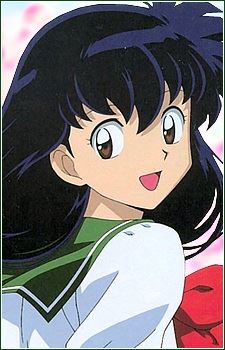
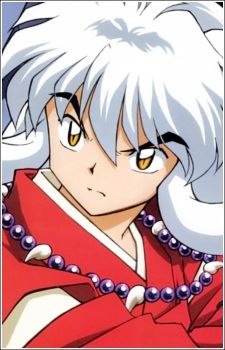
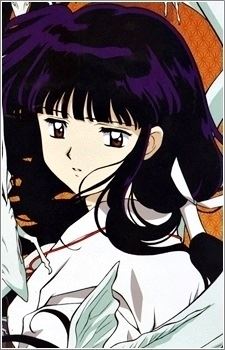
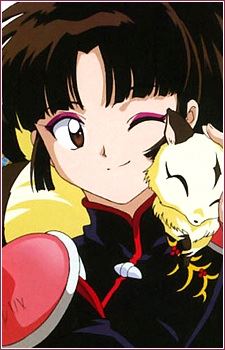
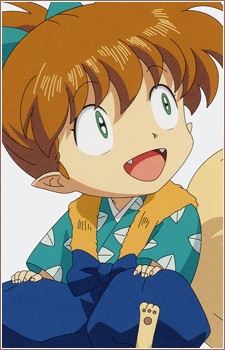




Every now and then, a manga series emerges that intimidates the typical reader for various reasons. It might be due to an overly ambitious narrative scope, an excessive number of chapters, an unappealing art style, or some other factor. Regardless of the reason, many potential readers are discouraged from picking up certain manga titles.
That being said, there are instances where it's justified not to start reading a manga, especially when some simply fail to deliver. But then there's InuYasha.
InuYasha, created by the renowned Takahashi Rumiko in 1996, remains her longest work to date. With an astounding 558 chapters, it is one of the lengthiest manga ever produced. Despite this, many people who happily dive into long-running shounen manga like Bleach, One Piece, Naruto, and HSD Kenichi tend to overlook InuYasha without giving it a fair chance. While it is indeed a lengthy read, it is also incredibly rewarding.
The story begins with InuYasha, a half-dog demon, half-human (known as a hanyou), who attacks a village to claim the Shikon no Tama, a mystical jewel that can amplify a demon's power, intending to use it to become a full-fledged youkai. Before he can escape, however, a wounded miko named Kikyou pins him to a tree with a holy arrow, supposedly sealing him forever. Shortly after, Kikyou dies, and per her instructions, her body is burned along with the Shikon no Tama.
Five hundred years later, a young girl named Kagome celebrates her 15th birthday, unaware that her fate is intertwined with InuYasha and the Shikon no Tama.
InuYasha is undeniably a prime example of shounen manga. The plot is well-developed, filled with twists, turns, loops, and betrayals, while also introducing innovative elements to the standard quest format. Although there are moments when the plot slows down, these breaks serve to give characters respite from stress and combat.
While some dislike fillers, in this manga, they form an integral part of the story rather than mere deviations due to lack of creativity.
However, there are minor issues with the overall plot. Repetition is inherent in this type of story, particularly concerning the powers gained by Tetsusaiga, the sword made from InuYasha's father's fang. Additionally, there's a "bad guy of the week" feel to some sections, though these often relate to Tetsusaiga.
Despite these minor flaws, the manga excels at keeping readers engaged. There's plenty of action, surprising events, and a convoluted path from beginning to end. This complexity allows for unusually deep character development.
Visually, the characters embody Takahashi Rumiko's signature style. Fans familiar with her work will recognize her trademark faces, although the artwork has some differences. The backgrounds are cleaner and more detailed, and the action sequences are more dynamic. More "effects" backgrounds are used to highlight the supernatural aspects of the story.
What sets InuYasha apart from most of Takahashi Rumiko's other works is its depth and character complexity. Each character has their own ideals and goals, developed in surprising ways. Kagome struggles with her fate and feelings for InuYasha, while he is torn between his desire to become a true youkai, his conflicting feelings for Kagome and Kikyou, and his hatred of the main antagonist.
Sango, Miroku, even Sesshomaru and Kikyou, all have inner conflicts impacting the plot. Their trials' resolution provides readers with a sense of catharsis. The most intriguing development involves the main villain, Naraku, whose mind and desires are revealed, making him one of the greatest adversaries in manga.
I unabashedly love this series. It has everything one could want: action, love, folklore, friendship, betrayal, loss, desire, unimaginable evil, numerous plot twists, and more. Currently, it stands as Takahashi Rumiko's masterpiece, surpassing Urusei Yatsura, Ranma, and Maison Ikkoku. Its content resembles Mermaid Saga but goes beyond it.
Fans of Bleach, Naruto, One Piece, and similar long-running shounen series should check this out. They may find modern shounen tales more sanitized compared to InuYasha. The series tagline, "A Feudal Fairytale," is apt, reflecting older folklore with its darker elements. InuYasha has more bite than most modern manga, focusing on making it akin to older fairytales, adding a dimension lacking today.
While some areas could have been improved, and repetition exists, these are forgivable due to the plot and characters' depth. The character design should not deter readers; missing out would be a mistake.
A final note: the manga differs from the anime adaptation in many respects, including continuing past the anime's end. Characters in the manga have greater depth, and the plot's complexity is more tangible. Anime fans should definitely read the manga; despite the daunting number of chapters, the reward is worth the effort.
As far as shounen series go, InuYasha stands head and shoulders above many modern ones. Its complex plot, deep and conflicted characters, and vast setting make it truly excellent.
This is genuinely a feudal fairytale, in the truest sense of the word.
InuYasha is an amazing and exceptionally crafted manga. It's a classic, and I find it immensely enjoyable to read, with lovable characters, a great storyline, and impressive art (though not the best, it remains likable in my view). The manga is a real page-turner; it's incredibly easy to get hooked.
Storyline 10/10 - NO SPOILERS. InuYasha revolves around a girl named Kagome who travels through a well and meets a dog demon named InuYasha. She joins him on a quest to find the scattered pieces of a jewel after it shatters. They must locate these shards before an evil demon named Naraku gets his hands on them. The story is extremely enjoyable, improving significantly as it progresses and introducing excellent characters. It combines action, drama, romance, comedy, magic, and adventure flawlessly. This is one of the best storylines ever in manga, second only perhaps to Naruto. A truly wonderful narrative.
Characters 10/10 - InuYasha features amazing and delightful characters, all of whom are outstanding. There’s a large cast, and they all evolve impressively over time. The character development is superb, with each character becoming more compelling as the story unfolds. The dynamic between Kagome and InuYasha is amusing, while Sesshomaru stands out as an exceptional character, possibly the best. All characters are fun and wonderful.
Art 10/10 - Some say InuYasha has poor art, but I disagree. The art is genuinely good, in my opinion. I love the character designs of InuYasha and Kagome, and overall, it's just pleasant to look at. The classic shonen aesthetic adds to its charm, making it highly enjoyable visually.
Enjoyment 10/10 - InuYasha is a fantastic, timeless manga. The enjoyment factor is sky-high. Everything about it is great. Few manga can match its level of enjoyment (maybe Naruto comes close). Overall, this manga offers incredibly enjoyable art, characters, and storyline.
Overall 10/10 - InuYasha is the best manga I've read. It’s simply fantastic, and I adore this manga. A true classic.
Out of 100 Nobles watching…
77 were impressed!
15 were tired of filler
8 wanted some more depth in characters
On my “Tour de Rumiko Takahashi”, instead of returning to Urusei Yatsura I took a detour and read Inuyasha. Inuyasha was one of the first anime I ever watched, catching episodes in elementary school late Friday and Saturday nights with my sisters. It was one of the biggest influences on my tastes, predisposing me to an interest in both traditional and modern Japanese culture. But here we are reading the manga, and boy, what a monster it was. Representative of Shonen of the time, Inuyasha is a whopping 558 chapters (559 if we count a cute little charity postlude chapter Takahashi wrote years later). Takahashi used the series to create some great grotesque imagery and lovely inky traditional-looking artwork throughout its publication.
Honestly, simply because it is complete, I consider Inuyasha worth the read, but it absolutely does not handle its run length well. The series unfortunately falls into some of the worst pitfalls of filler. Filler is baked into conflicts, dragging out major plot-relevant battles, and middling random filler chapters fighting some demon to save a village usually tie themselves back to the main plot, resulting in an experience that cannot really be trimmed down with a “read these chapters” list. That said, some of the best and most soulful feeling chapters were various filler sections. Takahashi clearly solidified herself as a Shonen author with such a renowned and long-running serialization, but I do not feel she was particularly suited for it. Lots of action felt weightless or hard to track.
The main story points of Inuyasha were engaging when they were relevant. All the main cast had a unique dynamic that was well-written if a bit simple. There isn’t much depth to Inuyasha outside of the Kikyou-Kagome love plot. Kagome is supposed to be a pure maiden, and I think Takahashi did a good job writing internal dialogue for her that rationalized her being a genuinely good person.
The standout arc and character of the series I thought was Inuyasha’s brother Sesshoumaru. The way Sesshoumaru grew midway through the series and by the end of the story really gave me insight into many an early 2000s fangirl's heart. “I cost you your life… and there is nothing… worth exchanging for that!”
Rumiko Takahashi writes good “Japanese boomer humor” and can make very strong interpersonal plotlines that capture realistic feelings well. Inuyasha stood out most, not when the main characters were chasing some big power-up to defeat Naraku, but when the story took the time to do a slice-of-life chapter, a joke chapter, or a romance chapter. The ending of the series had a very satisfying final chapter for me, and my only regret is that it took so long to get there.
Initially, I thought to close the book on Inuyasha and move on to just Yashahime, but writing this review to a YouTube playlist of the anime’s soundtrack is really feeding my childhood nostalgia and bringing me back to sitting on the living room floor vibin’ out. Looking into it, the anime is 193 episodes… this Souls-like Okami-ass soundtrack just might get me to come back someday. Until then, Inuyasha is a lovely adventure that meanders a bit too long, but is worth the read for weirdos who just like 70s-00s manga and anime like me.
Inuyasha boasts a masterfully crafted plot, with characters that are nothing short of exceptional. The story unfolds gradually, drawing you closer to an exhilarating climax, making it nearly impossible to stop reading.
I found Inuyasha particularly enjoyable due to its characters, especially Kagura. The series is packed with action, perfect for those who easily lose interest. Its romantic aspects are a blend of tragedy, sweetness, and humor all at once. To me, Inuyasha stands out as the finest manga I have ever had the pleasure of reading.
Made by the famous Rumiko Takahashi, InuYasha spans over 558 chapters, a length that brings both its finest and most disappointing moments. For instance, the romance—or more specifically, the love triangle—culminates in a bittersweet yet satisfying conclusion towards the end. However, it's followed by what I consider another unsatisfactory ending from Takahashi. Although I haven't read all of Ranma 1/2, I've heard its ending wasn't great either. InuYasha felt rushed at the end, which is always bad but even worse after 558 chapters. It's frustrating when the story feels hurried, especially with such a lengthy buildup. A few extra chapters to wrap things up would have been welcome, but instead, the "romance" during the reunion feels like a casual greeting between old friends. Moreover, side characters getting more closure than the main ones can be quite annoying. In summary, InuYasha isn't for those without patience. At times, it falls into repetitive patterns like "villain attacks and villain leaves" or "upgrade weapon, get stronger." If you read InuYasha, expect some disappointments, but also witness great plots and romance—at least until the end.
The story begins with Kagome, a typical fifteen-year-old high school student living in an ancient shrine filled with artifacts. One day, she's pulled into the Bone-Eater's Well by a monster and finds a demon sealed to a tree. She learns this demon, named InuYasha, was sealed fifty years ago by a Miko named Kikyou, who died doing so. When Kagome gets close to him while fleeing the monster, he awakens, mistaking her for Kikyou due to their resemblance. After being attacked, she discovers she has the Shikon no Tama (Jewel of Four Souls) inside her, an object that can make demons stronger, the same one InuYasha sought. To save herself, she frees InuYasha to kill the demon, but he immediately goes after the Jewel. Kaede, Kikyou’s younger sister, places a necklace on InuYasha, giving Kagome control over him. When another demon tries to steal the Jewel, it breaks and scatters across the world, leading InuYasha and Kagome on a quest to retrieve it.
This initial plot evolves into a much grander narrative about why Kikyou sealed InuYasha, introducing greater villains, a wider cast, and deeper ambitions. The length benefits and hinders the story; Takahashi delivers great twists and scenes but also repetitive sequences. Sometimes, you get fifty chapters of the same thing happening, which can be boring. I'll give it an eight because it offers interesting scenes, especially in romance, but it can also be mediocre.
From my limited experience reading manga, InuYasha's art is average. Compared to "20th Century Boy," it can look rather ugly at times, though occasionally decent. Nothing special here—the art never goes beyond average but isn't bad either. You won't pause just to admire how good it looks.
The characters are the best part of the story, offering various types. The "good guys" are typical—an angry lead fighter, a sexually harassing sidekick, an innocent girl—but the "bad guys" range from badass fighters to homosexual characters. This variety entertains, and my favorite parts involve character interactions, especially the love triangle. It presents a dilemma: choosing between the woman you fell in love with first, who showed you a different life and followed you in death, or the woman who came later and changed your life. It makes you question which choice is better, a concept excellently executed.
Most people involved in anime and manga know InuYasha and Rumiko Takahashi. I've seen as much love as hate for it, mostly directed at the anime's repetitiveness. Despite falling into repetition, it also has great moments, especially in the latter half with the love triangle's resolution. If you seek a manga with great characters and a well-established fantasy world, InuYasha is worth picking up if you're patient. There were times I loved it and eagerly read the next chapter, and times I forced myself through it, always looking for the bright side. InuYasha has its disappointments, as I've voiced, but also its great moments, making it a worthwhile read. End of the first review—please indicate whether it was helpful or unhelpful.
InuYasha is the longest manga I've read as of posting this review. Initially, I doubted my ability to finish it since it was about 20 times longer than the first manga I ever read. Well, past me, you'd be pleasantly surprised.
Story
While reading, I made several predictions that initially seemed correct but were later proven wrong. This unpredictability kept me hooked, along with the straightforward storyline that was easy to follow.
Art
Rumiko Takahashi's distinctive art style shines through in Inuyasha. Throughout the series, there was no noticeable drop in artwork quality. Around 2004, the art quality noticeably improved.
Character
This is another reason why I enjoyed InuYasha so much. Weaker characters occasionally took center stage and had their moments to shine in battle. This demonstrated that Takahashi cared for all characters, not just the stronger ones.
The characters themselves were well-written. They underwent significant character development, growing both in power and mentally. The occasional perverted antics were present but never overdone to the point of annoyance.
Enjoyment
I thoroughly enjoyed InuYasha. Had it not been for the well-written characters and unique art style, I likely wouldn't have finished it, and this review wouldn't exist.
I recommend this to those who enjoy the isekai genre (technically an isekai) and anyone looking for a manga to start with. Despite its length, which I've mentioned multiple times, the engaging characters, art style, and plot will keep you coming back for more.
Well, actually I completed this before I started reading Pretear, and also watched the anime way before that, probably around high school (2001?).
Inuyasha is a tale about Kagome Higurashi, a seemingly ordinary junior high school girl, and Inuyasha, a half-demon with dog traits. They embark on a quest to retrieve shards of a jewel known as the Shikon no Tama (Jewel of the Four Souls). This quest evolves into an adventure involving Shippou, a young demon fox; Miroku, a monk cursed with a dangerous hand; and Sango, a demon slayer. Their pursuit of the Shikon shards transforms into a mission to defeat the evil Naraku, leading to further expansions in the story.
As usual, some events and characters differ between the anime and manga versions, with the manga continuing beyond where the anime ends.
One thing that puzzles me is the abundance of Kikyo haters. Yes, she was indeed a thorn in the side for those rooting for Inu-Kag, but from an unbiased perspective, she was more of a tragic figure than an adversary (though admittedly a romantic rival to Kagome). Under different circumstances, an Inu-Kikyo pairing might have been possible.
Though I'm not a fan of any specific ship, I do occasionally read fanfictions from this series. Despite starting as a vengeful resurrected spirit made of clay and souls, Kikyo still loved Inuyasha, albeit in a twisted manner due to her dead state, naturally thinking of taking her love to the afterlife or hell where she initially ended up.
Kagome often comes across as a martyr of love, suppressing her feelings of jealousy, although sometimes poorly expressed by taking it out on Inuyasha.
These aspects are precisely why I enjoyed this manga—the "love triangle" between two women, one deceased and one from the future, both vying for the affection of a young half-demon. What could be more intriguing?
Seriously though, I appreciate the numerous character interactions and understand why various "non-canon" pairings seem plausible. There's also the theme of camaraderie working towards a common goal, along with examinations of sibling relationships like those between Inuyasha and Sesshomaru, Sango and Kohaku, Kagome and Souta. Plus, there's the portrayal of parent-child relationships or their absence, and the "alternate world" feel reminiscent of Fushigi Yuugi.
The only two reasons I wanted to read this manga were:
1. I like Rumiko Takahashi.
2. Inuyasha has dog ears.
Since I loved Ranma and laughed a lot with that manga, why not try this one too?
The story starts nicely—a girl falls into a well and finds a boy with doggy ears, and because of an accident, she has to team up with him, leading them to fall in love.
The story is decent and spans 56 volumes, so what fills all those pages?
The basic plot repeats: Kagome is in danger, Inuyasha saves her at the last minute. Again—Kagome is in danger, Inuyasha saves her at the last minute, and so on for 56 volumes.
I have 32 volumes at home and feel foolish for buying them, hating every volume from number nine onwards.
The art is poor, not even slightly nice. It's really bad, lacking detail, with the only distinction between characters being their hair. I dislike the faces as they are triangular.
The characters are typical—a pretty and kind girl and a handsome, self-centered boy.
Nothing special. The other characters are okay too.
Enjoyment—I loved it initially and was excited to buy it but gradually found myself forcing through it.
Overall—do yourself a favor and don't waste time on this manga. It's not very original and is excessively long and boring. If you enjoy shoujo, definitely avoid it.
I still can't understand why people rate it a 9 or 10.