

The utopian city of Zalem towers above the ground, its imposing structure dominating the skyline. Below it lies The Scrapyard, a toxic wasteland where all the city's refuse is dumped. Amidst the mountains of garbage, humans and cyborgs eke out a living by any means necessary.
While scavenging through a pile of old android parts, Daisuke Ido, a doctor skilled in cyborg repairs, discovers the head of a young female cyborg. He constructs a new body for her and names her Gally. Upon activation, Gally has no memory of her past life, but she seems content as long as she can stay with Ido.
However, Gally soon learns that Ido works part-time as a hunter-warrior, a bounty hunter employed by The Scrapyard’s government. Despite Ido’s warnings, she decides to become one herself, unlocking forgotten combat skills. With newfound strength, Gally is determined to fight through the alleys of The Scrapyard and beyond, piecing together fragments of her past to uncover her true identity.
Gunnm, known in English as Battle Angel Alita, was published by VIZ Media in comic book format. It spanned 68 VIZ Select Comics issues split into eight volumes from July 1992 to March 1998. It was later republished under the VIZ Graphic Novels imprint from July 6, 1995, to December 6, 1998, and again under the VIZ Action imprint from December 31, 2003, to March 1, 2005. Kodansha Comics took over the license and released the series digitally from May 26, 2017, to July 31, 2018. The series has also been published in various languages including Brazilian Portuguese, French, German, Spanish, Italian, Dutch, and Polish.
Oscar-winning director James Cameron was introduced to Gunnm by fellow director Guillermo del Toro and acquired the rights for a live-action film adaptation in 2000. Production faced several delays due to Cameron’s commitments to other projects until October 2015, when he handed over the directorial role to Robert Rodriguez. The film, titled Alita: Battle Angel, premiered on February 14, 2019.


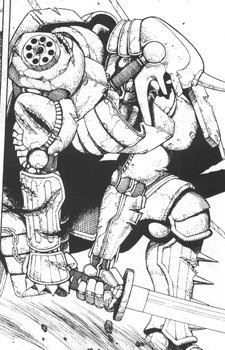


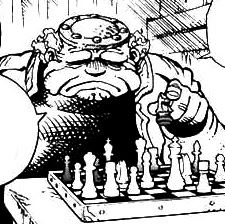





Gunnm presents a series of intriguing concepts, none of which are novel in the realm of science fiction, yet all are handled with care and evident passion. The issue lies in the fact that compelling ideas alone do not suffice to create an engaging narrative; a robust plot and, arguably, even more compelling characters are essential. Gunnm boasts a strong lead character, but every supporting figure, much like the explored ideas, enters and exits the storyline abruptly. Despite some flashes of brilliance, the plot is repetitive and disjointed, failing to offer readers a sense of continuity.
The artwork is commendable, excelling in both gripping action sequences and poignant depictions of melancholy. Character designs are consistently neat and fascinating, featuring memorable faces and occasionally surprising physiques. The main heroine is particularly well-crafted, with a recognizable silhouette that even those unfamiliar with manga will likely recognize.
In conclusion, I would recommend Gunnm to both science fiction enthusiasts and manga aficionados. In terms of its influence and significance, this title stands as essential reading for both groups. Who knows, they might find it more appealing than I did.
Battle Angel Alita – Spoiler Free – Not Recommended
TLDR
Story – 2/10 – 2 x 0.275 = 0.55
Art – 8/10 – 8 x 0.2 = 1.6
Characters – 3/10 – 3 x 0.225 = 0.675
Enjoyment – 1/10 – 1 x 0.3 = 0.3
Total: 3.125
Story – 2/10
It's such a disappointment...
Battle Angel Alita’s story is chaotic, incredibly so. It's challenging to convey how flawed this narrative is. The plot makes little sense, filled with leaps of faith and poorly constructed overall. What began as an intriguing premise quickly lost its direction. This manga is anything but coherent, merely a collection of random events happening to Alita.
Romance plays a significant role or at least the idea of romance does in Battle Angel Alita. Characters meet in one volume and are suddenly in love by the end of it. Alita’s main romantic interest, Yogo, appears abruptly, undeveloped yet somehow crucial to the story without reason. Understandably, a cyborg-centered story should explore love and human emotions, but this execution is off the mark. Additionally, Alita frequently emphasizes her humanity, making you forget she's a cyborg.
The time-skips are present but not poorly executed; however, they highlight poor writing. Certain elements only make sense if there's an unmentioned time-skip, except for one instance early on (a two-year jump). Time-skips must be inferred.
Not all is bad in Battle Angel Alita. The world-building is interesting, with significant lore aspects mentioned throughout. In that regard, it's a lore-rich story. However, the ending is also poorly handled.
Art – 8/10
The art is Battle Angel Alita's primary strength – possibly its only one. The artwork is functional, stylish, impeccable, and a joy to read. Character designs are beautiful, making them easily distinguishable. While there are good panels, none are awe-inspiring. If only the story and characters were better...
Characters – 3/10
With one exception – Ido – Battle Angel Alita's characters are awful. The protagonist is particularly annoying, resembling a teenager experiencing angst, changing opinions impulsively. Characters appear and disappear randomly, contributing to the mess.
Enjoyment – 1/10
Enjoyment must be very low for Battle Angel Alita. This is definitively Not Recommended. The story and characters combine to create a painful, frustrating experience. Despite being considered a classic by some criteria, quality isn't one of them. It's a terrible manga with only good world-building and lore. Interestingly, a manga focusing heavily on love has such a robotic approach. There's no reason to read the sequel since it's based on a non-canonical version of the ending, and I certainly won't reread it.
Battle Angel Alita is a manga with a dedicated fan base that isn't vast but deeply passionate about the series. This makes sense, as it's the kind of cult classic that doesn't quite fit into the traditional definition of 'cult' but remains undeniably classic. The story is an excellent science fiction narrative featuring a unique art style and an engrossing world. It also stands as one of the early works that could be classified under the cyberpunk genre.
The manga centers around Alita, a cyborg discovered by Dr. Ido in a junkyard with no memory of her past. The plot follows her journey as she navigates life and uncovers her identity, traveling from place to place and experiencing incredible adventures. The story includes graphic violence and sexual content, with occasional gratuitous exposure of breasts as fan service rather than the panty shots typical in modern anime. Blood and gore are prevalent throughout, with scenes involving eyeballs falling out of sockets and brains being consumed or stored in places they don't belong. While somewhat excessive, these elements fit within the context of the dystopian future setting, filled with deranged and violent cyborgs in the Scrapyard.
This book is very much a product of the 90s, both visually and thematically. Its art style is distinctive for its stylization while maintaining traditional anime aesthetics. The story begins somewhat slowly but gains momentum as the series progresses, leading to high-energy sequences and a satisfying conclusion.
While I enjoyed the book, I wouldn't say it's essential reading for everyone. My appreciation for the medium wouldn't diminish had I not read it, and after finishing, I didn't feel compelled to read the sequel/reboot (Battle Angel Alita: Last Order). That said, it's a worthwhile read if you're into cyborgs and intense action scenes, and I understand why so many people are captivated by this manga.
tuesdaysdusk.tumblr.com/tagged/review
Let's dive into a story about existentialism, narrated through our main heroine Alita/Gally. What does it mean to be alive? Everyone needs a reason to live and move forward. In this world, society is split into two classes: the impoverished living in the scrap yard and those with social status residing in Tiphares. For those from the scrap yard, Tiphares symbolizes their dreams and hopes, like an oasis amidst a desert where travelers can rest after their journey.
The worldbuilding in Gunnm is fantastic. As the narrative unfolds, we learn more about the inhabitants of the scrap yard, their lifestyle, their daily hopes, the corruption they face, and the environment they navigate. Another striking aspect is how meticulously the author explains each element within the limited space of manga panels. The manga is incredibly detailed, with every new element thoroughly explained. I must commend the author for his effort and talent in the art. Each chapter is rich in content, and the backgrounds of each panel are intricately designed. The black-and-white contrast style is well balanced, and the fights are beautifully drawn, making it easy for readers to distinguish small details. Unlike many contemporary mangas that overuse black in fight scenes, diminishing quality, Gunnm maintains its high standard.
The story is beautiful and emotional. Through each chapter, our heroine Alita discovers the meaning of being alive through her experiences and encounters. Each character imparts a lesson on life to Alita, and every experience serves her future battles. Some arcs may seem slow-paced, but they have a purpose later in the story, so don't be misled—everything in Gunnm has significance.
What I enjoyed most about this manga was Alita herself. She is one of the best female characters in fiction, thanks to her personality, her care for others despite her circumstances, and her ideals. I love her thoughts, her perception of the world, and every word she exchanges during her encounters and fights. From the bottom of my heart, she will always be my number one girl.
In conclusion, the 53 chapters are pure art. Yes, pure art, my friends, into which the author poured all his soul and emotions. Each story offers a lesson for its readers—a lesson about life and the meaning of existence, about leaving something memorable behind in this world. We all struggle to do that in our own societies. FANTASTIC!
Warning! This is not a lengthy review. It's short and my very first one. Please be kind.
I just finished reading the first manga. Holy cow, how did I miss out on this gem all this time? Well, maybe it's because this is my first manga.
- My impressions of the manga -
Gunnm is an excellent storytelling piece set in a cyberpunk world, centered around a girl named Alita, Gally, or Yoko, who lost her memories after being revived by a cyber doctor named Ido. Throughout the story, she seeks to unravel several mysteries about herself, the world, and the essence of humanity. Along the way, she encounters intriguing events and people.
Pros:
1. Good character development for the main characters and others too.
2. Almost original work, refreshing compared to other stuff out there.
3. Balanced between comic relief scenes and grim moments, I think?
4. Great antagonist, really well-crafted.
5. Not bad art!
6. You'll hate the author for making the character suffer. That bastard. But you'll care about her, which means the author succeeded in creating a compelling character.
7. Badass action!
Cons:
1. The ending was weak and rushed, as if the author had no choice but to do it that way? I heard he had to due to some circumstances, though I'm not sure.
Neutral:
Many questions remain unanswered, but I guess they'll be addressed in the next manga?
Final thoughts:
1. Cameron, make the movie great! Don't ruin it!
2. I freaking love Desty Nova.
3. Yoko is the only female action character I like in anime or manga.
For those who don't know, James Cameron is going to direct or co-direct a movie adaptation of this manga or become a producer. No later than 2017, my guess is 2019.
Final verdict: 9/10
Amnesiac protagonists can be challenging to handle. In the worst scenarios, they're used for shocking reveals or convoluted plots that don't serve the story well. However, when done right, they offer fresh perspectives, introducing audiences to settings, characters, and ideas without being heavy-handed or clumsy. Gunnm often succeeds in this regard, even if it doesn't always hit the mark.
The narrative structure is fluid: you witness Alita engaging in various jobs, each with its own level of danger and reward, while observing her personal growth. This approach blends different genres to broaden the scope and heighten the stakes in exciting ways: bounty hunting, romance, sports, and many other threads intertwine throughout the story. It's an exhilarating journey from start to finish, and watching Alita stumble and then triumph in her various roles never gets old. The standout moments in Gunnm are those where Alita’s occupations shed light on the setting, illustrating a bleak world divided by class. Complementing this are the motivations of the villains; most of their actions stem from injustices within the setting, making them relatable, if not somewhat sympathetic. Unfortunately, this doesn’t apply to the manga’s final villain, which somewhat diminishes the overall impact.
A significant portion of the cast consists of archetypes, but their execution and standout moments overshadow their origins. For instance, the regretful veteran in the Motorball arc, the young kid saving money to move to the big city, and the grizzled soldier with a heart of gold. While these characters add depth, problems arise when an archetype overshadows the story despite its flatness—this is especially true for the manga’s final antagonist. Without giving anything away, he lacks the charisma of previous antagonists, and his connection to the setting feels underdeveloped. Combined with the fact that he's the flattest character in the series, the last two volumes feel like a bit of a drag compared to the high-energy start. Alita herself is portrayed exceptionally well, offering a "fish out of water" perspective that lets readers learn about the world naturally. This makes her journey to maturity all the more rewarding, as we see her rise from nothing to carve out her place in the world. Her amnesia is mostly a positive element for the story, despite some missteps towards the end. Overall, Alita is a great protagonist who fits the story perfectly.
Gunnm’s art is of remarkably high quality. Characters look lively and detailed, with shapes stretched and exaggerated effectively. The action sequences are beautifully panelled and easy to follow, tying with Alita as one of the best aspects of the series. The setting is vividly realized, and the use of black and white (or lack of color) is masterfully executed. Gunnm is one of the few manga where I can't imagine reading it in color—it stands as a testament to the power of black and white art, and is worth reading for that alone.
In summary, Alita is awesome, the art is top-notch, and the setting is intriguing. Give it a try.
When most people think of futuristic sci-fi settings involving cyborgs in anime and manga, the first thing that likely comes to mind is Ghost in the Shell. While GitS is a very accomplished and influential work, it overshadowed another similar but, in my opinion, superior creation: Battle Angel Alita (known as Gunnm in Japan, which is an inferior title). Released in 1989, despite being an excellent manga, it never achieved significant success, with only a small portion adapted into an anime.
The story of Battle Angel Alita begins in a scrapyard where a scientist named Ido discovers the remains of a cyborg girl. She has lost all her memories and lacks an identity. He names her Alita, gives her a cyborg body, and provides her with a reason to live.
The setting revolves around a floating city called Tiphares. Most of the action takes place outside the city, on what's referred to as 'the surface,' where people scavenge from the city’s leftovers. However, events eventually lead inside the city itself. The artwork starts off as merely serviceable but gradually improves, becoming excellent later on. It truly brings the world to life. The style evokes a Blade Runner-like feel and is highly immersive. The action scenes are also brilliantly illustrated, always clear and flowing seamlessly from one panel to the next.
What really makes Battle Angel Alita shine, however, is not its setting or artwork but its characters, particularly its main character, Alita (or Gally in Japan). She is easily one of the greatest characters in the medium. Deep and complex, her character arc is extremely well-handled. We see her evolve from an innocent child to an aggressive bounty hunter and racer, then to a love-struck and contemplative individual, and finally to a badass anti-hero, assassin, and outright hero. This transformation is believably executed and very well done.
While Alita undoubtedly steals the show, there are plenty of other high-quality characters. Most noteworthy is probably Ido, the scientist who took in Alita and made her what she is. His relationship with Alita is quite deep and complex. He mostly sees her as a daughter and wants her for himself, though there are likely sexual undertones as well. He looks after Alita as best he can but tries to keep her close, even intervening when she strays.
The villains are also fascinating. Few are portrayed as outright evil. Even those initially appearing without redeeming qualities end up somewhat likable by the end. They all have their reasons for their actions and never feel like they're just there to give the protagonist something to fight. A mad scientist does feature, but even this trope is somewhat subverted. Their interactions and conflicts with Alita are compelling to watch.
The story encompasses a wide range of themes, centered around technology, ethics, and philosophy. It's very contemplative without ever getting bogged down with long-winded exposition. The pacing throughout the manga is pitch-perfect. Each volume focuses on different themes and events than the last. Starting with the familiar amnesia trope, the story rapidly evolves into a journey of self-discovery, the meaning of life, and human folly. Emotions such as rage, sadness, jealousy, compassion, love, and hate are all present.
Events change from bounty hunting to rollerball, martial arts combat, wartime battlefields, and more. Despite the shifts in tone, everything feels cohesive and well-planned. There is barely any filler, and few plot holes or inconsistencies exist. Some revelatory plot twists are introduced, managing to be shocking yet not undermining the preceding narrative, unlike many stories reliant on shock value.
Very few manga or stories in general manage to be so well-paced and entertaining while also being deep and contemplative, but Battle Angel Alita succeeds spectacularly. There are only minor gripes I had with the story. While I had no problem with the open-ended nature of the ending, the buildup felt slightly rushed. Some events happened too quickly and weren’t explained in as much detail as I would have liked. A follow-up manga, The Last Order, explains some things but ends up bloated and messy, best avoided.
The only other flaw worth noting involves Alita’s relationship with a character called Figure 4, who appears later. This character isn't very likable, yet Alita falls in love with him rather quickly. I found this unconvincing, considering her character type and his foolishness, which detracted from the credibility. Fortunately, this is a small part of the story and doesn't impede events overall.
Battle Angel Alita is perhaps the best sci-fi manga I’ve read and one of the greatest sci-fi stories I've experienced. Despite its lack of popularity, its influence can be seen in works today, such as the films Elysium and the TV show Dark Angel. Regardless, the story is simply an excellent tale in its own right and deserves much more recognition than it has received.