

In a vast steel labyrinth teeming with terrifying creatures, humanity is confined to small enclaves, living in perpetual fear of annihilation. In this dystopian world, only a mysterious young man named Killy dares to venture through its harsh territories.
With superhuman strength and a rare Graviton Beam Emitter, Killy battles bloodthirsty beasts and other sinister forces in his relentless quest to find a human possessing the Net Terminal Gene—a genetic key that could restore the corrupted world.
The dark universe of Blame! follows Killy as he encounters new allies and enemies, sheds more blood, and inches closer to discovering the elusive Net Terminal Gene. Through his journey, the true nature of this world gradually unravels.
Blame! was first published in English by Tokyopop from August 9, 2005, to November 6, 2007, earning a nomination for the Harvey Award in the Best American Edition of Foreign Material category in 2006. Vertical Inc. subsequently re-released the series in English following the Japanese shinsouban reprint from September 13, 2016, to December 12, 2017. The manga has also been published in Italian by Panini Comics from March 16, 2000, to November 18, 2004; in Polish by Japonica Polonica Fantastica from April 8, 2016, to January 31, 2018; in Brazilian Portuguese by Editora JBC from December 2016 to June 2018; and in Russian by XL Media from May 24, 2017, to October 4, 2018.
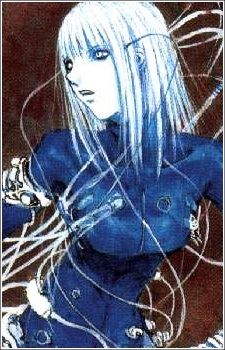
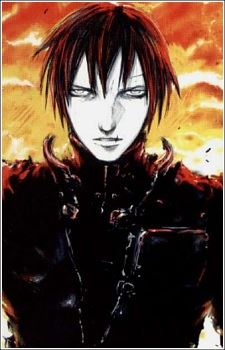
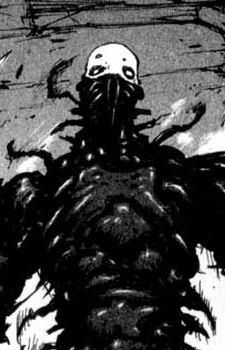
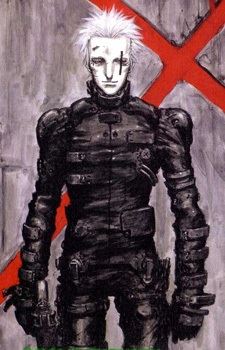
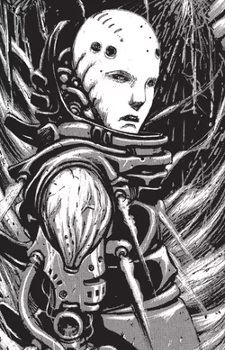
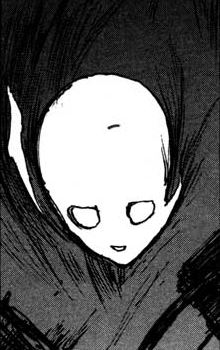




Story - The narrative is sparse, almost nonexistent. The backdrop is ambiguously set as "possibly Earth, possibly the future," offering minimal plot context from the outset. This vagueness might have been tolerable had the characters provided more insight, but alas, they did not. The manga opens with two seemingly random individuals who I guessed were the protagonists. Another man approaches one of them and remarks, "Hey! It's been a long time since I've seen anyone." Without hesitation, the protagonist uses an unspecified weapon to blast the man in half, muttering, "I bet he wanted my cell." Thus, we're introduced to our main character, apparently suffering from paranoid schizophrenia. And this is just the start. Two additional, robotic humanoid figures appear, stealing the dying man's memories, leading to chaotic gunfights and explosions. The action was too erratic and poorly illustrated for me to follow coherently.
Art - The artwork is crude and messy, making it challenging to discern what exactly is happening on the page. Character designs are unattractive, with little distinction between male and female figures. Furthermore, the artist seems to struggle with perspective drawing.
Character - The characters are bizarrely eccentric, behaving so erratically that their actions are nearly incomprehensible. Their dialogue is peculiar and makes little sense no matter how you interpret it.
Enjoyment - Reading this manga offered me no enjoyment whatsoever.
Overall - This manga can be described only as a series of nonsensical, bewildering action sequences. If all you seek are explosions and clumsily drawn humanoids, then perhaps give it a read. Otherwise, it's best avoided.
I believe what makes Blame such a memorable experience is that the manga itself serves as an experience rather than a straightforward narrative. You simply observe events unfolding and gradually piece things together, which is remarkable because it leaves much to your imagination, allowing for personal interpretation. Clearly, there are occurrences and you can see Killy has a mission, but most of Blame revolves around watching him traverse this world in pursuit of his goal.
The brilliance of this narrative choice lies in its ability to make you feel everything happening while simultaneously making it deeply personal. It leads you to imagine a world existing unchanged for millennia, with Killy wandering almost alone for ages. This concept permeates every part of the story, as the author uses landscapes and environmental elements to convey the narrative, inviting you to speculate on how things reached their current state. The art itself tells the story, requiring few words to do so. In fact, the minimalistic storyline enhances Blame's appeal.
You're immersed in a tale where understanding only 0.1% seems impossible, yet you don't need extensive comprehension to enjoy it. Interpreting and filling in the blanks becomes the essence of the story. That’s why I say Blame is more of an experience than a narrated story; ultimately, it's about the journey, making you feel the narrative rather than merely reading it. This effect intensifies with sparse dialogue and abundant scenic beauty.
In conclusion, Blame is a beautiful journey. I understand if some find it frustrating or even poor, given its unique style and potential for confusion. Nonetheless, it’s a different kind of manga, and I rate it 10/10.
Proof that people will enjoy something simply because it's 'weird.' The art is rough and occasionally visually appealing, reminiscent of Dorohedoro, but unlike Dorohedoro, there's no method to the madness—it's just unattractive. Characters barely express emotions, and it takes the author about twenty chapters to learn how to draw a human face. The plot is skeletal at best, poorly and inadequately explained. The entire manga revolves around a character—not quite a person, more like an empty shell—wandering through a cool cyberpunk environment and battling robots without uttering a word. The dialogue is sparse and weak.
There's nothing in the story to connect with—not the so-called "plot," not the characters, since if you combined everyone's personalities into one, you might get a single passable character. Not the 'world' either, as it's too cluttered and messy to make sense of anything, with constant sensory overload making it impossible to fully engage with anything. It's unique, strange, and beautiful at times, but not worth 66 chapters of a monthly manga. There's a limit to 'show, don't tell,' and this series has far surpassed it.
One of my favorite stories is BLAME, which is somewhat amusing because it's not much of a story given the minimal dialogue throughout the entire series. You'll find many visually stunning panels without any dialogue, and this can go on for several chapters. But don't let this fool you; if you read it too quickly, you might miss the point of the story. The narrative isn't conveyed through words or character relationships but rather through the journey of "Killy," the main character. With the lack of dialogue, you're mainly forced to interpret the story from your own perspective, whatever that may be.
I don't want to delve too deeply into the plot as I believe everyone who reads this will have their own interpretation of events within this masterpiece. As you progress through the panels, it feels like you're writing the story yourself. The creator uses large, detailed, empty panels to immerse you in the desolate world, drawing you in despite its often sad or grim nature. You continue wanting to push forward to uncover what's happening, and even at the end, you're left wondering what has transpired. Overall, I would recommend this story to anyone who enjoys cyberpunk tales.
I entered Blame with high hopes that were sadly unfulfilled. The narrative is strikingly linear and ambiguous, leaving much unexplained, if at all. This left me bewildered for the majority of my reading experience. Dialogue is sparse, making it a struggle to stay engaged until Cibo was introduced. Even then, it was the artwork that kept my interest alive. I adore the world of Blame; the character designs are exceptional. The art alone justifies giving this manga a read. However, one drawback in the art is the portrayal of faces. The eyes appear too far apart, and characters consistently wear the same expression.
The characters themselves come off as rather bland, with Killy being particularly uninspiring. He barely utters a word, and by the end, we learn nothing substantial about him. It's disappointing because the universe of Blame is fascinating, yet it lacks an engaging cast and compelling storyline to match. Despite this, I still enjoyed the manga, though it had the potential to be much more impactful.
Blame! is an absolute nightmare.
Blame! feels more like a tone poem than a narrative. There isn't a terribly coherent story. No clear goal or destination. Characterization is vague at best. The whole thing feels somewhat surreal.
What you do get is an exploration of a truly hellish city that's completely devoid of humanity. Every panel feels claustrophobic and threatening.
Reading Blame! was a weird kind of torture, and I'm honestly not sure if I enjoyed this series or not. It was off-putting, and I frequently wanted to just stop reading. But it's engaging and fascinating in a way I don't understand. I had to see what happened next. I wanted to see where the story would go.
You haven't read anything quite like Blame!
Sci-fi is a polarizing genre: some of the best works I have ever encountered belong there; so do some of the greatest wastes of time. That said, Blame! makes me want to take that gamble again. I love it and find it utterly unique. I recommend giving it a try regardless of your taste as its uniqueness shines through. If you enjoy it, you'll be thankful for taking the time.
I've read almost all of Nihei's works, from Blame! to Country of Dolls, with everything in between. It's interesting to note he graduated in architecture before writing this. He's a peculiar individual. In my opinion, Blame! is both his debut and masterpiece, as his other works sadly don't match up. For more of his work, Blame! is a great starting point, introducing many of Nihei's recurring themes.
The world of Blame! revolves around size, abandonment, and nihilism. The vast emptiness emphasizes minuscule feelings through silence. The architecture is stellar, with memorable panels of ruins. Unused facilities, gigantic towers, crumbled tunnels, sealed chambers—it's a rotting carcass through which the tiny cast wanders.
However, one isn't alone here. There are tribes of survivors, dormant mechanisms, cruel butchers making Sith look tame, and deities some consider divine. The diversity feels bizarre yet fitting. Much remains unknown, adding to tension and curiosity. Everything has a reason, but you may never know it—and you don't need to. The reader follows the cast on their set goal, ignoring peripheral info.
Killy’s journey spans a very long time. You see only the "notable" moments among years of walking and waiting. Characters are ants in an enormous megastructure, small in size, insight, and compared to time. This adds poetic depth to the journey.
Nihei's protagonists are stoic and calculated, Killy being the first. His character doesn't interfere with the world. The same applies to the rest of the cast; their ambitions are clear but never central. It adds to characters feeling small against surroundings and maturity alongside Killy’s character.
Blame!'s tempo is slow and steady, with a sense of stillness and suspense. Danger breaks this rhythm, startling readers. Scenes often omit preparation, impact, or resolution, making them feel snappy. Spectacle lies not just in explosions but interruptions and grandeur. Amidst it all, there's calm as characters are insignificant overall. Killy may be strong, but he's still prone to failure.
Among manga I’ve read, Blame!'s art is among my favorites, probably my favorite at the time of writing. It's jaw-dropping, best experienced in black and white on paper. It's gritty, visceral, precise, often gory, dark with noir vibes, sometimes haunting. Certain scenes are terrifying. Villains are sinister, filled with malice. Action is clean, motion incredible. Architecture is staggering; memorable panels feature just that. None of his future works matched Blame!'s art.
No work is perfect. Sometimes action gets confusing near the end. The story can be hard to follow. Fear of death wanes due to Killy's trusty Glock. These aren’t deal-breakers but present. They don’t interfere with what the manga aims for.
I view it as a story of indifference and perseverance—a man with a mission walking a road without knowing if he'll reach the end or if it will be happy. It's about witnessing victories and regrets of a now-sleeping civilization corpse, hope, passing the torch forward, coming to terms with reality, with a tragic, unspectacular, yet heart-warming ending.
There's Noise!, Blame Academy!, a crossover with Knights of Sidonia, and short stories. Noise! is notable as an actual story. I don't remember much about these, believing lack of information adds to Blame!'s charm. Noise! doesn't add nor subtract much. It's there if you want more. Academy is a joke manga where characters are students. Not my humor, but charming. Side stories include Blame 2 acting as a finale. It's fine, but I prefer the original ending. These offer more if you're hungry.
Blame! isn't a perfect manga, nor will everyone like it. Everyone should give it a try though. It's unique with a story to tell. Even if it's not your cup of tea, you won't regret reading it. Nothing appeals to everyone, but everyone should try certain things—that's what a work rated 10 out of 10 means to me.
Thank you for reading up to this point. I wish you all the very best. Kind regards.
Blame is a complex piece of work. Despite the remarkable art and progression in some central arcs, my main issue with Blame is its horrifically unbalanced nature that gradually fades away until it feels like it was mercy-killed by its creator. This makes reading it a strange experience overall, as Blame is already an odd piece from the early chapters. The narrative structure and background are eschewed from the start to focus on atmosphere and experience. While this can carry a work for a while, at some point, Blame ceases to be just that. However, with added ambition comes a promise to deliver, and the goods ordered were lost somewhere in transit.
Story: 3
I give this more than a 1 purely off of promise. There is a clear setup, albeit lacking consistent narrative development, and a world built around it that can be very engrossing and inventive for readers. Blame has a sense of scale and otherworldliness that invites speculation and answers. Sadly, as the manga progresses, it becomes apparent that the reader has about as much idea where it's going as the story itself does. Promising leads into where the narrative could drive are developed to intrigue and then dropped altogether, never to be seen again, until everything blows up in its own face. Blame doesn't stride to the finish; it sputters along broken yet hurried out of necessity into stasis.
Art: 8
The art is great. It's stylized and dark, carrying a distinct sci-fi vibe that carries it through its abstract beginnings and is really the pillar of enjoyment in the series. There are diverse and interesting monstrous beings, consistently evocative and interesting designs and world-building, all setting the tone quite well. Even into the late chapters, where a pattern starts to become apparent in the progression, the designs remain something to marvel at. My only real complaint is that the abstract structure combined with the aesthetic of Blame makes some particularly hectic and massive action set pieces tricky to properly track.
Character: 3
It's difficult to talk about character in Blame because there are very few. Even among those few, the central figure, Killy, is a character only in a very charitable sense. His motivations are limited to the point of nonexistence, existing mainly to one-shot monstrous horrors with his hand cannon. Cibo, who arises as a sort of secondary protagonist, is infinitely more interesting as a character with personality, defined motivation, and background. But regardless, it's hard to connect truly to any character in Blame because there are really no stakes. Killy is functionally unkillable, characters that are undeniably killed are resurrected and repurposed to try to give the manga any hope of ending coherently, and most interesting intermediary characters don't survive to have a lasting impact or get left in the dust entirely. All in all, it's just a grab bag of inconsistency, spearheaded by a blank-eyed killer with no emotional connection to the world around him or his stated goals.
I would say that Blame, on a level of actually being fun to read, both succeeds and doesn't. It's a tale of two halves—the first is an intriguing build into a unique and stylized world full of horrific creatures and gnarly kills, but the second dumps it all in the trash. If I had stopped reading at the end of Killy and Cibo's interaction with the Electrofishers, this would probably be an 8-9/10. But those dastardly two ending arcs exist, which really draw out the underlying flaws of Blame and undercut a lot of the fun by becoming inconsistent and formulaic. It's a classic for its uncompromising style and aesthetics and even its commitment to a blank protagonist and unconventional structure, but as a whole experience, Blame lacks the legs and foresight to deliver on its promises. It wouldn't be a problem if Blame were solely, and consistently, as it is through the first several parts. But there comes a point where it wants to be more. A narrative develops, and the world attempts to make itself understandable. But that process can't be started without an idea of an overall payoff, or even a payoff in the moment. And Blame simply cannot deliver.