

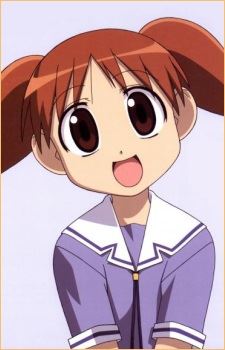
Chiyo Mihama is a child prodigy who has skipped several grades to find herself in high school. On her first day, she encounters a classroom filled with unique personalities. Sakaki, who stands much taller than Chiyo, is quiet and somewhat intimidating; Tomo Takino is energetic and often annoying; Ayumu "Osaka" Kasuga is forgetful but excels at solving puzzles; Koyomi "Yomi" Mizuhara is fixated on dieting and enjoys karaoke despite her terrible singing; and Kagura, who is a competitive tomboy.
As the classmates grow closer over time, they share numerous experiences together—school days, study sessions, summer trips, and all sorts of fun and mischief!
Azumanga Daioh was released in English by ADV Manga from September 16, 2003, to April 6, 2004, and later as a complete omnibus on November 20, 2007. Yen Press republished the series as a complete omnibus with updated translations on December 15, 2009. The series was also published in Brazilian Portuguese by NewPOP Editora from July 2014 to May 2015.




Azumanga Daioh is a beloved classic for good reason. Simply put, it's a comedic masterpiece. Everyone should read it and watch the anime.
STORY: 9/10. The plot isn't complex; it’s another slice-of-life story about Japanese schoolgirls. However, it's executed brilliantly. There's never a dull moment, and you'll find yourself laughing out loud at the hilarious conversations these girls have and the situations they encounter. Heartwarming moments, especially towards the end, add depth. Though it might be seen as slightly cheesy, it feels like the perfect way to conclude the light-hearted series.
ART: 8/10. As a 4koma with a new gag in every strip, most of the illustrations focus on characters from the chest up. Consequently, the designs are quite simple, allowing more attention to the humor. At the same time, the art is very expressive, clean, and visually appealing. Occasionally, there are "special" strips set up like regular comics where Azuma's artistic talent really stands out. The details are delightful and shouldn’t be missed. Overall, the art serves its purpose beautifully.
CHARACTER: 10/10. This is what makes the incredible comedy possible. Every character in this manga is well-developed, original, and utterly hilarious. From the spacey Osaka to the fiery Tomo to the lecherous Kimura-sensei, they all bring their unique charm to the manga. My favorite character, though, is Chiyo-chan’s dad. You won't find a cool cat like him anywhere else.
ENJOYMENT: 10/10. Holy Cthulhu, this series is funny. Even the weakest strips will make you smile, while the best ones will have you laughing uncontrollably. This isn't your typical anime/manga humor—this is off-the-wall, unpredictable, and clever overall. It's just as enjoyable for Westerners as it is for Japanese viewers—you don't need to understand Japanese culture to appreciate the jokes. It's totally fresh and consistently funny.
OVERALL: 10/10. Essentially, this manga is a masterpiece—and I don’t use that term lightly. It's one of the funniest things I've ever seen, done, or eaten. You should go and pick up a copy right now. You won't regret it.
I picked up this manga because Kiyohiko Azuma, the author of my all-time favorite series [book:Yotsuba&!, Vol. 01|511240], wrote it. Initially, I felt a bit let down as I didn't find it as humorous or engaging as Yotsuba&! However, continuing with the story was rewarding. The more I got to know the characters, the funnier and more enjoyable the manga became. By the time I reached the fourth and final volume, I found myself feeling quite sad about saying farewell to the girls and their teachers. The narrative unfolds through a sequence of interactions depicted mostly in four-paneled strips. This series isn't just hilarious; it also evokes a warm, happy sensation. It's an excellent mood lifter when you're feeling low. I highly recommend it to fans of Yotsuba&!
Update: Also, watch the anime version! It's peculiarly adorable and funny :)
One of the best things since sliced bread (maybe).
Azumanga Daioh is considered a classic in the slice-of-life genre, though opinions about it are quite polarized. Some people think it's the greatest thing ever, while others find it incredibly overrated. I personally fall into the category of people who love it, and here’s why:
Azumanga Daioh (a combination of the mangaka's name Azuma and the name of the magazine it was published in, Dengeki Daioh) tells the story of a group of friends experiencing their high school years from the first year to graduation. Each month of every year is divided into two parts.
Typically, Azumanga is told in the 4-koma panel style (if you don't know what that is, Google it), and it has a highly comedic tone. Occasionally, it deviates from this format for longer, more traditional manga-style comics, which are well worth it.
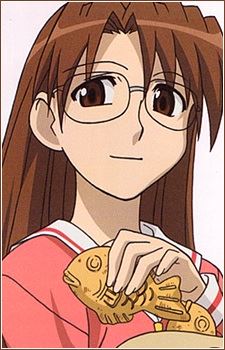
The characters in Azumanga are written by effectively using tropes. Tomo is extremely loud, impulsive, and competitive, despite not being able to win at anything. She has been friends with Yomi since first grade, who would be considered the "smart" one of the group if it weren't for the child prodigy Chiyo, who skipped from elementary straight to 10th grade. Yomi is there to ground Tomo and the others in reality (sometimes failing to do so) and is generally used as a punching bag for the manga, as nothing seems to go her way. Osaka is hard to describe, but I'd consider her the airhead of the group. Then there's Sakaki, who has an image of being cool and distant, but really she likes everything cute and really wants to pet a cat.
Azumanga has really good side characters, from the teachers to other students, and you never get bored because it places importance equally on all its characters. This allows you to see pretty much every combination of the characters play out.
Overall, Azumanga Daioh is a really enjoyable series that is well worth the read. (Also, the term waifu originates from its anime counterpart.)
P.S. The anime intro song is so good, I can't stop listening to it.
It's an earlier comedy manga by Kiyohiko Azuma, but it doesn't quite match the humor or cleverness of Yotsuba. The jokes mainly revolve around the typical young girls in school scenario, which has been overused in anime and manga. The funniest character was probably the perverted teacher. The artwork isn't nearly as impressive as in Yotsuba, and the characters aren't as endearing; I didn't find myself becoming attached to them.
Nevertheless, it does have some decent jokes, and there are certainly worse attempts at comedy out there. You could do worse than Azumanga Daioh. It shares the same uplifting and happy vibe that Yotsuba has, which is definitely a plus for it.
If you've never experienced a 4-panel gag manga, this one is a must-read. To me, it epitomizes the genre.
Story
The narrative revolves around the everyday lives of high school girls and their teachers in an unnamed Japanese school. Its simplicity is its charm.
Art
This being a 4-panel gag manga, the artwork isn't overly intricate, but it perfectly complements the story and format. In short, it's ideal.
Character
A single word to describe all characters here: RELATABLE. It’s not the plot or the art that captivates me; it's the characters that make this manga unforgettable. That makes exactly twenty words. Hehe.
Enjoyment
The enjoyment factor is high. The author's ability to extract humor from such a simple premise is truly impressive.
Overall
The straightforward storyline, decent art, and vividly portrayed characters (especially Chiyo, who is exceptionally well-developed) make this manga incredibly enjoyable and utterly fantastic. Give it a read, and you'll see what I mean.
While I did find Azumanga a bit dull when I watched it a few years ago, the manga is incredibly funny, well-paced, and can be quite touching at times (similar to how it ends with an uplifting yet bittersweet conclusion, akin to Wrinkles). Despite not typically enjoying this genre nowadays or stories where the smart character gets undue admiration (for personal reasons), this one was exceptional.
Manga seems to be a superior art form compared to anime overall. I'm glad I decided to read it since I adore Yotsuba. I didn't anticipate enjoying it as much as I did when I initially considered picking it up years ago.
Now, I'm off to read the three chapters that YenPress didn't release (which they really should have) and hope they are at least half as good as the original ones.
8/10
I'm surprised there are no reviews for Azumanga Daioh, despite many for its anime adaptation.
Story
I love slice-of-life manga, which fits Azumanga Daioh perfectly. Its plot isn't heavy or dramatic; it's sometimes nonsensical yet amazing. The humor is random and odd, making it even funnier.
Art
The art in the first volume isn't my favorite, but overall, it's well done. Since it mostly features four-panel strips, the artwork is simple rather than detailed. Kiyohiko's art in Yotsuba&! is better, though Azumanga Daioh’s art is still commendable. Azuma's style improves throughout the series, leading to some inconsistencies, like Chiyo-chan's pigtails.
Characters
The characters are the highlight. Tomo is hyper-energetic and annoying, while Yomi is level-headed and cynical. Osaka is spacey with strange logic, Sakaki is shy and loves cute things, Kagura is athletic and blunt, and Chiyo-chan is a naive 10-year-old genius. There are also teachers: the irresponsible Yukari, the reliable Nyamo, and the perverted Mr. Kimura. Each character has unique traits that make them interesting.
Azumanga Daioh is one of my favorite manga. I own all four volumes and highly recommend giving it a try.
A slice-of-life manga that follows a group of girls as they navigate through high school, with occasional appearances from teachers and a random cat. Similar to Garfield or other newspaper comics, each joke unfolds over four panels, woven together by a subtle overarching storyline. In an era where it's uncommon to find ink-and-paper writing or art that genuinely makes you laugh out loud, Azumanga Daioh manages to do just that, repeatedly.
It has been at least five years since I last read it, yet I still vividly remember the characters and some of the more bizarre or hilarious gags. Beyond the humor, the author and illustrator excel in developing relationships among the characters throughout the four volumes. If high school is a distant memory—or even a recent one—this manga will evoke nostalgia for those cherished times spent with friends and the carefree days of youth.