
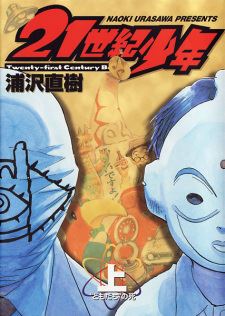
As the conflict between Kenji Endo, his childhood friends, and the cult leader known as "Friend" reaches its climax, two mysteries remain unresolved—Friend's true identity and whether the threat of an "anti-photon bomb" before his death was genuine. In search of answers, Kenji, along with the United Nations, decides to use a virtual reality program created from Friend's childhood memories. This marks the conclusion of a decades-long journey.
The combined storyline of 20th Century Boys and 21st Century Boys won the Grand Prize at the 37th Japan Cartoonist Awards on May 9, 2008.
VIZ Media published the manga in English under the VIZ Signature imprint from January 15, 2013, to March 19, 2013, and later released it as a 2-in-1 omnibus volume. The series has also been published in Brazilian Portuguese by Planet Manga, in French by Panini Comics, in German by Planet Manga, and in Spanish by Planeta DeAgostini.
A complete edition of 21st Century Boys was released in Japan by Shogakukan on December 28, 2016. This edition features the entire series with colored pages and a unique new ending. VIZ Media published this version under the title 21st Century Boys: The Perfect Edition on June 15, 2021.
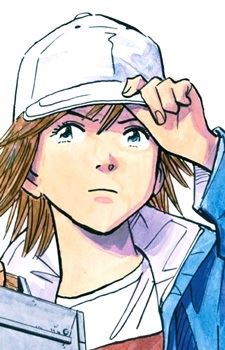
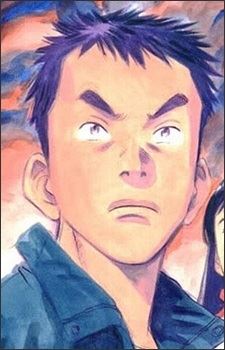
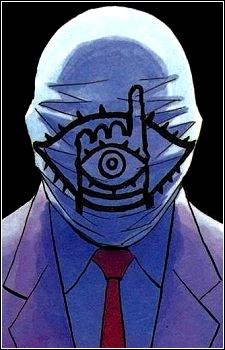
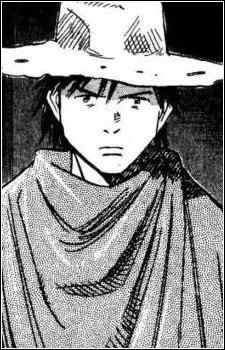
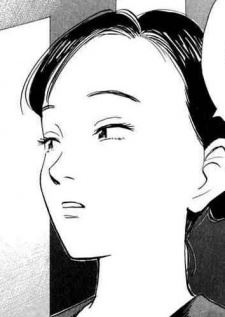
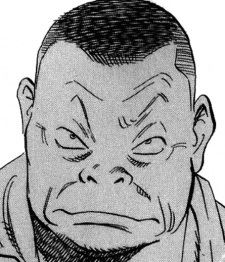





I've already emphasized all the positive aspects of this magnificent series in my review of 20th Century Boys, so I'll tone it down a bit here. 21st Century Boys serves as a fitting conclusion to the series, following Kenji's ultimate confrontation with Friend. The artwork remains consistently excellent, and while the story encounters some bumps along the way—similar to its predecessor—it ultimately finds its footing again. The mystery that we've been following since the beginning of 20th Century Boys reaches its resolution here, and it concludes peacefully. All the characters' efforts have paid off, making their pain and exhaustion worthwhile—and I'm glad for that.
The symbol has been reclaimed; the flag is home.
This is filled with spoilers
This manga left me feeling like I wanted a conclusion, an ending. I've read "20th Century Boys" and loved it, but I was desperate for more. I want a real ending to such a fantastic journey. I don't want to prolong the journey any longer. Not only that, they introduced some sort of "I can feel you with my heart" mechanic, which drives the story in a particular direction. The virtual reality world is evident and realistic enough for me to comprehend. The ESP aspects are unrealistic, but I'm still fine with them because they're not overpowered. However, in this part of the manga, it's incredibly overpowered, and the threat doesn't feel threatening at all. The real threat died a long time ago. I want a closing ceremony to the epic masterpiece that is "20th Century Boys." That's why I consider this medium separate from the main series. I understand I enjoyed the main series more than this. I would prefer if this were more about heartwarming moments rather than another "Kenji saves the world" scenario.
This feels more like a present from the author to fans who craved more. It conveyed a sense of making amends, offering an apology, and getting things right the second time around.
I believe this sequel slightly weakened the story. It includes additional scenes from their childhood, which provided some answers but also raised new questions.
The sequel also illustrates how the characters' relationships have evolved from their childhood days to the present. Even Yukari and Kenji are hinted at having developed feelings beyond friendship after all these years.
I still get the sense that the series hasn't concluded yet. This makes me want to reread the entire series from the beginning.
*Spoiler-free - Rapid Review*
*(My 20th Century Boys review for context)*
Perhaps the most overrated manga ever.
Even though it's Gigguk's favorite manga, this one is *extremely* overhyped. Despite having well-developed characters who interact effectively, the plot struggles with a flimsy mystery that should have wrapped up in about 100 chapters. It’s a mishmash of various ideas that don’t complement each other, and the resolution of plot points is quite dull. In fact, that's exactly what this manga is—dull. The art is decent, and some scenes look great, but the actual story is so random and poorly executed that I can't recommend it to anyone. It's unfortunate that this manga is considered a "rite of passage" for becoming a "true manga fan," because the writing is incredibly basic. And the entire mystery plotline is laughable. It's like trying to fit ten different genres into one story—it just doesn't work. Period. Trying to be too many things at once is detrimental.
I'd give it a 3 or 4 out of 10, but the somewhat innovative, albeit unsuccessful approach, along with some standout scenes, bumps it up to a 5/10.
*(My review for 21st Century Boys)*
This was an unnecessary sequel.
I can't fathom why this wasn't part of the original manga, especially since the previous story didn't conclude properly. It's really strange. Imagine watching a movie, it ends, then you need to switch DVDs just to see the ending.
Moving on to the manga itself.
This was the most disappointing manga conclusion I've ever read. After two weeks of reading and years of waiting since its release, we got a horrible conclusion that answers nothing, sets up nothing, and pays off nothing, filled with the usual nonsense from 20th CB. Once again, I'm astounded by how highly rated this manga is. But I do appreciate that people can enjoy things I don't, and vice versa.
I'm NOT a contrarian, and if your opinion differs, please be respectful. Your opinion is as valid as mine. Don't rate this as "confusing" just because you disagree with me; instead, critique the actual content of the review. That's what it's here for. Don't act immature. Thank you for reading my rapid review, have a nice day/night!
As the continuation and finale to 20th Century Boys, this manga concludes the narrative in a manner that serves as a fitting farewell. It delves further into the true identity of "Friend" and his motivations, offering gratifying resolutions to lingering queries. However, the storyline ventures into fantastical territory with the inclusion of time travel elements, occasionally leading to some confusion. Despite these intricate twists and turns, the ending manages to be sufficiently cohesive for such an elaborate tale. While it may not tie up every loose end, it effectively wraps up the central arcs and feels like a natural conclusion to Urasawa's epic saga. Though not flawless, it is an ending that aligns well with the series' ambitious and multifaceted storytelling.
Surprised that no one has reviewed this yet, while it may not reach the heights of "20th Century Boys," it's a concise two-volume conclusion that remains an excellent read despite its brevity. If anything, I felt a bit let down by the lack of a detailed "aftermath" and a deeper explanation for Friend's motivations, which never materialized. "21st Century Boy" neatly wraps up the saga of "20th Century Boys," beginning with the concert seen near the end of the previous series and leading us to the final page events. Despite being short, it offers an intriguing and satisfying finale to Naoki Urasawa's brilliant creation.
The story directly concludes the events from "The New Book of Prophecies," resolving all mysteries around who Friend was, who replaced him, and the relationships among those involved. I won't spoil too much, but if you've finished "20th Century Boys," go ahead and read this sequel. The narrative style is similar, offering more answers and delving deeper into the past to shape the present, taken to even higher levels here. If you enjoyed "20th Century Boys," you'll find this sequel equally compelling.
As expected from Urasawa, the artwork in "21st Century Boys" is superb, making you pause to admire the intricate details and beauty on each page. While the characters aren't conventionally attractive, it doesn't matter; the art is filled with detail and is visually stunning. Truly a genius both as a writer and artist, the artwork alone earns a perfect ten out of ten in my book.
The characters here are familiar faces, but we get a closer look at Kenji's interactions with the children and delve deeper into some of Friend's former servants. Primarily, it's Kenji and the villains from the previous series who shine, providing fascinating angles and dynamics, especially in their interactions and how they evolve or remain the same.
In summary, "21st Century Boys" further clarifies the final events of "The New Book of Prophecies," though it leaves some loose ends, like unfulfilled confessions between characters. It feels slightly incomplete, yet still satisfying overall. It's almost as if there should have been another chapter, but what we get is still a fitting end to a great chapter. Of course, you should read this right after "20th Century Boys," and you don't need this review to decide that, but if it helps, I hope it encourages you to experience this fantastic series.
As the conflict between Kenji Endo, his childhood friends, and cult leader "Friend" reaches its climax, two mysteries remain unresolved—Friend's true identity and the legitimacy of the threat posed by an "anti-photon bomb" before his demise. In search of answers, Kenji collaborates with the United Nations to utilize a virtual reality program constructed from Friend's childhood memories, marking the conclusion of a journey that spans several decades.
"21st Century Boys" continues the saga of "20th Century Boys," a monumental manga. This sequel unravels many mysteries left unsolved in the previous installment after its abrupt ending while introducing a new "small" problem to be resolved within these volumes. Despite being concise, consisting of only 16 chapters spread across 2 volumes, it ties up loose ends effectively from the preceding work, addressing all unanswered questions and resolving the issues presented here. While comparisons are challenging, the conclusion of this series is commendable. Although some uncertainties persist for me, I rate the story a 7/10 (in contrast to my earlier review of "20th Century Boys," where I awarded it an 8; hence, this sequel might be slightly below or around a 7.5).
The characters in this sequel remain consistent with those in the original, so there’s no need for additional analysis on this aspect. Similarly, since Naoki Urasawa both writes and illustrates, the art style shows minor improvements but remains largely unchanged. Therefore, I won't delve into a detailed critique of the drawing or design.
Entertainment: I read this manga in a mere two hours one morning, right after finishing the first series. Despite its brevity, several moments stand out, such as Manjome's finale or the final revelation about Friend's identity, making it highly engaging. While it doesn’t quite reach the perfect score of the original, which earned a 10, these two hours were thoroughly entertaining, earning it an 8/10.
In summary, if we combine the scores given, the overall grade would naturally hover around an 8.