
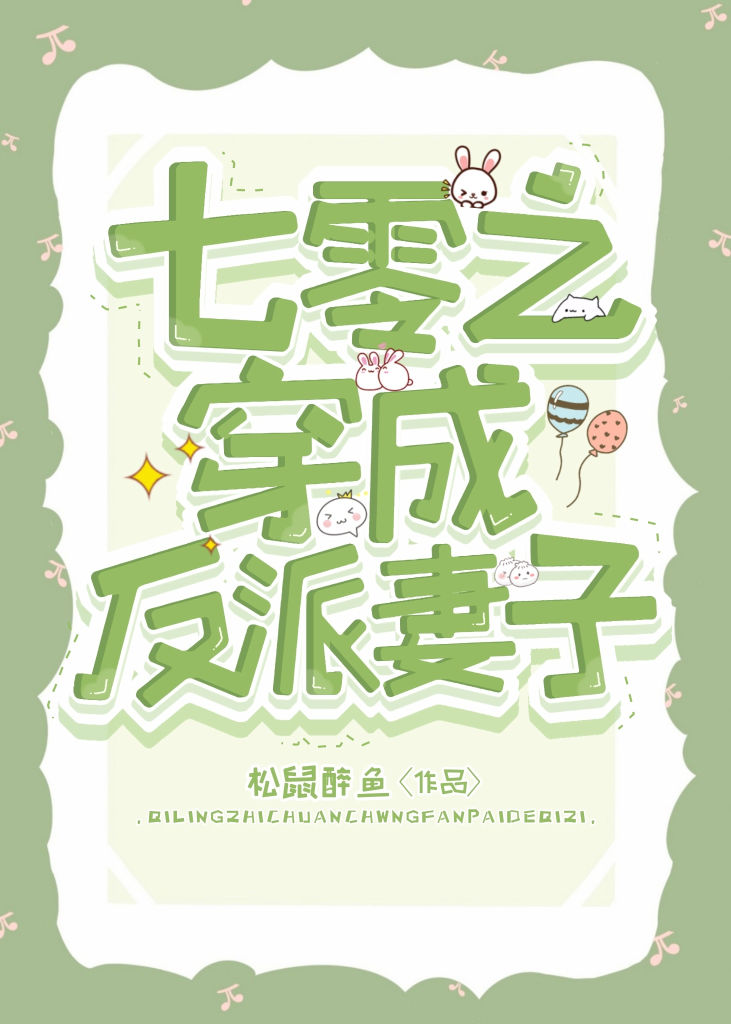
Su Xiaoman was a fake daughter of a wealthy family. She is not loved by her biological parents. She was also rejected by her adoptive parents.
When she woke up again, she found herself in a book and became the village flower Su Xiaoman in the 1970s.
Su Xiaoman is the wife of a villain male supporting role.
The original Su Xiaoman, who disliked poverty and loves the rich, is devoted to climbing high branches, and is obsessed with Jiang Yantang, the educated youth male protagonist who just went to the countryside.
Su Xiaoman was unwilling to marry Xie Mingtu because of his poverty, and is still obsessed with the male protagonist Jiang Yantang. Who knows that not long after, the second brother of the male protagonist Jiang Yantang went to the countryside to visit relatives, and found that the poor boy Xie Mingtu was the real child of the Jiang family, and the male protagonist Jiang Yan Tang was held wrong.
Xie Mingtu returned to Jiang’s house in the courtyard, but he was ridiculed because he was gloomy and vulgar, and he couldn’t compare to the fake boy Jiang Yantang, and his wife was also even more obsessed with Jiang Yantang…
In this way, Xie Mingtu had completely blackened, mad and ruthless, and became the biggest villain in the book, and ended up tragically.
When Su Xiaoman opened her eyes, Xie Mingtu, the biggest villain in the book, was about to feed her rice soup. His clothes were tattered and his bones were visible. When he saw her wake up, his tone was humble and cautious:
“Manman?”
When Xie Mingtu thought that the woman would not give him any response, a pair of slender and tender hands grabbed his thin wrist.





However, the quality takes a nosedive in the later chapters. The author seems to have a habit of introducing characters or bits of information that are never developed or revisited. It's as if they pop up briefly to showcase the FL's skills or enhance her image, but serve no real purpose. For instance, the ML's maternal family or minor characters who briefly appeared would suddenly appear and disappear without explanation.
The FL's backstory in the "real world," where her switched identity involves an illegitimate heir instead of the main character, is hinted at but never fully explored. The resemblance between the real young master and the ML keeps lingering in the reader's mind, but it's never addressed again.
Overall, the story isn't terrible, but it's clear the writer's enthusiasm waned, leading to a rushed execution of the clichéd tropes, leaving readers wanting a more satisfying conclusion.
The side characters often exhibit envy towards the protagonists, but these feelings are portrayed realistically – shallow and short-lived. They either fade away or become occupied with other matters, reducing their impact on the plot. The novel avoids typical jealous vendettas that escalate into violence, which I appreciate.
I also appreciate the realistic portrayal of relationships. Characters who develop affections for the protagonist due to their beauty eventually realize that marriage isn't solely about status, and they opt for genuine connections instead. This adds depth to the narrative.
Regarding the 'fake-real son' subplot, the author handles it with care. Though it doesn't have a clear resolution, the complexity and emotional turmoil faced by the characters are well-rendered. The grandmother's choice is a tough one, emphasizing the impossibility of a harmonious coexistence between the two children.
The main love interest, the Other Male Lead (O!ML), initially comes across as spoiled and hypocritical but evolves over time. His reliance on his mother's affection creates an internal struggle, which ultimately leads to growth and self-reliance. Although his character arc is not the main focus, it adds an interesting dimension.
In conclusion, the story has its flaws but overall, it's a decent read. The antagonist faces consequences, and the innocent are protected. The O!ML's future is left open-ended, but it's satisfying to see him become independent. The main character and his mother's journey towards reconciliation takes time, but it's a meaningful development.
Lastly, it's amusing how the Jiang family, known for lacking literary talent, ends up marrying into artistic professions: the eldest brother marries a pianist, the second brother a novelist, the third sister an actor turned music teacher, and our protagonist with someone involved in makeup and fashion. This unexpected twist adds a touch of humor to the story.
Though originally depicted as a villain in the original source material, his difficult upbringing played a significant role in shaping his character. However, the female lead (FL)'s arrival redirected his path. Although not quite on the same level as the ML, the FL displays her own remarkable qualities. She is a strong-willed and resourceful protagonist, far from a pushover. She refuses to tolerate verbal abuse and stands up for herself with equal force.