
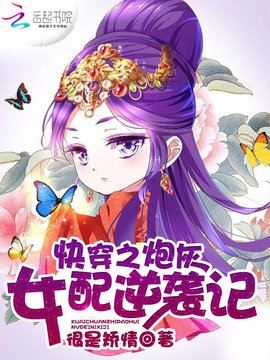
Quick Transmigration Cannon Fodder’s Record of Counterattacks
-
Author:
Hen Shi Jiao Qing,很是矫情,
- Status: Complete
Rating(4.1 / 5.0, 133 votes)
5 stars
56(42%)
4 stars
40(30%)
3 stars
37(28%)
2 stars
0(0%)
1 stars
0(0%)
Popular Reviews
I eagerly anticipate continuing the read, and I extend my gratitude to the translator for their hard work. Kudos to the author for crafting such an engaging tale. I'm on the edge of my seat to see how the story unfolds!
1. The MC demonstrates remarkable adaptability, adjusting her demeanor according to each new world she encounters while maintaining a consistent moral compass within.
2. It offers a unique perspective, as compared to other Chinese web novels. The storytelling approach makes me reconsider how I perceive characters in typical cultivation narratives. Although some MCs appear overpowered or fortunate, this novel provides a more realistic and thought-provoking take on their journey.
3. What I find appealing is the MC's relatability and struggle, as she doesn't rely solely on extraordinary powers or external support – she faces challenges head-on.
4. The translation team deserves praise for their excellent work. The text flows smoothly and is easy to comprehend, even for non-native English speakers like myself, though occasionally complex sentences pose a challenge.
As for drawbacks, I'm struggling to come up with any at the moment. The only遗憾 is my inability to read the original Chinese, despite my eagerness to continue. Overall, a fantastic read!
1. A world beyond mere assignment realms.
2. Absence of a typical, clichéd male protagonist.
3. Unlike typical fast-paced transmigration stories, the female lead (FL) partners with different individuals each time, adding variety.
4. The FL's strength grows through her own determination and efforts, making for a compelling narrative.
While some quick transmigration stories can feel repetitive, the organization-centric chapters bring an extra layer of excitement. I adore the FL ❤️"
The author also commits a common mistake in underestimating the time and effort required to acquire certain skills. Many transmigration stories make this assumption, which I find frustratingly unrealistic. The author seems unaware of this flaw, as Ning Shu encounters characters bringing modern skills to a prehistoric setting without questioning it. For example, Ning Shu effortlessly recites entire novels to compete with a character with a system granting them instant access to all written texts. While the setting permits some leeway, memorizing such vast amounts of content is implausible, even for someone like a fan of Harry Potter.
Additionally, the novel struggles with a conflicting theme of female empowerment and traditional Chinese values. Despite promoting independence, stories where requesters escape abusive partners typically don't result in new relationships. Meanwhile, the MC often criticizes others for not adhering to Confucian principles, which creates an awkward balance. It's possible to be a strong, independent woman while respecting tradition, but the series fails to harmoniously blend these aspects.
There are instances where the narrative suggests "Eastern magic" surpasses Western magic, especially as Ning Shu's abilities grow. While she may be more skilled, the Taoist exorcism techniques and martial arts techniques she employs seem to overpower the Western-style magic in the story's universe, creating an imbalance. Eventually, the MC's logic gives way to an overpowered, unapologetic Mary Sue archetype, with her morality conveniently disappearing as she uses her powers to destroy entire towns for personal gain, justified by labelling the victims as "evil." This clichéd trope feels poorly executed.
While I understand webnovels often lack editing, the MC's constant critique of other transmigration stories becomes grating when her own work exhibits similar flaws. The hypocrisy is hard to ignore.
In conclusion, despite the subpar beginning, the book deserves a solid 5-star rating. But I deducted a star due to the unsatisfactory first-world experience. The system element felt somewhat forced.
The final arc, possibly the fourth or fifth (my memory is hazy from the emotional impact), featured a difficult task for our protagonist, Ning Shu. She took on a mission for a pitiful character from an anime/harem context, which was distressing to read. Yet, Ning Shu's resilience in dealing with the antagonist men and seeking justice for the FC made it bearable.
Many male leads in these types of stories demand harsh fates for their Mary Sue-like FCs, evoking a mix of emotions. You might struggle with whether to continue, but if you're in the right mindset, Ning Shu's journey unfolds with depth. She's the true cannon fodder among the quick transmigration novels, facing an arduous path to revenge due to her unconventional background. Before her demise, she had a limited life experience due to her illness, making her relatable as a transmigration protagonist.
Despite the challenges, give it a chance. Ning Shu grows throughout the story, and you'll find yourself genuinely invested in her development. So, keep reading, knowing that there's much more to love about her character.
1. The absence of romance stands out positively for me among system novels. Unlike other stories where the main character (ML) falls for the female lead (FL) solely due to her uniqueness, this one avoids that trope. The focus on character development and realistic relationships makes the story more engaging.
2. The protagonist is strong and grows throughout the narrative without starting as an overpowered (OP) character. She relies on others initially, which adds authenticity to her journey. While some might criticize her early struggles, it's crucial to understand the context – she's a newbie in a different world. Ning Shu's progress is gradual, and her mistakes serve as valuable learning experiences.
3. The supporting characters are diverse and well-rounded, with some redeemable and others not. It challenges the stereotype that all beautiful FLs are flawless, adding depth to the narrative.
4. The novel provides realistic consequences for antagonists, such as the harem world karma where the lack of women forces the protagonist to engage in unwanted relationships. In another example, the CEO's character arc shows the progression from sexual abuse to physical violence, reflecting a grim reality.
5. The storytelling is generally fresh and avoids cliches, making for an interesting read.
However, the novel is not without its flaws:
1. There's a conflicting feminist message, which has been discussed by other readers.
2. The use of rape as a form of punishment raises ethical concerns.
3. Micro-homophobia exists in certain instances, particularly regarding the protagonist's transition and relationships with other characters.
Despite these issues, the novel stands out due to its strengths, especially considering it's a Chinese work, where some problematic elements might be more prevalent. Overall, it's a commendable read with room for improvement.
However, the novel started to consistently falter around World 22, specifically Chapter 1386. It's quite disappointing, as I once genuinely enjoyed the narrative. The story revolved around a protagonist who evolved from being romantic to pragmatic and strong, driven by her profession and a desire for a fulfilling life. Unfortunately, the progressive deterioration of moral themes, character development, and even the portrayal of the AI has marred the experience for me.
Leave a Review