
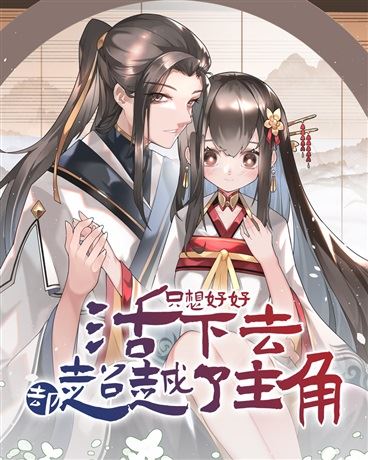
My name is Ye Yong, and I’m panicking right now. I was just reading a novel and accidentally got hit by my phone and I transmigrated and became a villain.
Right now, every day, my thoughts are occupied with how to avoid the male lead and how to make the female protagonists fall for me.
I think and plan my actions carefully, and I make every move according to plan. However, the development seems to have gotten off track. The most obvious changes are the female protagonists, who became different than how they were in the novel. They-
Crap, I gotta run, talk to you later.




Characters-
The characters are also well-established. Battler proves to be an engaging and charming protagonist from the start, evoking genuine empathy during pivotal moments in the story. His likability is infectious, compelling you to fervently support his survival against all odds and eagerly accompany him on this journey. Maria exudes both creepiness and sorrow; while she may occasionally be irritating, it becomes evident that her behavior serves as a coping mechanism for the pain she endures, showcasing her depth as a character.
Jessica is likable, though she wasn't among my favorites in Episode 1; she was merely acceptable in this installment. George, on the other hand, aroused suspicion almost immediately. I was convinced he was the killer, manipulating Maria into committing murder. His perfection seemed too contrived, making him appear untrustworthy, especially with repeated mentions of his affinity for children fueling my suspicions.
Natsuhi's character is skillfully developed, providing just enough detail to pique our interest while leaving room for further exploration in the exceptional Episode 5, which happens to be my personal favorite. As for the others, some noteworthy highlights include Eva's introduction as an initially unlikable character who later experiences a touching humanizing moment with Hideyoshi, enhancing her appeal and intrigue. Additionally, Shannon and Kanon stand out due to the mystery surrounding their identities as "furniture" and the reasons behind it—a puzzle I'm just beginning to unravel.
Story and Atmosphere-
This is likely the weakest episode so far in terms of storyline. The early segments were occasionally frustrating, yet they proved effective and crucial. Upon revisiting them after uncovering certain truths about Beatrice, their significance and foreshadowing become apparent.
Nevertheless, I thoroughly enjoyed the latter half of the episode. The tension was masterfully built, leaving me anxiously anticipating what would unfold. The conclusion sent shivers down my spine, and by the time the credits rolled, I was completely hooked on Umineko, eagerly embarking on my ongoing six-month reading journey.
Overall, despite being my least favorite episode, I greatly appreciated it. It served as an excellent introduction, effectively capturing my interest.
<p>
Nonetheless, I will aim for as precise a review as possible, covering each episode individually as well as providing a holistic perspective. Also included is an extra segment related to the visual novel, exclusive to this single review.
[1. Let's start with an introduction.]
Umineko stands as the second installment in the When They Cry visual novel series and is often regarded as a spiritual successor to Higurashi. Structured similarly to its predecessor, it consists of eight episodes divided between question arcs and corresponding answer arcs labeled "Chiru," with the last four episodes offering clearer insights into what was established in the question arcs.
Episode 1 serves as a prologue, introducing characters, key concepts, and laying the groundwork for an overarching narrative that becomes increasingly complex and captivating with each subsequent episode.
[2. Moving on to the story...]
At this point, the story unfolds as a whodunit crime mystery infused with horror elements, heavily inspired by Agatha Christie's "And Then There Were None," a novel that creator Ryukishi07 cited as a major influence on his writing.
Set in October 1986, the extended Ushiromiya family gathers on Rokkenjima Island, where the main mansion is located, for their annual meeting but becomes stranded due to a monsoon. Similar to "And Then There Were None," a series of mysterious murders ensues, leaving fewer and fewer survivors. The twist? The murders are carried out under circumstances hinting at supernatural involvement, leaving both the reader and characters uncertain: is it the work of a human or a great witch? Deductive reasoning battles against fantasy, and many describe Umineko as a clash between the mystery and fantasy genres (though this isn't entirely accurate).
Regardless, don't expect clear-cut answers in any of the question arcs. Throughout Umineko, more than mere guesses are needed to understand either the whodunit or the basic ideas behind the overarching mystery; observation, taking hints, thinking, and theorizing are required. The rest must be experienced firsthand.
[3. Continuing with the characters...]
At this stage, the characters aren't their strongest asset, as readers are introduced to nineteen of them, all remaining underdeveloped here. However, this is justifiable for three reasons. First, they are all easily recognizable and memorable. Second, development is reserved for later episodes.
Third, and connected to the above, almost none of the characters introduced here remain exactly as they initially appear. One aspect tied to this is the overarching theme of family. Without delving too deeply, I can confidently say that Umineko offers one of the most radical portrayals of family I've encountered in Japanese fiction; parents aren't idealized by their children and are depicted as people with flaws, ranging from abusive yet troubled to sweet if strict to dysfunctional but caring. Moreover, mothers take on central or even protagonist roles in various parts of the story. And this is merely the beginning.
Ushiromiya Battler, as the protagonist, appears goofy, upbeat, and somewhat perverted at first glance, but he is also compassionate, rational, and intelligent. Driven to uncover the culprit and prevent further murders, he is more than meets the eye and shouldn't be judged solely based on this episode.
[4. Concluding with artwork...]
Umineko's story evolves and improves in quality with each episode. What remains inconsistent, however, is the artwork, as the manga adaptations are not illustrated by the same artist. Aside from the current subject of this review, the artist responsible for this episode also drew and illustrated episodes 2 and 8.
Character designs can vary in quality, and most backgrounds serve a functional purpose, yet some powerful panels stand out, and expressions are one of the strong points of the artwork. The artwork truly shines during transitions to crime scenes and more disturbing expressions. These shifts perfectly complement their respective scenes and are not for the faint of heart. This should be kept in mind throughout Umineko: be prepared for extremely graphic horror scenes that could shock or nauseate even seasoned viewers, among other things.
[Extra: comparison to the VN...]
I vastly prefer the visual novel for nearly all aspects, except for Episode 8, which I haven't completed in VN form. Two notes before elaborating on my impressions:
Note #1: My PC version of the visual novel is from Steam and includes a patch that provides PS3 models and voice acting (not present in the original VN), among other features. This patch is free, easy to find, and simple to install.
Note #2: This section aims to offer an alternative for interested readers.
In explaining my preference, the VN takes more time to develop the characters early on. Additionally, I adore the intricately detailed and polished PS3 sprites (including their iconic and terrifying expressions) and appreciate the backgrounds. Writing-wise, I even enjoyed some seemingly superfluous parts due to interesting trivia sprinkled throughout.
Above all, the music and voice acting won me over. Concerning the former, there's a good reason Umineko was marketed as a "sound novel"; the soundtracks effectively enhance the mood and tone of each scene. Moreover, I greatly appreciated Akiko Shikata's contributions to the OST, such as the opening theme (though I prefer the anime version).
What about the voice acting? It's outstanding. The voices align well with their respective roles, whether it's Miki Ito's soft-spoken portrayal of the mockingly playful Ushiromiya Eva, Daisuke Ono's energetic performance as the hot-blooded Ushiromiya Battler, or Ohara Sayaka's deep, commanding voice as the majestic, hammy, troll witch Beatrice. Regarding the latter two voice actors, I cannot praise their performances enough for the sheer energy they bring to their dialogues; it's evident they thoroughly enjoyed their work.
However, fairness demands I acknowledge some flaws. Unlike the manga, which starts "in media res," the visual novel begins with an extended introduction scene at an airport and later at a harbor, where most family members are directly introduced to the reader. Given the visual novel's reliance on script, expect longer scenes across all parts.
Two drawbacks arise from this: a slower start requiring patience and some excessive writing here and there, though the narrative picks up pace once the crimes begin. Lastly, certain parts may seem overly silly, although Umineko is highly self-aware due to its writing style and embraces these elements as part of its charm and enjoyable journey. A legitimate criticism, however, lies in the overly silly fight scenes, which are far more successfully rendered in the manga adaptations.
I hope you found my review enjoyable, and I hope you'll enjoy Umineko in the future!
<p>
The premise follows typical murder mystery tropes. The Ushiromiya family gathers annually on Rokkenjima Island. During their stay, a storm hits, and soon, half the island's inhabitants are dead. This sets up a classic "whodunit" scenario, though Umineko is far from conventional, a point I'll elaborate on later. The protagonist, Battler, is quirky, somewhat perverted, and has a good sense of humor. His level-headedness and logical thinking are crucial to the story, though this may not be immediately apparent. An important detail is that Episode 1: Legend of The Golden Witch differs significantly from the other three episodes. It establishes characters and poses initial questions, serving as a lengthy prologue with a distinct mood and tone compared to the others. The real story kicks off in Episode 2.
That said, Episode 1 is far from subpar. As a standalone story, it excels in presenting its mystery effectively. The suspense is top-notch, and many murders will leave readers puzzled. While it adheres to traditional mystery conventions, it does so skillfully given its starting constraints. The pacing is solid, albeit a tad slow. Unlike the anime, the manga includes numerous details from the VN concerning characters and the plot. It offers an intriguing take on ambiguous events, enhancing the story's elements in my view. A host of fascinating characters are introduced, including the abusive Rosa, the atypical loli Maria, the overcompensating Kinzo, and the enigmatic witch Beatrice. Umineko has a knack for reshaping your perceptions of characters dramatically, making them complex and unpredictable.
The art is commendable, surpassing the generic designs by DEEN and far exceeding the VN's "art." Although character proportions can occasionally appear odd, the style complements the story's overall atmosphere well. Some details are stunning, making it enjoyable to pause and admire certain pages. The only downside regarding presentation is the absence of the VN's BGM, a key strength that greatly enhanced the atmosphere. Certain scenes in the manga lack the same emotional impact without the accompanying tracks, but the superior art serves as a fair trade-off.
As a mystery, Episode 1 is excellent if somewhat familiar. I mentioned earlier that Umineko diverges from the norm, but the story truly takes flight in later episodes. Unfortunately, only EP1 has been fully published so far, leaving the remaining three incomplete. This fragmented publishing approach isn't ideal due to the continuity between episodes. I wouldn't recommend the anime under any circumstances, so if you're interested, consider picking it up in the future unless you don't mind waiting. Alternatively, reading the VN is highly recommended if you wish to know what happens next.
Right. I wasn’t expecting much from the start. Honestly, I had no idea what Umineko was about, but I knew it involved a witch, a family, and a mansion. I decided to check out the anime first, but it was so bad that I wanted to erase it from my memory and instead began with the manga adaptation of the saga. Let me start by mentioning the elements I found interesting.
Basically, episode 1 revolves around the protagonist, Battler, grappling with himself as he tries to uncover the murderer within the mansion. Most importantly, he’s determined to deny the existence of the Golden Witch, Beatrice. That particular point is intriguing. Battler appears to have potential as a character.
Alright, now let’s move on to what I thought wasn’t cool:
- First and foremost, something well-known among non-readers of Umineko are the exaggerated facial expressions. "Ah, but why are these exaggerated faces so bad?" someone might ask, and I get it. Edgy expressions meant to depict insanity, anger, or hatred are usually over-the-top to convey emotions without necessarily showing them subtlety. It seems almost impossible to create characters who can express their feelings naturally without resorting to contorted grimaces and sticking out their tongues, as if this were completely natural. And yes, Umineko is filled with scenes like this. If Maria ever decides to change her demeanor, she simply starts twisting her face and laughing hysterically because creating an organic character capable of evoking genuine fear is apparently very difficult. The expressions she makes are more comedic than terrifying, in fact. And her mother beating her up for making those faces, complete with even more exaggerated expressions... hilarious.
Another example is Natsuhi during her argument with Eva. It essentially becomes a shouting match over who can yell the loudest, but this in itself isn’t inherently flawed—haven’t we all been in family disputes where someone suddenly starts yelling? The real issue lies in the exaggerated faces and death threats, which, coming from characters we barely know, sound more like unbearable madness than a simple family disagreement.
- Another significant problem is how the manga fails to anticipate or prepare its audience for plot twists. Anticipation in plot twists is considered fundamental to make them believable, and a twist without any groundwork sounds like "the author pulled it out of thin air." Episode 1 of Umineko is full of such baseless plot twists. For instance, the charred corpse of the family head is discovered in a room, and only then is it revealed that the man had six toes on each foot, solely because otherwise they wouldn’t be able to identify the body. Couldn’t this detail have been mentioned earlier? Couldn’t it have been referenced or hinted at somehow? But no, it suddenly existed because the author needed it.
There’s another scene where one of the characters, Eva, anticipates her father’s movements by placing a piece of paper between the door so he couldn’t leave his chambers without leaving evidence. Alright, this served to make Battler doubt the origins of the case and ponder the existence of Beatrice, but why did Eva do that? Up until that moment, there was no suspicion or crime concerning that part of the mansion, so her actions seem rather meaningless. And the episode ends without any explanation; she was just super psychic, apparently.
Yet another example of this is when Battler returns the lucky charm to Mary. In one chapter, the climax hinges on Battler saying he didn’t have the amulet, implying he wasn’t spared by Beatrice, all in an attempt to prove to Maria that the witch doesn’t exist. A few chapters later, however, Battler reveals it was a lie—he had kept it all along—and gives it back to Maria to protect her from any threats. Something that could have been easily grounded quickly isn’t, resulting in yet another script convenience.
- Lastly, what disappointed me most about this manga is the characters. I have three main points expressing my dissatisfaction with the cast:
Case 1: They draw conclusions out of nowhere
The characters in Umineko vary wildly in intelligence—from super geniuses to complete morons throughout the story. One inexplicable aspect is how they sometimes reach incredible conclusions without any basis. A good example is Battler’s stepmother, before any murders occur. Battler is upset about the family's infighting and the letter supposedly written by Beatrice, and Kyrie, the stepmother, suddenly approaches him and starts spouting wild theories out of the blue. Not only was Battler not talking to her, but she suddenly unleashes endless strands of thought and backstory. While it’s not entirely unrealistic that she could be a hidden genius, since it wasn’t foreshadowed, she seemed more like an NPC whose sole purpose was to provide crucial information to the protagonist.
Case 2: They change personalities
This issue recurs frequently. The cast of Umineko doesn’t seem to have consistent personalities. Battler is minimally characterized—his primary conflict revolves around whether the witch exists or not, so he alternates between denying and asserting her existence quite conveniently. What’s even more convenient is how the rest of the cast behaves: in Chapter 20, there’s a murder of three people in front of a child in a locked room, with only four people present. Since Mary is a child and they don’t suspect her, Jessica, one of the young women remaining in the mansion, immediately blames Beatrice for the deed. We think, "Okay, she believes in Beatrice." However, in Chapter 21, literally a few pages later, she sees her mother with a bullet wound in her head, and her sole reaction is to wail over her mother’s dead body, repeatedly asking, "Why a suicide?" Considering she already believed in Beatrice committing serial murders, as stated in the previous chapter, and knowing her mother, who was determined to hunt down the culprit and exact revenge, what was the obvious alternative? Especially since Jessica herself had acknowledged the truth of Beatrice’s existence? It makes no sense.
Examples of this personality inconsistency abound in Umineko. George, another young survivor, feels hatred toward the mysterious killer wiping out his entire family, but when it’s suggested that Beatrice was the mistress of the family patriarch and he’s attempting to resurrect her through black magic by sacrificing his descendants, George empathizes with the killer and says he’d do the same. ??????????
And another factor: they oscillate sharply between “Beatrice exists” and “she doesn’t exist!” depending on the author’s convenience. The ones who cling most rigidly to skepticism are Natsuhi and Eva, while the rest of the cast constantly contradict themselves. There’s a consensus that the murder inside the locked room was Beatrice’s doing, yet in the next case, they’ve already forgotten that conclusion and begin doubting her strongly again. It feels very forced.
Case 3: They’re dumb when it suits the author
Battler and company witness the witch’s ritual in Chapter 3 or 4, read about the nights of the murders and Beatrice’s return. Yet for some reason, the geniuses solving murder cases chapters later were too clueless initially to understand what it all meant, failing to connect it with events happening later. Only in Chapter 20, after more than half the house is dead, do they come to that realization—too late for it to be useful.
And what about Kanon, the servant? In a fit of rage, he impulsively decides to confront the witch in the most reckless way possible. Due to this abrupt personality shift, he’s conveniently killed off.
Additionally, Umineko’s characters are too shallow, relying on exaggerated facial expressions to convey emotions. This is an extremely low-level manga, with a poorly constructed foundation that can’t sustain anything, and many unresolved issues that will likely be glossed over in subsequent episodes. A very poor start.