
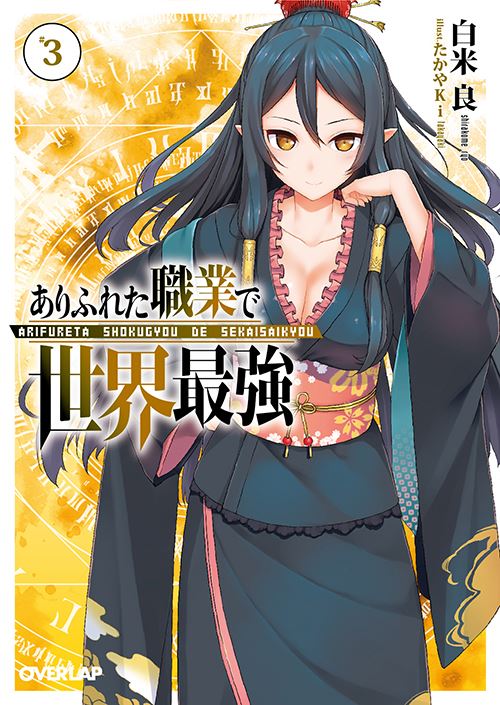
Arifureta Shokugyou de Sekai Saikyou (WN)
-
Author:
Chuuni Suki,Ryo Shirakome,厨二好き,白米良,
- Status: Completed)<br /> 306 WN After Story Chapters (Ongoing
Rating(3.9 / 5.0, 196 votes)
5 stars
58(30%)
4 stars
69(35%)
3 stars
69(35%)
2 stars
0(0%)
1 stars
0(0%)
Popular Reviews
1. The loli vampire character, inspired by Yukari Yakumo from Touhou Project (and if you're familiar with Bad Apple, you'll recognize the connection to 2hu). Although Yukari herself isn't a loli (some fan art portrays her that way, as ZUN, the creator, permits reinterpretations), the same applies to the bunny girl, based on Reisen Udongein Inaba, another non-loli character. My love for Touhou compelled me to stay with the story, even if my progress halted at chapter 402 due to the wait for updates.
2. The author's <em>honesty</em> is commendable. He openly admits to blending his delusions into the narrative. You can read about it in the afterword or this excerpt: "I'm pouring all my effort into delusion power and striving hard. Please take care of this work too." – from the Afterword chapter available on bakape*vert.
Despite this, I found the supporting characters intriguing, particularly the "Abyss Lord" or Kousuke Endou-like character (I've forgotten his actual name; it's been a year since I last read it).
In summary, I'd rate the first volume at 4.5/5. For subsequent volumes, it's a more tepid 1 (or 2/3) due to the author's delusions, and perhaps 3.5/5 for the epilogue stories, with a 4/5 for the Abyss Lord arc. If you're looking for something better, there are plenty of alternatives. But if you're <em>idle</em> or seeking unusual, overpowered content, you might as well give it a shot.
After finishing the main plot, I decided to explore the after story, and I was pleasantly surprised. The series has a fantastic blend of comedy and everyday life moments. The main character's growth, especially after his experiences, is evident, and the after story doesn't pale in comparison to the main narrative. We witness the development of supporting characters, turning the annoying hero from the beginning into a more likable figure.
What truly won me over were these character interactions and the well-balanced mix of fluffy, action-packed, and humorous scenes. In terms of uniqueness, Arifureta stands out from other isekai novels I've read due to the protagonist's struggle to return home rather than simply accepting his new life. The journey, despite forming a harem, appeals to the inner otaku in everyone.
In conclusion, if you're looking for an isekai with a perfect harmony of feel-good elements, thrilling action, and laughter, Arifureta delivers. And the after story only adds to the enjoyment, trust me; I wouldn't lie about that!
Many reviewers criticize it for losing its darker elements or turning into a romantic comedy harem, or perhaps because the MC embodies an emo version of Sasuke from Naruto, which isn't necessarily a deal-breaker – similar dynamics are common in other LNs like Shieldbrother. However, my main issue lies with the MC's sudden ability to create anything without explanation. In the beginning, his passion for guns allowed him to craft a simple cannon from local scavenged materials, which was impressive.
From the second volume onward, the unrealistic nature of his powers derails the story for me. His skills escalate to Chuck Norris levels, with no logical foundation. Initially portrayed as weak, he suddenly knows gun kata and can levitate – even constructing advanced technology like cars, submarines, and motorcycles, all powered by his magic. His weapons are mind-bogglingly complex, combining Gundam-like features, telepathic control, self-igniting hammers, micro-missiles, and retractable spikes. It's implausible for a normal person to possess such knowledge or access to necessary resources like gunpowder, alloys, and circuitry. Although he claims ancient knowledge as inheritance, it doesn't justify the creation of these gadgets.
If he were to just build a Gundam and defeat his foes, that might be more believable. Unfortunately, despite the engaging parts, the lack of plausible progression in the MC's abilities ruins the overall experience for me.
If you're looking for a casual read without delving too deep, this might serve the purpose. It's more suitable for passing the time when you're bored, rather than something meant for serious engagement.
The main character's initial drive for survival resonated with me, but his sudden shift in wanting revenge after being abandoned was off-putting. If that had been the consistent theme, I'd have given it three stars. Unfortunately, it didn't stay that way. He prioritized survival but didn't want to be ruthless, which led to a confusing inconsistency.
Adding to the frustration were the female characters. The vampire princess, initially rejected, was eventually accepted due to their shared outlook. That was fine, but then came the overused therianthrope trope – a rabbit girl portrayed as weak, insecure, and overly dependent on others, plus harboring strong feelings for the protagonist. It felt clichéd and forced.
The protagonist's naivety became even more exaggerated, bordering on Twilight-like melodrama. As I reached volume six, it became clear that the book spiraled into an endless sea of clichés and filler content.
In summary, this book has been a massive disappointment. If the author had addressed these issues earlier, it might have been salvageable, but instead, they veered off into random and poorly executed subplots. I'm genuinely upset with how the story unfolded, and at this point, any improvement would come too late.
1. Light on Substance: As a web novel, it's not designed to delve deep. If you seek profound themes, you might be setting unrealistic expectations.
2. Harem and Loli: With those tags in the title, it's clear what you're getting into. If those elements don't bother you, then it's a fitting choice.
3. Character Arc: Initially, the protagonist's struggle resonates, but his growth afterward is questionable. It's a common formula where the MC starts off broken, but that's part of the fun.
4. Isekai Arc: The first part is engaging, but the rest follows a predictable isekai pattern. The MC's sudden power-up can be frustrating for some, but remember, it's a reaction-fulfillment narrative.
5. Anti-Hero vs. Anti-Heroism: The character is a gray area between the two, which can be refreshing, but not everyone will appreciate this particular take on the anti-hero trope.
If you're seeking vicarious victory and escapism, Arifureta delivers. The protagonist's unconventional choices, like using modern technology in a fantasy world, create a unique experience.
Spoiler Alert:
The dungeon journey, power-ups, and harem dynamics are classic elements in this genre. It's about conquering challenges and enjoying the story.
What sets Arifureta apart from others is its execution and ability to evoke positive emotions. If you're after a feel-good, wish-fulfillment read, give it a try. But if you prefer a more serious or nuanced plot, this might not be your cup of tea.
In conclusion, Arifureta defends its place as a trashy yet enjoyable read, perfect for those who want a simple, uplifting adventure. Your choice to dive in depends on your preferences.
In my opinion, it's a worthwhile read for those who enjoy fantasy with an OP protagonist and a touch of escapism. I prefer stories that offer a break from the harsh realities of everyday life, and Arifureta provides just that – a world of magic and adventure. It caters to those who appreciate cliches and the exploration of various plotlines within a fantasy setting.
The characters are well-developed, with distinct personalities, and their interactions allow readers to form connections without needing deep character arcs. The main character initially puzzled me, as he didn't conform to the usual 'nice guy' stereotype. However, the author skillfully charts his journey from a caring individual to a cold, seemingly mean one, only to redeem himself later. His transformation due to life-threatening experiences and tough treatment is compelling.
I would recommend this series to fans of isekai light novels, especially if you enjoy lighter fare. However, if you prefer more introspective or darker narratives, like in Saya no Uta, this might not be your cup of tea.
I stand by my opinion, giving it a full 5 out of 5, and I would definitely read it again. Among all the isekai I've experienced, this one stands out as my favorite.
The translation and writing are top-notch, with the translators completing their work promptly. I find the writing style enjoyable, particularly the comedy, which I believe is a result of both the author's talent and the translators' skill.
The story itself starts off predictable with a weak protagonist turning powerful and seeking revenge, but it maintains a certain charm. The real highlights come in the after stories where the world is delved into further, making them more interesting, albeit less intense than the main narrative.
As for the harem aspect, usually, I'm not a fan, but this one is handled well. Each girl has her unique development, the jealousy is minimal, and the relationships among them are genuine. The MC's interactions are handled maturely, and the size of the harem doesn't overshadow the plot.
Characters are well-developed, with Hajime undergoing significant growth throughout the story, while other supporting characters also have their moments. The chuuni characters, including the broken rabbits, bring a lot of comedy, and the after stories introduce new, funny characters, enhancing the overall experience.
Overall, the MC's character might not be groundbreaking, but he's relatable, and his motivations are clear. The cast evolves positively, and the humor in the after stories is consistently enjoyable.
Kaori fell for his bravery when he protected a grandma and her grandson from a thug, using humor to embarrass the assailant. She admired his courage and developed a strong affection (bordering on yandere). Yue owes her rescue from centuries of isolation and later support during a crisis, and both she and the main character share magical abilities.
Shia saved her family and trained them, and they owe their survival skills to him. They also possess similar magical powers. Tio became obsessed after he awakened her to the M-world. Aiko emotionally saved Aiko by helping her overcome a mental breakdown during a high-altitude battle against an apostle. Shizuku fell in love when she experienced care and treatment as a girl for the first time, despite societal pressures. Remia, a mother figure to Myuu, chose to marry him for Myuu's sake.
Liliana's love grew from him saving her from attempted rape and assisting her in overcoming a political crisis.
It's important to note that the main character's strength, which allows him to save these women, is unmatched in the world – he can even defeat a god. Additionally, he didn't pursue relationships with anyone other than Yue until Volume 5 of the web novel (Volume 7 of the light novel).
The characters' power levels are justified through their experiences, such as Hajime's relentless training, acquiring god-like magic, and genius-level intellect. Each woman's growth is also a result of their own efforts, training, and unique abilities.
Even the side stories, like Kousuke Endou arcs and the Tortus journey, enhance the overall narrative, making the after-story just as compelling or even better than the main plot."
In summary, the harem isn't arbitrary, and the主角's strength and the development of his relationships are integral to the story. The characters' power and growth are well-explained, and the side stories add depth to the narrative.
Leave a Review