
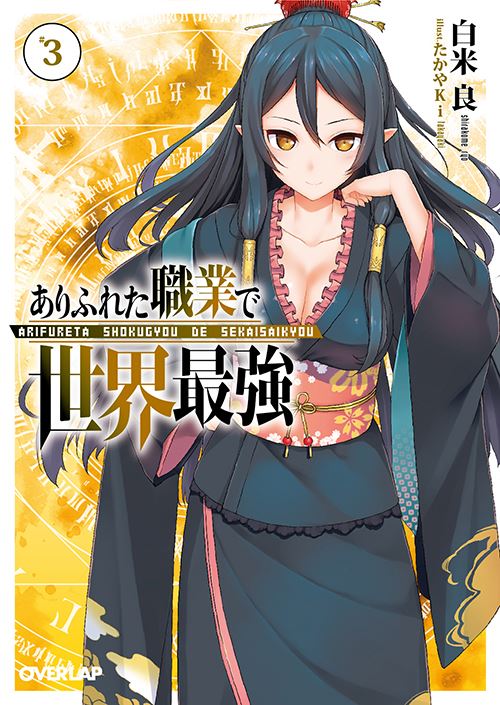
Arifureta Shokugyou de Sekai Saikyou (WN)
-
Author:
Chuuni Suki,Ryo Shirakome,厨二好き,白米良,
- Status: Completed)<br /> 306 WN After Story Chapters (Ongoing
Rating(3.9 / 5.0, 196 votes)
5 stars
58(30%)
4 stars
69(35%)
3 stars
69(35%)
2 stars
0(0%)
1 stars
0(0%)
Popular Reviews
The series itself is a fantastic read. The plot was coherent and didn't drag, with a clear direction from the beginning. Although it might have borrowed from common tropes, the author skillfully infused depth and subtlety, keeping me engaged throughout. The characters were diverse and well-rounded, with most of the main cast being fully realized, even if Yue's development started later in the story. The antagonist also had a backstory and motives, despite not being overly explored.
The world-building was impressive, showcasing attention to detail, and the plot, lore, and characters were intricately connected. The accompanying series, Arifureta Zero, further enriched the lore. While the writing could benefit from some refinement, it was still satisfactory for a web novel (WN) and the light novel (LN) version remained true to the original source.
Despite receiving unfairly low ratings, I believe the series deserves higher recognition. It ranks around 4-4.5 on my scale, falling short of something like Fullmetal Alchemist but certainly not lacking in quality. Don't let negative reviews sway you from enjoying this gem; it's definitely worth reading.
The plot, however, becomes convoluted with numerous unpredictable twists, occasionally bordering on illogical. For instance, the protagonist suddenly conjures a Death Sun Ray without prior explanation, which deviates from the established pattern of introducing new abilities beforehand. This inconsistency stands out.
In my opinion, I wouldn't advise reading it. While the ending satisfactorily wraps up, the chapters beyond Chapter 110 become increasingly tedious. There are a few unnecessary subplots, such as the purification of the oasis arc, that serve little purpose.
The only redeeming aspect is the character Tio, the dragon, who brings some humor. Otherwise, the book doesn't offer much value. The main character's softening due to influence from his harem members from his previous life becomes a major annoyance, especially when it affects his decision-making negatively.
As someone who doesn't particularly enjoy harem stories, I initially didn't mind when it started, but the impact on the MC's behavior turned it sour. If you're considering it, I'd suggest waiting for the anime adaptation, as it's more likely to address these issues and provide a better viewing experience.
While the harem aspect and action sequences may be enjoyable, the inconsistency in the character's behavior becomes grating. The harem members are described as unique, not carbon copies, which is a positive point. However, the development of the main character's relationship with the female lead could have benefited from more depth and a stronger foundation than simply a shared, undefined similarity.
In summary, if you can overlook the character's contradictory actions, the story offers entertaining elements. But for those sensitive to character consistency, it might be a challenge. The author could have spent more time refining the main character's relationships to make them more believable and engaging.
Kaori and Shizuku's romance, on the other hand, becomes the highlight, compensating for Shia's rocky moments. Kaori's arc teaches about embracing change in loved ones, while Shizuku's self-discovery is portrayed beautifully. Her character growth would have benefited from earlier exposure.
The main storyline follows a classic trajectory of tragedy turning into strength, as the protagonist transforms into a harem member – not necessarily a negative thing. Many compelling narratives have straightforward structures.
For those concerned about dark themes, let's not dismiss the story based on preconceived notions. Kouki was introduced as a villain from the beginning, so hatred towards him is expected.
This tale revolves around a protagonist who descends into darkness before reclaiming his heart and finding love. Readers often enjoy seeing a protagonist struggle, even if it disrupts the original sweetness. The story serves as a reminder that the hero's journey isn't solely about darkness; it's about overcoming adversity and returning to a more compassionate state.
I rate it 4 stars, deducting one for the somewhat uneven romance, but overall, it's a recommendation, especially for the captivating side stories. They truly shine.
Now, onto my thoughts on the novel. Initially, I discovered the manga and read up until Chapter 5, intrigued by the character's journey. Many readers seemed to lose patience quickly, particularly with the female characters following him, given the Harem genre. While this was expected, I found the way the author portrayed Yue and Hajime's dynamic with their companions amusing at times.
The story had its ups and downs – moments that made me laugh and others where I wished for a more engaging plot. However, I appreciated the character development, as it allowed the protagonist to become more human, even if his reactions could still be predictable. It's essential to recognize that not every story caters to everyone's tastes, and I'm not defending this book; I merely share this observation, as I've seen similar patterns in other novels that I personally enjoy.
In conclusion, whether or not you should read this novel is entirely your choice. You might find it appealing, or it might not resonate with you. Give it a chance, and let your own judgment decide.
Unlike other works where the main character constantly gets beat up for cheap laughs, this one features a strong protagonist who exudes confidence. The clichés are there, but they're executed cleverly, similar to My Hero Academia. The main female character actively tries to recruit him into a harem, and honestly, who could blame him when even night battles can't defeat her? If you despise that overly naive, self-righteous character type, this novel might just be your cup of tea. It's got smugness, humor, sweetness, and a healthy dose of badassery - around 40-60% of the book, depending on your definition of awesomeness. And if you're a fan of firearms or weapon enthusiasts, the main character's arsenal is practically a harem of adorable gadgets.
1. Although the web novel (WN) isn't flawless, its strengths far outweigh its weaknesses.
2. The main heroine is a loli, which might be a point of contention for some. To clarify, the vampire character stopped aging at 12, making her significantly older than the MC, who is 16. Some readers might relate to the MC's discomfort, but it's important to remember that age gaps are common in such settings, especially given the context of demon battles.
3. Those who advise against reading it because it's supposedly a waste of time, perhaps they should consider broadening their reading horizons to scientific journals instead of dismissing someone else's enjoyment.
4. One reviewer mentioned disengaging after Kaori's death, but their decision wasn't driven by disappointment; it was a mix of concern and anticipation. The novel's emotional rollercoaster, with its highs and lows, is part of its charm.
5. Lastly, to the person who created an account solely to criticize Yue, the world of the novel may not adhere to our real-life sensibilities. Early marriages are typical in many world-building stories, especially in demon-fighting contexts. Your negative rating doesn't reflect a true understanding or appreciation of the story.
In summary, the novel starts strong, and while it may not cater to everyone's tastes, it offers a compelling and immersive experience for those who give it a chance.
It's important to remember that the human brain reaches full maturity around the age of 25, putting Hajime's mental resilience at risk. His extraordinary intellectual growth can be attributed to what is known as Aquired Savant Syndrome. The apparent contradictions in his behavior, which may appear hypocritical, stem from the conflict between his pre-trauma personality and the one shaped after the event.
As Hajime becomes more composed, it signifies a healing process from the emotional stress and trauma he has endured. The novel offers a unique perspective on the psychological aspect, and I highly recommend it, especially for those with a background in understanding complex themes (my apologies to those who might find it overwhelming).
From my perspective, this isn't entirely fair. It's true that the author shifts focus more towards the harem element later on, but considering the MC's background, they deserve the love and support from those around them. If you appreciate a dark start, engaging harem dynamics, an emotionally uplifting progression, and an overpowered main character who isn't afraid to showcase his prowess, I would definitely recommend this novel.
Leave a Review