

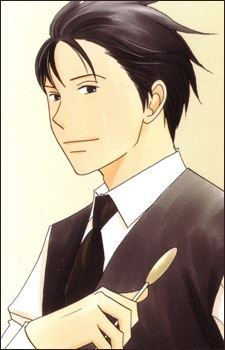
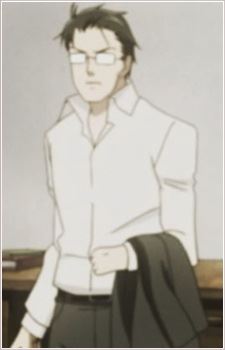
Shinichi Chiaki, a perfectionist and the son of a renowned pianist, is in his fourth year at Momogaoka College of Music, harboring a secret dream of becoming a conductor. His passion for music was ignited by his admiration for his father. Despite his desire to return to Europe, his fear of flying confines him to Japan.
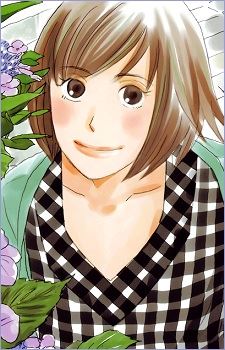
One evening, after passing out, he is taken in by Megumi "Nodame" Noda. At first glance, Nodame is a gifted pianist, but she is also messy and eccentric. To make matters worse, she lives next door and ends up being someone he has to work with. Although this sounds like a recipe for disaster, Chiaki finds himself drawn to her, as she rekindles his love for music. What does the future hold for this musical duo?
Nodame Cantabile has been adapted into three different television series: an award-winning live-action drama that aired in 2006, followed by a sequel TV special in January 2008, and an anime series spanning three seasons, with the first season airing in 2007.
In 2014, it received a South Korean adaptation titled Cantabile Tomorrow.
The series was published in English by Del Rey Manga, in France by Pika, and in Spain by Norma Editorial. Kodansha later acquired the English license and published the series digitally from July 26, 2016, to June 27, 2017.
The final two volumes, titled Nodame Cantabile: Encore Opera-hen, serve as a sequel to the main series.






This was one of the best manga I've ever read. Initially, I didn't expect it to be this fantastic. My expectations were quite low, but this manga exceeded them greatly.
Nodame and Chiaki feel very real. They aren't like typical shoujo characters; everything they do or say matches what regular people would do, which made me fall in love with this manga.
I'd love to read more manga similar to this one.
o/
I would like to share my insights regarding the plot developments the author has set forth for the story's progression.
The most intriguing aspect of reading a narrative lies in predicting its unfolding based on character growth, transformation, and by observing both the deliberate and inadvertent hints provided by the author.
I am delighted to witness Nodame's evolution. The tale began with her at 20 years old, and as it progresses, she now stands at 23. Her journey from Japan to France, encountering diverse individuals and absorbing new knowledge, naturally fosters personal development. This maturation is logical and necessary for the character. However, I've noticed Chiaki hasn't experienced a parallel growth trajectory. While this might seem imbalanced, it serves a purposeful design by the author, critical for future narrative arcs, particularly influencing the romantic dynamics that captivate many fans.
Whether or not I'll be permitted to speculate on the story's conclusion remains uncertain. Nevertheless, these are merely conjectures, possibly unfounded.
Are you aware that the author admires "The Rose of Versailles"? Do you recall the protagonist's fate? Understand why it culminated tragically? It's plausible that as characters evolve, elements initially central to their appeal may lose relevance, prompting an impactful, albeit somber, finale. Furthermore, while characters appear splendid adorned in opulent attire, changes inevitably strip them of such luxuries, diminishing further engagement from fans.
Manga creators often fear their work isn't taken seriously. In reality, numerous manga convey profound messages through compelling plots. Personally, I believe some manga artists merit recognition akin to literary writers—a sentiment shared by many.
Classic Chinese literature frequently concludes tragically, mirroring authors' perspectives shaped by societal contexts. An author's life experiences influence their creative decisions, including whether characters meet unfortunate ends.
To underscore a couple's unfulfilled romance, authors often juxtapose it with secondary characters achieving happiness, thereby accentuating the protagonists' plight.
These reflections encapsulate my general impressions. Various subtle clues within the story hint at potential endings, but revealing all could spoil surprises. Thus, I conclude here.
Ah, Nodame Cantabile. I'm a big fan of yours. The anime truly captivated me—from the first season, through the second, until the finale. It was genuinely breathtaking. So naturally, I decided to give the manga a chance.
Story: 10
I won't elaborate much on the story since it's completely stunning. The manga and the anime are practically identical. The narrative is incredibly realistic, and throughout its progression, it never strays from its central theme—music. To me, this unquestionably stands as the best music-themed series ever. The storyline doesn't skimp on musical knowledge; instead, we're treated to an abundance of music, particularly classical pieces. It masterfully conveys its main points, allowing us to immerse ourselves in the story swiftly. Well done.
Art: 6
As for the artwork... I'm not sure if it's just my perception, but it seems somewhat inconsistent. At times, it looks beautiful, yet at others, it appears rather comical (lol). Personally, I don't particularly enjoy the art style. Compared to other mangas I've read, it feels quite simplistic. It lacks detailed illustrations and isn't very neat either.
Character: 10
The characters are integral to the story. We have two main protagonists: the perfectionist Chiaki Shinichi and the eccentric genius Noda Megumi. Their character dynamics aren't entirely novel—a harsh guy meets an eccentric girl, she falls for him, he rejects her initially, she persists, he eventually realizes her genuine feelings and opens his heart. This plot might seem cliché because it's been used countless times, but the ChiakixNodame pairing didn't disappoint. Initially, I found their relationship stagnant, but I'm glad they didn't let me down. Their pairing feels fresh, with surprising elements that keep us engaged. Moreover, their characters are strong and relatable to readers.
Additionally, the supporting characters also play their roles well. Their presence is palpable, and their importance grows as the story unfolds, even though they aren't the main focus.
Enjoyment: 8
I'd give it a perfect score if we could hear the music while reading the manga... but unfortunately, we can't. Yes, that's the only drawback of this manga. Since it revolves around music, not knowing the specific pieces (sometimes Ninomiya uses uncommon classical music, right?) makes it hard to fully imagine the intended emotions or situations. On the bright side, this weakness is nonexistent in the anime. If you find the lack of auditory experience bothersome, I highly recommend watching the anime immediately.
Overall: 8
Despite flaws like inconsistent artwork and silent music, this manga remains quite enjoyable. The story itself is exceptional. Even if you can't hear the music, you can still imagine it being played, haha. Although I strongly recommend the anime series more, as it offers a fuller experience.
Art: poor. Particularly in the early volumes, characters are more crudely sketched than carefully drawn, lacking significant detail.
Story: mediocre. It's overly long and includes an excessive number of panels depicting musical performances and mesmerized audiences.
Characters: mixed bag. The two main characters are well-developed, and a few secondary ones are decent. I particularly disliked the group of opportunistic students (especially the detestable, stingy Chinese pianist) who leech off the protagonist. Besides these, there are numerous secondary characters, most of whom aren't explored deeply.
Enjoyment: not bad initially, but as the manga dragged on far too long, I felt relieved when it concluded.
This is a very lengthy romantic comedy set in the music world, clearly narrated from a female perspective. Objectively speaking, it’s the tale of a brilliant, hard-working, wealthy, and handsome musician (Chiaki) falling for a rather unremarkable slacker. Not only does she freely benefit from him and his family, but he also caters to her every need: he cleans, cooks, and babysits her since she can barely do anything independently. Truly, she even neglects bathing for days if left alone. Does she bring anything to the table? Her quirky and instinctive personality seems enough to label her an angel, despite her doing very little for her admirer and occasionally disappearing due to mood swings. She has talent, but it needs to be painstakingly nurtured by her lover and teachers, step by step. The author even suggests that the slacker is better than Chiaki’s beautiful ex-girlfriends. His mother remarks that she doesn’t remember their faces and encourages him to cherish his bond with Nodame.
I hoped against hope that he would come to his senses and leave her, but obviously, that wasn’t meant to be; after all, this is a josei manga, where the notion is that even a plain girl with no notable qualities deserves a rich (they're always rich, naturally!) and handsome prince. It’s easy to see why women might like it, but it puzzles me to see men enjoying it as well.
I have spent years reading manga and watching anime, but this is the first time I've ever felt compelled to write a review.
As a musician with the piano as my primary instrument, I’ve never encountered anything quite like this before. The way musical pieces are used, the descriptions provided, and the terminology employed make classical music enjoyable even for non-musicians. It’s truly endearing. The characters' personalities are outstanding! This is one of the funniest manga I've ever read in my life.
The art is simply incredible! Being a graphic designer myself, I can't help but see it as a masterpiece! It's amazing how such simple illustrations can be so dynamic. Truly remarkable.
Please, if you're looking to enjoy one of the best manga and anime experiences out there, give this a read! The authenticity of the relationships, the beauty of the music, and the joy of reading something both fun and meaningful make this the perfect choice.
As a former music student, I found this to be an absolutely fantastic read. The story feels realistic and has a great vibe. The characters are multidimensional and engaging, and the understanding of music and its terminology is excellent.
I would recommend also listening to the Nodame Cantabile CDs while reading the manga; it makes for a much more enriching and enjoyable experience.
The only downside is that the romantic development is quite slow. However, it avoids falling into any typical shoujo manga clichés.
Read or watch, it's your choice – either way, you'll enjoy it. The real question is whether you should read or watch.
Differences
1. Audio - If you choose the Anime, you get to hear the music pieces, which offers a deeper understanding of the emotions and technical challenges involved in playing them. With the manga, unless you seek out the specific piece and listen to it separately, you won't fully grasp its essence.
2. Drama - The manga features minimal drama, with no competing affections or heartbreaks. It’s simple and lighthearted. On the other hand, the Anime emphasizes relationships and creates more drama around them. Characters like those from the R*S Orchestra are much more prominent.
3. Length - The anime runs about twice as long as the manga. In the manga, most "music playing" scenes are covered in just a page or two; there's only so much you can depict in terms of musical notes and dramatic performances. The Anime includes extended musical segments with actual music playing in the background.
Manga: 8/10 VS Anime: 9/10
I prefer having the matching audio and enjoy the more dramatized version presented by the Anime. However, the stories are nearly identical. So, if you're not particularly interested in classical music and are looking for a drama-free read, go for the manga. Just pick one because it's a great story.
Three words are enough to introduce Nodame Cantabile: lovely, passionate, and inspiring.
This beautiful musical rom-com manga follows the life of the arrogant musical genius Chiaki Shinichi as he navigates through the music conservatory he is enrolled in. A twist of fate leads him to meet Noda Megumi, or "Nodame," and this energetic eccentric nonchalantly drags him into numerous life-changing moments he would never experience if they hadn't met.
You might wonder, "Why should I even consider reading a musical manga?" Of course, there's already an excellent anime adaptation and two sequels, so it makes sense to just go for the anime, right?
But don't let your expectations of dullness from this seemingly silent musical story take over. For a black and white manga, it is brimming with color – full of emotions and candid moments. Whether in funny times, sad times, or especially during all musical performances, you can feel the characters' emotions in every panel as if captured by a professional photographer. There's no exaggeration in calling Nodame Cantabile more of a photo album than a manga.
The story of Nodame Cantabile is nothing short of respectable. You have two college students struggling their way, meeting and parting with friends, and deepening their relationship as they hit many obstacles. It's a very relatable story revolving around timely struggles faced by people uncertain of their future. The story is handled with utmost care and respect; it never feels senseless; everything is worth following. Even with such a mature story, Nodame Cantabile manages to be light-hearted and hilarious without ever making things awkward for the narrative.
Nodame and Chiaki are, hands down, the best couple out of all the animanga pair-ups I know. Chiaki’s perfectionist nature and Nodame’s devil-may-care attitude constantly clash, sparking the growth of both as individuals and as a couple. Slowly, one learns and accepts things from the other while still being true to themselves. They begin to rely more on each other but remain strong and independent people. These changes also help them gradually come to terms with real-life dilemmas.
The supporting cast is a treat too. From Tokyo to Paris, they meet a variety of interesting people who either challenge them or just want to have fun. They get ample panel time and development, making them truly relatable.
This series is an emotional roller coaster for me. Hilarious most of the time, heartbreaking at the right moments, lovely every time, and inspiring throughout. Nodame Cantabile transcends the traditional "achieve your dreams" story while maintaining a sense of realism to be believable. The story is very dear to me, as someone who faces similar problems as the characters. I never let fictional stories influence my way of life, but I will gladly make an exception for this one.
Even with all the great things about this series, it is challenging to recommend to others. The story is basically about people living their everyday lives and eventually facing the biggest turning point of their career – and that's about it. It's even more about Nodame and Chiaki's growth as persons and how they need each other, and the romance between them is more or less a result of this development. But the goal is never the true purpose of this manga; it's the journey – the journey of accepting and enduring all odds whatever life throws at us and still having a positive outlook in life.
Take your time to read or watch Nodame Cantabile. The plot and characters are great, but what really matters is the passion it shows. It's genuine and pure; a very honest series.