

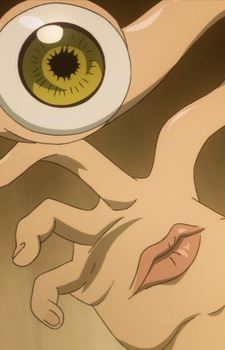
"Parasites" are creatures the size of tennis balls, with unknown numbers and origins. They invade and take control of the human mind to survive. Shinichi Izumi is a 16-year-old high school student living with his parents in a peaceful neighborhood. One night, a Parasite attempts to take over Shinichi's body but fails to fully control it, ending up inhabiting only his right arm.
As a result, both Shinichi and the Parasite, who calls himself Migi, maintain their own minds. In this unique "human and alien" partnership, Migi suggests they cooperate to survive. Shinichi has no choice but to agree, and he must now cling to his morality as he and Migi confront other bloodthirsty Parasites.
Kiseijuu won the 17th Kodansha Manga Award for Best General Manga in 1993. In 2003, it was reprinted in an eight-volume complete version format. In 2014, it was released in a new edition format and a bunko format complete version. The manga was adapted into two live-action movies released on November 29, 2014, and April 25, 2015, respectively. A spin-off live-action series titled Parasyte: The Grey was released on Netflix in 2024.
The series was first published in English as Parasyte by Tokyopop, appearing in their manga anthology magazine Mixxzine, and had a 12-volume release from June 23, 1998, to November 19, 2002. Del Rey Manga republished the series based on the eight-volume reprint from May 1, 2007, to July 28, 2009. Kodansha Comics USA later reprinted the Del Rey release from July 26, 2011, to August 21, 2012. It has been published in Spanish by Planeta Comic and in Brazilian Portuguese by Jbc from September 2015 to June 2016. The manga was also published in Italian by Magic Press from October 3, 1998, to August 30, 2004, before the release was discontinued. RW Edizioni picked up the license and published the manga based on the eight-volume reprint under the GOEN imprint from December 6, 2014, to January 30, 2016.

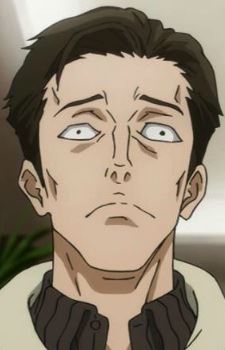


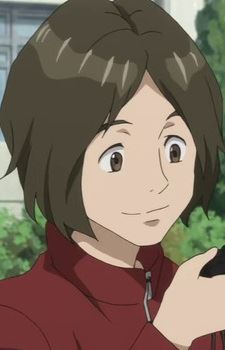





This is a review I decided to write after re-reading Parasyte two or three times over a span of roughly four years. Many reviews already exist, so I'll attempt to craft a comprehensive yet straightforward one.
Story:
I thoroughly enjoyed it. The length is substantial but not overwhelmingly epic; it strikes a balance that avoids abrupt endings while maintaining interest without dragging on endlessly. The storyline can be segmented into a few major chapters, each flowing seamlessly into the next, making for continuous reading. It doesn't follow the typical manga pattern where a new threat emerges just as you think the story has concluded. The plot begins gradually but never stagnates and concludes definitively with no sequel planned. An extremely brief epilogue provides closure, ensuring no loose ends remain within the characters or storyline.
The plot itself is simple yet shrouded in mystery. The origin, nature, and purpose of the parasites are not fully disclosed, only hinted at. What's clear is that they originate from outer space as snake-like creatures, invade parts of human bodies (preferably the head), can change shape, and consume their host species using the host’s organs. The narrative follows a parasite failing to enter Shinichi’s brain, instead integrating with his arm, resulting in a symbiotic relationship. Together, they face enemies, assist the Japanese army against other parasites, grow stronger, and learn to understand each other. The story is primarily told from Shinichi’s perspective, with occasional exceptions. Random scenes provide context about the world, such as an infected dog or a parasite causing a fatal car accident. Everything ties together by the end.
Art:
The art style is distinctive, not your typical anime look with large eyes and small mouths. It leans towards realism, lacking exaggerated female forms or unrealistic body proportions. If you appreciate realistic art, you’ll love it; if you prefer classic innocent styles, this might not be for you. The artwork is clean, with no unnecessary lines, grayscale, or overwhelming backgrounds. Balanced and pleasant, it features minimal gore—just enough blood here and there to accompany severed limbs and corpses left to dry like laundry, bones and flesh protruding.
Characters:
The characters are well-developed, each with unique personalities and thought processes, even the parasites who exhibit diverse behaviors, emotions, memories, and judgments. No two parasites are alike; some are dumb, others curious, intelligent, or leaders. Humans are equally well-defined, sometimes predictable, other times surprising. Throughout the story, three collective characters emerge: parasites feeding on and mingling with humans; humanity fighting off its predator; and the two known symbiotes, outcast by other parasites, helping humanity. Sometimes parasites win, other times humans do. Shinichi and Migi undergo significant character growth, transforming into a thinking weapon and a matured individual respectively. Shinichi’s emotional nature becomes dulled by Migi’s presence, leading some to view him as cold.
Enjoyment:
Given that I’ve re-read it multiple times and consider it my favorite manga, it’s evident I greatly enjoyed it. I laughed when Migi transformed into a giant penis during a public moment, felt sad for the puppy dying in Shinichi’s arms, and was hooked until the very end, never bored. There are no flashbacks, making the story easy to follow.
Overall:
My sole gripe is the lack of detailed information about the parasites’ origins and purpose. It felt as though some all-powerful being had a plan for them, then abandoned it, leaving the parasites to fend for themselves. This blank slate is a minor minus overshadowed by countless pluses. I highly recommend it to those who appreciate action, crime, survival, and evolution. If you seek senseless fighting, sex, or alien invasions, look elsewhere, as this isn’t what you’re seeking.
PARASYTE:
CHARACTERS - Each character has their own unique story. Every parasite featured in these chapters reveals its strengths and weaknesses. During battles, each parasite demonstrates strategic skills.
STORY - The narrative revolves around a parasite falling from the sky and a high school boy fighting against these parasites. If they successfully invade a human's brain, they consume them. If unsuccessful, they can use other parts of the body like hands, eyes, nose, mouth, or ears without harming humans. These parasites can change their appearance, have excellent memory retention, detect the presence of other parasites, and enhance the abilities of their hosts.
ART - Hitoshi Iwaaki's artwork is exceptionally good, creative, and unique. Migi stands out as one of the cuter parasites, while others like Gotou are particularly frightening, especially being the strongest parasite. The manga's art style differs significantly from the anime adaptation. Personally, I prefer reading the manga over watching the anime, though the voices in the anime were quite endearing.
ENJOYMENT - While reading this manga, I kept track of how many parasites were residing within human bodies. I wondered how many would battle against Migi and how many would ally with him. I was also curious about the new forms the parasites would take in the next chapter. Who would ultimately perish at the end of each fight?
Parasyte/Kiseijuu is one of those mangas that remains eternally excellent. Although I was somewhat critical of the anime adaptation, I'm glad I decided to read the manga afterward. Thanks to a compelling narrative, stunning art, and well-crafted character arcs, this manga stands out as a prime example of horror seinen.
[Story - 9]
The plot initially seems rather mundane (following high school student Shinichi Izumi's journey as he copes with an alien inhabiting part of his body), but it becomes increasingly intriguing due to Iwaaki's skillful writing. Exploring themes such as humanity's destructive potential and whether we can truly understand beings like the parasites makes each mini-arc engaging, all of which come together beautifully around how Shinichi and Migi (his alien companion) react.
[Art - 9]
I absolutely loved the art in this manga. While some might consider it dated, I personally appreciate its look and feel. It has a minimalist vibe yet includes detailed elements not often seen. The gore is depicted gruesomely beautiful, but the backgrounds and characters' expressions are equally noteworthy. The character designs might be a bit tacky, but I attribute that mostly to the time period; they still reflect the characters well.
[Character - 8]
Characterization is one area where both the manga and the anime receive similar critiques. To summarize: most characters aren't thoroughly developed beyond their initial traits and feel incomplete. While some characters do break free from this mold, it's still a prevalent issue and somewhat disappointing.
However, characters like Satomi Murano (the love interest) and Tamura Reiko (an antagonist) receive significant development. Whether through their actions or inner monologues, these characters stand out. Of course, they don't compare to the protagonist, Shinichi, and the deuteragonist Migi. Watching Shinichi evolve from a 'human with a monster inside' to 'half-human, half-monster' was absolutely thrilling, especially in the more relaxed format and pacing of manga. Migi's parallel arc is equally remarkable, seeing him transition from purely analytical to a distinctive outlier.
[Enjoyment/Overall - 9]
This manga, as mentioned at the beginning, is timeless. It will linger with you for quite a while, and it's safe to say it can easily become a favorite. Definitely check it out for a meditation on humanity's place in the world set against the backdrop of gory alien horror.
Art (9): The artwork exudes a distinct 90's vibe, despite being published in 1989. It effectively conveys the mood of various scenes. Shinichi’s posture alone can alter the atmosphere dramatically. In casual moments with Murano, he appears relaxed, but when confronting an intruder with a knife, his rigidity heightens the tension. The gore and violence are masterfully illustrated, sometimes disturbingly so, which is commendable. Occasionally, facial expressions can seem slightly stiff, like when Shinichi looks contemplative but ends up looking sad instead. Nevertheless, it's visually stunning.
Story (9): I rate this category a 9 due to the lack of background information on the parasytes. Their origin remains a mystery; we only know they consume humans and claim to 'help the earth' by combating human pollution. Despite this, the story is chilling, suspenseful, surprising, tragic, and brilliantly told. A bit more explanation about the parasytes' functions and origins would have been appreciated, but overall, the narrative is nearly flawless.
Characters (10): Shinichi ranks among my favorite protagonists in manga/anime. His character development is superbly executed, with subtle changes in his expressions and body language depicted through the art. Migi is another standout character with a well-developed arc. Every character feels appropriately likable or unlikable at the right moments. Even the villains evoke empathy at times, a remarkable feat (see Hunter x Hunter (2011) for more examples of compelling villains).
Enjoyment/Overall (10): Parasyte stands as a brilliant classic manga, boasting exceptional storytelling, characters, and art. My brief review barely does it justice, so please read it yourself to fully appreciate its brilliance!
I'm not an expert reviewer, and I tend to be quite generous in my reviews. Additionally, I don't have much experience with manga, so who knows how many great works are still out there that could overshadow this one? But for now, based on my personal opinion, this is a brilliant manga that I hope to remember for years to come. Because I feel it deserves this, I will provide an in-depth review of each section to the best of my ability. I'll try not to spoil anything, but I can't make any guarantees.
Story: No words I have can do it justice. It started off very oddly, something I thought I'd just read for the sake of reading something weird. When I saw how many chapters the story contained, I doubted I'd ever finish it. Instead, I was drawn into what became an amazing emotional rollercoaster, an educational experience, and a brand new outlook on the world. There are statements made at the beginning of the story that you may or may not think you understand, may or may not agree with, but it won't be until the very end that you truly hear the message. It was very gripping, and I can recall at least three times when I was nearly brought to tears. Any issues I had with the story stem only from a few shaky translations here and there, making the dialogue hard to follow, but this was very rare. If not for that, if I had perfect understanding of every panel, I would give the story a 10.
Art: The art is interesting. As another reviewer mentioned, it's not quite the same as typical manga art. Every artist is unique, of course, but this style certainly stood out and was fitting for the story. No character is overly beautified, as you often see. The characters all appear rather average, which adds to the realism. This creates a sharp contrast with the titular parasites of the story, which are some of the most abnormal things you'll ever see drawn. Everything is nicely detailed, and anything involving the parasites is satisfyingly surreal. If the artist wants you to see inside a body, you will. If you should see an amorphous parasite, the art will clearly show it. Negatives include some strange facial expressions, particularly side views of open mouths, and the fact that certain characters, mostly females, looked almost inconveniently similar. While I approve of the characters having an average appearance, more effort to differentiate between them would have been nice.
Character: I have no doubts these characters are a perfect 10. When they faced a struggle, I faced it with them. When they lost something precious, I felt their loss. When they attacked in blind rage, I felt their rage. These characters are very real, even in the most surreal moments of the plot, and I refuse to believe anyone could read through this manga without connecting to them. The human characters, even the minor ones, experience various flavors of pain, and you can sympathize with even the most subtle hints of emotional distress from these characters. Even the cold, emotionless parasites will relate to you in their logic. What they lack in emotion, they make up for by delivering a different view on life that you won't soon forget.
Enjoyment: Here, opinions will differ the most. Some will find this work brilliant, others might disregard it based on its face value. Reading about parasites taking over bodies and mutilating humankind requires a certain taste or tolerance. However, anyone who can enjoy or look past the more disgusting aspects will surely enjoy every moment. I hadn't expected to have the attention span to complete the story, expecting just a quick fix for something out of the ordinary. Instead, this manga gripped me tightly, and I stayed up late just to blast through more chapters. I enjoyed every moment, and I'd like to believe I'm not alone in this.
Overall: In conclusion, this is among the best manga I've ever read. The art gave me very little problems, and I don't regret a single night I gave up sleep to read it to its conclusion. The plot, characters, themes, and messages sliced deep into my heart like only a parasite can. And, similar to certain events in the manga, this parasite has proven itself a symbiote, because as it invaded me, I only felt myself grow stronger and become a better person for reading it. That's how I feel, and how I hope other readers will feel once they allow themselves to be taken over by Parasyte.
I, uh... wow. This manga was incredible. It has a completely different vibe from any other manga I've read or anime I've seen. This is truly a masterpiece.
- - - S T O R Y - - -
Parasitic aliens taking over humans, disguising themselves to kill/eat more humans. You might think it sounds like your average horror movie, but that line of thinking is entirely off the mark.
Only Shin's right hand is taken over by a parasite, and he has to learn to co-exist with it. The parasite is as logical as math itself and engages in conversations with Shin. The story isn't so much about an alien takeover horror scenario but rather about how these characters change and grow throughout the series. Some parasites even learn to become more human than humans. Following the plot and seeing these developments is amazing and infinitely better than a simple war against aliens.
The story is very thought-provoking. It can be interpreted literally and still make perfect sense—or you can read it with an alternate interpretation for an even deeper experience. Consider how Shin's "right hand" kills parasites disguised as humans, and how the parasites are similar to humans. You can also view it as a straightforward battle manga if the plot seems too complex. It's like three full manga series packed into one.
- - - A R T - - -
Given this manga is from the '80s to early '90s, the art predates the "moe" and 2D wife trends. Truly, a better time for real stories to be told. Some characters have dated hairstyles and aren't as sexy as modern styles, but who cares? This manga is dark, and the art fits perfectly. It aims for realism, making the story more believable.
I really liked how the characters' faces conveyed emotions. The artist did a fantastic job showing sorrow in Shin's eyes during distant looks. One impactful moment was when a character appeared cheerful, then the next panel showed the same drawing, except with a small, half-hearted smile and lost-looking eyes. It was perfectly executed and clearly conveyed the emotion.
- - - C H A R A C T E R S - - -
I hoped for a bit more character development, though they are quite good as is. Some characters fade out without much closure, which makes sense since there's no need to keep them around (like the girl Shin met on the ferry). Many characters die after we get to know and like them, stirring strong emotions.
Shin's character development was surprising and open to interpretation. Did he change due to the parasite's influence or psychological reasons? I lean towards psychological reasons since Migi acted more human than Shin at times. Still, you could see it either way, adding intrigue.
- - - O V E R A L L - - -
This kept me on the edge of my seat. I was completely engrossed in the story. Some moments were so tense and suspenseful I was sweating. Others were so sad I nearly cried. It's addictive and leaves you wanting more.
I have mixed feelings about the ending. Chapter 63 is the true ending. Chapter 64 is more like a bonus to give closure, but it leaves a somewhat empty feeling. So, if you read this, consider chapter 64 as just a little bonus.
This manga is fairly short, so you should read it if you have time. If you like stories with depth and value, you'll probably enjoy this.
Initially, Parasyte appears to be another tale of parasitic aliens and the intricate "relationship between monsters and humans." Yet, as the story progresses, it becomes evident that Hitoshi Iwaki ventures much deeper, delving into profound and contemplative themes. The predatory dynamic between parasites and humans serves as a mirror to how humans interact with other living beings and their environment. Our cruel actions towards nature, often normalized by society, echo the same selfishness exhibited by the parasites in their quest for survival.
Iwaki also underscores the irony of humans being perceived as monsters, illustrating that people can be just as merciless as the creatures they dread. Both humans and parasites share the same instinctual drive for an ideal world, and even discussions about environmental conservation are frequently motivated more by personal gain than genuine benevolence.
However, the narrative isn't entirely bleak. Iwaki infuses a hopeful message by emphasizing human qualities such as altruism, compassion, and the capacity to appreciate diverse viewpoints. The author posits that despite our inherent selfishness, we possess the ability to surpass these limitations and strive for a more empathetic connection with the world and its inhabitants.
In this light, Parasyte transcends being merely a survival story; it offers a critique and simultaneously celebrates human complexity. It lays bare both our darkest impulses and our potential for kindness and understanding.
A potent mix of action and provocative social commentary, Parasyte stands out for its exceptional execution. Few manga manage to balance an exciting narrative with thought-provoking themes without leaning too heavily on one side. What sets Parasyte apart is its compelling and relatable characters that you can't help but root for. The character development is substantial, culminating in a satisfying conclusion that wraps up a solid story with minimal flaws.
The premise is ingenious: a high school student becomes infected by an alien that forms a symbiotic relationship, granting him extraordinary abilities while gradually transforming him into something less than human. This isn't the only alien, and the protagonist's survival as a symbiote rather than being overtaken creates the central conflict. The protagonist experiences numerous highs and lows, making his journey both engaging and relatable. Unlike many manga featuring high school students, Parasyte avoids melodrama and instead offers subtle storytelling.
Life becomes a nightmare for the protagonist due to the Parasyte and other aliens, with intense moments hitting hard and fast. The alien itself evolves into a distinct character, developing its own personality and forming a bond with the protagonist. Early on, there’s humorous banter, and despite the serious plot, comedy remains present, except during an incredibly tense finale that keeps you on edge. Supporting characters, whether alien or classmates, contribute meaningfully to the protagonist's growth. I’d love to discuss specific moments I enjoyed, but I won’t spoil it for potential readers.
In terms of action, Parasyte doesn’t feature flashy battles. It’s not a fighting series, but the action is engaging enough to hold your interest. The Parasyte grants the protagonist abilities like stretchy limbs and precise aim, along with typical superhuman strength. Fights often require ingenuity or teamwork with the Parasyte, with stakes always high and realistic. The story’s poignant moments and lack of filler make suspension of disbelief effective. Without spoiling specifics, there’s less reliance on plot armor compared to many supposedly mature series, making it refreshing.
The artwork might be one area open to criticism. While serviceable, it reflects its era, as this is a relatively old manga now, around 30 years old. The art style is simple, occasionally shining through detailed gore scenes in early chapters, but the basic 80s aesthetic for humans can grow tiresome. Alien designs are strong, though. (Side note: the anime adaptation modernizes human characters, sometimes to their detriment.)
Overall, complaints about Parasyte are minor. A few plot twists felt odd, particularly within the corruption subplot, and some comedic elements could be overly silly. The villains aren’t numerous, but those present are well-crafted, especially in the final major confrontation. Even the last showdown had me guessing outcomes. While the corruption subplot could have been more impactful, what detracts is minor and doesn’t overshadow the overall excellence. Parasyte is a great manga that I believe most would enjoy.