

...
Show More
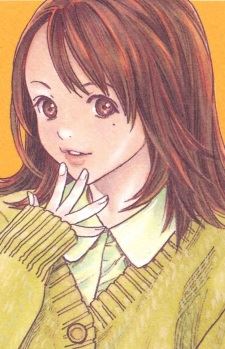
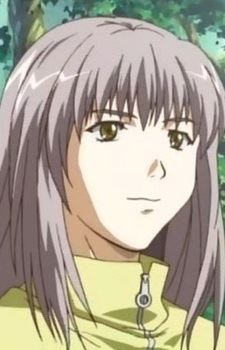
Ichitaka Seto is a 16-year-old high school student who is deeply in love. He has a crush on Iori Yoshizuki, a classmate who recently gained fame after being featured in a magazine. However, Ichitaka struggles to express his feelings due to a painful rejection he experienced in the past. Fortunately, he finds himself paired with Iori during the Freshman Welcoming Ceremony. Despite a few mishaps, things seem to be going well between them. But when Ichitaka's childhood friend, Itsuki Akiba, unexpectedly shows up at his place, the situation takes a dramatic turn, complicating the relationships among the three individuals.
"I's" was published in English by VIZ Media under the Shonen Jump Advanced imprint from April 12, 2005, to September 4, 2007.






tl;dr: A straightforward yet well-executed shounen romance, though weakened by its final third.
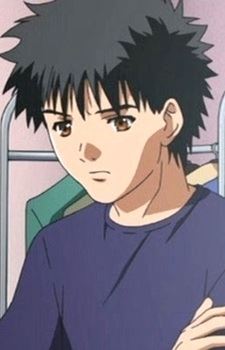
This manga is a classic published from 1997 to 2000. For the most part, it’s a simple shounen romance but executed remarkably well. As with many shounen romances, the protagonist is incredibly indecisive, making progress very slow. Usually, there's no explanation for this, but here at least a brief reason is provided: Ichitaka was harshly rejected by a girl who found out he liked her. Consequently, whenever he's about to do something that might reveal his feelings, his trauma kicks in and stops him. Despite this, I felt Ichitaka was a great protagonist. Even if he’s somewhat lame for not moving forward, his constant agonizing and best efforts are conveyed really well, making him easy to empathize with. The writing, almost entirely from his perspective with little information given to the reader that he doesn’t know, works excellently in conveying his emotions. He doesn’t have any outstanding traits, but his seriousness and kindness regardless of circumstances make him likable.
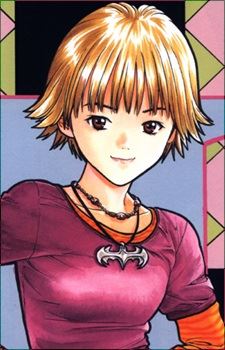
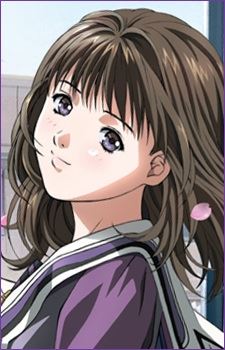
The rest of the cast is also reasonably solid. The main heroine, Iori, lacks depth but remains likable due to her niceness and pure-heartedness. The writing always places her perfectly within the story when needed. The relationship development is slow but sweet. The side heroines, Itsuki and Izumi, are both likable with strong personalities and contribute well to Ichitaka’s character and relationship growth. The other side characters, Teratani, Jun, and Nami, were surprisingly great too. Though flat, they play well into the core character and relationship dynamics. The diverse cast results in good comedy, which helps maintain interest even when the plot stalls.
The biggest problem is that the manga dragged on too long as the mangaka couldn't write the final third well. Most shounen romances end soon after the couple starts dating, and this manga shows why. Writing a good build-up doesn't mean one can write a good relationship. After they start dating, the mangaka continues the same approach, where despite events happening, it feels like nothing changes. Instead of progressing towards them getting closer, it moves towards breaking up. There was more romantic fluff before they started dating than after. Post-dating, it’s all drama and conflict, lacking the happiness expected after so much investment. Conceptually, the ending is decent, but it was rushed, making it unsatisfying after a weak stretch leading up to it.
The art is excellent, distinct from modern manga styles yet clean and nice-looking. Faces and expressions are particularly well-done. Character designs are grounded yet distinctive. However, I didn’t like most cover illustrations. They’re technically better with shading and detail, but the faces often cross into uncanny valley territory for me, so I prefer the normal art.
There's no hiding the fact that this series uses standard tropes and plot devices; it is, after all, what we expect from a simple romance story. In some ways, it fits perfectly because your main male and female characters approach obstacles with simplistic thinking. This predictability leads to exaggerated situations and misunderstandings, which are common in such narratives. What saves the series, however, is Iori. Despite Seto's lack of finesse and his clumsy nature, she remains steadfast in her belief in him, barring a few incidents. Unlike other manga where the main love interest becomes as upset as the supporting cast, Katsura Masakazu prefers to maintain loyalty throughout most of the series. However, even this loyalty is questioned later on when Iori's character is further developed.
Yoshizuki Iori doesn't play a significant role until the second half of the series, serving initially as an 'out-of-reach' goal for Seto. This underutilization does a disservice both to her character and the story itself. Without knowing her internal and external struggles, she appears one-dimensional for much of the series, making Seto's ineptitude hard to endure at times. Consequently, the story lacks variety, focusing repetitively on similar plots like Seto spotting girls naked or stumbling over himself during confession attempts. This repetition can be tiresome, especially when Izumi reappears, causing Seto to regress into old habits despite apparent progress with Iori.
Criticizing a traditional romance story is challenging for several reasons. This storytelling style has proven successful for other series, offering character-driven narratives that, while not groundbreaking, keep readers engaged. The desire to see characters achieve their goals can be inspiring, particularly for those who relate to the characters' situations. Confessing love is difficult and takes courage, explaining why these stories remain popular.
Overall, the series doesn't break new ground, and its characters are somewhat generic. Yet, the latter half presents more realistic stories, especially as Iori's character develops. Some plots and minor characters are forgettable, but the main cast provides enough charm to elevate the series above average. The artwork caught my eye back in 2005, with semi-realistic covers depicting Iori as an aspiring actress. Inside, the characters and backgrounds are impressively detailed, showcasing the mangaka's skillful improvement since Video Girl Ai.
Viz Media censored some nudity for North American release, stopping censorship from volume 13 onwards. The artistic details and character designs are highlights, reflecting the mangaka's growth. Through the series, we see Seto striving towards his dream, overcoming personal doubts to reach Iori. While the middle section falters with repetitive plots, the humor and artistry provide balance. For me, the enjoyment came from the supporting cast influencing Seto's journey, combined with superb artwork, creating potential greatness that narrowly misses perfection.
STORY: I can say that the story might seem somewhat unappealing simply because it's a very typical, ordinary tale. It revolves around a boy falling in love with a girl, their school life, and how their relationship evolves. Nothing extraordinary. However, this doesn't mean the story isn't good! Not at all! There are even scenes so well-crafted they make your heart race XD. I can't provide more details, but you'll understand what I mean when you read the manga. Throughout the "reading process" (^_^), one thing became clear: the author excels at depicting people's feelings and the atmosphere between two individuals in love. I really loved this aspect of the manga. Maybe that's why I strongly recommend it XD.
ART: The rating I gave speaks for itself. It's truly outstanding! The characters are beautiful! The settings are mostly urban, naturally, but they're oh-so realistic! The ecchi elements (XD) are exceptionally well-drawn. I really can't describe it any better than one word: masterpiece!
CHARACTERS: What I loved most about this manga is the characters, especially the main character. Seto-kun is the type of person who lacks confidence. He's shy, never says what's on his mind, worries a lot, and is very responsible. However, he's also a dependable friend and a kind-hearted individual. I also liked Itsuki a lot. She's a confident and daring girl, but deep down very sensitive and delicate. There are many characters worth describing, but I think I shouldn't do it because readers tend to perceive characters in their own way. I don't want to impose my view of the characters. However, I must mention how I felt about Iori's character since she's the main character alongside Seto. In my opinion—and I emphasize that this is just my view—Iori's character was shallow. This might be because we see her through Seto-kun's eyes for 90% of the story. It feels like she barely has a personality of her own. I couldn't discern her traits or personality. The only thing we know is that she loves acting, but that alone isn't enough. I repeat, this is just my opinion, but I didn't particularly like Iori's character...
ENJOYMENT: As mentioned, I loved how the author described the characters' emotions. There are also numerous funny or thrilling moments you'll surely enjoy. I particularly liked the ou-sama game chapters. They were hilarious and suspenseful at the same time XD. I can't say more as I'd spoil the surprise XD. Overall, I genuinely enjoyed reading this manga. I'm sure everyone will find it enjoyable!
OVERALL: I strongly recommend this manga. Whether you like shounen romances or not, I'm confident no one will say "This was a waste of time" after reading it. I guarantee this manga will captivate and entertain you regardless of your preferred genre!
I had high hopes for I"s, given its acclaimed status in the manga community as a remarkable romance with relatable characters. However, it falls short due to its predictable and repetitive narrative style, which transforms supposedly "real" characters into increasingly irritating ones. The story repeatedly cycles through the protagonist falling in love with his crush, only to then develop feelings for another person—this happens three times. Each iteration fails to improve, and the ending feels like it's setting up for yet another repetition. There was a moment, after the first cycle ended and he began to develop feelings for his childhood friend, when I believed in his potential for character growth and his desire to confess. That’s when I realized I still had about 100 more chapters to go through.
Despite my disappointment with I"s, its artwork is undeniably stellar. If anything, it’s always a visual delight, capturing that nostalgic 90's manga aesthetic we all know and cherish.
Ichitaka Seto has an irreparable flaw as a character for the context in which he is presented: his absolute lack of evolution. It's common in romantic harem stories for the protagonist to start with few redeemable qualities beyond kindness or attention, flashes of genius. In Ichitaka's case, he also has these traits, but the difference is that throughout his extensive journey to the end, he remains stuck with only the same qualities.
Again and again, he faces dilemmas that are quite similar to each other. He makes mistakes, we believe he learns from them, but then he makes the same mistake in the next problem. The apparent outline of an evolution is summarized in just one moment on which the work depended to continue existing. It's a pity because if there is anything of interest at the narrative level, it's how empathetic it can be in certain scenes for its target audience.
Because Seto doesn't exude the confidence or security that other protagonists of the genre have, he has doubts about his desires, how they will affect others, and how he wants to deal with them. These are expressed transparently and effectively in his internal monologue and visually captured by Masakazu, either through different resources such as memory collages or enclosing him within the panel. That's when Ichitaka is the best version of himself. But this approach is not extended through changes in his attitudes; it only results in promises waiting to be broken.
He also lacks any dimension unrelated to his relationships—he has no hobbies, interests, or dreams. The latter is referenced in the narrative from a certain point, so it may be an intentional omission. However, the absence of the other two is a huge drawback in getting interest or empathy for him. A hollow protagonist who only exists for his relationships and even then doesn't manage to get along well.
Another reason for this emptiness is the secondary characters and how they are treated. Unlike the main character, they have more personality, expressed in their interests and relationships with each other. Even with little time in the narrative, several of them show some evolution. However, since the plot is so engrossed in romantic drama, most of their interactions with Ichitaka will be advice or observation, with the exception of his best friend Teratani and the main female cast.
As mentioned, it's a romantic comedy harem, although calling it a "harem" is a bit of an exaggeration. Instead, it could be considered a repeated romantic triangle during the course of the narrative. This narrative approach should give the story space to develop properly, were it not for the characterization of the female characters being beneath Teratani himself.
Katsura uses the characters at his convenience, not treating them like actual characters. Introducing and omitting them to add interest to the main story without consideration for the beings he has created. Again, it's a pity because, contrary to Seto, they do have some characteristics beyond their emotional dimensions, such as artistic interests and future perspectives, which are skirted around, not deepened, and given no more attention than for the purposes of misunderstanding or gag. And the one who gets the worst of it is the main heroine, Iori.
Iori is two different characters before and after the main event of the story. Even accepting her sudden personality change due to the importance of that event, we have an ending that contradicts her efforts and attitudes up to that point, merely pandering to Seto, who has never dedicated himself to changing or understanding others. His act of heroism remains the same as at the beginning, an unintentional mirror reflecting how little the events have mattered.
I liked Katsura's drawing style. My interest in the work came from its covers, where I was attracted to see a style closer to realism, something not frequent. And that talent has carried over to his pages because even if there is poor content, the presentation enhances it in several ways. He has a great sense of character positioning with respect to the environment, usually detailing it with dedication, a good rhythm in presenting events, and a character design that, while not exceptional, is nice to see grounded in reality to a certain extent.
If there is an evident contrast factor, it's the fanservice approach. While I can admire and appreciate Katsura's talent as a drawer, I cannot say the same about his ability as a writer. The work abuses "perverted imagination" during panels, to the point that it becomes tiring as a cheap resource to use. When it's not used, it resorts to the most unlikely and absurd situations to entertain the reader, noticeable in its increase as the series progresses, demonstrating the need to retain something for its audience.
Therefore, I can only keep his pencil talent, implying that it would have been more enjoyable and valuable to see a collection of his illustrations rather than read his story. He may have specific qualities at particular times, but the inanity of the rest has prevented me from remembering him well or recommending him for genuine or historical interest.
It takes some time for the story to gain momentum, but once it does, it becomes truly excellent. This romance manga has everything one could hope for. The narrative presents a life that I believe any man would be delighted to live. I found the ending to be spectacular; it nearly brought me to tears, which should signify something coming from a guy. It's an absolute must-read..........
I"s is a typical shonen romcom experience. The protagonist is a generic loser, there's a stunning girl inexplicably fond of him, a childhood sweetheart, and a perverted buddy. Originality is scarce until the second half, which turns out to be the worst part of the manga. It baffles me why it ranks so high on MAL with such positive reviews.
The story starts as expected. Seto is the unremarkable protagonist for readers to relate to. He has feelings for Iori, a girl out of his league, and their relationship progresses. Or rather, it doesn't, for nearly one hundred chapters. At the end of each volume, our hero is back at square one, undecided between Iori or Itsuki/Izumi. The plot structure usually involves a misunderstanding leading to Seto meeting one of the girls, they chat, possibly have a romantic moment, then something else happens involving the other girl. Predictably, it gets repetitive and boring.
The characters are as bland as can be. Iori lacks personality; her sole trait seems to be shyness (maybe) and having large breasts. Her actions merely extend the plot, giving Seto problems to solve. Itsuki is energetic and outspoken. She’s an okay character, and her main arc is the best in the manga. Izumi is a copy of Itsuki but more annoying and cringeworthy since she attends the same school as Seto. The rest of the cast is irrelevant.
The art is decent but underutilized due to the static setting, making backgrounds stale. Character designs are generic and dull, much like the manga itself. Ecchi scenes are well-drawn but imaginary, losing points for me. These scenes are often absurd with cringeworthy dialogue.
The comedy falls flat. It recycles the same jokes repeatedly: a girl says something perverted, Seto imagines it creating ecchi content, and then the girl mocks him: “You actually imagined that, you perverted idiot.” The overused "I was just joking lol xD" trope is everywhere, which makes me want to scream. Not once did I laugh despite its "Comedy" tag.
Pacing and tone issues plague this manga. The plot barely moves, yet tries mixing drama, comedy, and romance within the same volume, sometimes chapter. Each element fails to make an impact. The rushed ending feels forced, lacking buildup, and is quite dumb and childish.
In conclusion, I"s is very bad. Sure, it's entertaining, but if entertainment is your goal, better options exist. The manga offers almost nothing original and should only be read for discussion or review purposes.
“I's has always been a guilty pleasure for me. There are numerous flaws, particularly in the story progression and cliché characters. However, I rated it highly due to the exceptional character art and the main girl, Iori. The first chapter gave me an instant crush when I was 13, likely leading to a lifelong preference for cute females in woolen thigh highs and mini skirts.
Back then, I couldn't get my hands on the following volumes, so I read the entire series in my late 20s. What can I say? If the romance had revolved around a less compelling character, I probably would have dropped it after 50 chapters. But the question of how Iori's future would unfold kept fascinating me. So, I pushed through the dull first half, and it became more interesting around chapter 80 or so. To me, it was certainly a better read than Ichigo 100%.”