

...
Show More
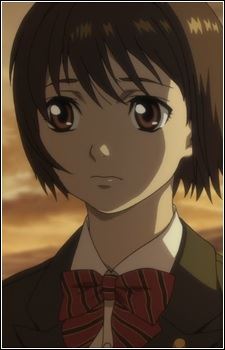
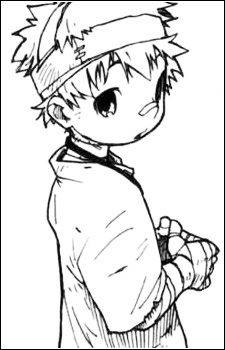
Two twins, Kasumi and Shizuku, were infected with the Medusa virus, a deadly disease that gradually turns its victims to stone. With no known cure, only Kasumi is chosen to enter a cryogenically frozen state, along with 159 others, in hopes of finding a cure in the future. Sometime later, Kasumi awakens in an unknown world filled with violent monsters, alongside others who were also in suspended animation. Determined to uncover the mysteries of her current situation and the fate of her twin sister, Kasumi fights to survive in this perilous new environment.
King of Thorn, originally titled Ibara no Ou, was published in English by Tokyopop from June 12, 2007, to November 4, 2008. It was also released in Brazilian Portuguese by Editora JBC from June 2013 to December 2013.
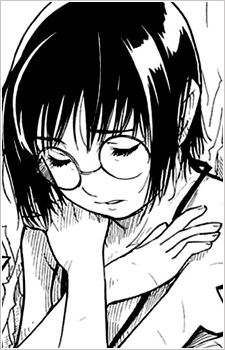
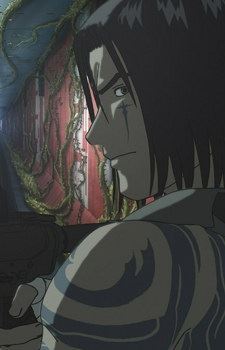
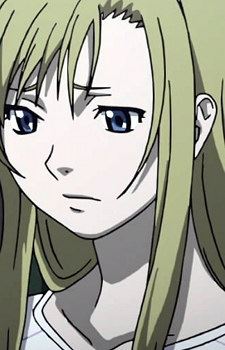
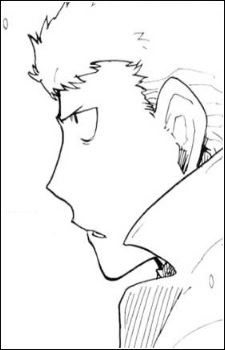


This series is one of those that keeps you on the edge of your seat, craving for more. The storyline is packed with incredible twists and stands out as EXTREMELY unique. While there are a few elements that might be challenging to grasp, it remains a fantastic series that deserves a wider audience. I HIGHLY recommend this series to anyone who enjoys action-packed, adventurous sci-fi manga.
Given the recent surge in popularity of horror survival games and live-action shows in the West, it's somewhat surprising that the East hasn't shown as much enthusiasm for this rich genre. That said, there are always exceptions like Iwahara Yuji, who bravely ventured into this territory with some startling results.
In a world where the Medusa disease runs rampant, leaving only suffering, sorrow, and death in its wake, Kasumi finds herself facing her own inevitable fate. Diagnosed with the incurable disease, she joins 159 other patients in an experimental cryostasis program, hoping to survive until a cure is found. However, when they finally awaken, their surroundings are overrun by monstrous creatures and covered in thorns, signaling a new struggle for survival and understanding of what transpired during their deep sleep.
The mystery element of the story draws readers in, creating an edge-of-your-seat experience for both the characters and the audience. Survival isn't the only goal; uncovering the truth about the world's transformation becomes equally crucial. This leads to the discovery of clues and plot twists that gradually unfold, enhancing the storytelling and immersing both characters and readers alike. The dialogue and pacing are well-executed, ensuring that every conversation holds significance to the narrative, whether it involves decision-making or unraveling hidden secrets.
Despite the best-laid plans, the monsters roaming the area pose constant threats, each more terrifying than the last. These encounters lead to tense moments where characters must use their wits and environment to their advantage, often with life-or-death consequences. Besides the monsters, the ever-advancing virus within their bodies adds urgency to their quest for survival. Limited resources such as weapons, food, and first aid necessitate careful management and constant vigilance, ensuring that the manga remains engaging without dull moments.
The post-apocalyptic setting is meticulously detailed, with thorns covering the facility emphasizing its long abandonment and destruction. Character designs are generally well-thought-out but could be enhanced in certain areas. The paneling deserves special mention, with fluid transitions and detailed illustrations making the black-and-white artwork almost reminiscent of an anime.
While the characters' development falls slightly short of expectations, their interactions with the environment and each other add depth. Initially strangers, they must cooperate to survive, leading to complex dynamics filled with cooperation, betrayal, and power struggles. Despite their flaws, these interactions highlight the human condition under extreme circumstances.
By blending Western-style horror survival with Eastern storytelling prowess, this manga offers a thrilling ride from start to finish. Its focus on not just surviving but detailing how survival unfolds, coupled with intriguing plot twists, captures the essence of what makes survival horror so captivating.
So, I just wrapped up this series a few minutes ago. It was incredibly intense! Loved it, even though it didn't seem like my usual kind of thing. Even if you're not big on futuristic stories, give it a shot ^^
It was surprising. There were some plot twists I absolutely did not see coming. At all. But that unpredictability made it so much more enjoyable :D After all, nobody likes a predictable story, right?
Besides the action-packed scenes, there were also some heartfelt moments. Those moments that almost make you tear up. (Kinda... ^^;;)
You could get pretty attached to the characters (if you're anything like me and tend to obsess over them ^^;;).
Anyway, I didn’t give it a perfect 10/10 for a reason. It wasn’t the absolute best manga I’ve ever read, but it came pretty close. Just couldn’t justify going into decimals.
TL;DR, not worth the time investment, but short and concise enough for an afternoon binge if you are a fan of cheap thrills and early 2000s edge.
Ibara no Ou (InO) or King of Thorn is a manga written in 2002 by Iwahara Yuji. While most people might know him from Dimension W or character design for Darker than Black, I first encountered his work through Koudelka. His style encapsulates everything good and bad about the 2000s. I love that era, but it had many flaws that persist today.
InO centers around a group of people waking up in a facility within a world plagued by a mysterious disease that turns people to stone. Throughout the surprisingly short and concise story, the backstory of the cast unfolds, along with the plot behind the facility, the monsters, the disease, conspiracy, military, government, "hacking," and more. It touches on various subjects, reminiscent of visual novels. The plot could easily be structured into one, which makes it odd that it was adapted into an animated movie rather than a 12-episode anime. The movie couldn't cover the entire plot and ended up cutting it apart to fit, focusing instead on the survival aspect.
The story initially emphasized survival, which felt strange since the atmosphere didn't quite reflect that. The characters' capabilities diminished the survival tension after a few chapters, making their discussions on how to proceed less impactful. I didn't feel particularly attached to any of the cast either. They have backstories, but little else stands out about them. They neither excel nor falter, leaving little impression. As the story shifted to survivor horror, the "challenges" became more deadly and gory. Unfortunately, while the monsters were well-drawn, they weren't interesting or nightmarish enough to leave a lasting impression.
The story isn't particularly engaging. The 2000s were rife with ideas but lacked guidelines on effectively handling them. This wasn't unique to InO; Ergo Proxy is another notable example. Both had numerous ideas crammed into one package, resulting in nothing being done well. Like Ergo Proxy, InO's art was impressive on its own—the environment detailed, characters stylistically fine, and monsters cool—but together, it lacked punch. Ergo Proxy did everything better yet still lacked emotional impact and staying power. This reflects the core issue of experimental Japanese culture in the 2000s—lack of substance and punch.
This small, short comic reminded me of a pivotal question from my past: Why did Ergo Proxy and RahXephon fail where Lain and Evangelion succeeded? It's the weight of the story and design. Another unfulfilled potential is Witch Hunter Robin—a beautiful, captivating show lacking depth. Comparing Ergo Proxy to WHB feels unfair, but both were shallow and uninteresting ultimately. I suspect the problem lies in scripts not focusing enough on characters. For edgy shows, the script must expand sufficiently on the cast to avoid the impression that violent elements were added merely for entertainment. If characters aren't relatable, they must be admirable to hold the story together. In Evangelion, the entire cast had relatable emotional issues. Meanwhile, GitS' Major was powerful, professional, and curious, making her admirable despite being mostly machine. Conversely, RahXephon's spiritual journey lacked a clear "enemy," failing to deliver impact. GitS' dystopian future had a perfect villain—an AI trying to understand humanity. Ergo Proxy's weaker villain concepts rendered it bland.
But I digress. These points apply to InO as well. Its main cast's emotional depth wasn't great, and the villain wasn't well-done. It never gave me a thrill when flipping pages. There was no anticipation or curiosity about the mystery. Despite having decent mystery and sufficient explanation, I walked away feeling just fine, like I spent the afternoon doing anything else. No lasting memory or reminiscence—I knew I'd forget it in ten years. And I did. I read the first volume long ago and finished the last year. It slipped my mind until I read the newest chapter of his latest work.
That said, I don't think InO is worth anyone's time. It's a decent story but not special. The art was great but also unremarkable. Still, I enjoyed it. What's great about it is something missing today—ideas. The web novel world created a rat race to write the most popular genre, clickbait, Isekai, redo, power fantasy. InO had a good idea about survival, mystery, horror, adventure. Today's works are derivative, using the same formula with different variables. That's worrying. The sad thing is they learned only to focus on fun elements and reduce background building from the early 2000s variety. Reading InO sent me back to a time when I was excited for new works each week, spending all my money on the latest because each promised something different. Today's bookshelf gives me depression or confusion due to the Arifure titles following the same setup. Their blatant copying continues under Japan's strict copyright laws.
Here's hoping the 2020s bring a revolution. But my gut says it's all downhill from here. Talented artists and creators are successfully transitioning to streaming.
"The book is better." We've all heard that phrase, and often it holds true. Marvel films span at least two hours, based on comics with decades of celebrated—or sometimes scandalous—history. Something's bound to be left out.
Enter "King of Thorn". There's a film adaptation out there, and it's pretty good—a fairly standard modern horror anime. But the King of Thorn manga has six volumes that unveil a mysteriously failed world, pull us deeper into its enigma, only to deliver a psychological twist at the end reminiscent of M. Night Shyamalan's early works. Not to mention a clever final scene by the creator. A nice touch indeed.
Imagine Resident Evil meets Dino Crisis with a dash of "plague to end all plagues" (something we can all relate to these days). It's one of the best stories I've read, featuring some of my favorite art. I became deeply attached to these characters as they fought for their lives against an unexpected nightmare.
If you're looking for the CliffNotes version, go watch the movie—I recommend it. But if you want a story that will keep you up at night, the manga is better.
Reading Ibara no Ou was a major surprise for me. It had been sitting on my shelf for nearly a year, and I didn't anticipate anything extraordinary from it. However, once I started reading, the six volumes were finished in less than three days.
The art style is quite distinctive. The characters, especially the female ones, are beautifully drawn and highly likable. They all have well-developed personalities that significantly influence the events and pacing of the story.
Where Ibara no Ou truly excels is in its storytelling. Reading the manga was an exhilarating experience. The story is packed with plot twists, and almost every chapter offers a "that was almost the end" moment. You'll find yourself rooting for the characters—or hoping some will meet their demise, depending on who they are.
The only reason I'm not giving this manga a perfect score is due to the conclusion, particularly the last volume. It crams in a lot of information, and you might need to read it two or three times to fully grasp everything. It feels like the author didn't have enough pages and rushed the ending. Additionally, the story's conclusion is very open-ended. What happens to some characters at the end will be left to your imagination.
Overall, reading this manga is definitely worthwhile, and I wholeheartedly recommend it.
Overall, it's a fairly enjoyable read. It begins in a rather typical manner for stories involving cryo-frozen individuals with incurable diseases but quickly dives into the action. The plot is excellent, unfolding at a steady pace that provides frequent, digestible pieces of information without overwhelming the reader all at once. There are plenty of twists and turns. The ending was good and quite surprising, though I think it could have been wrapped up a bit more neatly.
The artwork is pretty decent.
The characters are well-developed (far from flat!) and the story itself is quite intriguing.
In summary, it's a pretty good book. Not groundbreaking, but considering it's only 37 chapters long, it makes for an entertaining read during a long trip and will definitely keep you engaged.
King of Thorn is a manga where fiction, mystery, and the will to survive intertwine seamlessly. Each character harbors a backstory that is both harsh and painful, and some engage in suspicious actions that breed distrust and unease among others.
What captivates me most is the narrative. Although the core premise isn't entirely novel—a pandemic disease threatens humanity, everyone strives to survive, numerous mysteries demand solving, and characters perish along the way—the fictional elements are remarkably inventive and unique. Moreover, each character carries a past they'd rather not disclose, but as the story unfolds, they confront their problems and traumas, enabling them to keep pace with their comrades. Gradually uncovering the truth, they persevere, determined to find an escape route. The plot brims with dramatic moments; they battle monsters and disease, conquer their fears, and support one another in their quest for survival.
The artwork is equally impressive. The style is exceptional, with shadows depicted through lines rather than flat gray tones. The artist predominantly uses black for shading, reserving gray hues solely for essential color differentiation. Consequently, it's rare to encounter gray coloring in backgrounds or clothing (which are strictly rendered in black and white, devoid of gray shading). Despite this minimalist approach, the artist adeptly conveys action scenes without issue. It’s a commendable shounen style.
In conclusion, if you're drawn to fiction infused with mystery, coupled with a survival story rich in drama and action, King of Thorn is a must-read manga for you.