
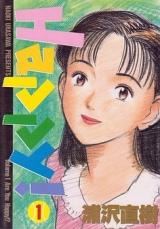
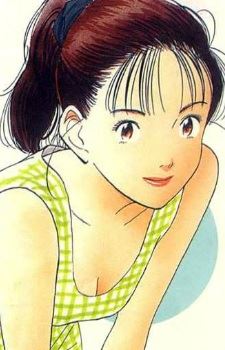
In their modest, cramped apartment, Miyuki Umino's older brother enthusiastically discusses the new business venture he's launching, vowing to achieve great success and lift his family out of poverty. Months pass, and Miyuki is confronted by creditors linked to the yakuza. They inform her of her brother's disappearance and a defaulted loan of 250 million yen. With her brother nowhere to be found, Miyuki is now responsible for this debt. The creditors present her with an option: repay the loan by working in a soapland.
Desperately seeking an alternative to prostitution, Miyuki stumbles upon an article about the reigning women's tennis champion, who earned 250 million yen within a year. Having once been a promising tennis player, Miyuki decides to leave school and pursue a professional tennis career to pay off her debt. However, the organization that previously excluded her from the tennis world has not forgotten or forgiven her. Can Miyuki thrive in a highly competitive environment that actively works against her?
[Written by MAL Rewrite]



Read this after you read the manga, it may contain SPOILERS.
Well, I start this review by saying that Urasawa is one of my favorite mangakas. Billy Bat and 20th Century Boys are among my all-time favorites, but reading Happy! left me with some concerns.
In the beginning, there were a few unfortunate moments, but the problem is that these situations kept repeating chapter after chapter, almost identically. I get that the message is to be happy even if the world crushes you, no matter what, but it felt a bit too much and unrealistic.
Chouko makes her usual "joke" -> Everyone becomes stupid and believes her -> Miyuki wins -> Booed -> Some tragic situation -> REPEAT
I was going to give it a 7, but the ending was so... happy that I almost cried. Maybe after all those repetitive bad moments, seeing everyone - audience, enemies, and literally Japan - cheering for Miyuki made me feel better for her. Or seeing Sabrina help her rise while everyone cheered them on, putting the cardigan on her shoulder, I waited 254 chapters to see some happiness in this story. So I gave it an 8. I didn't feel this plot problem in his later works. And Urasawa created Happy! alongside Monster, so maybe he was more focused on the latter, who knows.
I've never had such a hard time judging something. It's just that it has very high moments and very low, unbearable moments, like the 150,000th time we see Chouko plotting the same bad deed for Miyuki sitting at a table with someone. Or when Miyuki traveled around the world, and everyone still denied her talent and skills, barely knowing who she was. Come on, that's so stressful, weak, and unrealistic.
Criticism aside, I'm glad Sabrina returned after her loss, and Miyuki still plays. Probably, in the last pages, Urasawa hinted that the next match was the following month since she recovered her leg. It's just weird that the Wimbledon champion, now free of debts, still lives in that place. Well, I guess she's very humble after all. I think she'll return to pro tennis more carefreely, taking one championship at a time due to her last injury. We don't know how the relationship between her and Madame Otohri and her son will evolve, but according to the last chapters, I assume Madame took her as a player, and in the future, she'll be happy with her son. I'm not sure about Thunder; I hope he's happy too, becoming a legal coach or perhaps retired. After all, his dream was to dethrone Sabrina, who knows.
Happy! is an ironic title for this manga, as there's hardly anything cheerful about it. This story revolves around overcoming adversity through tennis. The protagonist, Umino, faces relentless opposition from various characters who attempt to undermine her efforts. Despite these challenges, she consistently proves them wrong by surmounting every obstacle set before her. Readers will find themselves rooting for her due to her unfortunate circumstances and the way she triumphs over these difficulties, especially considering how inept some of her companions are.
Naoki Urasawa cleverly uses tennis merely as a plot device to introduce deeper psychological themes he's renowned for. If you're expecting Happy! to be filled with technical shounen-style tennis content, you'll be disappointed. Much of the manga focuses on human relationships. This narrative approach can become repetitive, as nearly every arc involves Umino's adversaries setting her up in ways designed to infuriate readers because of her apparent naivety.
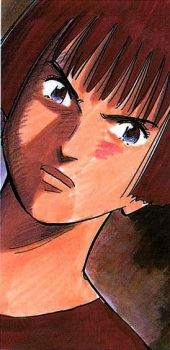
The characters, apart from Sakurada, seem largely heartless and one-dimensional. Most antagonists share the belief that Umino is undeserving of her victories and aim to ruin her life. This sentiment extends to most of her rivals, with only a few exceptions. Concerning sports rivalries, they are almost non-existent here. Instead, the focus is on Umino overcoming life's hurdles, so expect no training camps or similar clichés found in typical shounen manga.
The artwork is commendable, making it easy to interpret panels and distinguish between protagonists and antagonists. The tennis matches are depicted straightforwardly without flashy techniques or exaggerated movements, just simple back-and-forth gameplay and varied strikes.
The sole aspect I disliked about Happy! was its ending. It felt incomplete, as if more should have been said, and I wasn't satisfied with the outcome of the final game, which seemed forced.
A wholesome manga, I love Monster, 20th Century Boys, and Pluto, which is why I decided to read this Urasawa manga. It's a very good slice-of-life tennis manga. It’s not particularly memorable, but it’s okay. The main issue for me is its length – 254 chapters is quite long. Overall, it’s good, and I don’t have much more to say. I almost forgot: I hate Choko; she’s annoying. The rest of the characters are okay and sometimes funny, especially the debt collector, who is my favorite character in this series. I didn’t like the madam either. So yeah, it’s just great, and I’m glad I read this.
Yeah… this manga hasn't actually reached America yet, but that doesn't stop me from reading the series online and posting a review about it so far. Another fantastic story from the master of suspense and drama, Naoki Urasawa.
Story:
This story follows a teenage girl named Miyuki Umino. One day, her brother disappears, leaving her with a 250 million yen debt to the Japanese mafia. Her only chance they give her is to work in a soapland, but she jumps at a better opportunity: to become a professional tennis player.
As the story progresses, we encounter numerous villains and very few heroes in this cruel and dark world known as women's tennis. This tale, filled with great characters, a sense of suspense, and uncertainty about what will happen to our heroine, makes for an engrossing read from start to finish. The sad part is that there seem to be too many villains, which is disheartening since things keep getting harder for her.
Art:
If you've read any of Naoki Urasawa's previous works, you already know he does a great job of bringing the world to life. The characters are nicely drawn, but I dislike that almost all the females are ugly except for our main character. The world itself is well-drawn, though some rooms can appear bland in certain areas.
Character:
Even after reviewing Negima, I have never encountered such a wonderful cast of amazing and realistic characters! Our heroine evokes sympathy easily because her emotions are conveyed clearly. Her friends are relatable, and sometimes we find ourselves wondering if we'd go as far to help our own friends. Even some villains eventually turn around and aren't as bad as initially thought.
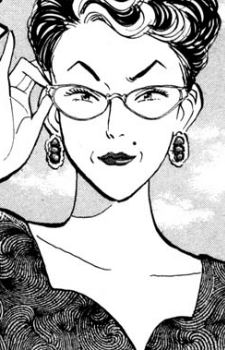
As for the villains, oh my God, I have never met such evil characters in my life. What makes them so terrible is that their actions could happen in real life. The main character’s nemesis is such a... b-word that I just want to strangle her little neck! The other villains truly bring out the worst in humanity, making us despise them.
Enjoyment:
I have never enjoyed such a thrilling manga before, though Monster and The Drifting Classroom still can’t compete in my mind. This is the best sports comic I have ever read and probably will be forever. Once you start reading, you’ll never want to stop.
Overall:
The greatest sports manga of all time, hands down, is this one. The best set of characters can definitely be found here. This comic has its weaknesses—what manga doesn’t? Don’t skip this series if you enjoy sports, Naoki Urasawa, or manga in general.
This series contains nudity, sexual scenes, and strong language. If that stuff isn’t your scene, it’s best to avoid this series.
Can Umino Miyuki find happiness? Probably not. I started reading this manga without any background, as it was my first encounter with Naoki Urasawa's work. A YouTube video thumbnail labeled it his "most depressing" creation, which intrigued me enough to dive in on a whim. It's challenging to categorize this manga as strictly "good" or "bad" because it is simultaneously incredibly frustrating and fairly rewarding. The story kicks off with an intriguing premise but quickly piles misfortune upon the protagonist, Umino Miyuki. Almost everything she attempts (except for necessary plot points) fails, mostly due to circumstances beyond her control. This pattern persists throughout the 254-chapter saga.
However, this relentless adversity drives the plot effectively, pushing Umino to dig deeper and push harder against the odds standing between her and her goals. Admittedly, around chapter 70, I found myself more frustrated than anything else. Yet, the frustration amplifies the eventual triumphs, making them feel significantly more rewarding. Still, the negative-to-positive ratio hovers around 60-40, favoring frustration, especially in the middle sections. I'm torn about whether this writing style—punishing readers for caring about the characters to amplify rewards—is brilliant or just plain dumb. It creates a peculiar dynamic, reminiscent of Stockholm syndrome, where captives develop sympathy for their captors. In this case, I felt captive by the story itself.
The ending wraps up in a single chapter: everyone can be "HAPPY!" Except maybe the reader. At least, that's how it feels. The conclusion left several loose ends unresolved. What were Sabrina Nicolic's true motives for playing tennis? Was she truly happy with her sport? And what about Hina and Thunder Ushiyama? Did they achieve happiness? Did Umino Miyuki get HAPPY? Many characters are well-developed but ultimately forgotten by the end (possibly intentionally). One chapter wasn't enough to tie up all the threads and compensate for the frustrations accumulated throughout the manga.
Despite its flaws, the manga is well-written and hard to put down, though also feels like a constant grind. Bad things happen relentlessly, akin to Oliver Twist's misfortunes. Misunderstandings and heartless villains who lack any redeeming qualities constantly thwart Umino. Her determination to fight for her family, brothers, and sisters, despite being alone, underscores her struggle. However, the writing leans heavily into one-dimensional roles: villains are evil, and the protagonist is pure. Characters often feel more like caricatures than real people. I found myself questioning the motivations behind the villainy, wondering if they saw themselves as good people. Most real-life individuals, no matter how malevolent, believe they have some justification. This isn't a complex narrative; it follows the basic tenets of a straightforward sports story. So, is it bad? No. But is it good? That depends on your tolerance for Umino's endless battle against the world. For pure enjoyment, it was... eh. When a story keeps readers engaged, it relies on suspending disbelief, making you think, "Wow, this could happen." Happy! does this reasonably well but becomes predictable: "Here we go again, another setback." Thus, while not poorly written, it lacks the finesse it could have had.
I'm not a fan of Urasawa's art style, compounded by the fact that the villains look infuriatingly annoying. You'd despise them even before learning their despicable actions. Nonetheless, credit must be given to Urasawa for crafting such detestable antagonists, as expected from the creator of the acclaimed "Monster." Objectively, the manga is well-drawn. The action sequences are easy to follow, paneling rarely confusing, and there aren't many overwhelming two-page spreads. Urasawa excels at conveying emotions through his artwork, and the action flows decently. Overall, Happy! isn't a terrible read, nor is it outstanding. If you decide to read it, know what to expect: emotionally taxing, with somewhat one-dimensional plots and characters. But if you can overlook these aspects, it's a decent tale about perseverance, dedication, and how passion, virtue, and hard work eventually pay off.
Happy! is a manga series that emphasizes perseverance, no matter how unjust life becomes or how many daunting challenges emerge. It’s about persistently giving your all to ensure things work out in your favor. If you’re seeking a story like this or one featuring an intensely loathable female antagonist, you should definitely give it a read. A fully developed cast of characters and intriguing plot twists at every turn make this story hard to put down.
Set in a bizarre world where Japanese Idol culture intertwines with professional women's tennis, Happy! presents an odd mix. Despite the realism in other aspects, this blend drags the entire series down on its own. The hate from certain groups and the idol-like support for tennis players globally, along with terms like "The World's Idol" used to describe some girls, show a lack of understanding of cultures outside Japan.
I don’t want to be overly critical of Naoki Urasawa here because the manga is mostly enjoyable. Moreover, it was serialized weekly at the same time as his arguably most popular series, Monster. So, how much he cared about this series overall is uncertain. This manga succeeds magnificently as an eventful drama. However, given the amateur handling of the tennis theme, I can't rate this series higher than a 7.
Slight Spoiler warning for the remainder of the review! The series started strongly but became very repetitive towards the end. Not in a small way either. Most final matches followed the exact same formula: losing massively due to current issues, then the protagonist turning things around once she overcomes her troubles. Because of this, I became a little bored towards the end, and I’m sure others who have read the series share this sentiment. Anyway, I’ve outlined the negatives and positives of this series; if anything in the first paragraph spoke to you, you’ll get something out of this series. Furthermore, if you're a fan of Naoki Urasawa’s style, you'll likely enjoy Happy! considerably.
Happy! is an intriguing sports manga that follows the journey of a resourceful girl aiming to become a professional tennis player to settle her brother's enormous debts.
Before delving deeper, I must caution readers that sports manga isn't my cup of tea, and if given a choice, I'd likely opt for nearly any other genre. Consequently, I don't have extensive experience in evaluating such manga, making my ratings subjective based on my personal tastes.
I appreciate the plot but rated it a 7. This rating is highly subjective. To many others, this manga might score significantly higher. However, I found myself utterly frustrated with the plot. Attempting to binge-read will likely result in pulling your hair out while screaming at your screen. While I enjoy the twists and the direction the story takes, watching Umino, a good girl, face relentless misfortunes is simply painful, leading to the lower grade.
The art received a 9 from me. Most characters are well-drawn and align perfectly with their personalities—sometimes too much so. The grotesque smiles of Umino’s enemies, especially Ryugasaki, clearly reveal their true nature. Interestingly, this aspect amplifies the frustration I feel while reading.
I gave the characters a 6, the lowest score among all sections for this manga. With few exceptions, most characters are clichéd stereotypes that merely exhibit these traits without depth. In my view, Keiichiro is the most interesting character. He could be seen as pathetic or spineless, barely a man. Yet, flashbacks about his upbringing explain his character, inviting readers to imagine his growth as he develops a stronger will. Another compelling character is the Yakuza leader, who's just awesome. These two complement each other well by balancing their judgment flaws. The rest of the characters are stereotypical and annoyingly obstructive. Kaku is an exception, but I'm still undecided about him.
For enjoyment, I rated this manga a 7. It’s not hard to get absorbed in this story. I felt compelled to keep reading, with each chapter beckoning strongly until I was flying through them. However, after extended reading, the endless suffering became exhausting. I wished it were a romance manga where Umino would find a supportive partner.
Overall, I graded this manga a 7. It's worth a read if you're into sports manga and enjoy emotional rollercoasters involving high school girls facing hellish situations. Otherwise, give the first few chapters a try; it might grow on you. But if you struggle through the first major competition, consider dropping it, as the pacing and plot structure remain similar for a while.