
...
Show More
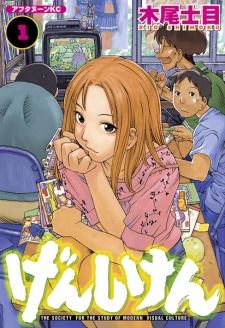
It's the spring of freshman year, and Kanji Sasahara finds himself in a dilemma. Should he pursue his lifelong dream of joining an otaku club? Meanwhile, Saki Kasukabe faces her own challenge: can she ever transform her anime-obsessed boyfriend, Kousaka, into someone more conventional? While Saki struggles, Kanji takes the plunge and joins Genshiken: The Society for the Study of Modern Visual Culture, along with Kousaka.
Undeterred, Saki follows Kousaka through the various activities of the club, from cosplay and comic conventions to video gaming and collecting anime figures. Along the way, she learns more than she ever wanted to know about the quirky world of Japanese fandom...
(Source: Del Rey Manga)
The first nine volumes of *Genshiken* were published as *Genshiken: The Society for the Study of Modern Visual Culture* by Del Rey Manga from April 26, 2005, to November 27, 2007. Kodansha USA later acquired the license and continued the series from volume 10 onwards, releasing it as *Genshiken: Second Season* from September 4, 2012, to March 13, 2018. The earlier nine volumes were republished as 3-in-1 omnibus editions. Additionally, the first nine volumes were released in Brazilian Portuguese by Editora JBC from June 2013 to May 2014.


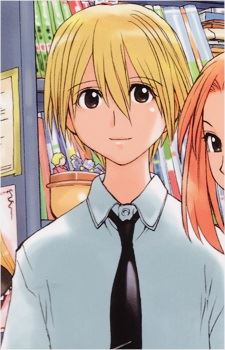
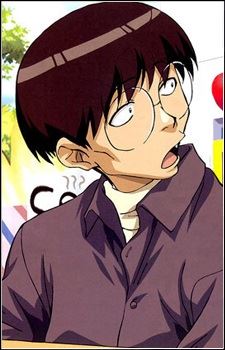
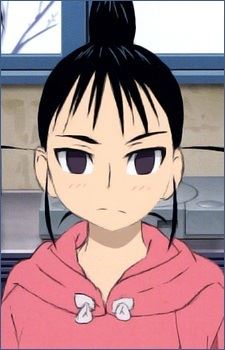
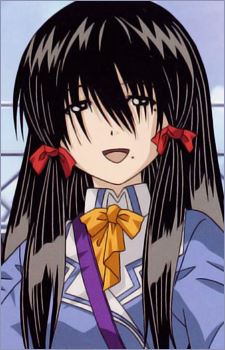






The most captivating aspect of Genshiken is perhaps its focus on ordinary individuals. Each character has their unique quirks, but doesn't everyone? Sure, they're all otaku, yet that doesn't exempt them from life's challenges like attending classes, purchasing food, finding jobs, pursuing love and friendships, and most importantly, seeking their place in the world. This makes Genshiken a rare manga where readers can find a character that resonates with them. Maybe you see yourself in Sasahara (as I did), the shy and introverted otaku who knows his passion but fears admitting it to others, even those who share the same interests. Or perhaps you relate more to Madarame, whose honesty becomes a burden, causing him to mask his feelings behind a fabricated persona. Regardless, at its core, Genshiken tells the story of teenagers united by similar interests (or in Saki’s case, a cute guy with peculiar hobbies) who grow together and share precious moments.
Oh, and it's also a comedy. Did I mention that? No? Well, it is indeed a comedy—a pretty good one at that. Genshiken is filled with parodies, from Madarame quoting Gundam lines incessantly to ring tones featuring theme songs from obscure anime. It’s a tale about otaku, for otaku, and there's something humorously ironic about it all.
The club's comedic elements highlight how significant Genshiken is to each member. This is a story about people brought together by shared interests, forming a family—albeit a quirky, argumentative, clumsy, awkward one. Genshiken captures everyday life. It’s a comedy. It’s a unique piece that I believe every serious anime and manga fan should read. It’s a chronicle of people like you, reflecting your life, even if the events differ. It teaches that it’s okay to openly express your passions. It shows that finding solace among like-minded individuals is perfectly fine. It underscores that being an otaku doesn’t strip away your humanity. Ultimately, it conveys that everyone can find happiness, irrespective of their tastes. To outsiders, it might seem strange and quaint, but to us otaku, it’s a transformative work that both questions and affirms our place in the world: no different from anyone else’s.
Well, to start with, this manga delves into the life of otakus in Japan. The narrative centers on the Genshiken club at a university and chronicles the activities undertaken by both its members and the club itself over three years. The story maintains a tranquil slice-of-life tone, illustrating the pressures faced from non-otaku peers as well as fellow otakus.
The artwork is particularly impressive, featuring meticulous details in depictions of cluttered otaku rooms, comic festivals, and even the light refractions and shadows cast by trees and other elements.
Throughout the three-year span of the story, all the original characters evolve from students into working adults. Even characters introduced later in the story exhibit significant character growth. Their emotions towards current situations are portrayed, along with how different people interpret various scenarios differently.
In summary, I believe that anyone who enjoys anime or manga, regardless of whether they consider themselves an otaku or not, will appreciate this manga.
There's a widespread misunderstanding in the Western world regarding the term "otaku," particularly its usage. Many Westerners believe it refers to someone zealously passionate about something, especially anime and manga, with the word gaining a positive connotation over time. This perception is partly due to Gainax’s playful use of the term in their 1991 movie "Otaku no Video." However, in Japan, the word carries darker and more derogatory meanings, which persist even today.
This somber introduction might seem out of place for a comedy manga review, but it serves a purpose, particularly as Genshiken is a series that explores various forms of otaku culture—from cosplayers and fujoshis (girls who are obsessed with "boy's love" stories) to doujinshi artists and gaming enthusiasts, among others.
Created by Kio Shimoku in 2002, Genshiken quickly filled the void left by Comic Party and became a fan favorite due to its realistic and humorous take on otaku subculture. The story revolves around a university club called GENdai SHIkaku Bunka KENkyūkai (The Society for the Study of Modern Visual Culture), which is essentially a collection of oddballs united by their shared love for anime, manga, games, and other socially reclusive hobbies. Into this peculiar environment steps freshman student Sasahara Kanji, a shy young man eager to join a club where he can enjoy his interests and indulge in some hentai/porn.
A standout aspect of Genshiken's slice-of-life plot is the quirky and often humorous interactions between characters. The series is character-driven, which ironically contributes significantly to its comedic success. It functions much like an otaku sitcom, deriving humor from social stereotypes, including the more negative ones.
The plot's most pleasing feature is its broad representation of otaku subculture rather than focusing on just one type. Each character brings something unique to the story, especially Kusakabe Saki, the only "normal" major character. While the manga portrays otaku through rose-tinted glasses, it also presents them as plausible human beings—a feat unmatched by other otaku-centric stories until NHK ni Youkoso!
The plot has flaws, but these are mostly minor annoyances. The pacing is good, neither too fast nor too slow, and the focus on characters means events rarely drive the story forward artificially. Some readers may find certain chapters placid, but such moments offer deeper insights into the characters' personalities.
The artwork impressed me with its simple yet detailed panels. The author carefully designed each character to be distinctive while playing on social stereotypes. This is especially evident with Kousaka Makoto, who stands out from the other club members. Given the focus on characters, it's satisfying to see expressive mannerisms and actions. Though facial designs are simplistic, they convey emotions effectively.
The backgrounds and settings, especially the clubroom, can appear haphazardly drawn but are highly detailed. Each chapter is set in an area filled with "stuff," making the art sometimes messy but always realistic due to its detailed nature.
Genshiken centers around its characters, both in terms of story and club dynamics. Each character is unique, with their own thoughts, feelings, prejudices, and hobbies. The series excels in characterization, presenting adult characters within a university club setting, lending maturity and subtlety to the humor, relationships, and emotions.
One of Genshiken's greatest achievements is the character development over several years. Members leave and new ones join, leading to significant progressions for each character. Notable examples include Madarame shopping for "decent" clothes, Sasahara becoming club president, and Ohno and Tanaka's cosplay-based relationship.
Kusakabe Saki is arguably the most interesting character. She represents normalcy and is in a relationship with Kousaka Makoto, an otaku who defies stereotypes. He is handsome, smart, stylish, sociable, and amiable. His association with Genshiken introduces her to the other characters, challenging her dislike for all things otaku and gradually altering her perceptions.
Kusakabe's relationship with Genshiken is crucial, representing society's voice and influencing the story's development. Her gradual understanding of otaku culture shapes every character's journey. Despite Sasahara being the main lead, her influence is most telling.
Genshiken stands out not only for its realistic portrayal of otaku culture but also for its sensitivity, humor, maturity, and deep characters. Fans of anime or manga will relate to the story uniquely, regardless of age. Its accessibility makes the series truly great, handling the dichotomy between normal and otaku well, based on the Japanese perspective.
Understanding the true meaning of "otaku" adds depth and meaning to the manga, from Ogiue's reluctance to "come out" to Kusakabe's efforts for a "normal" relationship. If readers remember that "otaku" is generally derogatory in Japan, much of the story becomes clearer.
The anime Nogizaka Haruka no Himitsu illustrates this further. The lead female character faces bullying for her anime and manga fandom, reflecting historical reactions to otaku in Japan. This context underscores the negative perception of "otaku."
Genshiken is unlike other otaku comedies like Comic Party or Lucky Star. Its realism and interactions require understanding the intended use of "otaku" to fully appreciate the story.
Now that you know the difference, give Genshiken another try. You may be surprised at how different it feels.
Genshiken is a slice-of-life comedy centered around a college otaku club.
To begin, I prefer to divide Genshiken into three segments based on the club's generational shifts. The first part features Sasahara, Saki, and Kousaka. Then comes the second part with Ogiue and Kuchi joining, followed by the third part introducing Hato, Yoshitake, and Yajima. While it's tough to pick a favorite, I find the second part to be the strongest, followed by the third, and then the first. If I were to rate them, I'd give the first part an 8, the second part a perfect 10, and the third part a 9, averaging out to a solid 9/10 overall rating.
The story truly excels through its characters. Each character is distinct, possessing unique personalities. The author also draws them with distinguishable features, preventing any confusion that often arises in other manga. Initially, you might think Sasahara is the main character, but in reality, there is no central protagonist. Instead, the story revolves around all club members and their experiences, which I love because it reveals intricate details about each character.
A standout feature of the manga is how older characters continue to appear even after graduation. It's wonderful to see what they're up to and witness their interactions with the newer generation. (That said, I wished Saki and Kousaka appeared more frequently post-graduation, but perhaps that wasn't feasible.) Often, characters are forgotten in other manga, but here, everyone seems included.
Despite its brilliance, I wouldn't recommend this manga to everyone. It's evident that the target audience is slightly older readers, as the characters freely discuss topics like doujinshi and porn. The chapters are dialogue-heavy, making them feel lengthy (though this could be seen as a positive).
If you're someone who isn't deeply into manga and primarily consumes basic shonen, you might not enjoy this as much as I did. However, if you consider yourself a fan of manga or anime, you're missing out if you don't explore this series.
Extra note: The 4-Koma at the end of each chapter are hilarious, likely the best I've encountered in any manga. They offer small additions or clarifications to the story, which I find incredibly fun to read.
Genshiken is a story about a group of college students who gather in a club dedicated to the study of manga, anime, and video games. This club, known as Genshiken (The Society for the Study of Modern Visual Culture), participates in Comicfest twice a year and organizes an annual school event, but most of the series takes place within the club room itself. Unlike many other stories, there isn't a single main character; instead, multiple characters share the spotlight equally.
Genshiken stands out because despite its niche focus on otaku culture, it remains engaging. You might expect a series with limited character development and repetitive themes to become dull over time, but Genshiken manages to captivate its audience consistently. The well-written dialogue, excellent artwork, and evident effort from the author make this series a success among fans of anime, manga, and video games.
Many chapters involve the characters simply conversing in the club room, which makes the manga easy to pick up and read casually. However, this also means that readers who cannot connect with the characters may find it less appealing. Ultimately, what makes Genshiken work is its cast of characters. While some characters feel unrealistic, such as Kasukabe and her boyfriend Kousaka, others like Madarame are exceptionally well-developed and relatable.
Kasukabe's fiery personality adds humor and depth to the story, even if her involvement with the club seems improbable. Her interactions with Madarame, especially their shared moments alone, highlight personal growth and unspoken feelings. Unfortunately, the relationship between them never evolves beyond friendship, leaving some readers wanting more.
A new character, Ogiue, enters the scene later in the series. She struggles with her identity as an otaku and enjoys drawing yaoi. Though initially difficult to understand, her backstory eventually provides context for her behavior. Other notable characters include Sasahara, a passive individual who finds his place within Genshiken, and Ohno, a cosplay enthusiast who brings energy and enthusiasm to the group.
The plot of Genshiken lacks a central storyline, with most chapters being self-contained. Despite this, the characters' development serves as the driving force behind the narrative. The abrupt and inconclusive ending detracts slightly from the overall experience, though bonus content helps soften the blow.
Each volume of Genshiken includes additional four-panel comics and explanations of cultural references, making the reading experience richer. The artwork is detailed and consistent, although the repetitive depiction of the club room can become monotonous at times.
In conclusion, Genshiken is a must-read for any fan of manga or anime. Its realistic portrayal of otaku life and deep, multifaceted characters make it stand out. If you're looking for a compelling character-driven story, Genshiken delivers an unforgettable experience.
Rating: 9/10
"Otaku" is a term I once embraced, especially during my teenage years when I eagerly awaited each episode of seasonal anime as an escape from long hours of tedious class lectures. At the peak of my adolescence, I immersed myself in the 2D world on my laptop screen, rejecting much of reality. I had friends who also identified as otakus, and we would discuss the latest developments in the anime world during school breaks. My obsession with doujins and video games led me to neglect real-life priorities. This hobby persisted through college but waned due to academic stress. Although I still occasionally return to this comfort zone, it's usually short-lived. As I near the end of my college days, Genshiken came at the perfect time, reminding me that my otaku experiences were not wasted.
One striking aspect of the manga is its sense of realism. The Genshiken members behave like actual otakus might in real life. They are often hopeless and degenerate, but the story embraces these traits rather than shaming them. It acknowledges the negative perceptions about otakus but addresses them maturely. Their eccentricities are present but not overwhelming; instead, they enhance the group dynamic, leading to enjoyable and hilarious moments. The manga features two generations: the old and the new.
The original Genshiken members include enthusiastic Madarame, timid Sasahara, cosplay enthusiast Tanaka, artist Kugayama, normal Kasukabe, BL-loving Ohno, flawless Kousaka, and otaku-hating Oguie. Notably, the manga doesn't have a single main character, even though Sasahara seems central initially. What I loved most about this generation is how it develops almost all characters. The narrative shows how the Genshiken members grow closer over time, leading to romantic developments. Their shared activities strengthen their friendships, culminating in a fulfilling closure as they go their separate ways.
Genshiken Nidaime introduces a new cast, with most original members graduating and some side characters gaining more relevance. New additions include crossdresser Hato and fujoshis Yoshitaka and Yajima. There's a noticeable shift in tone, with many gags revolving around BL, which also drives the plot forward through significant romantic developments handled naturally. While this might alienate fans of the original gang, it refreshes the story. Additionally, the mangaka returned with significantly improved artwork.
There are minor issues, mostly nitpicks. We don’t see much of campus life outside the clubroom, which could have enhanced realism. Some romance subplots derail without conclusion, only to be picked up later. Certain characters could have benefited from more spotlight to engage readers further. However, complicating the already complex plot might have risked its collapse, saved only by a well-executed conclusion.
Overall, this manga is a must-read for anyone familiar with otaku culture. It’s a well-written story that incorporates typical otaku clichés and stereotypes, making for an enjoyable and emotional reading experience. If Welcome to the NHK highlights the dark side of being an otaku, Genshiken showcases the fun side while acknowledging its drawbacks. Don’t miss out on this incredible manga.
Charming is the single word that encapsulates Genshiken for me. The series does have its share of narrative and character development issues, but it never fails to charm me with each volume, which makes it easier to overlook its flaws.
The characters in this series are crafted with remarkable balance. Shimoku Kio has masterfully portrayed Madarame as the most well-realized and empathetic otaku ever. Unlike the protagonists in Welcome to the NHK or Ressentiment, we witness Madarame delve into darker territories due to his deep involvement in otaku culture, yet he never loses his optimistic outlook. It's evident that the author enjoyed drawing him, too. His broad, expressive face serves as the punchline for some of the comic’s best visual gags.
Not every member of Genshiken receives the same level of depth as Madarame. Some characters are sympathetic and undergo genuine emotional journeys, but others, like Kousaka, seem to fit into archetypes that feel out of place next to nuanced portrayals such as those of Sasahara or Kasukabe.
Despite much of Genshiken focusing on conversations within similar settings, the art remains impressive. The characters are clean, consistent, and expressive, while the detailed backgrounds convey a lived-in authenticity.
Some argue that Genshiken lacks a strong plot, but readers aren’t here for the plot—they’re here for the characters. And the series definitely delivers compelling arcs. When Madarame mustered the courage to open up to Kasukabe, I was deeply invested in his emotional struggle. And when the first generation of Genshiken members graduated, I felt a sense of closure and satisfaction.
Art - 8
The artwork, while stylistically simple and occasionally rough, is impressively detailed. The backgrounds are typically filled with motion or scenery that draws you into the scene, avoiding the cliché of a plain white backdrop. There's always something happening in the background, making the scenes feel like genuine parts of real life. Every location is packed with tiny details that usually go unnoticed but never detract from the overall composition.
The style also complements the message about otaku culture very well. The characters look unique yet somewhat ordinary, which makes it easier for supposedly attractive characters like Saki or Kousaka to stand out against someone like Madarame, who seems like a fashion disaster.
Characters - 9
If there's one thing Genshiken does exceptionally well, it's character development. The story primarily focuses on how these characters evolve through their college years, making this aspect crucial. Each character is distinct in their own way. You have a gaming otaku, a manga otaku, an anime otaku, and a cosplay otaku, all coexisting without overshadowing each other. Instead, they complement each other in various ways. A grounded Saki balances the dreamy Kousaka, while the laid-back Sasahara pairs well with the chaotic Ogiue. Even when the plot advances to show Madarame's unreciprocated crush on his opposite, Saki, it feels natural despite the awkward moments.
Story - 8
As mentioned earlier, this manga is character-driven, so the narrative progresses based on the characters' actions rather than following a structured plotline.
The first chapter of Genshiken is arguably the weakest in the series. It's quite awkward, and the characters initially seem unlikeable. However, it effectively showcases Sasahara's hesitance in joining the group, even if the tone feels off. Thankfully, after a shaky start, the manga improves significantly, presenting engaging character interactions and intriguing plot developments.
A prime example of the manga's craftsmanship is seen in chapter four. It begins with a typical otaku group conversation that any otaku can relate to. This dialogue is then unexpectedly interrupted by a disheartened Saki, leading to a discussion about Kousaka's anime porn collection. The scene transitions smoothly from explaining 2D pornography to delving into Kousaka's past relationship with Saki, culminating in the couple's eventual pairing—all within one chapter. It's a masterclass in packing comedic content into a single scene and demonstrating how conversations naturally shift between topics through character interactions.
The 4-Koma additions at the end of each chapter are delightful and seamlessly integrate with the main story.
Enjoyment - 10
By the end of the manga, I felt satisfied. It gracefully handled the graduation of older members and concluded appropriately. I found Del Rey's translation and editing to be some of the best I've encountered, and overall, it felt like an excellent read.