

The story unfolds in the ordinary Japanese town of Fuyuki City. Unbeknownst to the general populace, a lethal war has been raging within this town. Seven sorcerers, known as "Masters," summon powerful beings called "Servants" and engage in battle until only one remains. The last surviving Master is said to be granted a wish by the Holy Grail. Only a handful know when this war began and what the Holy Grail truly is, but the war was about to commence once again this year.
The protagonist is Emiya Shirou, who lost his parents in a fire and was subsequently adopted by a man who claimed to be a sorcerer. Inspired by his stepfather, Shirou trained himself to become a sorcerer. However, he lacked natural talent and could barely perform one type of magic. His stepfather has since passed away, leaving Shirou as an inexperienced sorcerer with minimal skills and knowledge. He becomes embroiled in the Holy Grail War when he inadvertently summons Saber, reputed to be the strongest Servant of all...
Fate/stay night is an adaptation of the first route from TYPE-MOON's 2004 visual novel for PC. The series was initially published in English by Tokyopop, with eleven volumes released between October 28, 2008, and May 10, 2011, before publication ceased. VIZ Media later re-released ten of Tokyopop's volumes digitally under the VIZ Select imprint from May 20 to September 30, 2014.
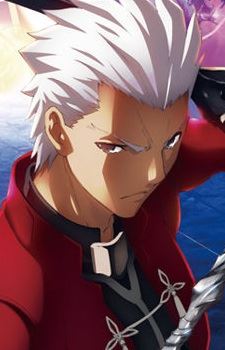
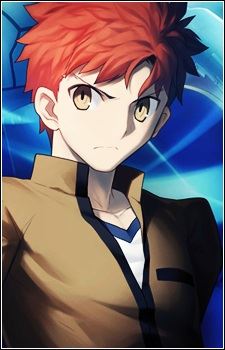
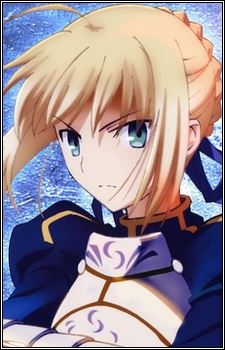

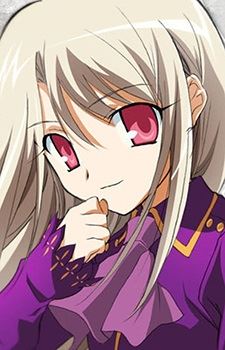



Fate Stay Night is a decent manga, though not the best. It follows some of the cliché tropes common in Shonen mangas but manages to tell its story fairly well. If you look online for reviews, you'll find that most translating sites have only released up to 65 chapters, which is disappointing considering the series concluded six years ago as of my writing this. It's uncertain if the series will resume translations since a six-year hiatus is quite long. Likely, it has been put on the backburner or abandoned due to lack of interest.
~SPOILERS~
The characters can be quite off-putting, to say the least. Shinji is an outright jerk, and Kiritsugu isn't much better. I assume he's the one who torched a village and killed many people ten years ago, feeling some remorse for Shirou losing his family, though it doesn't seem genuine. Kiritsugu leaves his adopted son behind frequently, embarking on adventures overseas and fathering another child without mentioning it to Shirou. The fight scenes are mediocre at best, though some stand out, like the Berserker battle near the end of the translated chapters. Berserker needs to die twelve times (seven during this fight) to stop regenerating, which is pretty wild.
The Caster fight was okay; she managed to subjugate two, maybe three or four Servants under her control, which was impressive but also made her overpowered. Still, she gets defeated eventually. Then there's Kirei, the preacher, who gives off creepy vibes from his first appearance. He looks like a typical villainous Asian character right from the start. I'm unsure how the series will conclude in the next 17 chapters if they ever come out, but it would be interesting if they did. I might update this review then. On a rough scale, I'd give it an 8/10 with just one read-through because even the Berserker fight drags on towards the end.
This manga is based on a highly acclaimed visual novel (VN) of the same name. I recommend playing the VN before diving into this or any other material in the Fate franchise, as no adaptations come close to the original in terms of depth, detail, realism, and presentation.
The manga resembles the anime adaptations in that it addresses everything quite superficially. For someone unfamiliar with the source material, the plot may seem illogical, arbitrary, and shallow, as little to no reasoning is provided for the characters' actions, and there's no insight into events outside the protagonist's view, how the magic system operates, or what might have happened if different choices were made. Due to this poor presentation, the manga reads like a below-average shōnen series.
That said, if you're already familiar with the story, it can be somewhat entertaining, much like a 'climax inference' in a Danganronpa game. While it disrupts the flow, seeing the events get jumbled can be amusing if you know how they were supposed to unfold.
All in all, the manga is mildly entertaining. It's not nearly as enjoyable as simply re-reading the VN, but the format does have its merits.