

...
Show More
When quirky inventor Senbei Norimaki creates an advanced robot named Arale, his brilliant creation turns out to be more than he expected!
Amidst the excitement of his scientific breakthrough, Senbei rushes to get Arale fully operational so that the residents of Penguin Village won’t suspect she’s anything but a real girl. However, before he can unveil her to the world, Senbei needs to find Arale a pair of glasses and some clothes.
(Source: VIZ Media)
Dr. Slump won the 27th Shogakukan Manga Award in both the Shounen and Shoujo categories in 1981.
The series was published in English by VIZ Media from May 3, 2005, to May 5, 2009, though this release included some censorship and translation changes. Prior to this, the manga had been introduced to English-speaking audiences through the educational publication Mangajin in February 1994, specifically in issues 32 and 33.


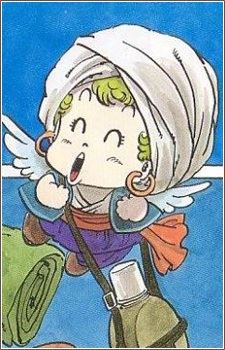


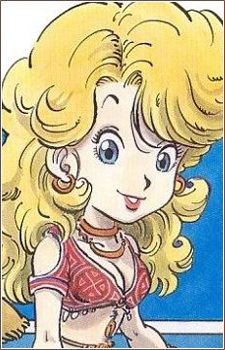




If you're a fan of Akira Toriyama's unique art style, enjoy wacky gag manga, and adore innocent characters, then this manga is for you. The episodic nature of the story keeps it engaging most of the time. While there were one or two storylines that started to feel monotonous, they never fully lost my interest. Many times, I found myself laughing uncontrollably—it's genuinely a fantastic manga. Personally, I am deeply fond of Toriyama's art style. Every aspect appeals to me; it’s visually pleasing in every way. Perhaps it's because Dragon Ball was my favorite show growing up, conditioning me to appreciate his work, or maybe he genuinely deserves all the praise. Each chapter begins with beautifully drawn cover art featuring certain characters, which often leaves me amazed. I truly love it and hope others share this sentiment. If asked to name the series with the best characters ever, I would instantly choose Dr. Slump. Nearly every character stands out uniquely. Arale Norimaki, the protagonist, is irresistibly adorable. Her design, personality, and actions are all endearing. She's my favorite character in this series and second overall in fiction (with Kid Goku being first). I'm glad Toriyama's editor suggested making Arale the main character instead of Senbei Norimaki, as originally planned. Senbei, the genius inventor who created Arale (yes, she's a robot), adds hilarious moments with his serious face and perverted antics, placing him among my top ten favorites. His attempts to see Midori Yamabuki's panties are always funny. Midori, Arale's teacher, is the best female character here—adorable yet mature, beautifully designed, and incredibly cute. Another student, Akane Kimidori, shares similarities with Bulma from Dragon Ball but is more fun. Tsun Tsururin is another adorably designed character whose actions are equally charming. Her brother, Tsun Tsukutsun, resembles Yamcha and is among my top five favorites, likely inspiring parts of Dragon Ball. This series is magnificent, and I hope the full anime subtitles become available online soon. I borrowed it from the library and plan to buy it once I can afford it to support the series. It's wonderfully crafted, filled with passion, much more so than Dragon Ball. Although Dragon Ball is larger in scale and popularity, Toriyama's heart lies with Dr. Slump. He might be catering to fans with Dragon Ball now, but his true passion remains evident in Dr. Slump. I highly recommend giving this series a try—you'll see the genuine dedication Toriyama poured into it.
Personal Thought:
This is one of the great comedy series I've read that's also appropriate for kids, maybe not six-year-olds but definitely at least ten. It's this series that made me wish Toriyama kept working on comedies. But Dragon Ball does kick major ass.
(Please note that content portions of a review may contain spoilers)
Story - 8/10
Manga author Akira Toriyama is probably most familiar in the West for his perennially-popular Dragon Ball series and its various offshoots. His career was launched, however, by this series, which combines goofy humor with a keen awareness of the tropes of robot-centric anime and manga.
Senbei Norimaki, the main character (whose name is a pun on a variety of rice cracker), creates what he considers his masterpiece as an inventor – a humanoid robot shaped like a little girl. He names the girl Arale (another, smaller variety of rice cracker, naturally), and while her strength and other abilities are superhuman, her straightforwardness and questioning nature are those of a small child. Norimaki soon realizes that Arale may not be the perfect creation he had envisioned and spends as much time trying to keep a handle on her as he does inventing new items and lusting after the beautiful women of Penguin Village.
Enjoyment - 9/10
I believe humor is one of the most challenging genres to write because what’s funny to one person may fall flat with another. The humor in this volume is very hit-or-miss with me, mainly because the author approaches the various gags from several different angles, some of which resonate more than others. Many of the jokes rely on familiarity with the tropes and clichés of how robotic characters are usually presented in anime and manga; one of the first things Arale does upon gaining self-awareness in the first chapter is ask Norimaki if he included any weaponry features ("tummy missiles") in her body. There are also amusing situations arising from the contrast between Arale’s apparent age and her complete lack of knowledge about human society. At least once a chapter, the characters seem to break the fourth wall and reflect on the fact they’re manga characters.
These elements are what I find most enjoyable about the manga, whereas the more immature gags tend to miss the mark. There are repeated instances where it’s clear this is, above all else, a manga aimed at a juvenile male audience. Several references to Norimaki’s continuing search for a wife and his weakness for attractive women thrust to the foreground when he’s forced to do "research" on a certain body part that Arale is missing. That particular chapter turns out to have a more amusing resolution than one might first suspect, but it does feature quite a bit of peeping (with X-Ray specs, no less) and paints Norimaki as sexually uncontrollable and unlikable. There are also a couple of gags based on Norimaki’s ownership of pornographic magazines, which come across as grasping at low-hanging fruit to me.
Art - 8/10
Whether or not the humor hits home will depend on individual reader tastes, but I suspect most readers could enjoy the manga on its artistic merits alone. Toriyama’s character designs have become ubiquitous in subsequent years due to his involvement in several high-profile video game titles (Dragon Quest and Chrono Trigger being two of my personal favorites) and the aforementioned mega-hit franchise, Dragon Ball, but even in this early series, he displays a keen eye for character detail and a restrained style distinctive enough to stand out. While there isn’t much variance in Toriyama’s primary character "types" (Arale looks like a younger version of "Lucca" from Chrono Trigger, for example), it’s interesting to see them reflected so early on in this work.
Overall - 8/10
Fans of Akira Toriyama’s body of work will definitely want to set aside some time to check out this volume, if only because it may help flesh out his reputation beyond the looming presence of Dragon Ball. Readers who enjoy humorous manga will likely appreciate the nature and sheer variety of the gags presented here. For all others, the humor and subject matter may be a bit too hit-or-miss to commit to multiple volumes, but the first has enough charm that the twenty-page preview provided on the Viz Manga website is certainly worth a look.