
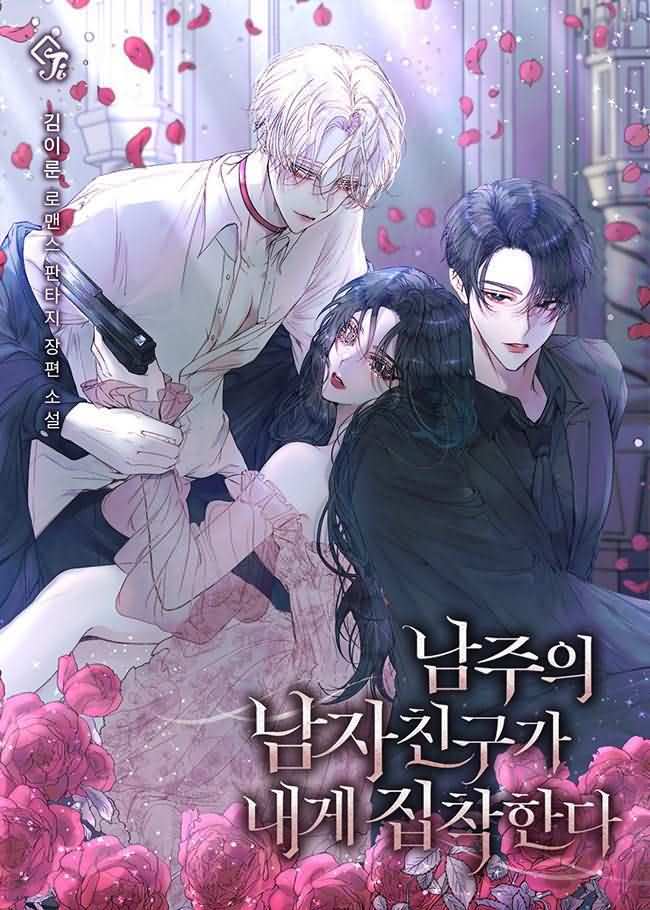
I fell into the ultimate noir* BL novel.
I was also the obsessive maniac and villainess who fell in love with the boss of The Hundred Thousand and brutally died during the main characters’ first meeting!
I thought I’d change the love between the two, which originally ended with the death of my bias due to schemes, into a happy ending,
“Join me. To hell.”
What? I’ve been kidnapped by my favorite character.
‘You’re my bias.’
‘But this is too much.’
To survive a life-turning event that is similar to the novel, I tried to seduce my bias a little. Just to the point where he would be sad to kill me.
“Why do you like me so much?”
Yet something wasn’t right.
“Try running away Princess, if you can.”
“I’m blind about you right now, and I’m going crazy.”
The male lead’s boyfriend began to cling to me.
“Please, Yeonbyeol…”
“Don’t leave me alone…”
Too dangerous and dizzying, there’s no way to escape.
*Noir is, according to Google, “A genre of crime film or fiction characterized by cynicism, fatalism, and moral ambiguity.”



The subsequent stories are equally peculiar; from Milk’s boyfriend becoming pregnant after an innocent kiss following her declaration that "if you kiss someone, you'll get pregnant!" to people vanishing from the earth due to Milk forgetting them. Each story places the little girl in a position of immense power and control over her surroundings, culminating in the titular story where the world literally freezes, leaving only Milk to rewind the springs of the great machine powering the world.
The art style of "Milk Wound the Spring" isn't overly intricate or chaotic. Every page features straightforward yet impactful visuals that help convey these odd narratives with minimal dialogue.
In terms of characters, Milk remains the sole constant. She encapsulates the innocence of childhood, the untamed imagination that thrives when one is naive to the complexities of the world. We witness Milk’s childlike musings and ideas shaping her reality—manipulating others and her environment alike. This concept can be unsettling in itself. Yet, upon finishing the final page, the reader still doesn’t fully grasp whether these tales unfolded exactly as Milk described or if they were merely figments of her imagination. It seems she might have been crafting these fantastical narratives to cope with her shifting environment. The dilemma of her mother having another child was resolved when it turned out to be a dinosaur. The apprehension and bewilderment of her first romantic relationship were sidestepped when her boyfriend became pregnant from a kiss and had to depart. The onset of adolescence was paused as the earth stood still. On the penultimate page, Milk confesses that she may have overwound the spring. "Time started moving faster," her dress no longer fits, her legs growing longer. Her mother reassures her that it's because she's maturing. But Milk dismisses this. "I made like I was impressed, like a good little kid... but what really happened; only I know!" And so, she persists in employing a childish rationale to interpret the world around her.
"The Time Milk Wound the Spring" is a swift read, infused with bizarre surrealism and the whimsical imaginings of youth. The theme of a young girl fervently clinging to her childhood is conveyed effectively through simple, poignant stories reminiscent of fairy tales or bedtime stories. It’s worth exploring if you're seeking something distinct from the usual plot-driven manga or school-life comedies.