
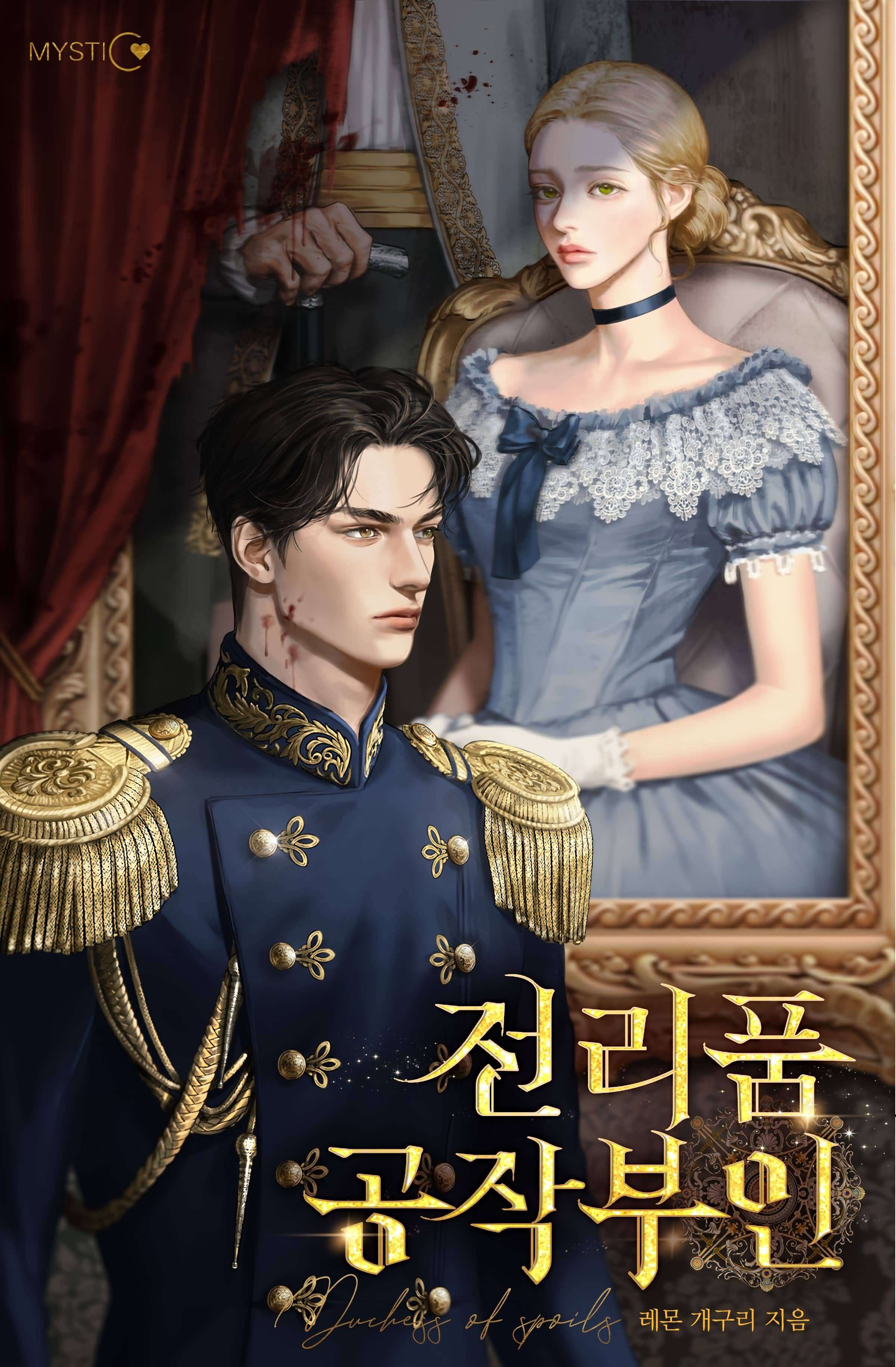
The Duke of Lancaster who sought independence from the empire!
Toppled by the Emperor’s suppression,the young and beautiful Duchess Ethel Lancaster falls as spoils of war.
Standing before the nobles who, not long ago, bowed their heads to her like a s*ave!
Regardless of who takes possession, it is certain that she will become a target for exploitation….
The Emperor seeks consent from a man of humble origin.
From the mercenary Count, Rasto Christceros.
“Rasto, do you not need a woman?”
“Well, I do lack a maid at home.”
Rasto’s response captivates the Emperor, who wanted to set an example for the nobles.
***
Ethel, now a ‘possession’ of Rasto, contemplates ending her life before suffering disgrace, but Rasto orders her to work as a maid.
However, in the eyes of the once perfect Duchess, Count Christceros seems terribly lacking.
From the dreary interior of the mansion, cheap decorations, indifferent servants, to the groveling maids acting like those in power….
‘Is revealing this going too far, or is it a crucial point?’
The highly experienced novice maid, Ethel, begins to gradually change Count Christceros.
Including the master of the house, Rasto Christceros.

The book is more compact than a manga volume, featuring lovely white, thin paper. It's a delight to hold. The cover resembles a standard manga but is 'western-oriented'; you read it from the front to the back, not the other way around. Inside, there are full-color illustrations at the beginning, along with some black and white ones scattered throughout. The font and font size are just right—neither too large nor too small. There's a brief explanation of certain Japanese terms used in the novel, and before the story begins, there's an introduction to more commonly known Japanese words like ~kun and ~sensei. The author has also included an afterword, and there are two pages advertising the publishing company.
The book opens and closes with a poem and consists of four stories that can be read independently. The longest story spans 100 pages, while the shortest is 30. In each tale, a child or teenager encounters Momo, the girl-like Shinigami accompanied by her black cat, Daniel. This cat is her assistant, it talks, and it possesses demon wings. Momo isn't your typical 'soul reaper'; she cares about people and aims to improve lives. This leads her to interfere in people's lives, and often, according to Daniel, she's a crybaby.
The second story particularly resonated with me emotionally. It was about a young boy who befriended a female classmate suffering from an illness. One day, they found a kitten, hid it because they couldn't keep pets at home, and took care of it together. But one day, when the boy played with other friends, the girl had to care for the kitten alone, became exhausted, and passed away. Overwhelmed with guilt, the boy sought Momo's intervention. I appreciated this story. Although it didn't make me cry, it was comforting.
The other three stories also lean towards the creepy side. The characters don't exactly have happy, carefree childhoods, but revealing more would spoil the tales. What this book does is narrate the stories of four young lives. It focuses on storytelling without overloading with unnecessary details, which gives the stories a somewhat unfinished feel. You receive the necessary details only when it's time to know them. However, this results in the book not leaving a lasting impression. It's the tales themselves that leave an impact, not the actual writing.
The book exudes a nice Japanese essence as it delves into the Japanese school system, includes bowing and respect, mentions shrines and bentos. I enjoyed reading something non-manga that still gave me a 'manga feeling'. Thus, I wasn't surprised when, after the light novel's publication, both the manga and anime versions emerged. I've glanced at the manga, but its introduction contains spoilers for Momo. What's appealing about this Light Novel is that in each story, you learn a bit more about this young shinigami. She's distinct from other shinigami, who are dressed in black and appear grim.
I've come to understand that a Light Novel is essentially a Young Adult novel. I enjoyed it so much that I also ordered (and read) the second volume of "Ballad of a Shinigami". It seems the series hasn't been translated beyond this second volume, which is quite disappointing.
Levels are supposed to have 10x dif between them but they kinda don't matter
Leave a Review
Part 1. Rate (click Star to vote)
Part 2. Login to account
Part 3. Write your review
Directory of Novels. where you can find Novels
Copyright novel cool © 2018–2024 — All rights reserved