
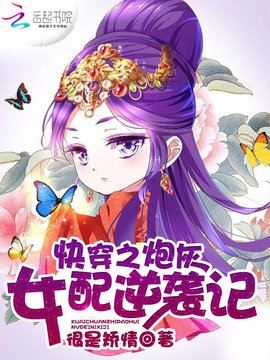
Quick Transmigration Cannon Fodder’s Record of Counterattacks
-
Author:
Hen Shi Jiao Qing,很是矫情,
- Status: Complete
Rating(4.1 / 5.0, 133 votes)
5 stars
56(42%)
4 stars
40(30%)
3 stars
37(28%)
2 stars
0(0%)
1 stars
0(0%)
Popular Reviews
Ning Shu possesses goals and ambitions beyond just securing a partner – in fact, she may not even have a clear objective, which is a refreshing aspect for this type of narrative. Unlike many female leads who become passive受害者, Ning Shu is assertive and driven by the wishes she inherits from her hosts. This makes her a dynamic character who evolves and adapts throughout her experiences.
In terms of plot, "Cannon Fodder" maintains the typical quick reincarnation format with short jumps between different worlds. However, since it omits romantic elements, the stories remain fresh as the author focuses on creating engaging and challenging environments for Ning Shu to navigate.
As the story progresses, both the narrative and the worlds become increasingly compelling. While the initial world might be a challenge for some, the progression of settings adds depth and improves with each chapter. If you enjoyed the concept of characters overcoming artificial "karma," but want a twist, "Cannon Fodder" is definitely worth giving a try.
1. An arrogant, greedy AI prone to reckless actions, despite being an AI, possessing inexplicable foolishness?
2. A detached being who looks down on all creatures, yet lacks tangible accomplishments?
3. Or perhaps a clichéd cold and domineering figure who, against all odds, falls for a "truly unique and extraordinary transmigrator," defying their usual demeanor?
Nope. In this novel, the Lord God turns out to be a model employee!
Beyond the typical quick reincarnation arcs and revenge plots, what I appreciate most is the intricate background of systems and transmigrators. The organization driving the quick reincarnation phenomenon, its staff, superiors, including the all-powerful Boss or the Almighty Lord God, and the vast backdrop that transcends Earth or even the cosmos – it's all masterfully written, although reaching that depth requires reading around Chapter 800 in the original source or Chapter 1600 in the group translation, so be patient, as it's worth the journey.
He works harder than anyone, busier than his own employees. He oversees a vast Ocean of Law brimming with countless universes, manages troublesome underlings, repairs破损 worlds, and tackles complex cases within the Sea of Law. Every day, millions of workers, universes, and systems depend on his constant attention and maintenance.
Contrary to stereotypes, he's not cold and aloof; he communicates effectively, whether sternly or with a touch of humor. Rather than being harsh, he displays immense kindness, valuing individuals based on their alignment with his interests, regardless of their identity – human, ant, or from high or low clans.
Lastly, as the Lord God and master of systems and transmigrators, there's no one who can captivate him enough to pursue and transform him into a possessive suitor. He embodies the 'unromantic male protagonist' archetype perfectly.
Indeed, he's Uncle Tai, TaiShu, the Great Uncle. I simply adore his character development and wish for a story where he takes center stage.
In Arc 1, Ning Shu's primary objective is to thwart her rival, the FL (a transmigrated girl), and gain revenge. The arc involves lots of struggles, self-defense training, and unexpected encounters with characters. However, the plot thickens when Ning Shu forms an unlikely alliance with Psycho to protect herself.
While Arc 1 contains valuable background information, it might not be the most enjoyable part for new readers. If you decide to proceed, expect the tone and character dynamics to improve in subsequent arcs, with the protagonist becoming stronger and facing less annoying NPCs. Some plot points, like the doctor-related confusion, might be a source of humor or character development.
To sum up, while Arc 1 can be skipped without major loss, the novel improves as it progresses, and the author does address the annoying characters later on. Give the story a chance after Arc 1 if you're interested in the protagonist's growth and the more engaging storylines that lie ahead.
The author handles themes like adversity, camaraderie, and the evolution of characters' bonds expertly. While some relationships grow stronger, others end tragically, showcasing the fluid nature of connections. The fight scenes are intense and unpredictable, leaving readers on the edge of their seats.
What's remarkable is the主角's growth, despite her occasional idiocy, which adds realism to her eventual strength. Her journey is not marked by cheats or easy triumphs, but rather through hard work and resilience. This novel stands as a testament to feminist ideals, presenting a nuanced portrayal of a female character without centering on love or traditional gender roles.
The book subtly critiques society, tackling issues like gender discrimination, dowry systems, and societal expectations. It's significant, especially considering its setting in a more conservative Asian context. I applaud the author for addressing such taboo topics.
Lastly, I admire the protagonist's independence and rejection of traditional female roles, such as motherhood or domesticity. The fact that the author maintains her character's integrity without resorting to plot twists is commendable. It sends a message that career success and happiness aren't tied to marriage or parenthood.
Overall, I wholeheartedly recommend this novel for its well-developed characters, thought-provoking themes, and thrilling action sequences. It's a must-read for those seeking an empowering female lead navigating challenges and fighting for strength in a unique and imaginative world.
The writing is exceptional, the plot engaging, and the protagonist is likable. Initially, it followed the typical transmigration storyline, but as the story progressed, it evolved into an adventure tale centered around the main character. However, I must admit that the ending left me slightly unsatisfied and confused, especially with the extra content.
To give you a brief overview, the narrative revolves around a diligent protagonist who rises from humble beginnings to become a revered Void creature, transcending her initial transmigration status and even facilitating others' journeys. But the romantic subplot was a major point of frustration for me; I had to abandon the book twice previously due to this issue. It's like reading a 4000-chapter novel without any romantic development – it just doesn't resonate emotionally, especially when the main love interest, a divine being, turns against the MC and meets an untimely demise in the extras. The MC's own death occurs multiple times, adding to the sense of unnecessary conflict between them. It's put a damper on my belief in love stories, to be honest.
As for the ending, it could be labeled as open-ended, leaving many questions unanswered.
The storytelling of the introductory world is, in my opinion, inferior to most other arcs. It caused me to put the book down twice, once in the translated version and once in the raws. It wasn't until I skipped directly to the second world that I regained interest, which led me to continue reading for over 2800 chapters.
I must warn potential readers that this story does not have a romantic element; it's not a love story. The main character (MC) doesn't believe in true love and avoids romantic contact to maintain distance from others' partners. The author appears to have an anti-romance stance, as most worlds visited by the MC highlight the unimportance of love in favor of power, greed, and other motivations.
Starting from around chapter 1000, the focus shifts to the MC's adventures within the system and interactions with other users, as she works on self-improvement and creating her own world. This part can be hit-or-miss, as I initially found it engaging with group missions to different worlds. However, later on, the MC seems to lose her intelligence when outside mission settings, often putting herself in danger and acting foolishly.
Despite these drawbacks, the world-building and mission arcs are well-crafted, keeping my interest till chapter 2971. Overall, I'd rate the novel a 4 out of 5.
Some of my favorite arcs include:
1. As the emperor's sister, which captivated me for the remainder of the story and introduced an intriguing emperor character who reappears later.
2. "That Phoenix Guy" arc, where the unfaithful husband from a previous mission takes his own life and becomes a system-user, leading to the MC's paranoia.
3. "The Merchant's Daughter" arc, where the MC is suddenly dropped into a mission without system support, forcing her to rely on her retained skills to navigate the situation.
4. "Demon Sect Lady" arc, where the MC eliminates the original ML and plays a sarcastic game against the rest of the setting.
5. The male emperor arc, where the MC deals with a harem and various other complexities.
6. The interworld war arc, where the MC and other high-level mission-takers defend the multiverse from unseen enemies, revealing more about the overarching system organization.
These are just a few highlights, and the series maintains my interest despite its less-than-stellar introduction.
1. This is not a love story. The author clearly avoids romantic elements, and the idea that the protagonist, Ning Shu, is perceived as a potential love interest by those who see power in her is misguided. To them, she represents the opposing force.
2. As a fan of non-romantic fast-paced reads, I appreciate "Original Returns" for its unique take. Unlike typical stories where the main couple faces various situations, the focus is on character growth and self-improvement. Ning Shu's approach is pragmatic, balancing strength with empathy, ensuring her characters can lead fulfilling lives according to their abilities.
3. The term "cannon fodder" applies not only to the supporting characters but also to Ning Shu herself. The well-developed system within the story clearly outlines the motivations, and she undergoes significant challenges and hardships. It's not a tale of narcissistic power fantasies; instead, it's a journey of survival and alliances, which form gradually.
4. Some reviews claim the author discriminates against women or is racist. However, accusing the author of racism based on this work alone is unfounded. While the admiration for the female lead's beauty might not suit everyone's taste, it's not the sole focus. The novel actively addresses women's rights and tackles serious issues like rape and domestic violence. The "boyfriend is gay" story is an exception, but it doesn't define the author's stance.
5. Lastly, among all the fast-paced reads I've read, this is one of my favorites. The system and the diverse worlds she explores are creative and engaging. The initial world,尽管艰难, serves as a lesson in humility. The overall narrative is compelling, and the smaller subplots are imaginative.
In conclusion, while there may be some misinterpretations, this book offers a thoughtful and well-crafted experience in the fast-paced genre, with a strong emphasis on character development and social issues.
To illustrate, realistically, a new player shouldn't jump straight into fighting bosses without proper preparation. The chances of winning are slim, and it wouldn't be enjoyable unless one is seeking a difficult challenge. The MC did attempt to fight back in the first arc, but their efforts were fruitless, which was frustrating.
I highly suggest skipping the first arc if it doesn't resonate with you and moving on to Chapter 62, where the next arc begins. If you can't bear it past Chapter 40, you might find solace in skipping to that point. Spoiler alert: You might hope for an instant transformation from a beginner to a pro, but that's unrealistic – it takes time and experience. Instead, the MC learns to rely on others and grow, becoming self-sufficient and strong enough to protect herself and others.
The second arc, on the other hand, is a stark contrast to the first. It brings immense satisfaction, showcasing the MC's growth, determination, and self-reliance. They become a capable individual who doesn't need external protection and empowers other women who have faced similar struggles, inspiring them to stand up for themselves and strive for independence. This transformation and the positive impact on others are what make the second arc truly delightful.
Leave a Review