
“Mr. Chen, your order of one hundred buckets of fried chicken has arrived.”
“Mr. Chen, your order of one hundred roast ducks has arrived.”
“Mr. Chen, your order of ten thousand tons of pork has arrived.”
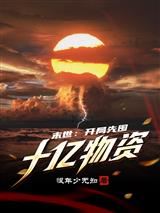
Known as the King of the Void, Chen Luo, relied on his unparalleled survival abilities to outlast all survivors, leaving no human left in the world except monsters.
Chen Luo, who found no meaning in living, buried himself in a pit. It wasn’t that he couldn’t survive, but that he didn’t want to.
After waking up, Chen Luo was surprised to find himself reborn one month before the apocalypse, with his unique space ability from his past life following him.
It goes without saying, he decided to stockpile ten billion supplies first. Why stockpile so much? Chen Luo said he wanted to try something different in this lifetime.

The protagonist's actions were disturbing. In the beginning, he cruelly fed his undead uncle and cousin, who had wronged him by killing his parent and attempting to steal his inheritance. Later, when encountering survivors trying to rob him, he electrocuted them无情地, displaying callousness. Lastly, his treatment of a fellow survivor who had manipulated them for protection was particularly vile – feeding her contaminated bread that was wiped on his dog's behind, which was intended as humor but fell flat due to its unlikeliness.
Despite the intriguing setup, the protagonist's morally questionable behavior became unbearable for me. While I don't expect a perfect hero, I prefer a character with some redeeming qualities. The potential for a compelling story was there, but the constant exposure to the protagonist's disturbing actions pushed me to abandon the book. It's unfortunate, as the core idea had promise.
The protagonist's rapid strength growth and "golden finger" ability are well-balanced, avoiding the overpowered stereotype often found in Japanese novels. Despite the somber theme of an apocalypse, the story's pacing ensures that the protagonist's experiences before his rebirth have prepared him to navigate challenges, making him an engaging and clever hero. There's even a touch of humor amidst the grim setting.
The majority of the tale takes place on Earth, with the interstellar part being concise. The author seems to excel at grounded storytelling rather than space adventures, which is not a negative. The protagonist's departure from Earth happens when they're already formidable, so the focus shifts to their exploits elsewhere without stretching the narrative for additional chapters.
While the ending feels rushed due to the multiple alternatives, it satisfactorily answers key questions, such as the reincarnation and power dynamics. Overall, the novel feels complete, and I wholeheartedly recommend it, except for those who might find the unyielding nature of the hero unappealing. The translation is fairly easy to follow.
I sincerely hope my interpretation is incorrect, but the story appears quite petty, despite being published. Chinese literature, unfortunately, can sometimes fall prey to unoriginality or shallow imitations, but this particular piece stands out for its intensity. It's certainly not a casual or offhand composition.
Leave a Review
Part 1. Rate (click Star to vote)
Part 2. Login to account
Part 3. Write your review