
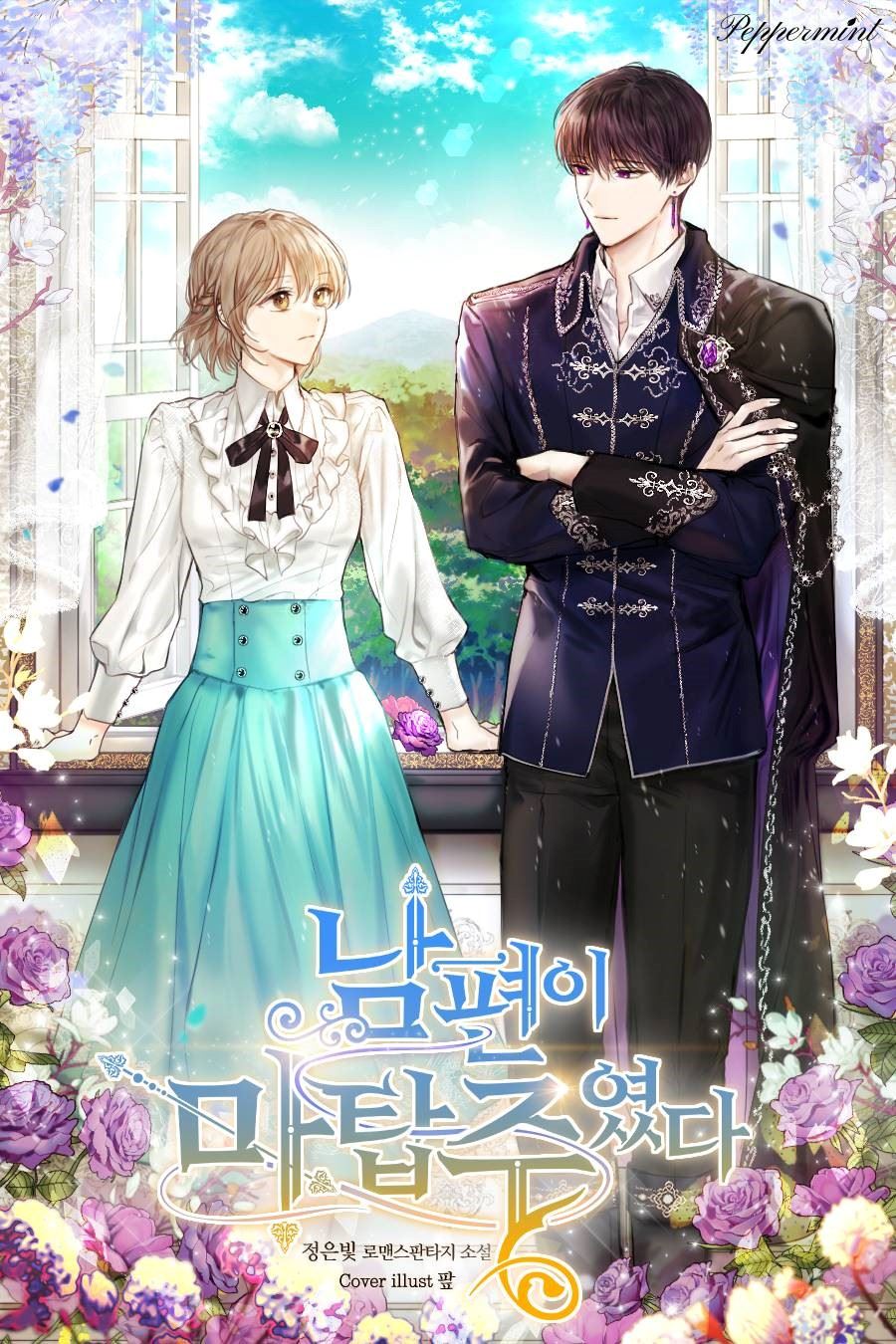
My husband wasn’t just a mere magician, but he is the Master of the Magic Tower. I didn’t know that fact.
I wasn’t just a mere dimension shifter, but someone with eternal youth and immortality. My husband didn’t know that fact.
I was killed by a bomb that suddenly exploded in the village, and I woke up 10 years after that. And the news that came to my ears was that the Master of the Magic Tower had gone mad and had been on a rampage for 10 years.
I get it that he doesn’t know I’m alive, but what’s up again with him being crazy?




A spoiler follows: I couldn't comprehend why Ei didn't disclose her immortality to the ML, considering it would have been a concern for her.
The plot then took a chaotic turn, with the ML descending into madness, hallucinations, and isolation. Ei eventually woke up and went in search of her friend, discovering his mental state and embarking on a drawn-out journey to reach him. The reunion was unnecessarily prolonged, and the ML's possessiveness became apparent, restricting Ei.
The subsequent parts felt unplanned, stretched for the sake of a lengthy story. Side characters, including a random kidnapping incident involving the FL's friend by a raven-like antagonist, felt unnecessary and tedious.
In conclusion, the side stories felt like a waste and left me wanting a refund.
Update: Wow, the FL discovers the ML's feelings surprisingly quickly, just in six chapters! Initially, I expected her to be oblivious, but she proves to be perceptive. Overall, it's a great progression.
The issue lies in the slow build-up to the climax, which felt unnecessarily prolonged. It's baffling that Ei didn't disclose her immortality to Dante, despite knowing his secret. The explanation for her silence is initially due to overwhelming happiness but then shifts to concerns about timing, leading to a convoluted plot point. The journey to find Dante after her resurrection becomes a distraction, introducing unnecessary side characters that detract from the main focus. We don't get a comprehensive understanding of Dante's descent into madness; it's merely conveyed through hearsay.
When the reunion finally happens, it lacks the emotional impact one might expect due to the excessive buildup for future arcs. The story drags on, making it exhausting to read, hence my rating of 2 stars instead of 3. The concept of immortal anomalies finding love is intriguing, but the execution leaves much to be desired, feeling like a rough draft that requires significant refinement.
While I've stopped reading, I might consider giving the author another chance based solely on their strong start with the romantic storyline.
I tried to give it more chances, but ultimately decided to lower the rating by another half-star and abandon the story. It's surprising to see such high 5-star reviews without a significant change in the story's direction, such as improved writing, plot, and character growth. The translation, however, is decent.
The protagonist, Ei, narrates in a monotonous manner and has little interest in relationships due to her immortality. She lacks desires, goals, and hobbies, and her detachment from past experiences makes her appear bland. Her reactions to events, like Dante's appearance or her own violent deaths, are underwhelming. Even when she claims to fall in love, it seems more practical than genuine, driven by convenience rather than true affection.
Dante, the male lead, has more depth compared to Ei, but his character is clichéd, resembling a typical tsundere manga protagonist. His love for Ei is confusing, as he struggles to understand her apathy towards life's events. The occasional third-person chapters from other characters serve no purpose other than padding the story and advancing the plot artificially.
While there was some initial intrigue in the promised "village bomb-death" event, the handling of Ei's immortality revelation was a major disappointment. She inexplicably keeps her own immortality a secret from Dante, despite her earlier emphasis on avoiding emotional entanglements due to her longevity. This inconsistency felt frustrating.
Furthermore, Dante's exaggerated grief and quest for revenge after Ei's death felt forced and melodramatic, especially since there was little buildup for such an intense response. The remaining chapters seemed to drag on without any meaningful progression, making the decision to stop reading even harder.
In summary, the lackluster character development,平淡 romance, and unrealistic plot twists contributed to my dissatisfaction with the novel. Despite my tolerance for common shoujo tropes, this book exceeded my limits.