
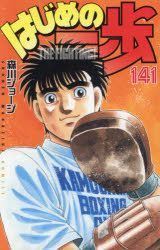
Hajime no Ippo
- Genre: action comedy drama martial arts shounen slice of life sports
- Author: morikawa jyoji
- Artist(s): morikawa jyoji
- Year: 1989
- Original Publisher: kodansha
- Status: Ongoing
...
Show More
20th century 21st century adapted to anime adapted to game adapted to movie adapted to ova / oav adapted to stage play americans travel to japan award-winning work black characters boxing character growth classic manga comedic facial expressions coming of age dead parents determined protagonist dogs extended flashbacks facial expressions fisherman friendly male lead friendship hard-working protagonist high school huge cast of characters injury/ies japan long-running story love polygon multiple couples muscular male lead nurses old man partial nudity perverts polite male lead professional sports rivals rivalry romantic subplot sexual innuendo slow romance strong characters strong male lead strong to stronger symbolism tournaments trainer-trainee relationship training unarmed combat unrealistic fighting violence weak to strong young male lead
Rating(4 / 5.0, 93 votes)
5 stars
33(35%)
4 stars
27(29%)
3 stars
33(35%)
2 stars
0(0%)
1 stars
0(0%)
Popular Reviews
- Hajime no Ippo, an anime/manga well known for its great story, its charismatic characters, and... Just kidding, now I start the manga review.
Story: 5/10 (Chapters 1-268) 3/10 (Chapters 269-???)
The story begins in a world conveniently tailored for the protagonist, with parents having a tragic past. He enters boxing in a way that is anything but casual ("casually met a boxer at a convenient time") and decides to box because he saw a video (an excuse to get him into boxing without complicating things). Besides this, the plot doesn't offer much more; it's just about wanting to know what it means to be strong through boxing (the protagonist is already strong, making this an excuse). This could have been acceptable up to chapter 268, ending as a typical action and self-improvement story. However, the author extended it (to make more money), which wouldn't be a big problem if the character changed or showed relationships between characters (which happens in a limited way). The character trains, fights, wins, and occasionally interacts with others. For a manga of 100 or 200 chapters, this might work, but for one over 1000? No thanks.
Characters: 5/10
The protagonist is a Gary Stu—kind, energetic, altruistic, without flaws, and his family has a very convenient tragic past. One reason why Ashita no Joe works so well is because the characters change, progress, and evolve. They feel human, changing their way of thinking. Here, after +1100 chapters, nothing changes ABSOLUTELY NOTHING, although it seems like there might be some change now, I doubt it will be significant for the manga. The villains follow the same pattern—they appear reckless and are then presented as tragic (with a few exceptions). This repetitive pattern becomes tiresome. The secondary characters are the best part of the manga for much of it, with more adequate pasts and greater motivations than "knowing that they are strong." Each time they appear, the series improves, even if they only get small arcs every so often.
PS: The relationship between Ippo and Kumi is one of the least credible I've ever seen.
Art: 10/10
Every action series that wants to succeed needs high-quality drawing, and this is no exception. Although initially, the drawing is somewhat messy, it ends up improving incredibly well. It's the best point of the manga for many, and I have nothing negative to say about it.
Enjoyment: 5/10
Although I was surprised at first, by chapters 300 to 400, it starts to decline, and before halfway through the manga, it becomes boring, predictable, and so on.
Overall: 4/10
I do not recommend it. There are many better action manga out there. But if you end up reading it, you shouldn't go beyond chapters 300 or 400 since the rest is more of the same—repetitive, boring, and static.
There are battle manga, and there are sports manga. Hajime no Ippo falls into the latter category. Boxing isn't fighting; it's a sport. Two athletes step into a ring for a regulated professional match. For this reason, with only one or two real exceptions, there are no antagonistic evil boxers. The story begins by following Makunochi Ippo, a young boy who is often bullied. After meeting a pro boxer, he becomes inspired to become one himself. With a style reminiscent of Mike Tyson (without the ear-biting), we see Ippo climb the ranks in the featherweight division.
At a certain point, the story shifts slightly, becoming less about Ippo alone (though he remains the primary focus) and more of an ensemble piece. As the mangaka George Morikawa stated, "Everyone in Hajime no Ippo is a main character." Additionally, the manga isn't solely about the sport. One of the biggest reasons why Hajime no Ippo has enjoyed such a long run is due to its humor and character development, both of which deserve praise.
Since this is a manga, the matches are obviously slower than they would be in real life, where a round lasts three minutes. This actually serves as an advantage for several reasons. The blows and patterns are shown in greater detail, making them easier to understand, and we can see the thoughts of the boxers and their seconds as they strategize. These elements serve a very important purpose. The amount of strategy and mental planning demonstrates that boxing isn't just two people punching each other but is a sport that requires significant strategy, instinct, and intelligence.
One of the most prominent aspects to highlight is the fighting spirit. Yes, one of the most common and overused tropes in shonen manga is present here too. And not only does it work, it fits absolutely perfectly and is a major symbolic theme in the series. Such masterful use of the fighting spirit trope is remarkable and rivals that of Gurren Lagann. A deeper analysis and a couple of rereads reveal that the series actually showcases the cultural symbolism of fighting spirit and the origins of the trope. In fact, it's possible to interpret the series as a metaphor for Japan's struggle between its traditional culture and post-war Westernization.
I won't explain more to avoid spoiling anything else, so I'll conclude by calling this a masterpiece.
Disclaimer: I watched the anime first, then picked up the manga where it left off. They aren't very different at all. I fully recommend the anime as well.
This manga tells an uplifting story about a boy named Makunouchi Ippo, who is often bullied. After being saved from a brutal beating by a strong boxer named Takamura Mamuro, Ippo joins a boxing gym. The story primarily follows Ippo and Takamura through their increasingly challenging pro boxing careers.
The cast isn't limited to just these two characters. There are many other significant rivals and three other gym mates, each with extensive and very realistic motivations. In fact, there are at least two fights in the story where I found myself rooting against Ippo because his opponent was either much cooler or had more at stake.
If you enjoy action, read Ippo.
If you appreciate realistic love stories, read Ippo.
If you love deeply developed characters, Ippo is for you.
Even if you think boxing is a boring sport, I can wholeheartedly recommend this manga. It has a unique spark that's rare to find these days.
What can I say except that I've re-read this manga about eight times? With the number of chapters it has, it's a fantastic read filled with story and character development. At times, you find yourself rooting for the characters to win, to get up and continue, feeling like you're there watching it live.
Like all great manga, the art at the beginning was good but had some flaws. However, over time, the art improved significantly, making it much more enjoyable to read. This isn't one of those manga where the main character is overpowered from the start, which is why it's so great. It gradually builds up the main character, making each fight more exciting as you just want him to win.
The series is filled with comedy and also has its serious moments. Each fight leaves you more excited for what's to come. Overall, I gave this a 10 out of 10. Every series has its flaws, even if they are minor, but this manga, from my perspective, was great with only minor issues.
This manga is enjoyable even if you don't like boxing. Initially, it progresses slowly, realistically reflecting the time between fights. However, this pacing is what makes the series better as it builds anticipation for each major fight involving the main character and other characters in the series.
It may be that you discovered the Ippo anime and are unsure whether to start reading the manga because of the huge number of chapters (1000+). Well, it's definitely worth the time. Let's review this manga as if you had no prior knowledge of it.
Story:
The story begins simply: a boy named Makunouchi Ippo gets bullied and starts boxing under the strict trainer Kamogawa Genji, an old but very experienced man. There, he meets his idol and competitor Miyata Ichiro, who becomes Ippo's motivation to train harder. It might seem simple and repetitive after over 1000 chapters, but it isn't. The story shifts between characters in the Kamogawa Gym and even former challengers who become part of the ongoing narrative. The story excels by combining multiple genres and subplots into one cohesive storyline. You get hilarious comedy, intense boxing matches, drama, slice-of-life moments, and some romance. Build-up and pacing are well-handled, with subtle time skips that you barely notice. Everything is interconnected, so you often see friends or former challengers reappear for plot or comedic purposes. It's not a "new enemy appears-loses-next enemy suddenly appears" pattern; it's crafted with great storytelling, build-up, and characterization. The unpredictability of the fights ("you never know what can happen in boxing") keeps things exciting, and you might find yourself cheering for the "enemy" because they're so well-written.
Art:
Keep in mind that this manga started serialization in '89, so don't expect too much from the first hundred chapters. Initially, I didn't like the art style, having been used to the generic shonen aesthetic. However, the art is truly great. You get beautiful double pages of either the park with the sky where Ippo & co. jog or epic boxing matches with perfectly drawn shadows and motions. Even the crowd's faces show emotion. This description alone shows the passion and love put into the artwork. Character designs and overall world-building are retro but cool and fitting. I couldn't imagine Ippo with flat screens and smartphones. The panel layout remains retro with strict borders, making it easy to follow compared to newer manga with more chaotic layouts. The art looks simple but is detailed and stays fresh even after 25 years of serialization.
Character:
"Ippo's" characters are unique in their own ways. No fight is random because we get introductions and characterizations of new challengers to the point where you sympathize with their determination, leading to dramatic and breath-taking matches. Spirit is a key element in every character, with some fighting even while unconscious to achieve their goals. Early beaten characters reappear later, showing how their boxing careers unfold, often crossing paths with other introduced characters. The characters' growth is immense, as expected from a long-running sports manga.
Enjoyment:
It really never gets boring. Between serious fights, there are light-hearted, inspirational, or funny moments, and even detours from boxing like cooking or baseball matches—always ending hilariously or benefiting future events. Ippo has a cute and funny "love life," often hindered by certain circumstances, but always amusing. You'll cheer for Ippo to be as strong-minded and confident with women as he is in the boxing ring. When you're engrossed in an exciting match, you'll read 30 chapters before you realize it. The pacing slows down during fights to thoroughly explore the competitors' strategies, which is necessary and a good point. You learn a lot about real-life boxing when real strategies or punches are introduced, which is a huge plus. The mangaka, George Morikawa, masterfully combines boxing techniques with each character's personality.
Overall, this manga is recommendable for anyone open to a longer project and not looking for quick one-shots. You don't even need to like boxing or sports; this manga is thrilling, inspirational, and funny. Most people I know who watched the anime got the urge to work out or start jogging because this manga portrays how hard work pays off repeatedly. Don't be scared by the huge number of chapters; see it as a blessing that you can read as much as you want without waiting weekly for new chapters. :-)
This manga is all about boxing, and I mean that in the most straightforward sense. It doesn't delve into dramatic twists, unexpected turns, or philosophical questions. It's purely focused on boxing. Every boxer character gets their moment in the spotlight, often with entire arcs dedicated to their matches. Even the supporting elements of boxing, such as the gym, trainers, corners, and media, are thoroughly explored.
However, after over 1000 chapters and still ongoing, it can become quite repetitive. Much like a real sport, the story doesn't evolve much beyond the cycle of training, match, win/defeat, and repeat. Occasionally, a character will suffer an injury and have to fight through recovery, but that's about as varied as it gets. The key to making a sports series like this work is ensuring each cycle remains entertaining. With so many fights written into the series, not all of them can be great—that's just statistics. But when it hits its stride, or focuses on a character you love, it becomes truly enjoyable.
Throughout its long run, the series has consistently maintained its core thesis: the power of hard work and perseverance. If that isn't the quintessential essence of a sports series, I don't know what is.
Summary Scores
Story: 9
Art: 7
Character: 10
Enjoyment: 9
Overall: 9
The reason for writing this review is that I thoroughly enjoyed the series (so much so that I read 870 chapters in just two weeks, even while attending school), and I found the other half-cap review to be lacking.
The story's premise is similar to many shounen manga like Eyeshield 21 or Naruto. However, it stands out by blending action and sports genres without resorting to unrealistic superpowers. This balance keeps the narrative grounded and engaging, especially when new moves or abilities are introduced.
In the first few hundred chapters, the story progresses quickly, with the protagonist, Ippo, advancing through various stages such as the Pro Test, Rookie Tournament, Japanese Rankings, and finally the Boxing Championship. After these milestones, the plot focuses more on title matches. While the pace slows down, the enjoyment remains high, making it one of the top shounen manga.
The artwork has an old-fashioned style that isn't unattractive but retains a classic manga feel. Although it has evolved over time, the overall aesthetic remains consistent. Personally, I don't mind it, but I wouldn't say I prefer it to modern art styles. The action scenes, however, are brilliantly illustrated, capturing dynamic movements and dramatic effects effectively.
Character design is solid but not outstanding. What truly shines in this manga is its characters. Takamura, arguably the most popular character, provides comic relief but also commands respect from his peers. His incredible boxing record and fierce presence in the ring make him an idolized figure within the Kamogawa Gym.
Ippo, the main character, follows a somewhat standard shounen archetype—a young, naive boy seeking to become stronger. However, he stands out by starting with considerable strength, equivalent to those in higher weight classes. The supporting cast is likable, with characters like Aoki and Kimura evoking sympathy due to their struggles and unfulfilled dreams. The Itagaki puns added a delightful touch of humor.
The enjoyment level was exceptionally high. The fights kept me engaged, filled with testosterone-fueled excitement. The training arcs were amusing, and the sheer amount of grit, effort, and determination depicted made the reading experience thrilling.
Overall, Hajime no Ippo is one of my favorite manga to date and a prime example of a well-executed shounen sports manga.
THE BEST FIGHTS IN MANGA! (EXTREMELY LONG REVIEW!!!)
Art:
The art in this manga is exceptional, especially for a fighting series. The impacts are incredibly well-drawn and convey the intensity of each punch. The speed and footwork of the fighters are depicted so vividly that it immerses you more deeply than watching a movie like Rocky or a real-life match could. It's beautifully violent and makes you feel very excited. Each punch looks like it has the force of a grenade or truck, which is captivating. As the series progresses, Morikawa introduces unique angles that make advanced techniques jaw-dropping and hype-inducing. Every movement of fists and feet is so fluid and powerful that you almost feel like the panels are moving.
The manga rarely experiments with its format, such as drawing full characters on a page with panels or having a fist break out of one panel into another. However, this does increase as the manga goes on. One consistent feature is the cheering sound effects plastered everywhere during arena fights, which helps communicate the audience's excitement—if you can read Japanese. These are often just "ア" (meaning "A"), making the cheering sound like "AAAAAAAAAAAAAAAAA." While generic, these SFX help solidify the crowd's presence in the matches. Character designs are top-notch, and you won't forget how any of them look. The artistic evolution of the series as Morikawa matured is endearing, much like One Piece. The manga retains its 1990s style with a modern flair, grounding it firmly in its setting.
Fights:
The best fights in manga*.
*With an asterisk because these are grounded, realistic fights. Morikawa takes some liberties, but they are the most realistically choreographed fights you'll ever see in manga. Somehow, he manages to make every fight unique, surprising you despite boxing being relatively simple. All boxers have distinct skills and personalities, sticking to the series' realistic tone. Themes of hard work and talent are used effectively, making fights against both hard-working good guys and talented bad guys gripping. You never know who's going to win, creating tension and making every fight insanely gripping and fun to read.
Characters/Story:
The characters are amazing. While they don't have emotional moments akin to One Piece, they are still effective, each with a backstory and reason to fight or live. Despite the violence, you rarely fear for their lives, leading to a light-hearted yet exciting read. You find yourself sympathizing even with the most evil foes, much like One Piece sometimes does. The manga brings back old characters, keeping them relevant and making the world feel alive. Some characters fill generic roles, like the love interest, which can be shallow. But with the sheer number of characters, this is forgivable. The main cast continues to develop, and you never get tired of spending time with them. You feel like you actually know these people, though you sometimes wish someone else would get the spotlight.
The characters are a massive part of Hajime no Ippo, and it's an absolute joy witnessing every moment with them, from silly to tragic. The cast is mostly male, which makes sense given the era and the sport's popularity among women. Women play supporting roles, solving problems and offering things the men cannot. Romance is rare, with characters even pointing this out. Comedy is the second biggest focus, making it extremely funny without detracting from the seriousness of boxing or character drama. Most characters have extensive backstories, even hundreds of chapters after their debut. One issue is that some characters are held back to maintain the status quo, which can be noticeable over decades of reading. Despite this, the story remains enjoyable, filled with hard-hitting moments and perhaps the funniest manga I've ever read.
The biggest issue is the lack of variety. While downtime between matches provides relief, it's almost always about boxing—training, talk, etc. This focus on boxing means other elements like romance, drama, dark moments, and slice-of-life are rare or not substantial. You're getting only boxing, which can be repetitive depending on your preferences. Comedy and gags make up 99% of the non-boxing sections, which might not appeal to everyone. The hyper-focus on boxing is commendable but doesn't satisfy all avenues of media. Morikawa pokes fun at this aspect, trolling readers about subplot development, which becomes a gag. The humor is the best in manga history, but the lack of substance in subplots is rightfully the biggest flaw, affecting everyone differently.
Setting:
The setting is hard to criticize. On one hand, it's boring compared to exploring varied environments in One Piece. On the other, it's a modern-day 1990s Japan boxing manga, so it lacks interesting environments. Hajime no Ippo could be a stage play with how simple the settings are. Key locations include the gym, arenas, and a running embankment, with some lesser-used places like restaurants and homes. Despite bland environments, the fighting and character interactions are the real draw. That you don't notice the limited locations shows how strong the core strengths of the manga are.
Overall:
Hajime no Ippo is one of the best manga ever created. Its fights are captivating, artwork is jaw-droppingly impactful, characters are endearing, and comedy is hilarious. It's a must-read, with 1500 chapters flying by. Note that this manga isn't officially translated, with official releases starting in 2023. Chapters don't redraw sound effects, making it lazy, but at least they add translations below. Fan translations are great until around chapter 700, where quality drops for about 100 chapters before returning to normal. Stick with fan translations until the official release catches up. If you can, support Hajime no Ippo by buying licensed merch and official translations!
(The anime covers up to chapter 500 and is insanely hype with great SFX, voice acting, and choreography. If you have time, the anime is also an amazing way to consume Hajime no Ippo. But the manga itself is no slouch, fitting comfortably in my top 5.)
This manga is one of the greatest ever made, a masterpiece despite its flaws, with the best* fights you will ever read.
Leave a Review