

It has been five years since Utena Tenjou's parents passed away. Instead of mourning, Utena vividly remembers the mysterious prince who comforted her during her time of need. On that day, the prince—who she nicknames "Peropero-kun" after he licks her tears away—gave her a ring and promised that as long as she kept it, it would lead her back to him one day.
Every year, just as the roses bloom, Peropero-kun sends Utena a letter. Believing these letters are written by Utena's aunt rather than an enigmatic nobleman, her best friend Kaidou sets out to find evidence supporting his suspicions. When he discovers six photos hidden in the letters that fit together like puzzle pieces, it confirms not only the existence of Peropero-kun but also his presence at the prestigious Ohtori Academy.
Desiring to reunite with her long-lost prince, Utena leaves her old life behind to search for Peropero-kun. Upon arriving at the academy, she encounters the student council of Ohtori Academy and their peculiar treatment of fellow student Anthy Himemiya. Utena’s investigation into this strange behavior uncovers a multitude of mysteries that may guide her to the prince she has sought for so long.
Shoujo Kakumei Utena, known in English as Revolutionary Girl Utena, was published by VIZ Media from January 9, 2002, to March 3, 2004. It was serialized in their shoujo anthology magazine Animerica Extra. The publisher later released the series in a deluxe two-volume hardcover box set.
The series was also published in French by Pika Édition, in German by Carlsen Comics, in Italian by Edizioni Star Comics, in Polish by Waneko, in Portuguese by JBC, and in Spanish by Norma Editorial.
The manga has inspired various musical and stage productions. It was also adapted into a video game titled Shoujo Kakumei Utena: Itsuka Kakumei Sareru Monogatari, developed and published by Sega for the Sega Saturn in 1998. The series is known to have influenced certain Western works, such as the critically acclaimed animated TV series Steven Universe.
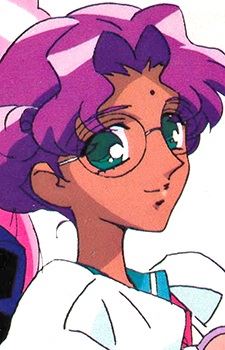
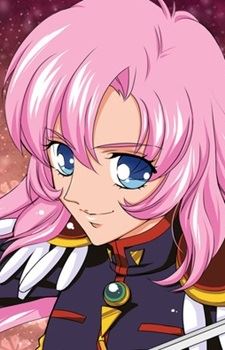
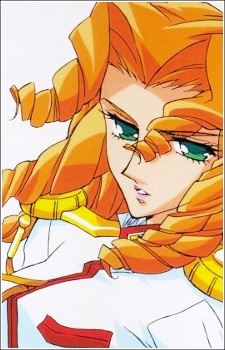
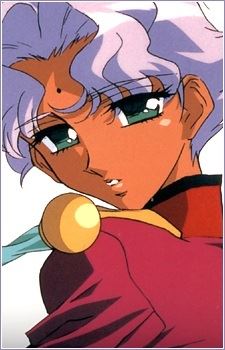






SO perfect! I wish the manga was just a bit more explicitly gay, but still. The art is so pretty and beautiful; there's surprisingly diverse characters for a manga (and also anime!) from the 90s. And I find the story so interesting and beautiful. I loved Anthy's story so much, and I love how much personality the female characters have. During the anime, I was confused pretty much throughout the whole thing, but after reading the manga, everything made a lot more sense. I would recommend reading before watching the anime. The only disappointing part about the manga itself was *****spoiler***** Juri is not a lesbian, and there's pretty much 0 Nanami! Still! Absolutely perfect.
This was such a letdown that I had to review it. For years, I've been told that this manga was amazing, even revolutionary. That it was a great story defying gender norms and tackling tropes and stereotypes. But honestly, I really don't see that at all.
The only different thing about this shoujo is that instead of ending up with the guy, Utena...??? I'm not even sure! She wants to become a prince throughout, breaking away from the princess trope, yet she constantly falls back into it. She falls in love with anyone she thinks might be her "prince" and seems unaware of anything happening around her.
In the first half of the first book, we meet her school friend, her aunt, and some college kid, only to never see them again once she transfers schools. The new characters seem to come out of nowhere, making it feel like two completely different stories. Then, the middle part feels pretty formulaic but at least like it's building to something. Yet, the ending chunk again leaves you wondering what the whole point of the book was. You could read literally the last three chapters and take away about the same as if you had slogged through the whole thing.
Some of the student council members seem interesting enough, but we never get into their stories, and then the story ends with minimal character development and minimal explanation of the actual plot. Anthy's character gets a ton of development right at the very end, but it feels forced? I don't even know—it was so fast and unexplained... And her entire character—what was the point? What was her goal? She seemed to have one, but by the end, her original goal contradicted what she was actually after. All the other characters, random school friends, were totally pointless. If they weren't there, the story would have been faster and probably easier to read.
Maybe I dislike it so much because of all the hype I had going into it, but watching Utena fall in love with anyone who barely resembles her prince (or not) got old real fast. That and the discombobulated plot was, IMO, bad writing. The end was predictable but somehow didn't mesh well with the rest of the narrative. I went in thinking "yeah girl power" and ended up getting a story driven by typical heteronormative romance (if you can call it that) with pretty much every character except for the main bad guy...
Story—what story?
Art—typical 90s shoujo style. I gave it a 9 because I really like that style when done well, and for the most part, it was, though not everyone will like it.
Character—there seemed to be so much potential, but in the end, they all fell flat on tropes, rushed development, no development, or were completely part of the scenery.
Enjoyment—I kept wondering when it was going to pick up, when the story would start to happen... and then it ended. I tried to enjoy it but was disappointed in the end.
Overall—I wouldn't recommend it. Maybe the anime is better? I'm still not sure if I'll attempt it, but if it follows the manga, I'm not about it. It's a real bummer.
I don't get it when people claim the manga isn't gay because, to me, it absolutely was. My interpretation of the story mainly centered on Utena's abandonment issues and her internal conflict between her instinct to find a "strong man" (essentially her compulsory heterosexuality) and her desire to become her own strong figure, freeing herself and Anthy from patriarchal constraints. Maybe I'm biased. I appreciated that in the ending (spoiler alert), she successfully revolutionizes the world and liberates herself and Anthy (or so I think?). However, the entire narrative felt too chaotic; plot points and magical abilities were suddenly introduced without any prior hints or coherent structure. But I suppose that's part of its fairytale reimagining. Perhaps I missed some nuances due to this chaos, especially in deciphering all the details of the ending.
Utena is a narrative that appears far less innocent than its surface suggests. Despite the subtle infusion of fantasy, it delves into controversial themes typical of shoujo anime, yet this series stands out as significantly more intricate.
Each character is meticulously crafted, their life stories and personal struggles woven with great care. The characters are strikingly human, embodying virtues and flaws that resonate universally.
The atmosphere of the anime is surreal. Whether it's the floating "Castle Dios" above the "Duel Arena" or the ambiguity surrounding time and place, Utena transcends being a mere fairy tale. It is a magical story where appearances deceive, and nothing is quite what it seems.
I truly believed I'd enjoy this enough to keep going, but it just didn't resonate with me. For a while, I had been eager to read this manga, and it was at the top of my 'must-read' list as one of the quintessential yuri classics. The concept of a girl aspiring to be a prince and safeguarding another girl appealed to me greatly, and I adore shojo art; anything glittery is fine by me (Note: I just want gay Sailor Moon). The artwork was stunning, but I found the story somewhat lacking and the characters underdeveloped. The entire premise of Utena being rescued by a rose-obsessed prince (or something?) felt rather weak. It was disheartening that she was portrayed as a strong character yet still depended on a prince to rescue her or meet her or give her a rose or whatever. She even transfers schools on a whim because, hey! the prince might be there! Maybe! As a manga that supposedly shattered stereotypical shojo cliches, it contained quite a few of them, and the misogyny was pretty aggravating and uncomfortable. Perhaps I expected too much, but I thought this was supposed to be a milestone in manga or something unique... revolutionary? Maybe I gave up too soon, and it improves later, but I have too many other titles to explore to revisit this one.
I'll do my best to keep my admiration for Chiho Saito from biasing this review, though I can't make any guarantees. Among the rare few, I found the Utena manga more appealing than its anime counterpart, likely because it resonated with me more deeply (plus, I prefer its ending... and it made more logical sense compared to the anime). The characters come across as more grounded in reality. Touga and Akio seem to possess a bit of heart. Given that the manga is considerably shorter than the anime, there's less room to explore secondary characters, so the narrative mainly zeroes in on the central trio (Utena, Anthy, Akio) alongside Touga. It's decidedly more symbolic than your typical shojo, driven more by themes than by character development or plot progression. Some might be put off by the story's metaphysical leanings, but those who enjoy tales of strong female empowerment should find it entertaining. Not recommended for those uncomfortable with homoerotic elements (though this version isn't as intense as others).
"The book is better than the movie/series/whatever!" Yes, we've all heard that, and from my experience, 99 times out of 100, rehashes, remakes, and adaptations fall short compared to their source material. However, the Utena manga falls into that rare, mythical 1% zone where the original pales in comparison to its adaptation.
This isn't to say the manga is bad. It covers roughly the first arc of the show and then jumps to the very end of the last arc, giving you what's generally considered the best parts of the series (I'm not a fan of the Black Rose arc myself). But where's Nanami? Where are the shadow girls? Why has the blatant homoeroticism been toned down from an intense 8 to a mild 3? Where are Shichiro Kobayashi's beautiful backgrounds? Where's the WEIRD?
The issue with the manga is that it lacks all those little extra elements that make the anime so unique and special. You're left with many familiar plot points (with some twists here and there, including a pretty awful and thankfully discarded opening involving Utena’s aunt and some nerd who disappears once the story gains momentum), but it feels like reading an abridged version of a classic. You find yourself questioning why you should read the manga when you can watch a far superior version of the same story. Then there's the inherent limitation of the medium itself: no color and no sound, which are two of the anime's strongest features.
It's still Utena, though, and there are definite moments of the magic that the series seems to have in abundance. Utena is still a badass; Anthy is still a creepy weirdo; there are still speeches about chicks cracking shells; there are still revolutions to be had. I suppose it just feels somewhat inessential and... tame, which is disappointing when you're used to the surreal heights of the anime.
Recommended with some reservations and a strong suggestion that you watch the series before making any judgments about the Utena universe as a whole.
A classic manga rich in symbolism and fantasy. To fully grasp the story, start by reading the manga, then watch the anime, and finally view the movie. While each medium has its unique differences, they are interconnected.
The narrative is exceptionally original, with deep character development and backstory exploration. The focus is on the Student Council members, their relationships, and Utena's quest to find her prince and become a prince herself. It highlights how one can fight for their dreams, live authentically, and underscores the importance of friendship. With memorable characters and an influential storyline, it's a must-read for everyone.
Story
Attention to detail is crucial for understanding. Essentially, Utena is a girl saved by a man when she was young. Years later, she searches for this man (her prince) and strives to emulate him. She enrolls in an academy where she meets the Rose Bride, a girl traded in duels among Student Council members vying for miraculous power from a place called "the end of the world." Read it and unravel the mystery yourself.
Art
The art isn't particularly remarkable but is clean and easy to understand.
Characters
Each character is distinct and deeply developed. Full comprehension requires watching the series as well. The manga is too brief to fully develop all characters, so secondary characters receive less attention.
Enjoyment
This is a fantastic manga that leaves you eager to explore more of its world. It certainly influenced numerous other titles.
Overall
The entire Utena universe is complex to comprehend. The manga serves as the easiest introduction, while many elements are further explained in the series and the movie, so don't miss them.