

...
Show More
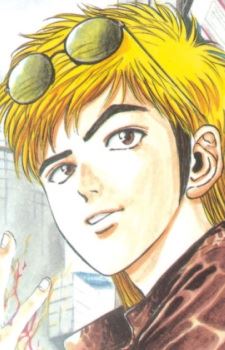
He doesn't excel academically, nor does he have a girlfriend. However, he's undefeated in every fight. Eiji Asuma is the quintessential high school troublemaker. What sets him apart is his unique ability—he can perceive past events and memories just by touching people or objects. Yes, Eiji possesses psychometric powers.
Ryouko Shima, a skilled profiler, discovers Eiji's extraordinary gift, disrupting his mundane life as a student. Charmed by Shima, Eiji agrees to assist her in unraveling an unsolved murder case. As they delve deeper, more enigmas unfold.







This is a series filled with highs and lows. It's challenging to form a single, definitive opinion due to the reasons I'll outline below.
Firstly, the story. It doesn't follow a straightforward path to its conclusion. After using the initial arc to introduce the main characters, each subsequent arc seems to occur somewhat randomly. Instead of every action in the story leading logically to the next, we have arcs that are loosely connected or entirely separate. While linearity isn't inherently good, many episodic stories can still be excellent. However, this requires each episode to stand strong on its own. Simply put, some arcs are fantastic, while others are just okay. No arc was outright terrible, but some were genuinely amazing.
Regarding the plot specifics, it revolves around our key detective, Eiji, and his "Psychometrer" power, as indicated by the title. By touching an object and focusing, he can glimpse events related to that object. Upon discovering this ability, a detective recruits his help to gain an edge over potential villains.
The story primarily falls into the mystery genre, though some arcs incorporate additional drama beyond the mystery elements. Even when the villain is known, they can significantly impact the plot. These arcs usually blend action and mystery well, providing variety for the reader while keeping them engaged.
A cliché statement holds that a hero is only as great as their villain, and I believe this applies to story quality too. Most arcs featuring more generic villains left me less invested, even before knowing the villain's identity. Though the stories are dramatic, there are questionable moments, particularly concerning plot contrivances and the handling of female characters. Many cases involve victims who are females targeted by perverted killers. This bothered me, especially when some female characters were given depth only to be killed off shortly after, feeling like cheap plot devices. There are also minor plot contrivances in some mysteries, but these aren't overly distracting, except those based on the Psychometrer's abilities.
The Psychometrer's powers are somewhat vague, falling under a soft magic system, which detracts from the story since supernatural abilities used in mysteries should adhere to hard rules. As a result, Eiji's visions vary unpredictably, making the power's mechanics exhausting and inconsistent. Despite being set mostly in the real world, these mechanics arguably matter more than the psychic power itself, which feels like a nit worth picking.
The story also includes filler content. While I don't consider filler inherently bad, taking breaks from heavy events can help flesh out characters. For the main cast, this works well, showing them hanging out and doing goofy things, making them feel more human. However, some filler chapters feature an ugly frog character involved in weird, pervy situations. I skipped these chapters and am glad they were filler, as they contributed to my rating the story a 7 instead of an 8. Luckily, this character can be ignored during reading.
Moving on to the cast, I can't give a straightforward assessment because some characters are excellent, while others are poor. The protagonist, Eiji, is well-rounded—he's hot-headed and emotional yet competent in fights and able to process information quickly. His psychometric ability gave him greater awareness of the world, making him unsociable for much of his life. These factors make Eiji's actions plausible and engaging.
Some side characters are great too. Toru leads a small gang and has a complicated family life, balancing small jobs to maintain his surroundings. Yuusuke lacks fighting prowess but is smart and provides camaraderie with Eiji.
However, some characters fall short. Shima starts strong but becomes a mere vehicle rather than a character overcoming her shortcomings. She often relies on Eiji's psychometry without trying other methods, treating his volunteer work flippantly. Emi, Eiji's sister, is mostly a victim in important roles and doesn't offer meaningful support despite being aware of Eiji's struggles.
Regarding the villains, discussing them is tricky due to the mystery genre. Most villains are mediocre, but two standout villains significantly elevate their respective arcs, deserving praise without spoilers.
The art has a great 90s aesthetic, depicting realistic human characters with detailed backgrounds. Visuals for the psychometric scenes effectively reveal and hide information. Over time, some simplification occurs, notably with Shima, whose appearance shifts from smoking hot to plastic-surgery enhanced. There's little variation in character designs between attractive and unattractive, but these critiques come from a non-artist perspective.
In summary, several arcs are great, some are mediocre, and there's filler. Overall, it's a 7, with some aspects better than others. Since I skipped some filler, negative elements in one arc don't necessarily affect others.