
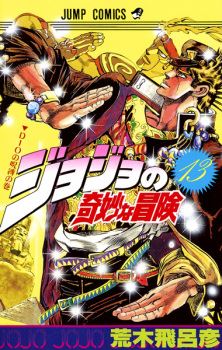
JoJo no Kimyou na Bouken Part 3: Stardust Crusaders
- Genre: action adventure supernatural
- Author: araki hirohiko
- Artist(s):
- Year: Mar 20, 1989 to Apr 14, 1992
- Original Publisher:
- Status: Finished
...
Show More
Rating(4 / 5.0, 24 votes)
5 stars
6(25%)
4 stars
11(46%)
3 stars
7(29%)
2 stars
0(0%)
1 stars
0(0%)
Popular Reviews
The initial chapters of JoJo’s Bizarre Adventure, part 3, may come off as underwhelming. The renowned stand concept might appear juvenile, the early battles often culminate in cliché enemy-becomes-friend scenarios, and protagonist Jotaro Kujo seems too reminiscent of his predecessor. However, if you persist through thirty chapters, Hirohiko Araki's brilliance starts to shine. Stands evolve into just another form of superhuman abilities, shounen tropes fade quickly, and Jotaro transforms into a unique, compelling character. In fact, most characters in Stardust Crusaders are fascinating thanks to Araki's distinctive storytelling approach. He avoids moralizing, allowing villains to be depicted as complex human beings rather than mere plot devices for hero bonding or life lessons. This same non-preachy technique strips away unnecessary, formulaic episodes about friendship, hard work, and other trite themes. Everything is straightforward and honest: protagonists united by duty against an ambitious, spiteful man—a far more plausible cause than many shounen series offer. Each character has quirks that make them fun and distinct.
Yet, the true revelation of part 3 is the stands. These cartoonish creatures standing behind their hosts sound silly at first. But midway through the journey, you'll overlook this detail and perceive stands simply as superhuman powers akin to those in western comics. Each fight begins with a mystery: what are our enemy's stand capabilities? And each revolves around strategic approaches to leverage strengths and exploit weaknesses. Indeed, Araki made the protagonist's stands initially simplistic so no encounter would have an easy solution—nor would any be dull. His extraordinary work fills the journey to Egypt with dozens of intricate, unorthodox stands, creating an engrossing narrative train where you eagerly await the next enemy and their powers. If you enjoy such narrative trains, JoJo part 3 is definitely for you.
Unfortunately, I'm not entirely on board. Ninety-nine percent of part 3 consists of battles. There are only two or three chapters devoid of combat. Protagonists can't take a step without encountering another stand user—an absurd frequency. There are virtually no story twists, side stories, or plot deviations. It's just relentless fights, one after another, making Stardust Crusaders feel contrived and unnatural. Ironically, the brief slices of life executed by Araki are *extremely* well-done. The tiny bits of peace at the start of each new battle arc are so entertaining that I couldn't help but lament their premature end.
All in all, Stardust Crusaders redefines JoJo as it remains today: a smart, stylish collection of epic strategic battles. Yet part 3 is overly blatant about it—a more sophisticated plot wouldn't have hurt.
P.S. The bulkiness, gore, and strong language add to the fun.
7/10
1) No tension. It's supposed to be an emotional story about Jotaro and his grandfather (Joseph from part 2) racing against time to save Holly, Jotaro's mother. Despite the potential for emotion, the story lacks any real tension.
2) Stand of the week concept. Here’s how it goes: Arrive at a new location -> Encounter an enemy stand -> Fight and defeat them -> Move on to the next place and repeat.
The most frustrating part is that despite numerous battles, there is no character development or growth. None of the characters become stronger or learn new abilities like the main character did in the previous two parts by mastering Hamon through combat.
It's amusing how the previous segment was titled "Battle Tendency" when this part is essentially nothing but battles.
Jojo Part 3: Stardust Crusaders marks the point in the series where it becomes unmistakably Jojo. Not only are the iconic Stands introduced, replacing hamon, but this section contains most of the memes that people associate with Jojo. Amidst all the "ORAORAORAORAORAORAORA"s and "OH NOOOOOO"s, Jotaro Kujo and his grandfather, Part 2's protagonist Joseph Joestar, must race against time to defeat Dio. Along their journey, they make a few friends and find themselves in countless more fights. And herein lies the crux of whether you'll love or hate this entry: either you relish the nonstop battles against other Stand Users, or you grow weary of them. Personally, I greatly enjoyed each fight.
The variation in the battles faced by Jojo and his companions in Stardust Crusaders is impressive. Each Stand possesses uniquely distinct abilities, and even when some have similar traits, the Stand Users' strategies ensure every battle feels different. Likewise, the methods by which characters defeat their respective antagonists vary widely. It's not always an endless barrage of "ORAORAORA" until victory. Sometimes the team gets split up, leaving only half of them to face the enemy.
While the constant battles leave little room for characters to sit down and talk, there are still plenty of pivotal moments for character growth, shining moments, and leaving lasting impressions on the reader. Particularly, the goofy side character Polnareff has several moments that can endear him to the audience. However, my favorite character in the group is undoubtedly the lead. Jotaro Kujo has earned a privilege few characters have. Alongside Guts the Black Swordsman, Kenpachi Zaraki, and Sachiko Fujinuma (the mom from Erased), he has become an Anime Gigachad. The sheer number of badass moments Jotaro has is perhaps too many to count, and my favorite endings to fights are always because of him. Best Jojo so far.
If I were to offer any critiques, it would be just one major and two minor points. One small issue is that there's a subplot that kind of just ends abruptly. It's not a big deal or anything, but it felt odd that considerable attention was given to it and then the character in question simply leaves. The second tiny issue is that a particularly awesome fight could've been even better if Joseph had used an ability he's known to have. I'm not saying it would've changed the overall flow, it's just that he uses a different tactic for effectively the same result. Lastly, one of the conflicts gets a bit uncomfortably weird—not the fight itself, which was really tense and another moment of Polnareff's that I like—but a fanservice-y scene that gets a bit strange without delving into spoilers.
Other than those minor quibbles, Stardust Crusaders is a blast. The fights come at you like punches from Star Platinum, and they never let up until the very end. I'm now looking forward much more to reading further into Jojo's Bizarre Adventure. If you haven't started yet and are considering skipping the first two parts, feel free. Most of the important details get covered by the usual Jojo exposition, so you can jump in at Jotaro's adventure and just hit the road from there.
The third part of JoJo's Bizarre Adventure marks a significant departure from the concise, straightforward storytelling of Parts 1 and 2. Stardust Crusaders is the most ambitious of the first three parts, yet it suffers due to the episodic nature required to fill that ambition. This section introduces the "monster of the week" format that characterizes the rest of the series, showcasing the franchise's self-contained structure.
Part 3's setup feels more suited for a video game than a manga, given its broad scope which allows for random battles to be easily added or removed. Hirohiko Araki, still not fully comfortable with Stands, struggles to maintain memorable and inventive fights in the first half of Part 3. Some encounters are refreshing and enhance the sense of adventure, while others are rather dull. While these less engaging segments can be more easily overlooked in manga form, they nonetheless detract from the overall story, making underdeveloped characters and plot elements more frustrating as the extra time spent makes one expect better.
The uninteresting filler battles highlight the shortcomings of our protagonist, Jotaro Kujo. Throughout Part 3, Jotaro is depicted as invincibly strong and smart, with occasional displays of kindness and bravery. Recognizing Jotaro's blandness, Araki shifts focus to Polnareff, who becomes the main character in most subsequent battles. Other cast members, though generally less charming than those in Part 2, range from delightful to somewhat confusing. Araki has taken on more than he can handle and doesn't regain control until midway through Stardust Crusaders.
The second half of Part 3 showcases the strongest aspects of what came before. Exciting, creative battles filled with humor and originality, punctuated by moments of pathos, though not as powerfully as in the first two parts. The final third of Part 3 might be as good as it gets, with Araki raising the stakes through ingenious timing and rhythm, introducing his essential technique of manipulating the reader's perception of time. Sculpting time is intrinsic to narrative storytelling, but few artists wield this tool with such conscious control as Araki does towards the end of Part 3. The tension in a great JoJo battle is unparalleled, achieved through panel size, focus, level of detail, etc.
Despite this, deeper issues persist in Stardust Crusaders. JoJo is largely a fatalistic story (see: FATE), although it contradicts itself at times. Part 3 takes this fatalism to an unsettling degree, with heroes often ominously declaring "I'll never forgive you," coloring the tone towards authoritarian bloodright rather than a classic battle between right and wrong. This redemption-less fatalism adds an uncomfortable undertone to the story, which Araki attempts to address in Part 4. Araki's artistic skill remains strong, and his cleverness finds a comfortable place in the second half of this part, but minor flaws are more numerous and damaging for Part 3 compared to the previous parts.
By far the most recognized part of the series, Stardust Crusaders is the third installment in the long-running manga franchise Jojo’s Bizarre Adventure. While Part 3 marks a clear step forward for the series, it is not without its stumbles due to the introduction of a different focus point (namely Stand-based combat), which does affect its overall effectiveness.
The first thing fans of the previous two parts will notice right away is that in terms of narrative strength, JJBA is at its most linear in Stardust Crusaders. The story opens in 1983 on the Atlantic Ocean where a crew of fishermen have discovered a metal casket inscribed with the word “DIO.” Believing it holds treasure, they eagerly open it but soon disappear and are never heard from again. Four years later, Jotaro Kujo has placed himself in a jail cell, fearing he is possessed by an unseen demon. Upon meeting Jotaro, his grandfather Joseph Joestar and his friend Mohammed Abdul explain that this "demon" is actually the physical embodiment of Jotaro’s own power known as a “Stand,” likely triggered by the revival of the Joestar's sworn enemy: Dio Brando. Jotaro’s mother falls ill due to Dio’s presence, leading Jotaro and his allies to track down Dio’s Egyptian lair and defeat him to save her and the world from Dio’s evil influence.
This synopsis essentially sums up Stardust Crusaders’ plot from beginning to end; what remains unspoken involves more character-driven moments or details not worth mentioning, with actual story progression acting more as a backdrop for the fights. While this formula was used in earlier parts, those stories had smaller objectives providing characters with victories and losses along the way. Stardust Crusaders lacks these intermediary goals, relying instead on readers' engagement with the promise of facing Dio. This doesn't work as well compared to Battle Tendency’s storytelling, leaving a blemish on an otherwise entertaining series.
Making up for the disappointingly linear plot are the crusaders themselves, each memorable in distinct ways. Jotaro takes over from Joseph effectively: while Joseph was a trickster, Jotaro is more of a silent badass. Both are analytical fighters driven to do the right thing, though Jotaro is more static in motivations. Joseph reappears as Jotaro’s mentor, appearing more level-headed but still quirky. Other ensemble members are terrific, likeable characters with distinct motivations. Noriaki Kakyoin and Jean-Pierre Polnareff receive excellent character development early on, overcoming obstacles from their past. Unfortunately, villains (except Dio) are mostly ineffective, bland, and don’t pose real threats despite their Stand powers. Dio remains largely unseen until the end, which can be distracting and detracts from the experience.
The absolute high point and main attraction are the fights across the journey. Gone is the Ripple fighting style, replaced by Stands—embodiments of inner fighting spirit named after Tarot Cards. Each Stand operates differently, making battles varied. Heroes must work out Stand mechanics and overcome them or find and defeat the user. This new dynamic improves upon the less original Ripple concept, though some Stands lack originality seen in other parts. Battles get more entertaining towards the end, culminating in a final confrontation with Dio, one of the best manga fights ever. The introduction of Stands solidified Jojo’s Bizarre Adventure as a unique and entertaining series impacting Manga forever.
In terms of art style, Hirohiko Araki really changed his drawing technique in Stardust Crusaders. Main characters remain overly muscled, but character drawings shifted from angular and messy to squared off with cleaner lines. This change also appears in environments, becoming slightly more angular as the series progresses. This is a change for the better, allowing greater distinction between objects, easier following of art, and moving away from Fist of the North Star influences to gain its own identity artistically. It’s worth noting this series can be very gory; while Phantom Blood and Battle Tendency had blood and guts, Araki stepped up the horror in this part. Anyone who can’t stomach graphic violence should avoid this series or overlook it.
So once all is said and done, Jojo’s Bizarre Adventure: Stardust Crusaders is praiseworthy but far from flawless. Its success gave the author direction for future parts and introduced Stands, making it a truly unique series. If you’ve read previous parts and enjoyed them, you’re in for a treat. If new to the series but don’t want to read preceding parts, it’s still worth checking out to see if you like the concept of Stands. It is one bizarre adventure that should not be missed.
Stardust Crusaders stands out as the most iconic, recognizable, and popular segment within the Jojo's Bizarre Adventure series. Its influence is undeniable, and whenever a Jojo reference pops up, it usually pertains to this part, especially Jotaro, who is arguably the most famous Jojo character in the entire franchise.
However, the earlier parts of the series haven't aged particularly well, and Stardust Crusaders, given its iconic status, might be the best example of this. The basic premise is solid: Dio returns after his absence in Part 2, and Joseph, along with his grandson Jotaro and a few others, embark on a journey to Egypt to rescue Joseph's daughter and eliminate Dio once and for all.
Credit where it's due, Stardust Crusaders introduced the concept of "Stands" to the series, which is significantly more interesting than the "Hamon/Ripple" from the previous two parts, allowing for greater diversity and ingenuity in combat scenarios. Nonetheless, while it may have been groundbreaking at the time, the characters and storytelling in Stardust Crusaders now come across as rather lackluster. Outside of some entertaining fights, there isn't much here that hasn't been done better countless times in modern shounen anime. Jotaro, when all is said and done, is quite a bland protagonist, and the rest of the cast is largely forgettable. Even Polnareff, despite being entertaining at times, pales in comparison to almost any side character from Part 4 onwards.
Stardust Crusaders also suffers from being unnecessarily long; it spans more than twice the length of Parts 1 and 2 combined, and most of it follows a repetitive "monster of the week" format that quickly becomes tedious. You find yourself wishing they would just get to Dio already, especially since there's no substantial drama, character development, or meaningful substance happening in the meantime.
The artwork in this part shows improvement over the previous two, with characters appearing more natural and expressive, though still bulky and overly muscular. While the art isn't bad by any means, it doesn't exactly stand out either unless you're a huge fan of the retro Fist of the North Star aesthetic.
There are some genuinely good moments, like Jotaro's game with D'Arby and the climactic final fight against Dio, but these highlights don't quite make up for how underwhelming Stardust Crusaders feels compared to later installments in the series.
In conclusion, Stardust Crusaders IS entertaining and serviceable, but it's noticeably dated. If you want to experience this part, I recommend watching the currently airing anime adaptation, as it enhances the entertainment value considerably.
Despite being the breakout part in both Japan and the West, I feel its popularity is somewhat misplaced when compared to the rest of Jojo's Bizarre Adventure. It’s undoubtedly a good part, and introducing Stands was a fantastic idea, especially since Ripple was a rather weak and undefined ability.
The story is solid, following the long feud between the Joestars and the Brandos, culminating in an epic ending. However, it feels like Araki's art style takes some time to get used to. By Parts 2 and 3, his muscular style started growing on me. Throughout this part, there are plenty of oddly proportioned models and cartoonish art direction that can be jarring, but these quirks become defining features as Araki's style improves over the series. The artwork towards the last few volumes is definitely stunning and clean.
The characters are generally well-developed, except for one glaring flaw: Jotaro. He’s one of the weakest protagonists in all of JJBA. Being a quiet badass is cool, but it doesn't make for an interesting lead. His Stand is also quite bland compared to future ones, though its energy makes it endearing regardless.
The enjoyment factor is slightly below average for Jojo parts. The main issue lies with the setting. While Jojo's has a formulaic "villain of the week" structure persisting throughout, Stardust Crusaders' take on this formula falters due to the Egyptian setting and lack of progress. It never really feels like they're getting closer to Dio, making some later fights before reaching Cairo tedious. Every villain is DIO's henchman without any breaks from the formula, which other parts improve upon. This made the first half until Egypt quite draining.
The series hits its stride once the crew gets to Egypt. That’s when it starts clicking more. The abilities become more creative, Araki's genius for interesting combat direction shines through, and moments start becoming punchier and more impactful.
Jojo's Bizarre Adventure, in my view, stands as the pinnacle of manga I've had the pleasure to experience. However, Stardust Crusaders, despite being the most iconic arc, isn't necessarily its finest offering. It occupies a peculiar spot where it showcases many hallmark elements of the series but also highlights some of its weaker aspects. Though crucial for the series' development, it lacks the refinement seen in later parts. The introduction of an experimental power system combined with pacing issues impacts its overall quality. Nonetheless, this part is pivotal as it wraps up the original trilogy and sets the stage for what follows.
Let's dive into what Stardust Crusaders is about and the themes it explores. We'll also discuss how the beginning might be misleading, how effectively it handles its thematic elements, and how it compares to other parts of Jojo's Bizarre Adventure and its anime adaptation.
So, what is this show about?
Each part of Jojo's Bizarre Adventure centers on a theme: a love for humanity often linked to karma—how actions shape fate, family, and community. While each part introduces unique thematic elements, they all fit within this larger framework. Stardust Crusaders completes the first trilogy, primarily exploring the concept of heroism.
Jonathan Joestar embodies traditional heroism, representing honor and courage albeit in a somewhat dated sense. Joseph Joestar builds on this by suggesting true heroism goes deeper than his grandfather's simpler ideals—it requires more refined ideas like effort and will. Jotaro Kujo, the protagonist of Stardust Crusaders, takes this further, proposing that the essence of heroism lies in patience and hope. In many ways, the initial trilogy was an exploration of core values that define a hero.
First things first, let’s talk art direction.
Hirohiko Araki’s artistic talent shines through, and Stardust Crusaders introduces a new visual element: stands. The introduction of stands enhances the art, as each character now has both an external design and an inner symbolic self in the form of their stand. This allows Araki to explore surreal, outlandish scenarios, providing endless creative freedom in illustrating battles and interactions.
That said, there are some awkwardly drawn panels, particularly in the earlier chapters. While Jojo's is known for its exaggerated body proportions, some perspectives in Stardust Crusaders feel off. However, considering Araki worked under intense pressure, producing weekly chapters for nearly four years without significant breaks (he only took his first hiatus after nine years of serialization), the relatively few missteps in the art are impressive. Unlike other mangaka who redraw for volume releases, Araki doesn’t revisit his work, making the consistently high quality even more admirable.
So, how does it start?
Unfortunately, the opening chapters are among the weakest in Jojo's Bizarre Adventure. The “monster of the week” formula, often criticized, is especially evident here and poorly executed at the beginning.
The first chapter is exciting, bringing back Joseph Joestar and introducing our new protagonist, Jotaro, along with a mysterious Egyptian man. The concept of stands is introduced well, and the use of Tarot cards adds intriguing symbolism. However, after the initial excitement, the narrative falls into a repetitive rhythm, with fight after fight, and little character development to carry it forward. Araki seems to forget to deepen the personalities of the characters, relying instead on the Tarot theme for characterization, which leaves much to be desired.
In terms of a starting point for new readers or viewers, Stardust Crusaders is one of the worst places to begin. Its first half is longer and less engaging than the earlier parts, and the second half is much more enjoyable with established context from characters like DIO and Joseph. Please, do not start here.
Regarding the anime adaptation, the first half drags out even more than the manga. While the anime does add some character development, the pacing remains an issue. If you're willing to go back and forth, the first half is perhaps best enjoyed while doing something else—watch it while eating or before going to bed. Then continue from JJBA volume 20, chapter 182 (or SC Volume 8, chapter 69).
The second half, however, shines in both the manga and the anime, but the manga offers a more contemplative experience, where you can stop and savor specific moments in a way the anime doesn’t quite allow. The anime also somewhat misses the mark on developing the main protagonist, making him appear too stoic from the start.
What about the characters?
The characters in Jojo's Bizarre Adventure are often the hidden gems of the series. They feel like real people who enter and exit the narrative without always completing their arcs. This can leave some characters feeling as though they’ve departed too soon, but it also lends a sense of realism to the story, as though Araki is recounting a tale that actually happened, with characters who have their own stories beyond what we see.
Stands amplify this dynamic. Now, we get a glimpse of both the inner and outer selves of these characters, frequently without needing much dialogue. Stand battles also become puzzles, revealing the complexities of a character’s soul rather than relying purely on physical combat. This form of storytelling is especially strong in the second half of Stardust Crusaders, where character development is more intricately woven into the narrative. Unfortunately, the first half doesn’t achieve this as effectively, frequently relying too heavily on Tarot symbolism, which hampers the development of minor characters and even some major characters.
What about the story itself?
The story is largely episodic. The overarching goal of the journey is often forgotten in the first half, making the structure feel loose. However, the travel aspect adds a unique flavor. The world-building (or should I say exploring?) is excellent, with each new setting offering a chapter where the characters simply explore a foreign culture before encountering another bizarre stand user. These moments of cultural discovery are a highlight and contribute to the appeal of even the weaker chapters.
The second half manages to retain the strengths of the first while adding much-needed depth to the narrative. The pacing improves, and the character dynamics become more engaging as the story draws closer to its climax.
Then, what did I think of it as a whole?
While Jojo's Bizarre Adventure is regularly seen as niche, it has broader appeal than many realize, offering depth and strong writing beneath its bizarre exterior. Stardust Crusaders is full of suspense, artistry, and philosophical themes, but it’s a mixed bag due to its pacing issues and underdeveloped characters in the first half.
Still, it’s important to remember that this part concludes the first trilogy of the series. The second half hints at the true potential of the masterpiece Jojo's would become. Yet, this doesn’t fully excuse the eight volumes of average-to-poor chapters that precede it. Nonetheless, for fans of the series, this part is essential for understanding the evolution of Jojo's Bizarre Adventure as a whole.
The mixed feelings evaluation relates to it in comparison to the anime adaptation.
Stardust Crusaders revolves around genetics, psychic ghosts, vampires, and memes. This manga is consistently beautiful and hilarious. JoJo's has kept me laughing and rereading entire volumes. However, why did I rate this down when I gave Aho-Girl and Grand Blue 10's for these very reasons?
At a certain point, I felt like it was just going too far to be funny, and that pandering was awful. The characters barely develop, with the exception of best boy Polnareff, and some characters are kept on longer than they should be or brought back in the most dumb and insulting ways possible. Seriously, ** and ** should have just stayed dead. They barely affected the story afterwards, and their absence could have been easily written around.
Art - JoJo's always excels in art, and part 3 is no different. The distinctively styled faces are marvelous, and the stylized dramatization of panels is incredible.
Character - The characters in Stardust Crusaders are excellent. Each party member stands out uniquely and is endearing in their own way. DIO embodies such a wicked character that it enhances the story greatly.
Story - To clarify, I'd rate the story itself about a 7, but the writing deserves a 9. Araki’s ability to kill off main characters is commendable because one of the most disappointing aspects in stories is when characters have plot armor simply because they are main characters.
Overall - The first half is good but not extraordinary. The second half is where most of the brilliance unfolds.
It's astonishing to think that this manga was penned in 1989. Even after three decades, it retains a modern feel and outshines several popular contemporary mangas. At its core, Stardust Crusaders is all about combat. It's a battle manga featuring a new recurring villain every few chapters as the protagonists traverse exotic locales across half the world in pursuit of their iconic nemesis, Dio.
The art style is uniquely distinctive with eccentric poses and framing, overly muscular characters, and a futuristic fashion sense. I adore the art style, but it does have some minor drawbacks due to the smudginess characteristic of 80s manga art. There wasn't much crosshatching for darker areas back then, resulting in somewhat muddy-looking shadows. Some fast-paced action scenes were also a bit unclear, but that’s common in many mangas I've read.
As for the story and characters, some might find the plot a bit simplistic, but this manga wasn’t aiming for a complex main storyline. Instead, it focuses on numerous intricate subplots. Each villain comes equipped with unique powers called "Stands," making them memorable. The unique abilities and the challenge of deciphering them kept me on the edge of my seat while reading or watching part three. The four main characters each have distinct traits: Jotaro's cool demeanor, Joseph's silliness, Avdol's insightfulness, Kakyoin's kindness, and Polnareff's airheadedness. These characters are engaging, each with slightly emotional backstories and a good dose of comic relief, well-balanced overall.
My favorite villains and showdowns were probably Darby with his poker game and Dio’s final battle. The intensity was palpable as Jotaro and Dio walked towards each other for their climactic confrontation. The journey through different countries was epic; the author did an excellent job showcasing local cultures, especially India, which felt like the author had a personal grudge against the country (no offense to my Indian friends, love you from across the border).
In summary, this was a fantastic journey, and I felt deeply immersed because of the intense psychological battles and beautiful scenery. Without a doubt, this stands as the peak of the franchise.
The essence of storytelling lies in consistency. Inconsistency is my least favorite aspect of any narrative. That said, the deviation in the power system here is shockingly brilliant, profoundly influential, and immensely enjoyable, even though it didn't fully flesh out its concept. Flying Ghost Beings offer a refreshing change of pace. Jotaro is a total badass, the characters are engaging, and the battles provide an incredible euphoric sensation when our heroes triumph. For the first time, I find myself accepting the outcomes of the characters before events unfold, and even afterward, I remain utterly shocked, heartbroken, and nostalgic. This story holds a special place in my heart and has sparked my overall interest in Jojo.
Leave a Review