

Sixth grader Shou Takamatsu is a mischievous boy who refuses to grow up. However, his life takes an unexpected turn one day, pushing him to mature rapidly—or risk death. When Shou reaches school that morning, a mysterious earthquake hits, and the entire campus is transported to a desolate wasteland, isolated from society. Shou and his classmates face immediate challenges such as food shortages, dangerous external threats, and escalating conflicts among themselves. With the adults struggling to adapt, Shou feels the heavy weight of responsibility to navigate their new dystopian reality.
Written by horror specialist Kazuo Umezu, Hyouryuu Kyoushitsu is considered a classic in its genre—a unique blend of mystery surrounding the entrapment of Shou and his classmates in a barren, hostile world, and their fight for survival.
Hyouryuu Kyoushitsu won the 20th Shogakukan Manga Award in 1975. It was adapted into a live-action film on July 11, 1987, and loosely adapted into a television drama titled Long Love Letter on January 9, 2002.
The series was published in English as The Drifting Classroom by VIZ Media under the VIZ Signature imprint from August 15, 2006, to April 15, 2008, and later as omnibus volumes from October 15, 2019, to June 16, 2020. It was also published in Spanish by Ponent Mon from October 2008 to August 2010.






Well... that was certainly a one-of-a-kind experience. It felt like a horror twist on "Lord of the Flies."
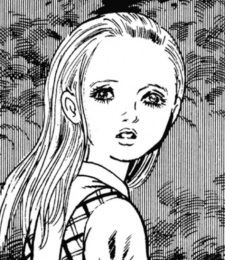
One thing I took away from this manga is that Sakiko is too precious for this world. She's unequivocally the Best Girl in this story, and by extension, the Best Character.
The narrative has its strengths and weaknesses. The plot structure was decent, but the execution and pacing left much to be desired. It definitely hasn't aged gracefully.
The premise was unique for its time, and the challenges faced by the main characters were intriguing, thanks to the mystery element. However, it felt cheap because several plot threads were abandoned without explanation. In a horror manga, some unexplained supernatural elements are expected, but the sheer amount of random events detracted from my immersion. It seemed like these occurrences were included purely for shock value rather than contributing to the story. Some plot lines could have been removed without affecting the ending.
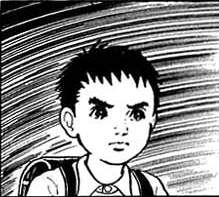
The characters aren't terrible, but they're far from exceptional. One character stood out to me: Sakiko. She's the primary reason I kept reading despite the mediocre storyline. The other main characters had their flaws, but I still enjoyed them. Shou, however, teetered on the edge of being a Gary Stu, which bothered me. The other kids and adults were mostly dull and served mainly as shock factors, making them weak characters.
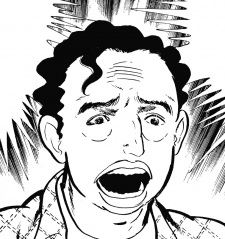
The artwork was solid, effectively creating a scary atmosphere without excessive gore. This added to the experience since the art wasn't gratuitously gory—most of the time, anyway. Although the art has aged poorly, I appreciate how the panels conveyed the severity of the events.
Overall, it's an enjoyable read if you don't overthink it. Given it was created in the '70s, it isn't meant to be overly complex. Its message is profound and mirrors current societal issues. Despite the deep themes, poor storytelling execution can't be overlooked. Hence, my score. Still, I recommend giving it a try.
(5.75/10)
I enjoy horror manga, and I usually always do. It should come as no surprise that I avidly read works by Itou Junji and Kazuo Umezu (the latter being my primary focus here), two renowned masters of the horror genre. Works like Orochi (by Kazuo Umezu) might have a somewhat outlandish premise, but their natural and convincingly believable presentation is what truly scares us. When characters react in ways we would in similar situations (and things go terribly wrong), it makes us feel vulnerable. The essence of the horror genre is this: the more realistic it feels, the scarier it becomes. The Drifting Classroom (aka. Hyouryuu Kyoushitsu) often fits this mold, but does that necessarily make it a "masterpiece"? That depends.
What exactly is The Drifting Classroom? Besides being likened to the manga version of Lord Of The Flies (a comparison I wholeheartedly agree with), it's an older manga from 1972, awarded the 20th General Shogakukan Award, serialized for two years before concluding unsatisfactorily. It chronicles the life and adventures of an entire school transported into a far, barren future devoid of vegetation or water—just endless sand. The story focuses on Sho Takamatsu, a sixth-grade student and our flawed protagonist whose rapidly shifting personas offer an unreliable narration. Other characters include Saki, Sho's "wife" (a confusing term, I know, but you'll understand later), who is conservative yet strong, and Yuu, Sho's adoptive "child," who mainly serves as an inconvenience. There are several minor characters like Otomo and Nishi, some opposing Sho's authority à la Ralph in Lord Of The Flies. Characterization was generally weak, typical for horror manga, but I was impressed by Saki's portrayal as a resilient mother figure.
The Drifting Classroom is said to be a collection of childhood fears of Kazuo Umezu. Whether true or not, it certainly includes elements that could scare boys—giant centipedes, darkness, aliens, mummies. As a kid, I'd be terrified; as an adult, not so much. This brings me to my next point: the story doesn't work well as pure horror. Bottom line: it's unrealistic, absurd, and illogical regarding its setting. Despite blood and gore, it's just not scary. A better classification might be adventure, thriller, and gore because, while these genres include horror elements, this manga fails to instill genuine fear.
But that doesn’t mean it’s bad. I had fun reading it. Occasionally, I’d show my dad something interesting like a giant centipede. It takes time to get into, but soon enough, you’ll be finishing the last volume. Yes, it's absurd and illogical, but it's creative and unpredictable. Someone had to think uniquely to craft such intriguing plot twists within the constraints of an elementary school and endless sand. This is the '70s, where tropes were fresh and original. Just suspend disbelief—it's fun regardless.
Despite its flaws, it’s good. Told through a child’s eyes, it has the right to be irrational and over-the-top. The children's fears drive the story, enabling them to survive using imagination. But the final flaw lies in the unanswered questions: how did the school get transported into the future, why, and how far ahead? Why is Earth sandy without vegetation, and where are all the humans? None of these are answered, leading to an unsatisfying conclusion. If you're solely interested in answers, skip this. Would I recommend it? Sure, if you want something interesting as described. Otherwise, tuck it away for another time. There are plenty of other great titles out there. The Drifting Classroom gets a 7/10 from me. Oh, and the art screams '70s. That is all.
I'm a massive horror enthusiast - be it movies, manga, anime, or TV shows. Personally, I adore gore; I revel in the true horror, blood-soaked, grotesque portrayals found in some series, haha. However, this particular piece is tailored for those who prefer to avoid the sight of blood or gore. It's a timeless horror classic that isn't excessively gruesome or gory by any measure, making it suitable for nearly all ages. If you're seeking a horror read without the intense frights, this one's perfect for you. At least give a few chapters a try, and I emphasize "chapters" because, in my opinion, the story starts off somewhat slowly.
I'm glad I read it. And they look beautiful on the shelf! I'll break this review into sections.
The kids are just like real kids... he's pretty accurate with that. Lots of crying and trying to act tough. It's a thing.
The adults are maniacs. Actually, some kids too. When people get an idea about (spoiler-free) eating someone's face off, you're about a page turn away from seeing it happen.
The art is good. Scary. This isn't a book of "why" but "how will we survive." Be okay with that if you're going to read it.
My FAVORITE part...is the resource management. I'm not sure if that's typical in comics or manga, but wow... this and TWD? I'm like "yes, daddy! Tell me about the corn reserves!!!"
I don't know why. But it was neat seeing what inspired so many books I've read in the last decade without realizing this was the granddaddy of them all.
I began reading Drifting Classroom after it was suggested at the conclusion of a book by an author I greatly admired. Unfortunately, I can't recall which book, but it was probably one by Junji Ito.
Picture Lord of the Flies, but instead of a small group of kids, it's an entire school ranging from first to sixth grade. Have you ever considered how understaffed schools are? You have roughly one adult for every 20-30 children. It's madness! The adults are utterly powerless. Reading this is even more disturbing when you know someone who teaches for a living.
The storyline in this series is incredibly chaotic and doesn't make much logical sense, yet it keeps you hooked like witnessing a train wreck unfold. There's always some new, twisted event lurking just around the corner. And surprisingly, the absurd plot twists start to become quite entertaining.
I adore narratives akin to "Lord of the Flies." A group of children thrust into a world that resembles nothing we know. The where, when, and how this world responds to their presence gradually unfolds, revealing its perils, rules, and just as we grasp it, the story concludes. It's a formulaic approach, yet it critiques humanity profoundly. Rationality can be fatal, and understanding your world sometimes bars new insights. Chaos, murder, and the grim reality of children in dire straits characterize this 70s manga, which pulls no punches.
In terms of storytelling, I found much to appreciate. The childlike illustrations starkly contrast the harsh realities depicted. These kids must uncover the essence of this new realm, comprehend its mechanics, and confront societal norms amid brutal killings. Disease, scarcity, discord, and the unsettling notion that adults and children alike succumb to madness when power is involved—along with lurking unknown threats—are central themes. Our protagonist, though not the brightest, embodies relentless effort, even at the expense of others.
Our hero evolves from start to finish. His peers are numerous, many fading into obscurity or meeting gruesome ends, escalating the stakes. Death is ever-present; scarcely an episode passes without showcasing this world's horrors and the sacrifices required for survival. Panic ensues constantly. Each moment underscores the lack of control, introducing minor antagonists amidst mounting problems. Antagonists range from decent to well-crafted, all eliciting appropriate disdain. Some characters were logically and skillfully written, but my frustration lay more with the world's concept than the characters themselves.
The concept lacked clear, logical rules. It blended sci-fi and horror fantasy without fully committing to either, creating an enigmatic atmosphere but needing more consistency. This ambiguity could be intriguing yet felt slightly detrimental. Additionally, despite excellent writing, the dialogue and character reactions often felt outdated. Rules seemed arbitrary, including some instances of plot armor that strained credibility, prompting me to pause reading occasionally.
Overall, it's a commendable manga with remarkable art for its era but feels dated in character expressions. It delves into disturbing depths, presenting panic-inducing narratives without respite, even if the protagonist's plot armor feels excessive. The unclear rules and seemingly random events detract from the experience. The story could have concluded sooner, maintaining its impact. Some horror elements fell flat, while others were genuinely eerie. Solid 7/10.
The Drifting Classroom is a peculiar horror manga, blending elements of Lord of the Flies with a desolate landscape brimming with nightmares. Children find themselves transported to a barren wasteland along with their school and its surroundings. Chaos reigns as they grapple with limited supplies of food and water, while sixth-grader Sho Takamatsu strives to prevent his classmates from descending into savagery. Initially published in 1972, The Drifting Classroom maintains an eerie atmosphere thanks to Kazuo Umezu's iconic manga art.
Following the first volume, gruesome scenes unfold almost every other page, conveying more than poorly translated dialogue ever could. At times, it’s disturbing, but not gratuitously so. Its depiction of murder and absurd horrors feels realistic, reflecting a brutal reality indifferent to the plight of stranded children.
Two themes permeate the work: hope and the death of innocence. Hope becomes somewhat clichéd and forced, yet in such dire circumstances, what else can survivors cling to? After all, hope was Shackleton’s guiding compass during his incredible voyage. The death of innocence is a more intriguing theme. Children unable to rationalize are the first to succumb, regressing to infancy or becoming barbarians—perhaps the only viable paths. Meanwhile, the protagonist clings to civilization, even managing empathy when his own survival is at stake.
Like Lovecraft, Umezu layers questions upon questions without providing answers. I found myself as confused, uncertain, and excited as the unfortunate children. Intriguing plot points emerge, hinting at revelations that might resolve mounting questions, only to be sidestepped by the next calamity. This is somewhat disappointing but reinforces the pervasive sense of hopelessness. It’s evident the manga isn’t flawless.
The breakneck pacing is The Drifting Classroom’s biggest flaw. One impossible conflict resolves only for another to begin immediately; there’s no time for character development or respite after an arc. Events seem to transpire within days, contradicting plot points demanding more time for coherence. Consequently, characters remain archetypal, never transcending their molds. Takamatsu remains a fearless leader, symbolizing hope. Other characters introduced stay one-dimensional—paper cutouts. But The Drifting Classroom isn’t about characters. The atmosphere is the protagonist, treating humans as pawns in its game.
What begins as a tale of survival against insanity evolves into a narrative driven by curiosity. By the final volume, I wasn’t sure if I read for entertainment or the need to know the conclusion—"How will this end?" Ultimately, I realized I read for the atmosphere, the sense that apocalypse could strike on the next page.
The Drifting Classroom is worth reading if you’re a fan of horror manga. While it lacks the tight narrative of The Enigma of Amigara Fault or the surreal continuity of Uzumaki, it entertains while posing the question, "Could you survive The Drifting Classroom’s absurd universe?"
I've heard some positive remarks about this manga, with some even calling it a classic. While I can partially agree, considering the time period it was released in, I understand why some might feel that way.
This manga has both strong and weak points, but I believe the latter outweighs the former.
Story: It started decently enough, but most of the rational thoughts seemed to end there. Personally, I think the author only had the beginning of the story figured out and made things up as they went along. This is somewhat understandable given its release format, but it contributed to the story being very episodic. Hardly anything could happen without the next "arc" closely following, sometimes immediately after the last one ended.
I rate this aspect poorly. Many events are too convenient, inconsistent, or nonsensical. For example, suddenly remembering more food and water were right next to them, getting hit and then hit again to lose and regain memory, time travel contradictions, etc. Why would elementary school kids know how to construct a giant death trap from wood and spikes? Where did the tools come from? Why does the "girl gang leader" leave and return later just to give them a misleading dying message? How can land be so close yet never found when needed? Why introduce cannibalism at the end without any prior indication? Why adopt the MC's art project as their deity? Why create creatures from humans if they're just going to disappear immediately after being established as a threat? And so on.
Art: Considering the creatures and threats depicted, the art isn't bad. In fact, it's quite detailed. Characters convey emotions adequately, though you get tired of seeing the same shocked and sad faces... 7
Character: The characters seem like the manga's last chance, but ultimately fail to save it. They behave in terribly stupid ways. One of my greatest annoyances is the MC's "best friend" always suggesting killing their threats, only for the MC to resist. Rinse, repeat. The failure to get home because the love interest wants to stay in their terrible present is frustrating. He shows no romantic interest in her, preferring survival. Most characters fall flat, serve as meat shields, or aren't memorable enough... 3
Enjoyment: It was (I believe) 8 long volumes of wacky, nonsensical adventures. My annoyances only increased as I continued reading. I didn't have an agonizing time, but I certainly didn't have a great one... 5
Overall: 5