

...
Show More
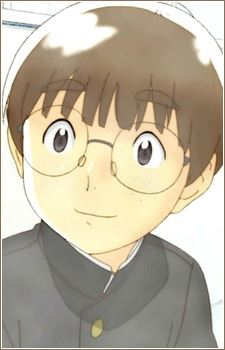
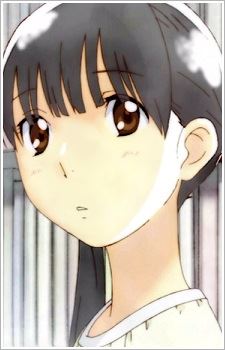
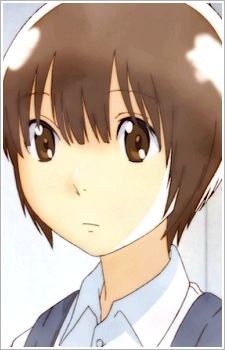
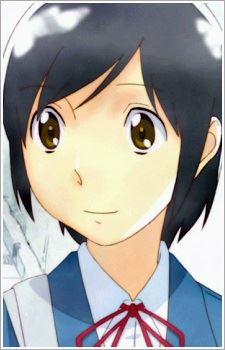
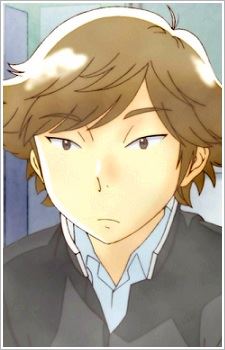
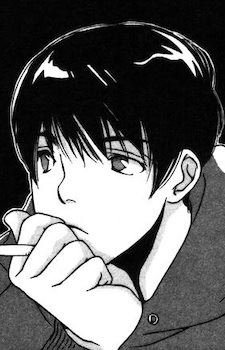
Shuuichi Nitori is a fifth-grade student who enjoys baking and has always exhibited a more feminine demeanor. Upon transferring to a new school, Shuuichi is mistaken for his older sister on his first day. He ends up sitting next to Yoshino Takatsuki, a tall, androgynous girl whom everyone refers to as "Takatsuki-kun." Both of them harbor secrets they cannot reveal to anyone.
The series delves into themes such as being transgender, gender identity, and the onset of puberty.
(Source: Kotonoha, edited)
Hourou Musuko was recognized as a recommended work in the manga category by the jury at the 10th and 17th Japan Media Arts Festival in 2006 and 2013 respectively. It was also nominated for the 2012 Great Graphic Novels for Teens list by the Young Adult Library Services Association. The series has been published in English under the title Wandering Son by Fantagraphic Books in hardcover format since July 5, 2011. Hourou Musuko received an 11-episode anime adaptation that aired in 2011.





Although I speed-read this in just two days, I'll do my best to provide a review.
This manga is highly relevant to today's generation, especially with its focus on gender identity and LGBTQ+ issues.
All I can say is that it's a rollercoaster of a story. As mentioned in the manga, time is indeed unfair, and as it progresses, the characters' perspectives on themselves change—one wants to be true to themselves while another still struggles with this idea...
Each character undergoes their own development, which is impressive considering they face discrimination in the middle part of the story.
If you enjoy a slow-burn type of story with a touch of realism about today's world, go read this.
This is my first time reading a manga that tackles such heavy topics, but I can assure you it hits the mark very well.
Ah, I don't know. I'm not going to talk about how accurate this is from a trans perspective since I'm not trans, but I'm not cis either (and assigned female at birth, for that matter), so it still left a bad aftertaste in my mouth. I'll talk about more general things instead.
First off, it seems this manga suffers from the very same thing most manga about trans characters written by cisgender people suffer, which is a very dragging negativity. Not to say hardships aren't part of what comes with existing as someone out of the binary gender, but now that there are more trans authors coming forth with their own stories, and despite their many different life stories, you truly realize how fundamentally different they are from stuff like this. Trans stories told by trans people tell you that there are ways to reach happiness and be yourself. But stories like this told by cis people are always suffocating; they make you feel trapped, like there's no way out of conformity, and they ultimately still see trans people as an experiment of sorts or the romanticization of martyr pain (which is ironic since there's an obvious self-insert character that does that... but anyway). They see trans people as troubled and impossible individuals, and so no matter how deep they try to dive into their psyche, they'll never get what existing and being happy is about for non-cis people.
Although the author was very ambitious about this story, and I had good hopes for it, I ended up feeling awful by the end of it, as you could tell this wasn't for LGBTQ people but a messy attempt to write about them. Sometimes it's better not to try writing about some things at all! Instead, I'd recommend supporting trans and gender-nonconforming mangaka even harder, since their chances to tell real stories wind up being stolen by situations like this.
I have a soft spot for Shimura Takako's peculiar style as a writer. She narrates ordinary stories about ordinary people—even when the subject is something fantastical like "Sayonara, Otokonoko," it still feels rooted in everyday life. However, her storytelling isn't conventional. The narrative jumps from present to past and back again, from reality to imagination or dreams. Conversations can suddenly shift characters without warning, and time flows erratically with minimal indicators. While this technique sometimes borders on incomprehensibility, it generally keeps you engaged. "Hourou Musuko" showcases her skills brilliantly.
The reason for this became clear: its length and story nature. "HM" doesn't explore sexuality and gender non-conformity dramatically but rather groundedly. This is crucial to understanding the story—it’s more observational than message-driven, focusing on Shuuichi and Takatsuki dealing with their sense of not belonging while growing up slowly. It’s a character study first, thematic exploration second.
The first two-thirds introduce us to Shuu’s group and family. We follow their daily lives, see new characters introduced and others forgotten, and witness different interactions and conflicts, all depicted realistically. The series' strength lies in its final third, often criticized yet vital. As middle school ends, separation looms, and Shuu faces bodily changes. The steady progression shifts, time becomes even more ambiguous, and we get glimpses into each character’s life post-separation.
Critics argue that the focus wanes, making it feel like a story about nothing. But this misses the point. By showing snippets of everyone’s lives—Shuu’s family, friends, acquaintances—a larger picture emerges. Shuu remains central, but what unfolds is the network around them, seen unconsciously. The mundane nature makes it poignant; no major conflicts or high stakes, just quiet, sad feelings born from time passing. Time’s shifting focus creates a blurred feeling across pages.
Time moves forward, and from awareness comes bittersweetness. Characters change, grow apart, form new bonds—all insignificant plot-wise because there barely is one. Some things will be forgotten, remembered, never the same, yet without real tragedy since it’s a universal truth affecting fictional and real people alike.
"One wanted to be a boy. One wanted to be a girl. One stopped wanting to be a boy. That’s all there is to it." This cathartic moment resolves Takatsuki and Shuu’s journey. It circles back, encapsulating everything loosely. Their bond fades, paths diverge, and Takatsuki cries thanking Shuu for once holding her hand, acknowledging they chose differently. Yet Shuu walks on, decided: she’s a girl.
Shimura’s storytelling choices make the ending impactful. A climactic interaction revealed later adds emotional weight. What follows—a few matter-of-factly pages—ends a huge story subtly yet powerfully, feeling real and significant.
To appreciate the story better, view Shuu not as a representative but as someone living as they choose. Labels don’t diminish "Hourou Musuko"'s power. Ultimately, it’s a coming-of-age story where gender plays a part but focuses on growing up and its complexities.
As noted, Yuki is Yuki, not just a transsexual label. Identity transcends labels, reflecting their interconnected lives. Achieving this makes the series exemplary, proving its worthiness despite its length.
There are time skips, many of them. A volume might end on a cliffhanger, but the next one won't pick up where it left off. Instead, it jumps ahead to when everything is resolved, and the characters are older, having moved on from whatever was happening before. However, as a reader, I find it hard to accept this so quickly. I end up reading the new chapter in a state of shock or upset because the previous issue's events were just... resolved and seemingly abandoned. Characters who had strong feelings about something or someone suddenly no longer feel as strongly, doing a complete 180. Like, what??? Sorry, huh?? I read all the author's notes at the end of the volumes and really appreciate them, understanding that this is their storytelling style, but... I feel like continuing this story will only bring me stress and disappointment, so... dropping it.
Good Parts: I love the art, the dialogue, some truly powerful scenes, and a few of the characters are very intriguing. Despite all of this, it doesn't convince me to keep reading, but I enjoyed these aspects nonetheless.
From a storyteller's perspective, the slice of life genre offers vast potential and can support long narratives due to its nature. However, this genre is often saturated with clichés. Typically, you'll find a protagonist in a high school setting filled with overused tropes, making it feel repetitive if you've experienced other slice of life stories. This is where "Hourou Musuko" stands out. Despite fitting into the slice of life category, it focuses more on the characters' personal journeys, making it one of the few manga in this genre that feels fresh.
Story:
Despite its seemingly simple premise, "Hourou Musuko" delivers an enjoyable narrative. The story begins with young, naive characters who gradually mature, bearing the scars of their past hardships. These experiences create self-doubt when similar situations arise, leading them to question their abilities. This realism elevates the story, giving it a depth many slice of life manga lack. It’s character-driven, and Shimura's attention to character depth makes it engaging.
Art:
Though I'm not an art critic, I find the artwork suitable for the story. The colored pages resemble watercolor paintings with soft, pastel hues that complement the light-hearted tone. Character designs are straightforward and may not be memorable, but Shimura's effort is evident. She has admitted her art isn't perfect, but its simplicity effectively supports the story's form.
Character:
The standout feature of "Hourou Musuko" is its characterization and development, crucial for a story like this. It demonstrates how far the slice of life genre can go when the mangaka invests in the characters rather than just placing them in a generic setting. The characters are realistic, not typical anime stereotypes, allowing readers to see themselves in the cast. This makes them more relatable and endearing.
Enjoyment:
If you enjoy this type of manga, "Hourou Musuko" offers high entertainment value without unnecessary drama. Slice of life often falls into two categories: comedy, which can be good but sometimes lacks substance, or overly dramatic stories. "Hourou Musuko" strikes a balance, showing life's ups and downs realistically. If any manga captures life's essence, it would be this one.
Overall:
With an engaging story, fitting art, and well-developed characters, "Hourou Musuko" is highly enjoyable. Its classification as a seinen manga adds depth, requiring maturity to appreciate its themes. While some characters don't receive enough focus, impacting the ending score, overall it's a well-crafted story. For these reasons, I award "Hourou Musuko" a 9 out of 10.
Title: Hourou Musuko ("The Transient Son" / 放浪息子)
Mangaka: Takako Shimura / 志村貴子
Originally Serialized in: Comic Beam (Enter Brain)
Scanlated by: Kotonoha
Nitori has always exhibited a more feminine demeanor for a boy. He enjoys cooking, is sensitive, and shares little common ground with his fellow fifth-grade boys. In fact, he's even cuter than his older sister, Maho, who dreams of becoming a model. Saori Chiba, a classmate, seems to understand him but mainly delights in dressing him up. Nitori befriends Takatsuki, a tall girl with a tomboyish personality whom everyone refers to as "Takatsuki-kun." They encounter Yuki, a stunning woman who turns out to be transgender. Throughout these experiences, Nitori discovers how good he looks dressed as a girl and how much he enjoys it.
Hourou Musuko revolves around elementary and middle school children, yet it is classified as a seinen manga aimed at college-aged readers. Although the narrative harks back to school days with a nostalgic touch, the characters grapple with very adult issues. Nitori isn't gay in the conventional sense; he lacks awareness or interest in sexuality or romance. Instead, he seeks friendship and prefers acting and dressing like a girl. Both he and Takatsuki receive love and support from friends and family, though they face some tension from classmates adhering to traditional norms.
The story progresses slowly, focusing on social situations and the characters' emotions. This might remind one of a shoujo manga, but it avoids excessive internal monologues or heavy screen tones. It’s a slice-of-life tale that captures readers with its distinct and heartwarming character portrayals despite the sexually ambiguous plot. The crossdressing prompts thoughts about sexual roles versus gender identity and their relation to sexuality. Hourou Musuko delves deeply into societal sexual roles rather than mere titillation, which I greatly appreciated.
Shimura employs a clean art style that retains a sketchbook-like appearance, making it seem effortless, though skilled artists know this is far from true. Effective art is always the result of hard work, evident here through her realistic figure studies and well-executed foreshortening—a testament to an artist's skill. Most of her panels omit backgrounds after setting up scenes, showcasing her accomplished talent.
Kotonoha's scanlation maintains high quality, with crisp whites and clean blacks. The typesetting complements the manga's style while ensuring readability. I highly recommend downloading this one.
I'll start by saying this: I've never seen any media, manga or otherwise, handle trans youth as well as this series. The messy, confusing, and difficult nature of transitioning through puberty as a sexual minority is tackled here with nothing held back. Characters aren't locked into stereotypes but grow and change as they mature to the point where they are scarcely recognizable by the series' end. If that premise alone interests you, it's a must-read. However, I won't call it a masterpiece due to some issues with how the plot progresses and is explained to the reader. Overall, I give it an 8/10.
Story: 6.5/10
Hourou Musuko is fundamentally a slice-of-life series that progresses over a very long time period. In 123 chapters, it covers the day-to-day lives of the characters from the 5th grade until they enter college. Because of this massive amount of time to cover, the setting of the series changes every dozen chapters or so, characters are moved around to different classes/schools, and friendships perpetually realign. While this adds realism, it makes following character interactions difficult, especially since this is a character-driven series with no overarching plot. There's a fairly large cast who all have their own friendships, crushes, relationships, and families that become hard to recall, especially with the appearance of characters constantly changing as they age. It becomes particularly challenging when all these characters seem to have different nicknames for each other!
Besides this, at times the storytelling can be jumbled. Since character perspective jumps so frequently, it's hard to tell what subplot we're supposed to be following, or if a new one is being established. It also doesn't help that events aren't clearly linear, or that timeskips of months can occur between panels on the same page. Often, the series simply changes a major relationship between characters and doesn't explain why until several chapters later, with a flashback. This happens more frequently as the series progresses, especially as the rate of time passing seems to speed up in the second half. Despite the story being difficult to follow at times, it is quite good for a slice-of-life series, certainly more in-depth than the genre's average.
Art: 7/10
The art of the series is usually fairly basic to the point where many secondary characters look very similar and it's hard to tell them apart until their names are used. However, key scenes are very well drawn, as are the two main characters Shuuichi and Yoshino. The quality of the art also seems to progress with the series, which isn't surprising since it took over a decade to complete.
Character: 9/10
This is the real strength of the manga. The major characters got absolutely flawless character development; they're all living, breathing people who change as they grow up, as the events of their lives unfold. Given how character-driven the series is, it's hard to speak of specifics without spoiling anything, so I'll simply say this: it's the agonizingly authentic way that these characters grow, make mistakes, hurt each other, and support each other in this messed-up world that won't accept them that makes this series so fantastic.
The only thing preventing it from being a 10/10 in my opinion is the sheer size of the cast, which seems unnecessary. While none of the minor characters are one-dimensional, some of them seemed to lack purpose. Momoko comes to mind, who is little more than the jealous friend of Chizuru, herself a minor character. Plenty of pages are devoted to Momoko's friendship with Chizuru, or to Momoko fighting with Saori or Chizuru herself, but it never seems to tie into the rest of the story or lead to anything meaningful, and I'm not sure why she was added to the story at all.
Enjoyment: 8/10
In the end, I loved it. I loved these confused kids trying to make sense of the world in the same way we all have to, in the most painfully real way possible. I loved how it starts and how it ends, but this series is not a fairytale. It's not even really a romance series, and if that's what you're hoping to enjoy from it, you'll be a bit disappointed. If you're down for something that takes every trope of school life manga and throws it out the window, though, I strongly suggest you give it a read.