

...
Show More
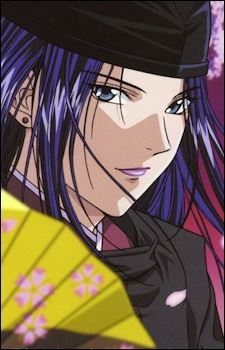
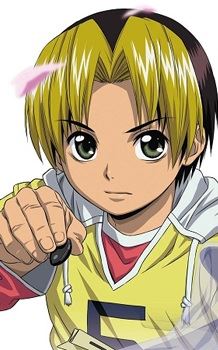
When Hikaru Shindou stumbles upon an old go board in his grandfather's attic, he encounters the spirit of Fujiwara no Sai, a go master from ancient times. Sai, who once taught the game to an emperor during the Heian era, is now eager to share his passion with Hikaru. However, Hikaru initially shows little interest in board games. Undeterred, Sai persistently pushes Hikaru to pursue what he calls the "Divine Move." Under Sai's relentless guidance, Hikaru reluctantly starts playing go, executing moves as instructed by Sai. Gradually, inspired by the dedication of his peers, Hikaru begins to learn the basics of the game.
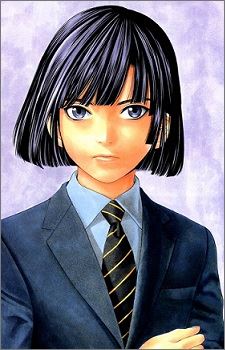
As Hikaru delves deeper into the world of go, guided by his ethereal tutor and motivated by his rival, Akira Touya, he finds himself increasingly drawn to the intricate game. Determined to prove his own abilities, Hikaru grows more committed to mastering go. In this coming-of-age story centered around an ancient board game, *Hikaru no Go* chronicles the journey of a boy discovering and nurturing his newfound passion.
*Hikaru no Go* won the 45th Shogakukan Manga Award in the Shounen category in 2000. The series also received the Creative Award at the seventh Tezuka Osamu Cultural Prize in 2003.
The series was published in English by VIZ Media under the Shonen Jump imprint from May 19, 2004, to May 3, 2011. It was also released in Brazilian Portuguese by Editora JBC from January 2010 to July 2012.

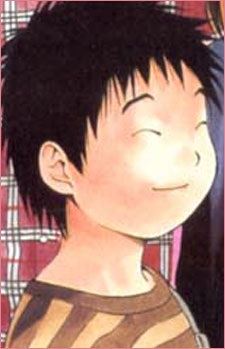






I absolutely loved Hikaru no Go. (A little trivia for those who didn’t know: Hikaru no Go was drawn by the same artist who illustrated Death Note, Obata Takeshi-sensei.)
I first heard of Hikago a long time ago, but I didn’t feel any urgency to read it. I knew it was good since I hadn’t come across any negative reviews, but as a primarily shoujo fan, I lacked enough interest to download or buy the manga. It wasn’t until I bought an issue of Shonen Jump containing some chapters of Hikago that I finally had a reason to start reading.
This issue only contained a few chapters, but it generated enough interest for me to look for the earlier ones. The story and art simply hooked me from the start. One might think that a manga about a game you barely know would be boring and confusing. On the contrary, it was anything but. The manga focused more on the characters' development and their interactions with each other. Knowing a bit about the game of Go would help, but it wasn’t necessary. (I had no prior knowledge of Go.) This series truly felt like a coming-of-age story, witnessing the literal and metaphorical growth of the characters. The story, especially in the beginning when introducing characters, was very engaging. I literally couldn’t stop reading it, which is why I finished it in just three days.
However, the story does become a bit boring in the second saga, which explains the 9 points in the Story and Enjoyment area.
Now, let’s talk about the art. I cannot rave enough about Obata-sensei's work—it is simply wonderful. Given that he mentored mangaka such as Kentaro Yabuki (Black Cat), Nobuhiro Watsuki (Rurouni Kenshin), and Yusuke Murata (Eyeshield 21), this isn’t surprising. Another plus side to reading Hikago is witnessing the evolution of Obata-sensei's art style over the chapters. His drawing style changes as the story progresses, which is definitely a good reason to read the manga.
Yumi Hotta did an excellent job creating the characters. There are many characters, and despite it seeming like a lot of work, she managed to shed light on their personalities, struggles, and victories. The character development is, quite simply, amazing. It’s for this reason (and the incredible art) that I have more than my share of favorite characters in the series.
I thoroughly enjoyed this series and recommend it to anyone looking for a great, engaging read.
Regarding the ending: I thought it was a bit disappointing. Nonetheless, I don’t regret reading this fantastic series. :)
However, my only complaint is that I found the ending disappointing.
Besides that, I would recommend this to almost anyone! >w
In 2008, I went to and returned from the lan house.
Yes, that was my start with this manga. I probably found it after finishing Death Note in anime, though I don't remember for sure. As a penciller, I was amazed by the art of Death Note's manga, so I looked for more works by the same artist and stumbled upon HnG.
The story is perfect from beginning to end, with the evolution of Hikaru and all the characters being fantastic. In a manga with so many characters, it would be normal not to focus on many, but in HnG, everyone has a focus. The story progresses wonderfully, making it outstanding!
If you can, look for it and read it. I believe you'll also be eager to read the next chapter!
So, I just binge-read this entire manga on the new Shonen Jump site, and I am upset. Extremely upset. So upset that I spent the entire day torturing myself with fan fiction and Pixiv fan art of this damn series.
How can something so good just flat out end when none of the major climactic points that have been built up to have been reached? This manga is how.
--Spoilers ahead--
We were absolutely riveted by the story of Hikaru's growth as a Go player, his intense rivalry with Akira, and him learning to go on without Sai. Hikaru was doing so well, on an upward trajectory, and then... it just fricking ends.
I get that this is not the fault of the creators. There were likely many extraneous reasons that the manga had to be canceled. What I take issue with are the people saying this is okay. That they liked how it ended. Let me tell you, THIS ENDING FREAKING SUCKS. Heck, it’s not even an ending. The story is straight-up incomplete.
What about Hikaru actually beating Akira through his own skill? At the very least, bookend the story with a match against Akira for some sense of coming full circle.
In other words, I am upset that what I wanted to happen didn’t happen. Okay, fine. We don’t need to see Hikaru beat Akira. But then what about the whole reason for this story in the first place? WHAT ABOUT THE DIVINE MOVE? This was the reason Sai remained as a spirit after he died. What even is a divine move? Who knows because it seemed like something that would be explained or reached later on, but then the manga got axed. Now it just seems like some BS thing brought up to make the plot happen.
Hikaru reaching a divine move or whatever would give real meaning to Sai’s disappearance. Sai is gone, but Hikaru accomplishes his goal. He fulfills Sai’s desire and becomes at peace with Sai being gone, knowing that Sai’s existence led him to do this amazing thing. Knowing that Sai’s existence was incredibly important to the world of Go, the world Sai loved but was forced out of. Just give us some validation for Sai, damn it.
At this point, all we can do is assume these things happen. Assume that Hikaru becomes this amazing Go player who beats his rival and eventually accomplishes a divine move. But our assumptions don't mean a darn thing. All that fan art we draw, the fan fics we write, the assumptions we make about what happens after the manga ends are just us trying to cope with the fact that the story is incomplete. Honestly, what else can we do?
--Spoilers end--
Do I regret reading this manga? No. It’s amazing. Sai’s mentor relationship with Hikaru and Hikaru’s rivalry with Akira are so good that it’s worth reading the manga just for those two things alone. I wouldn’t be so upset right now if I wasn’t deeply invested in the story and the characters.
Yes, reading this is worth it. Yes, you will be very upset that it ends mid-story. But there is still a lot of quality content here to obsess over.
Now it’s time to watch the anime and torture myself all over again.
It's the best manga I've ever read. And I've read a lot of manga, from classics like Dragon Ball to those I only read for the steamy scenes at the end, like "Idol na kanojo to otaku na boku to." The fact that there hasn't been any good medium about Go since Hikaru no Go speaks volumes about how brilliantly the authors turned the seemingly boring game of Go (which is actually quite fascinating) into an award-winning manga that attracted a huge influx of new players to the game. Oh man, it's just so good. Thinking about it almost gives me goosebumps.
Story: Perfection. Some might say it could have gone on a bit longer though.
Art: It's by the artist of Death Note. He's really good.
Character: I have to deduct one point here because of the lack of female characters. Even the two main females aren't as well-developed as the other characters.
Just like everything else in this manga, it's all faithful to the nuance and soul of the story, which is full of love for Go and a strong hope that this traditional game will survive, progress, and be passed on to future generations. With this in mind, I truly believe it has the most perfect ending and sequence of events. Often, when something reaches its pinnacle, it can only decline or disappear instead of progressing. Everyone, including Sai, had their own roles to play for the sake of Go, driven by their love for the game.
I did shed some sad tears when you-know-what happened, bah. Oops, you don't know? Then nothing happened, really. Just go ahead and read this manga. I love this manga for its characters' strong passion for Go, especially Sai's and Akira's, and how they both ignited the same passion in Hikaru. The storytelling is powerful, and the art is simply wonderful. This manga is not overrated, just as it was not overdone—it's truly a fine piece of work, executed very well.
It's easy to read and understand, requiring little brainpower or prior knowledge to enjoy. The fact that it's so easy to follow highlights the complexity and effort put into its creation. It's a beautiful, entertaining read. If you miss any of the 23 volumes, you're definitely missing something important. So, if you want to read it, make sure to read them all. I assure you that you won't be disappointed and will deeply appreciate this title.