
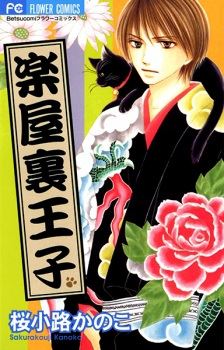
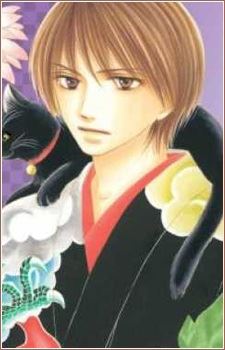
Akari hears about the renowned and attractive Kabuki actor, Ryuusei Horiuchi, but she has no interest in him as all she desires is to meet someone who truly loves her. As she makes this declaration, she accidentally injures Horiuchi, who glares at her silently before walking away. Later that day, she encounters a black cat, which leads her to Horiuchi's Kabuki theater. Feeling guilty for causing a bruise on the actor, Akari volunteers to be his assistant until the injury heals. Although Akari initially dislikes Horiuchi’s silent and cold demeanor, her feelings begin to shift as she spends more time with him.
Gakuya Ura Ouji was published in English as Backstage Prince by VIZ Media under the Shojo Beat imprint from March 6, 2007, to June 6, 2007.








I really didn't enjoy this manga. Although it was charming and brief, the writing just wasn't up to par. Nonetheless, I'll give it a decent rating because I found the characters likable :D
What truly irked me was the eternal love between the two main characters and their complete obliviousness to it. This not only frustrated me but also...
made me envious >_
Reading this manga was a delightful experience. I entered with low expectations and was pleasantly surprised by the genuinely sweet aspect of this short story. KiwaGaku (Kiwametsuke Gakuya Ura Ouji) isn't highly dramatic or groundbreaking. You probably won't feel your heart racing as you read. Predicting the plot's direction is likely, but despite its lack of extreme originality, it offers some refreshing elements.
KiwaGaku’s story follows a typical shoujo manga pattern: boy meets girl, girl falls for boy, and love blossoms. The fairy-tale essence of shoujo remains strong. Although the love develops quickly, there are small, well-executed twists that I enjoyed. The pacing is reasonable, and the story concludes satisfactorily. However, the plot loses momentum in later chapters, becoming cliché, and there are moments where poor communication frustrates, making the twists somewhat predictable and lacking a "special" factor.
While KiwaGaku is decent story-wise, the art is another matter. It isn't extraordinary, yet it has redeeming qualities. With handsome boys, beautiful girls, heartwarming panels, and clean drawings, everything visually pleases. The characters initially seem like clichéd shoujo figures, but they have nice qualities, though not deeply developed. Our main couple shares a sweet, heart-warming (albeit slightly immature) relationship. If you like Akari and Ryusei, you'll root for their happiness.
Akari is kind and imperfect in an understated way, making her admirable. Ryusei appears rude and stoic at first but evolves into a sweet character. Side characters aren’t deeply developed but are enjoyable to watch, much like the main pair. While the characters are likable, their development could be deeper, and sometimes their actions felt repetitive.
But I must admit—I liked them all.
In summary, KiwaGaku is a sweet, simple, and cute manga leaving you with a warm, fuzzy feeling inside. Despite its flaws, it's short and enjoyable. I hope if you decide to read KiwaGaku, you find it equally enjoyable.
I only picked this up because I liked the cover and it was short... but I ended up enjoying it more than I thought.
STORY: Well, I have to admit it wasn't the best. At least at the beginning, it felt like every other love story I've read in a manga. The one thing I disliked was that it seemed repetitive. With only 6 chapters, you'd expect something more exciting to happen. It had potential to be great but lacked that special something. I wouldn't call it boring, but it came close.
ART: It was pretty good, I must say. The shading wasn't the best I've seen, and it did resemble many other manga artists' work. But it was still visually interesting. For the first time ever, I think the FEMALE characters were drawn much better than the males. Usually, it's the other way around. But Akari's eyes are too big! *sigh*
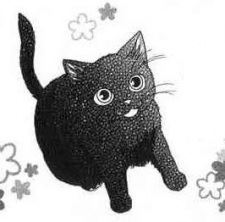
CHARACTER: Akari is a good female character. Shy yet sophisticated. Not perfect but not entirely hopeless either. Personally, I don't like male characters who are mean and bad with people. And Ryusei is exactly that. Mr. Ken, the cat, is totally adorable! :) That cat actually adds more excitement to the story than most of the other characters. But the rest of the extra characters don't contribute much to the story, except maybe Naoki. But even he doesn't make the story much better.
ENJOYMENT: I did enjoy reading this manga. I laughed a couple of times. If it was an anime, I would have cried at least once. There was just something very enjoyable about it. You keep hoping things will work out and they'll be happy. That's what makes it so enjoyable.
This series could have been great if only it was given more time. :)
Backstage Prince is a heartwarming tale about breaking free from cultural traditions. This story revolves around a forbidden, secret romance between a renowned Kabuki actor who struggles with social interactions and detests human contact, and his assistant, the only person he feels at ease with. The narrative includes distinctive elements such as the inclusion of Kabuki theater and the male protagonist's comfort solely in the presence of the main character. However, the primary plot points are reminiscent of many shoujo romances. Be it a love rival, a character from a lower social standing causing conflict, or public discrimination, these themes are common across countless other romance manga.
Furthermore, due to the incorporation of Kabuki, I would not suggest this series to someone unfamiliar with Japanese culture. While some authors and translation notes offer explanations for certain aspects, having prior knowledge of the country's traditional culture would enhance understanding. Overall, this is a splendid series for a quick and heart-fluttering read.
I first stumbled upon this story while browsing a site in search of a specific manga chapter. Instead, I ended up reading summaries of various manga. Initially, what grabbed my attention were the images from the manga. Typically, there are three factors that influence my decision to read a manga: 1) it must have good illustrations, 2) it should have an engaging plot, and 3) it needs to feature at least one cute guy =D. For this particular story, it was the artwork and the plot that caught my eye. I have to admit, I really enjoyed this story because I found the plot to be quite compelling. However, the part I didn't like was the ending – I'm not entirely sure if it was the conclusion itself (chapter 6). The reason I disliked the ending was that it felt unresolved, lacking a sense of closure.
Backstage Prince revolves around an ordinary girl who falls for a renowned Japanese kabuki actor. The story's climax and conflict stem from the insular nature of the kabuki world, where its members are discouraged from dating or being with anyone outside their community. Ryusei, the kabuki actor, is exceptionally shy, which leads him to keep Akari hidden from the press and media.
Additional conflicts emerge later in the narrative involving Ryusei’s family and another kabuki performer.
What disappointed me about this series was how short it is, consisting of only two volumes! It’s perfect for someone looking for a quick read, but it leaves you craving more!
I truly appreciated the art and characters in this narrative, but beyond that, I wasn't particularly impressed. The story began on a strong note, yet Sakurakoji Kanoko should have concluded it sooner because it deteriorated after the initial chapters.
Now, don't misunderstand me—I adored the dynamic between Akari and Ryusei! However, by the end of the story, everything seemed to lose momentum and didn't culminate in a powerful finale as I had hoped. This tale had the potential to be much more than it turned out to be. It boasted a compelling plot and intriguing characters with significant promise, but to me, it simply failed to meet those expectations.
I found the storyline to be tightly woven, featuring delightful and humorous plot twists along with captivating events.
The art style truly caught my attention. There were numerous details that made this series stand out as unique.
The characters were intriguing; the only slight drawback was that you didn't get to know them deeply, which is understandable given the series' short length.
Overall, I thoroughly enjoyed this series and would recommend it to anyone!
Love,
Mandiuana