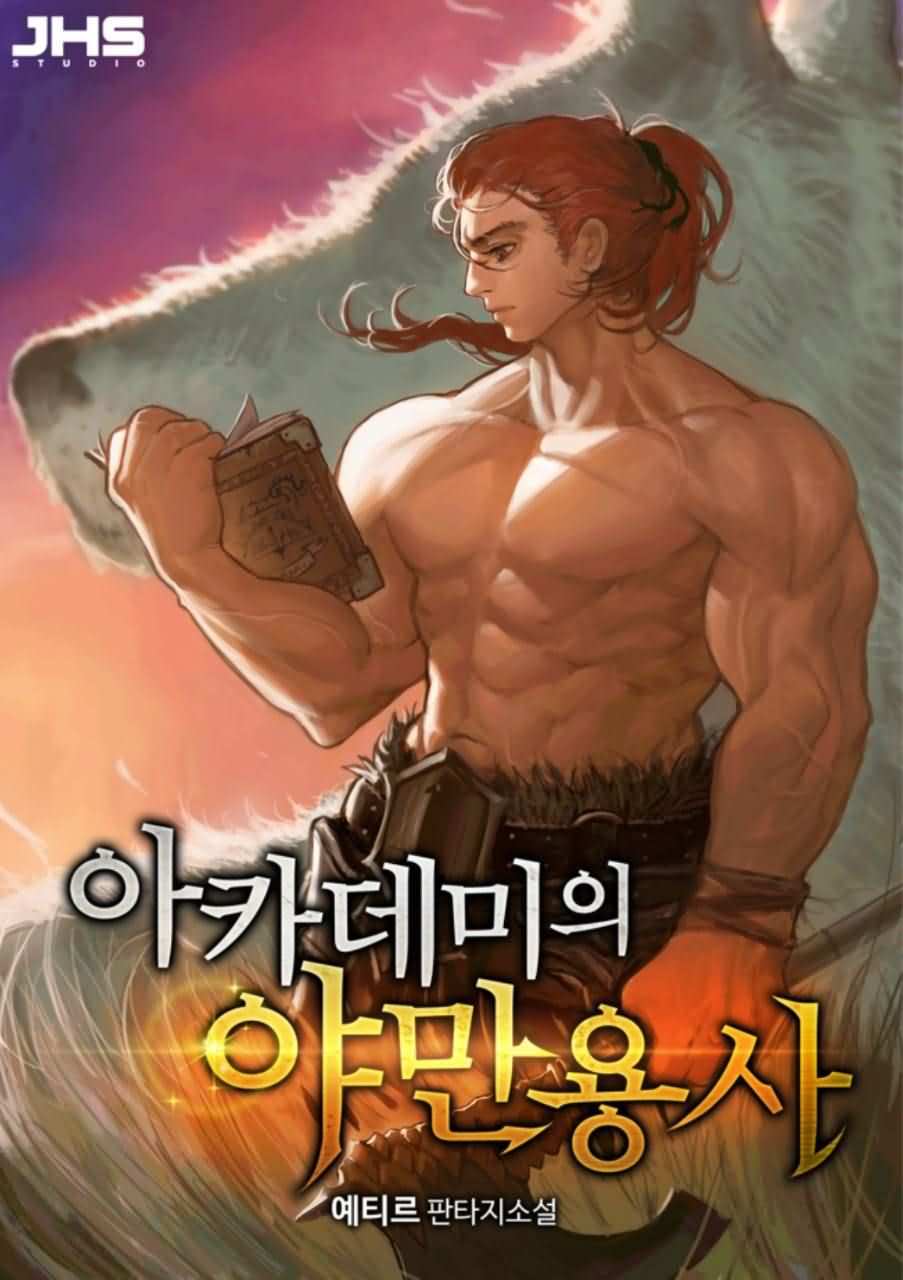
The Academy’s Barbarian

  • Genre: Action
  • Author: 예티르,
  • Translator:
  • Status: Completed):<br /> -Main story: 378 Chapters (Completed)<br /> -Afterword: 17 Chapters (Completed

  • Rating(4.3 / 5.0)

Arsene Academy – the best educational institution on the continent.

A place that’s famous for nurturing many talented people.

A warrior from a barbarian tribe enters the academy.
Recommendation Lists

These are recommendation lists which contains《The Academy’s Barbarian》You should give them a visit if you're looking for similar novels to read. Alternatively, you can also create your own list.

Latest ReleaseFilter Groups

Popular Reviews All reviews
  1. HydraHunter
    HydraHunter rated it
    <p>"Baroque" is a video game initially released for the Sega Saturn back in 1998, later ported to the Sony PlayStation in 1999. This unique and unsettling rogue-like horror RPG was exclusive to Japan. Fortunately, North America and Europe got to experience the faithful remake, which launched for the PlayStation 2 and Nintendo Wii in 2008. The manga "Baroque: Ketsuraku no Paradigm," or its English title "Baroque: Missing Paradigm," was published between 2000 and 2002, making its source material the original "Baroque" video game, although the remake's storyline mirrors its predecessor closely.<br /><br />To put it briefly, this manga is based on a video game. Keep that in mind as you read through my review.<br /><br /><br /><br />Story<br />"Baroque: Ketsuraku no Paradigm" throws you into the deep end without teaching you how to swim. Without any introduction, it plunges you into a story where you're expected to figure things out as you sink. Worst of all, it doesn't offer much help.<br />Meet the protagonist, whose name is only revealed halfway through the manga (which spans just 17 chapters, so you won't have long to wait). He can't remember his name or anything else about himself. To make matters worse, he can't speak. He awakens in a nightmarish world with a red sky and monstrous beings. Some are friendly, but most aren't. Early on, the protagonist, whose name turns out to be Dextera, encounters a mysterious man dressed in a white robe with a red religious insignia matching his eyes. Most strikingly, he has two large wings. Known simply as the Archangel, he hands Dextera a weapon called the Angelic Rifle. According to him, Dextera is responsible for the world's ruin, leaving Dextera bewildered. Before Dextera can question him further, the Archangel directs his attention to the Neuro Tower in the wasteland. At its base lies Dextera's chance at salvation. With no other options, Dextera takes the rifle and sets off to find answers.<br /><br />This marks the beginning of an incredibly strange tale, but the real substance of "Baroque: Ketsuraku no Paradigm" unfolds as the story progresses. However, there's something you should know: this story is confusing—very confusing. Flashbacks appear unexpectedly, Dextera repeatedly finds himself at the Neuro Tower's entrance, and characters speak cryptically. Many might attribute this to poor writing, but this confusion isn't accidental; both the video game and the manga intentionally embrace it.<br /><br />Let’s rewind to 1998. You're Japanese and have just bought "Baroque" for your Sega Saturn. What follows is unlike anything you've experienced before—a story that keeps you in the dark, revealing tiny bits of information sparingly and rarely in chronological order. You're forced to piece together the backstory yourself, without guides like GameFAQS or Super Cheats. While some may dislike this unconventional storytelling, I commend Sting Entertainment for their bold and risky approach.<br /><br />Oh yeah, the manga.<br /><br />Author Shinshu Ueda clearly admires the original Sega Saturn game, faithfully retelling its complex story in a more conventional and accessible way. As someone who played the PlayStation 2 remake before reading the manga, I greatly enjoyed its 17 chapters, finding them clarifying after the video game's cryptic narrative left me puzzled. I believe this familiarity significantly impacted my enjoyment. If I had read the manga without prior knowledge of the game, I doubt I would have been forgiving of its confusing nature.<br /><br />"Baroque" is often described as a "mind f*ck," and rightly so. Even after spending time trying to understand it, I agree with that assessment. Yet, there's satisfaction in piecing everything together. It brought out the detective in me, and apparently, I'm not alone.<br /><br />TL;DR - If you didn’t play or appreciate the video game first, this might not suit your taste.<br /><br /><br /><br />Characters<br />Given "Baroque's" reliance on revelations, I can't delve too deeply into the characters without venturing into spoiler territory. Just trust me when I say most of these characters have far more depth than I'm about to describe here.<br /><br />Dextera - our protagonist. Dextera starts the story just as confused as we are, his bewilderment evident in almost every panel. In fact, I often compared him to a lost puppy. Unlike typical shounen heroes, though, Dextera adapts reasonably well to his situation. He's a competent fighter with an air of relatable uncertainty. I find this refreshing.<br /><br />Part of the story's mystery revolves around Dextera's overwhelming sense of guilt, which plagues him from the start. He doesn't know why he feels guilty or how to resolve it. Instead of resorting to a clichéd "edgy" archetype akin to Shadow the Hedgehog, Dextera exhibits a very human reaction. Some panels genuinely convey his grief, largely due to the art, which we'll discuss next.<br /><br />The Archangel - despite appearances, he's not really an angel. He's human and the leader of the Malkuth Order, a quasi-religious cult. He's grounded, serious, and determined to achieve his goals, even if his perpetually stern expression suggests otherwise.<br /><br />If you missed the foreshadowing in his red eyes, the Archangel is technically the villain of the story. Whether that counts as a spoiler depends on how obvious it seems. However, he's a villain opposed to Dextera's objectives, not a stereotypical antagonist. He genuinely wants to improve the world's state, showcasing a level of nuance rarely seen in villains.<br /><br />There are more characters, but discussing them here would quickly lead to spoilers. Remember, this story relies heavily on gradual revelations, meaning even basic details hint at deeper complexities.<br /><br />TL;DR - The characters in this manga are surprisingly well-developed for its length, avoiding typical anime archetypes (possibly because it was written in 2000, before such archetypes became overused). Keep in mind that character details and purposes unfold gradually.<br /><br /><br /><br />Art<br />In short, I love the art style of this manga. Published in 2000, it retains that "90s manga" charm. Characters like Dextera and Alice have sweet, endearing faces that provide comfort amidst the dark narrative. The expressive faces characters wear in various situations stand out, especially Dextera's lost puppy expressions, which evoke sympathy. Alice, hinting at the tsundere archetype, reveals much about her character through her expressions, making her easy to understand. The Archangel's stern frowns reflect his intensity, though flashbacks occasionally show his confidence—or even snarkiness. Overall, the character designs are appealing and intriguing.<br /><br />The monsters inhabiting the Neuro Tower, the "Meta-Beings" or "Grotesques," boast unique designs that are both unsettling and fascinating. Credit for this goes less to Ueda and more to Sting Entertainment, as she adapts their creations from the game. Nevertheless, Ueda skillfully translates these Silent Hill-like creatures onto paper. One particularly gory scene captivated me with both revulsion and morbid fascination. I stared at the page for several minutes, an experience I haven't had with other manga, even ones like "Elfen Lied" and "Deadman Wonderland."<br /><br />Now, onto my criticisms of the art.<br /><br />While the drawings are generally good, some action scenes, especially fast-paced ones, can be confusing. A few times, I spent considerable effort deciphering what was happening, seeing mostly chaotic lines with a character's face buried within. This issue arises in many action manga, so it might be specific to me.<br /><br />Additionally, characters' faces are sometimes partially obscured by panels, showing only half a face or body, which doesn't always clarify the moment. There's also a lack of full-page illustrations establishing settings, though the important details are usually inferable. These issues aren't significant enough to discourage reading the manga.<br /><br />TL;DR - The characters, especially their facial expressions, are expressive and appealing. The monsters in the Neuro Tower are disturbingly curious, fitting a horror manga. Some action scenes can be hard to follow, and the lack of setting-establishing shots adds to the story's confusion.<br /><br /><br /><br />Conclusion<br />Like the video game, both the original and the remake, "Baroque: Ketsuraku no Paradigm" appeals to a niche audience. Its vague, confusing storytelling will deter many. And that's fine, as this isn't a manga for those unfamiliar with the game it's based on—you'll likely get lost quickly. Even those familiar with the games, like myself, might still struggle to follow. Moreover, I doubt you'd appreciate it as much without playing the game. In essence, this manga complements the video game, providing clarification—or perhaps leaving you with more questions! That's one thing I love about "Baroque"!</p>
  1. Brolord
    Brolord rated it
    Uhmmmmmmmmmm chapter 2 and I feel like it was taken out of another novel. THE PLOT IS SAMMEEEE!!! IS THE AUTHOR REALLY A VILLAIN? Tch so Shameless. And Who cares right I am reading for free so it is what it is. Imma read it tho who cares. DONT REPORT HIM.

Leave a Review

Part 1. Rate (click Star to vote)

Part 2. Login to account

Part 3. Write your review