
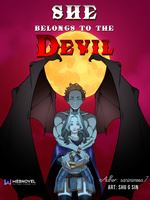
She Belongs To The Devil
- Genre: Fantasy
- Author: RedSonia
- Translator:
- Status: Ongoing
- Rating(4.3 / 5.0) ★
Recommendation Lists
Latest Release
-
chereads C 822
-
chereads C 821
-
chereads C 820
-
chereads C 819
-
chereads C 818
-
chereads C 817
-
chereads C 816
-
chereads C 815
-
chereads C 814
-
chereads C 813
-
chereads C 812
-
chereads C 811
-
chereads C 810
-
chereads C 809
-
chereads C 808
-
chereads C 807
-
chereads C 806
-
chereads C 805
-
chereads C 804
-
chereads C 803
-
chereads C 802
-
chereads C 801
-
chereads C 800
-
chereads C 799
-
chereads C 798
-
chereads C 797
-
chereads C 796
-
chereads C 795
<p>
Where SnK truly excels is in its exceptional artwork. Tetsuo Hara, the creator of Hokuto no Ken, is one of the most artistically gifted manga artists. He delivers vivid, imaginative layouts with great attention to detail in every panel. His two standout skills are composition and, as expected, drawing muscular men and petite, sexy women, which aligns with the style of Hokuto no Ken. It's a significant improvement over the 80s version of Hokuto no Ken, maintaining excellent quality throughout.
The composition shines particularly when certain characters, like the typical one-shot villains towering over Kenshiro, the protagonist, or other characters, are depicted. This is taken to absurd extremes with Zhang Lieshan, an actual giant who turns the series' constant size-warping into a hilarious in-joke by refusing to acknowledge his giantism and punishing any minions who do. This character represents the best of this Hokuto no Ken prequel: self-aware, funny, and brutal. Other memorable characters include Wu and Du.
The main character also deserves praise. If you found the original Kenshiro too bland, Kasumi Kenshiro offers a refreshing change with plenty of comedic moments that made me laugh almost as much as Zhang's antics. You wouldn't expect this series to be so funny, but it's one of its greatest strengths for entertainment value. The series has its fair share of side characters, though they are hit-or-miss. The mafia characters at the start are good, but the later parts see a decline.
Plot-wise, SnK starts promisingly. Kasumi Kenshiro returns to Shanghai after hearing about the death of his friends and lover. He finds himself caught in a bitter mafia feud and must rebuild his clan from scratch, fighting off all the evil criminals who have taken over in his absence. This part of the story is very engaging, but the narrative gets sidetracked multiple times. Early on, this isn't as problematic, as the pace is good, but by the end, it slows significantly, leading me to skip entire volumes just to reach the conclusion.
It's speculated that publishing issues led to a rushed ending, which certainly doesn't provide a satisfying resolution. I personally feel that the story mostly stalls before this point, as all the villains have been defeated and the remaining non-dead ones have become protagonists. There's little left to achieve without throwing more family members of the protagonists into danger to motivate Kenshiro.
My issue with both Hokuto no Ken and Souten no Ken is their obsession with a specific idea of "manliness" that ironically portrays some of the manliest villains as outright cowards yet glorifies irredeemable ones simply because they know martial arts. These selected villains are murderers, rapists, and extremely violent before meeting Kenshiro but are given second chances because, in some cases, the heavens demanded it. This may seem like nitpicking, but it's the essence of the story by the end, and it's not a good one. The lore is only hinted at until this point but takes center stage, and I can't say I enjoy it much. I almost recommend skipping to the last volume once the Du Tianfeng arc concludes, as it's that poor.
The failing of this manga, and why it isn't considered great or fondly remembered as HnK, lies in its awkward pacing and hard-to-follow fights. It features plenty of emotional scenes and tearjerkers, but it becomes very predictable as you progress. At no point can you truly believe the protagonist can lose. This is fine for enjoying the villains' antics, but then it shifts to protagonist versus other protagonists, which is dull. The villains get whole volumes of glory before predictably meeting their end in a few chapters, and these good vs good battles kill any momentum the story had built up.
Overall, I enjoyed this manga despite its flaws, as it includes some of the best arcs in the franchise. The criticism it receives stems from the numerous "manly" fights between Kenshiro and initially intimidating but eventually watered-down villains who aren't fun at all, and the story goes completely off-the-rails. Still, it boasts great art, and aside from the ending, there's no intolerably long bad stretch. A strong recommendation for big fans of Hokuto no Ken, and if you haven't read or watched HnK, what are you doing here?
<p>
Story-wise, it mirrors Hokuto no Ken with Kenshiro battling other branches of Hokuto Shinken, who are mafia leaders, to aid his friends or due to destiny. There's also an arc involving Nazis and Nanto Seiken, mainly to introduce characters for the second half. This part delves into the origins of Hokuto Shinken and its traditions, which adds intriguing concepts but occasionally feels inconsistent with established lore. The ending suffers from rushing due to the magazine going under, leaving many character relationships and events unclarified, such as Shura possibly representing China, Kasumi potentially being Kenshiro's real father, and Zong Wu being Raoh's.
There's a noticeable increase in comedy, typical of Tetsuo Hara's independent works, but it's handled naturally without disrupting the mood. Characters are often compared to the original Hokuto no Ken cast, which is inevitable in prequels/sequels. Yu-Ling resembles Yuria but takes action and leads, while Fei Yan combines traits of Rei and Ein, becoming a foster parent. Antagonists start one-dimensionally but reveal sides that evoke manly tears from Ken. Characters like Yasaka, Zong-Wu, and Kasumi stand out as callbacks to North Star characters yet remain distinct. Kasumi, though resembling Kenshiro, is far from the silent stoic; he's a heroic delinquent with a good heart, helping the mafia, joking about his "humble lit. professor" act, and ready to fight when challenged.
The art matches the detailed style of Hokuto no Ken, showcasing Hara's improvement since the eighties. The World War II Chinese setting offers unique backgrounds, blending Western-influenced Shanghai, Buddhist temples, and mixed army uniforms with traditional Western and Chinese attire. Action scenes are superb, with ATATATAs executed beautifully.
Pacing can be irregular, with some parts feeling rushed and others drawn out. It lacks the strong impact or grandeur of Hokuto no Ken but remains enjoyable. If you're looking for action or to satisfy your Hokuto craving, Souten delivers. It captures the essence of Fist of the North Star, offering violence, action, death, and manly tears in a Chinese context.
What more can I say? It's a blast! The setting is fantastic, and I genuinely appreciate the more grounded portrayals of Kenshiro and Yu-Ling, especially with the urban Shanghai backdrop replacing the post-apocalyptic wasteland. The villains offer a refreshing twist on the typical irredeemable antagonist—though they're still thoroughly despicable. Everything about it feels tangible and alive, which is to be expected from something rooted in reality. And of course, there's still the over-the-top martial arts action—but that's practically a hallmark of the series.
I particularly adore Ken. He's like Joseph Joestar but Japanese, with a touch of sass instead of pure cartoonish antics, and every moment he's on screen is a spectacle. Choosing between the two Kens is tough; both are incredible. If forced at gunpoint, though, I'd lean toward the North Star version being more my style. No disrespect intended to this one, though!
In terms of sheer insanity levels, it almost rivals Fist Of The North Star near the end, but overall, it sits at moderate-to-high. That makes it even more impactful since it's set in a realistic environment—which is bizarre to ponder because this technically counts as historical fiction. Maybe this is the part of history they don't cover in school...
Overall, 10/10, would definitely enjoy motorboating Kenshiro Kasumi's chest.
Leave a Review
Part 1. Rate (click Star to vote)
Part 2. Login to account
Part 3. Write your review
Directory of Novels. where you can find Novels
Copyright novel cool © 2018–2024 — All rights reserved