Warning: Mature Content. No Rape.
The truth will make her free, but could she handle this particular truth? Would she accept the freedom it brings?
Excerpt.
"What am I doing in your room?" Karina narrowed her eyes, waiting for the answer to that one question she just couldn't figure out the answer.
"I should be asking you that. What are you doing in my room?" Veron decided to play with her mind a little. But seeing how her jaw was working, and the pressure she was applying on her head, he decided to tell her what happened, saving her the stress of trying to remember.
"What's wrong with your head?"
"I have a headache." She answered with gritted teeth.
"Skye, get me that medicine for headache." He instructed via mind-link, then moved his feet again.
"HEY! I SAID DON'T COME ANY CLOSER!" Karina yelled, glaring at him as if she would attack him if he takes one more step.
"Get that dirty thought out of your head. I don't do shit with anyone without their consent." Veron remarked, annoyed at her thoughts and reactions toward him. "Also, I don't find men attractive."
"Who are you calling a… Wait…" Karina paused, realizing this may be a good opportunity to keep him away from her. "Yes… I am a man and you definitely shouldn't find men attractive." She accepted and Veron's expression died. However, Gerrard burst out laughing.
"Oh, this is perfect," Gerrard commented, enjoying himself.
"You are a man," Veron repeated.
"Yes, I am." Karina nodded her head.
"Take off your shirt."
"WHAT!" Karina exclaimed in shock and unconsciously clutched the front of her shirt. What has come over him? Didn't he just say he doesn't find men attractive? Why the hell was he saying she should take off her shirt?
"If you are a man as you claim, you shouldn't have a problem standing before me without a shirt on." Veron pointed out, standing in that same spot and keeping his eyes on her. As much as he found this funny, he refused to join Gerrard in laughing to his heart's content.
Hearing what he just said, Karina realized he was right. Men had no problem undressing before their fellow men, just as she had no problem undressing before Nori. Karina frowned and quickly thought of a way out, seeing he was indeed waiting for her to undress.
"I am a different kind of man." She blurted, and Gerrard laughed even harder than he did the first time, rolling his body on the floor.
"Oh, goddess… This is classic." Gerrard said amidst his laughter. He couldn't remember when last he heard anything as funny as what he just heard.
"A different kind of man?" Veron asked and when she nodded, he added another question. "When did that specie come into existence?"
"Today?" Karina answered, sounding unsure.
***
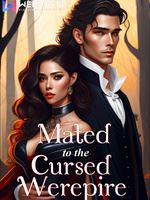
Karina Harper is the sheltered first daughter of Mr. and Mrs. Harper, whose childhood experiences forced her and her parents to put certain restrictions on her life.
Following the set down rules religiously, she encountered no problems in her life until the first day she spoke with Veron Silver, the most feared and most wanted student on campus.
She soon realized that everything she had believed to be true, was a lie, forcing her to question her very existence.
But who knew that the person who opened her eyes to the truth was keeping his identity a secret from her? How would she react when she finds out he was not what she thought he was?
Recommendation Lists
These are recommendation lists which contains
《Mated to the Cursed Werepire》You should give them a visit if you're looking for similar novels to read. Alternatively,
you can also
create your own list.


The story revolves around criminals released early due to prison overcrowding, leading the government to enact a new "Vengeance Law." This law permits individuals to hire Enforcers to eliminate ex-cons who have wronged them or their families. While the premise is simple and easy to follow, the author complicates it with psychological elements. Despite its intriguing plot and potential, the narrative occasionally falters by introducing random elements, such as an unrelated war.
The artwork starts off poorly, characterized by the author's signature sketchy style. Although it improves over time, it remains subpar.
Most characters exhibit varying degrees of insanity, particularly the protagonist, Kano, who frequently talks to himself. However, one or two characters are eventually well-developed. Freesia initially struggled in quality but has shown improvement, encouraging readers to continue with the next volume. Hopefully, the story will see significant enhancements moving forward.
^_^
tl;dr: A manga that is bizarre in every aspect, making it difficult to become invested in any part of it.
<p>
Freesia does not include sane characters in its primary lineup; the trio of protagonists comprises a clinically insane individual, a psycho, and an idealist. The main character, Kano, is an unstable schizophrenic who regularly experiences hallucinations, delusions, and memory lapses. He somewhat offsets these issues with his ability to turn invisible. (The setting isn't strictly realistic, allowing for some use of ESP powers.) Technically, the plot revolves around the cases handled by the vengeance killing company that employs the three main characters, but the author is more intrigued by the personal narratives of the company's employees and their victims. The manga delves into how people influence each other both physically and mentally. (The revenge agency isn't the focal point; I'm unsure why people dwell on it extensively in reviews.)
The standout feature of Freesia is that it is unflinching. It doesn't sugarcoat its characters, nor does it sympathize with them, even during their darkest moments, all while infusing a significant amount of dark humor. Be cautious, though, as the manga includes substantial gore and several scenes involving rape.
The artwork may not appeal to everyone. It isn't polished or aesthetically pleasing intentionally. However, if you've read works by Nihei or are familiar with Dorohedoro, you'll likely appreciate its charm. The illustrations are raw, rough, and gritty, with backgrounds rich in detail and faces often simplified for expressiveness. The composition is exceptional. The art style evolves slightly from volume to volume: the initial ones are a bit rough, while the last two have a somewhat different tone.
Freesia embodies many traits characteristic of Matsumoto's works – it's dark, gritty, satirical, and twisted. Yet, while some of his recent mangas seem to prioritize style over substance, Freesia remains highly focused and content-heavy. It is a profoundly mature and ultimately humane commentary on the complexities of living and the constant battle we must wage against the world within and around us.
It achieves this by interweaving three ongoing narratives: those of the criminals, the proxy enforcers, and snippets about the current political landscape. The latter isn't directly examined but is subtly referenced in a manner that even minimal attention should make noticeable.
It could have been flawless were it not for the overused metaphor of hunter and prey, along with a cheap derivative technique that stems from it. Honestly, if the other aspects weren't so strong, I would have stopped reading due to that.
The shooting scenes are undeniably cool yet marred by the poor technique mentioned earlier; nonetheless, they remain entertaining and cathartic.
The art leans towards realism and features some trippy moments, effectively complementing the tone and substance of the story.
In conclusion, this is an impressive work hindered by just one significant flaw.
This initially unflappable man secures employment as a proxy for those seeking vengeance, facilitated by a newly enacted Vengeance Act. So absurd is this legislation that even its creator, author Jiro Matsumoto, chuckles as he pens this brilliant manga. We find ourselves in a Japan where courts entertain petitions from crime victims, subsequently notifying local vengeance enforcement agencies, which then inform the intended targets before employing government proxy enforcers—essentially assassins—to hunt down and eliminate anyone the victim holds a grudge against, regardless of whether the accused has already served their sentence.
This preposterous concept is counterbalanced by granting ex-convicts prior knowledge of the commencement date of the hunt, along with the provision of a weapon and the option of a bodyguard for self-defense. "It's not a death sentence!" quips a character cheerfully. The governance of Japan remains meticulously organized, detailed to the extent of possessing a comprehensive manual of rules and regulations ensuring the 'rights' of both proxies and targets of retribution. A government entrenched in a politically correct culture, yielding a scenario both amusing due to its proximity to reality and alarming because it isn't, yet might become so.
If the individual who wronged your loved ones were released from prison, would you engage an agency to legally attempt their assassination on your behalf? Would you personally undertake such an endeavor? Or would you strive to forget and move forward? Welcome to the world of Freesia. As audacious as the Vengeance Act may be, it arises out of necessity to support the war effort and appease the aggrieved families of victims who consider it unjust to release criminals prematurely or at all.
Beyond the foundational premise anchoring the narrative, there exists an additional layer involving a cast predominantly composed of mentally unstable narcissists perpetually clashing. The central conflict ensues between Hiroshi and a mysterious woman employed by an enforcer agency, whose presence unsettles him, compelling him to question his entire lifestyle. Another adversary emerges in the form of a fellow proxy enforcer who identifies as a hunter and perceives Hiroshi's non-prey demeanor as a threat. Matsumoto escalates the tension through numerous hallucinations and introspective moments experienced by Hiroshi, a product of the depicted insane environment.
Jiro Matsumoto's wit is nothing short of scathing. Black humor permeates nearly every panel of this grim tale, characterized by nonchalant remarks and payoffs so dry that one must appreciate Kafka-esque absurdity to enjoy it; otherwise, they might recoil in baffled repulsion.
Matsumoto's narrative meanders from straightforward laughs, like unexpected sex involving an unfortunate elderly woman, to cruelly sharp wit exemplified by the first instance of the Vengeance Act being delivered to a bewildered mother of a killer who has already fulfilled his sentence, culminating in darker territory with flashbacks of harrowing events such as rape and murder—moments far removed from eliciting laughter. The full ramifications of instituting such a government-sponsored act are thoroughly examined across various scenarios, each handled with unwavering resolve.
In summary: Matsumoto excels in storytelling and the deployment of humor. He expertly knows when to deliver punches and when to temper them (though 'tempering' here implies conventional humor rather than something conjured from the depths of a demonic realm). He adeptly injects specific types of comedy into scenes, showcasing mastery of his craft with devastating punchlines.
The artwork adheres to typical Matsumoto style, appearing hastily drawn upon initial inspection but revealing intricate details upon closer examination, with much occurring in the background. The composition is skillful, creating a stark contrast to the polished appearance of most manga. His artistic universe feels lived-in, oddly enough, owing to the care and attention to detail despite its seemingly crude appearance, imbuing it with charm and vitality.
Freesia offers ample laughter but transcends mere comedy. Its execution of the bold premise and wild satire render it too intricately crafted for such simplicity. Though occasionally veering into supernatural action escapades, it maintains a surreal ambiance consistent with the psychological instability of its characters.
Freesia aligns with works like Joseph Heller's Catch-22, Kurt Vonnegut's Slaughterhouse-Five, and Chuck Palahniuk’s Fight Club. It serves as a reflection of the present, a whimsical sketch envisioning the future; it embodies the finest kind of narrative, rich in content, vividly told, and brimming with creatively irreverent flair.
<p>
To provide a brief introduction, we're placed in a slightly dystopian, realistic future world. The economy is in shambles, crime rates are soaring, technological progress has stagnated, and jobs involving killing people have become ordinary. A government agency introduces a vengeance act that benefits our schizophrenic, master hitman protagonist, Kano, giving him an opportunity to secure a job and establish a safe routine. I dove in without a synopsis, but that was a huge mistake. Everything at the start unfolds within the mind of a mentally ill individual who can't comprehend what's happening around him.
We explore how he handles his work, his visions, and constant hallucinations. He's the most unreliable protagonist I've ever encountered. Instead of the author obscuring the story, it's the protagonist himself who can't grasp it. He battles against the plot, trying to control and organize what doesn't make sense in this chaotic world. After some time, just as the protagonist finds a routine, the plot stabilizes, and we get a semblance of rhythm.
The narrative shifts perspectives to those who must be assassinated by the protagonist. We experience their lives, their struggles, and the death that awaits them. Amidst all the edgy and grim concepts, there's a human element—following those with good hearts or those who genuinely regret their mistakes. The world crashes down with the relentless power of Kano, who thinks nothing of death.
Bewildering, strange, confused? I'm confused about being confused. By the end, the message was quite clear, especially with that conclusion, but something still feels off. I've read many stories where the lesson was the absence of one. Sometimes, life throws curveballs that mean nothing, hurting people and involving them in the worst experiences imaginable. But, this had all that while still attempting to convey a message. Something in the void, a mix of violence, sexual assault, domestic violence, suicide, mental illness, throw in some dementia, PTSD. It's a cocktail of destruction and the worst aspects of humanity. Those who deserve to die will be the only ones to survive.
I suppose, or rather, I hope, it's about the lies we tell ourselves. In this world of terrible acts committed against everyone, we must not fabricate a world where they don't occur. We have no friends, but that's not an excuse to pretend life has no meaning or value. We should embrace the absurdity, the pain, loneliness, and violence, and only then can we see the value in life. I think that's it, and I hope that's it.
It's tough to transition into the artistic aspects smoothly, so I'll just highlight how impressive the art is. If there's anything I loved, it was the brutal, sketchy art that perfectly encapsulates this dreadful world. Dark, ugly, disgusting at times. You can always feel the impact of fight scenes on the damage inflicted on people. There's a gimmick where we don't see the reaction immediately after someone suffers harm; instead, we linger on the wound while their faces remain calm, right before the suffering begins. It feels so deliberate that I struggle to critique the rest.
This isn't an easy story to discuss. There's much I still need to ponder, but it definitely wasn't entirely for me. I had difficulty reading or engaging with the dialogue. The action scenes, and the main character using this odd predator vs. prey allegory as a power against others, felt exactly like the protagonist's mind—a scrambled mess of emotions, bursting with a desire to understand the world around him, yet ultimately failing. He only managed to understand himself and used it as a cautionary lesson for himself.
8/10. Absolutely not for everyone. The events in this manga are truly despicable, and many won't connect with the narrative style. I had to restart after the first few chapters. Still, there's a peculiar level of humanity here, and a strange lesson that draws you in. Give it a try, but even I struggle to call it good, even if it is.
Leave a Review
Part 1. Rate (click Star to vote)
Part 2. Login to account
Part 3. Write your review
Directory of Novels. where you can find Novels
Copyright novel cool © 2018–2024 — All rights reserved