
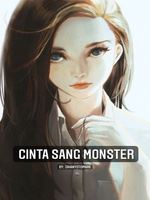
Cinta Sang Monster
- Genre: Fantasy
- Author: King_Starr
- Translator:
- Status: Completed
- Rating(4.3 / 5.0) ★
COMPLETED.
Snippet:
Satu tahun yang lalu Raine dikeluarkan dari Rumah sakit Jiwa dan harus hidup di Panti Asuhan. Itu memang bukan tempat yang terbaik, tapi setidaknya tidak bagi orang sepertinya.
Sampai suatu malam yang menentukan Raine bertemu dengan pria itu…
***
Pria itu menghentikan mobilnya.
Sementara itu, genggaman Raine pada selimutnya mengerat ketika dia bertanya- tanya dalam hati; apakah dia telah melakukan kesalahan?
Dia dapat merasakannya ketika Torak mengulurkan tangan kepada dirinya.
‘Apakah dia akan memukulku?’ Raine gemetar karena pemikirannya itu.
Namun, Torak membuka hoodie dari kepala Raine dan dengan sangat lembut menyelipkan helaian rambutnya ke balik telinganya.
“Jangan,” kata Torak dengan lembut. “Aku ingin melihatmu, jadi jangan menyembunyikan dirimu…”
**************
“Kekuatan jiwa dari para Guardian Angel akan bernafas di kehidupan baru dari anak manusia. Tiga Guardian Angel akan lahir ke dunia terrestrial dan sekali lagi, kalian bertiga akan menjadi pelindung mereka.”
“Kau akan membuat kami menjadi budak dari makhluk lemah seperti mereka?!” Torak bertanya dengan tidak percaya. “Tidakkah dirimu takut kalau kami akan mematahkan mereka menjadi dua?”
Para Guardian Angel itu sangatlah rapuh dan mereka, sebagai Lycanthropes, sangat tidak mengapresiasi segala bentuk kelemahan.
“Tidak, kamu tidak akan melakukan itu.” Selene berkata dengan sangat sabar. “Kalian tidak akan menjadi budak mereka ataupun meyakiti para Guardian Angel, kalian akan menghargai mereka dalam hal apapun.”
Tapi, suara Selene selanjutnya di selimuti dengan sebuah kebahagiaan saat dia berbicara.
“Kalian tidak akan pernah menyakiti pasangan jiwa kalian.”
====
Ini adalah cerita werewolf dan Lycanthropes (dan sudah pasti fantasi)! Didalam cerita ini ada beberapa istilah yang merujuk pada dewa dan dewi yunani kuno.
Kalau kalian suka membaca tentang fiksi makhluk supernatural pasti ada beberapa istilah yang tidak asing bagi kalian.
Pertanyaan mengenai hal yang kurang jelas dan saran dapat ditulis di kolom komentar, sebisa mungkin akan author jawab.
************************
Update setiap hari Pkl. 13.00 wib.
************************
Meet me on instragram : jikan_yo_tomare
Recommendation Lists
These are recommendation lists which contains《Cinta Sang Monster》You should give them a visit if you're looking for similar novels to read. Alternatively,
you can also
create your own list.

This story, much like most of Tsutomu Mihei's creations (including Blame!), features minimal dialogue. His work is stunningly beautiful; the intricate and detailed art style never fails to impress me.
Abara's plot is relatively straightforward—a typical "man saves the world" narrative. However, within its brief two volumes, Mihei skillfully incorporates subplots that add depth to the simplicity. While his plot is engaging and his artwork exceptional, there is a noticeable lack of character development. The characters are basic and exactly as they appear.
Additionally, every time you revisit this manga, you might form a different opinion on various aspects of it.
<p>
Abara's precursor is a 2 chapter one-shot named Digimortal written in 2004, shortly after Biomega started airing. It, with its 11 chapters, was written during said airing. Given its brevity, you aren't losing much even if you end up not liking it. It also serves as a good starting point when diving into Nihei's catalog, offering a taste of what he is all about. And, for those coming from Chainsaw Man: indeed, Fujimoto holds this work in high regard, and its influence is easy to see.
If you're coming from Blame! looking for more, Abara is the closest that will fill the void. Saying that feels both satisfying and disappointing at the same time, as I think there's a big gap between the two. Ultimately, Abara is an interesting and unique experience, but unfortunately not much more than that. I still like it, but... Yea...
Abara leans more towards biological themes compared to Blame!'s cyberpunk aesthetic. I adore it. Some of my all-time favorite panels are from Abara. They showcase brutality and vehement force, sometimes even solitude and dread. The designs of Black and White Gauna are insane. It's sheer carnage on display.
As for the story: the first thing you'll likely do upon reaching the end is head to some YouTube video, Reddit post, or straight up Wikipedia's "Plot" section for explanation. The story is intriguing, but it's so thinly narrated it makes Dark Souls lore seem intuitive. As with Blame!, the lack of information gives it charm, but unlike Blame!, where you always had the basic structure of "Follow Killy and see what jumps his ass this time," here you don't even know who's jumping who or why. It gains more value on re-reading when you have some necessary context.
My issues with Abara are its length and lack of clarity. I would have loved for this to have the runtime of Biomega, let alone Blame!. Its actual length often felt like a disservice to its potential and presentation. Alongside that, you often won't be able to make out what's happening right in front of you. Sometimes it's due to the art, sometimes due to lack of context, and sometimes because of a sense of rush; whatever way you look at it, it's there. The story itself isn't groundbreaking, but the added confusion doesn't help.
The art of Abara, in my opinion, comes closest to Blame!'s highs, and depending on the mood and day, sometimes I'd even say I view them equally as good. I'd also consider it the last work that got 'that Nihei aesthetic' which, in my opinion, was lost in Knight of Sidonia and Country of Dolls; however, that's a tangent I won't delve into now. Back to Abara's art: it's as messy and gritty as it gets, frequently on the verge of any resemblance; truth be told, it's sometimes too much, but when it's just right, it's brilliant. It beautifully complements the biological structure of the work, giving it that necessary relentlessness. To repeat myself: sheer carnage on display. It's practically pure black and white. I'm just sad we didn't get more.
To conclude, I hold this work dear. It was actually my introduction to Nihei's repertoire, and I'm glad that I still find value in it despite everything. I'm just sad it didn't get more attention. I recommend it regardless due to how little of an investment it is to read. A very unique experience, for sure.
Thank you for reading up to this point. I wish you all the very best. Kind regards.
Story 6
The plot of Abara is peculiar, and for the first time ever, I'm not sure that's a positive aspect. The beginning seemed promising, but as it progressed, I became lost in an excess of dialogue that was neither engaging nor helpful in understanding what was going on—until I was nearly finished.
Art 6
The artwork in Abara was somewhat inconsistent for me. Some elements looked impressive, while others didn't resonate. The style has an old-school vibe but lacks the charm it should possess, merely appearing dated without much appeal.
Character 4
The characters were quite disappointing. This manga seems to disregard its main figures since I didn't feel like the story centered around any single individual. It starts with a character who initially seems interesting, only to discard him swiftly and shift focus to another. There's no real connection to anyone within this brief span, and I barely recall any names.
Enjoyment and Overall 6
There were moments when certain visuals or ideas seemed intriguing, but they amounted to nothing significant. Overall, the manga left little impact on me; I derived almost no enjoyment from the 13 chapters I read, leaving me feeling it was largely a wasted effort.
<p>
<br /><br />
Expertly illustrated and utterly captivating, Tsutomu Nihei once again showcases his remarkable skill in sequential storytelling with this concise yet powerful manga.
<p>
A bleak look at humanity and what it can be reduced to in times of despair.
As is typical with Nihei, there are numerous subtle subplots intertwined with side characters, along with the one-shot attached character "Digimortal."
I don’t think it’s ever explicitly stated, but considering the art style and the resemblance to the Executioner ladies in *Abara* and Digimortal, I like to believe that *Abara*/*Digimortal* exists within the same universe as both *Blame!*, *APOSIMZ*, and a proof of concept for *Blame!* called "NoiSE."
I doubt that if you enjoyed *Blame!*, you wouldn’t appreciate *Abara*, even with its minimal dialogue and seemingly hard-to-grasp story.
I should clarify—it’s not difficult to understand due to complexity; rather, Tsutomu Nihei isn’t going to have a side character explain the entire situation to the protagonist.
So, we’re left piecing things together from where we start: the Gaunas, our main character, and Digimortal if we include him.
Objectively speaking—if such a thing exists in this medium—I wouldn’t rate it a 10/10. However, having read a lot of Tsutomu Nihei’s works, I adore this type of storytelling and consider this one of his finest creations.
This happens because Tsutomu tends to tell his stories through visuals rather than dialogue. However, even with the limited dialogue available, he doesn't provide enough substance to make readers care about or connect with the characters.
The art stands out as the manga's strongest point. If I were to view some of the pages as standalone, apocalyptic, gritty images, I'd find them captivating. But trying to read this as a coherent narrative becomes confusing. The characters' motives are unclear, replaced by vague justifications and urgency driving the action forward.
I get that withholding information can be a storytelling technique, but Tsutomu holds back almost everything except names and basic terms, leaving readers to decipher motives from cryptic illustrations. Some might call this "deep and psychological," but it feels more like an exhausting guessing game hidden behind intrigue.
It seems the author prioritized drawing gritty, sci-fi monsters and fight scenes, sacrificing plot and characters in the process. Despite the stunning art, my rating is low due to its sloppiness. There was no reason the author couldn’t include small details to help readers distinguish the characters and grasp the storyline better.
Let me add: I admit I value character development and a well-rounded story. If you don't mind being somewhat confused or disconnected from the characters, this is a grimy, action-filled read you might appreciate.
<p>
The manga attempts to tell its story primarily through images. Yet, it suffers from poor character development, leaving you confused until the very end. It delays explaining crucial elements far too late in the series, which is incredibly frustrating.
Additionally, the artwork can vary wildly—from "Wow, this looks amazing!" to "Okay, this looks sloppy at best..." This inconsistency irritates me to the point where I'm tempted to give this zero stars.
If you're looking for a truly miraculous, abstract, and intelligent manga, check out Darkside Blues instead. Everything Abara tries to achieve, Darkside Blues accomplishes ten times better.
<p>
Leave a Review
Part 1. Rate (click Star to vote)
Part 2. Login to account
Part 3. Write your review
Directory of Novels. where you can find Novels
Copyright novel cool © 2018–2024 — All rights reserved