
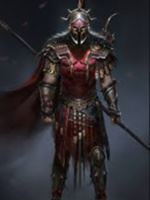
The year is 2068. Throughout his life, he has pondered his identity and the unique abilities he possesses. He doubts he belongs to the Genome Program, as many have suggested. An Extinction Level Event on Earth catapults him and his companions nearly 500 years into the future. This new world is far from what they expected, yet it starts to unravel the mystery of their true nature. Martin uncovers his authentic history and identity. The answers to lifelong questions begin to emerge, but not in the way he imagined. He learns he is a Spartan, born as one and much more. His origins lie in Sparta, but there is even more beyond his previous beliefs. Join him in this discovery.
Recommendation Lists
These are recommendation lists which contains《A SPARTAN'S WAR》You should give them a visit if you're looking for similar novels to read. Alternatively,
you can also
create your own list.
Latest Release
-
webnovel C 503
-
webnovel C 502
-
webnovel C 501
-
webnovel C 500
-
webnovel C 499
-
webnovel C 498
-
webnovel C 497
-
webnovel C 496
-
webnovel C 495
-
webnovel C 494
-
webnovel C 493
-
webnovel C 492
-
webnovel C 491
-
webnovel C 490
-
webnovel C 489
-
webnovel C 488
-
webnovel C 487
-
webnovel C 486
-
webnovel C 485
-
webnovel C 484
-
webnovel C 483
-
webnovel C 482
-
webnovel C 481
-
webnovel C 480
-
webnovel C 479
-
webnovel C 478
-
webnovel C 477
-
webnovel C 476
<p>
Let me briefly summarize the manga before diving into what I believe is crucial for a review. The story revolves around Akagi, a young gambling prodigy with an intense obsession, particularly with Mahjong, which becomes his primary focus throughout the series. His extraordinary, almost superhuman skills lead him to challenge Washizu, the story's antagonist. This experience was one of the most unique reads I've encountered in a long time. After watching the anime, I felt uneasy about its abrupt ending during the final battle, a sentiment many likely shared. However, my curiosity propelled me to explore the manga, determined to uncover what happened after Akagi and Washizu's legendary clash. To my astonishment, the story didn't conclude after the final arc; even more surprising was discovering that the battle depicted in the anime was merely the beginning—nowhere near the end! Mastermind mangaka Fukumoto extended this arc for 225 chapters, spanning over 20 years from start to finish, arguably making this the longest-running battle in manga history.
To say I was shocked would be an understatement. I had no idea what to think and wondered if I could endure finishing the entire story, especially since I'm not a Mahjong expert and feared boredom might prevent me from completing it. Contrary to expectations, I read the entire manga twice in the same year, never losing interest in what came next. This battle significantly deepened my love for the series. It's worth noting that before reading Akagi, I wasn't fond of battles that unnecessarily dragged on for countless episodes or chapters just to fill space or entertain audiences. For instance, some Battle Shounen series like Dragon Ball featured fights lasting numerous episodes with minimal action, as we know that in anime, particularly during the '90s and early 2000s, episodes had to align with the manga's release schedule, often resulting in slow pacing and characters doing little of substance, killing viewer interest. Pacing is key to any engaging story. Does Akagi maintain good pacing? Yes, but in a way few understand. The arc consists of six sessions, taking 20 years to complete, with the final session lasting the longest—THIRTEEN years, more than half the battle. Additionally, an entire volume was dedicated solely to how players construct their hands. Thus, the matches do drag on extensively, but their presentation keeps them intriguing. The conflict between the two protagonists brims with tension, anxiety, anguish, trauma, and strategy. Fukumoto excels at crafting horrifying panels where Washizu, despite playing a board game, remains under immense pressure, occasionally losing control, as he constantly teeters on the brink of death. The mangaka's ability to immerse readers is captivating, ensuring no moment feels calm, instead filled with distressing scenes until one opponent ultimately collapses. A notable shift occurs as Washizu transitions from villain to a sort of "protagonist" in this arc, with much attention directed toward his strategies to stand a chance against the demon seated before him, Akagi. Meanwhile, Akagi transforms from protagonist to antagonist, unafraid to descend into darkness, maintaining a dangerous presence for his rival. Another significant change is the art design; over two decades, Fukumoto's style evolved. By the end, Washizu appears almost melted, his eyes now covering nearly half his face! Though this isn't particularly bothersome.
There's no clear explanation for why it took 20 years to conclude. I assume Fukumoto had an extraordinary motive to make the battle unforgettable for readers. Regardless of his reasons, I appreciate it because while some may struggle with the patience required to read the entire match, it has inspired me and given hope that many mangaka will have the opportunity to complete their projects, knowing that isn't always possible today. Should I recommend the manga? Absolutely, you'll likely enjoy it, especially if you understand Mahjong rules and possess the endurance to tackle what I call the legendary battle between Akagi and Washizu. My final score is a perfect 10. I don't care if it stretches too long; I'd continue reading even if it were thousands of chapters. It's the best piece of entertainment ever, and I'll revisit it again.
<p>
I'm not suggesting you need to learn Mahjong to enjoy this series, but doing so definitely enhances the experience. Akagi is wildly unpredictable, filled with intense gambling sessions involving unconventional Mahjong rules. There's some cheating involved, but mostly it's about incredible luck and psychological tactics.
The main issue arises during the Washizu arc, which lingers far too long. This is a suitable point to either set the manga aside or skim through extensive sections.
<p>
Washizu Mahjong is, without a shadow of doubt, one of the most monumental battles in the entirety of anime and manga.
Spanning 226 chapters and taking FKMT two decades to complete, this gargantuan death match between Iwao Washizu and Akagi Shigeru stands as the quintessential embodiment of everything FKMT excels at: psychological warfare, unbearable tension, expressive facial expressions, extravagant visual metaphors, and an unrelenting push-and-pull dynamic where victory always seems just within reach but feels impossible to secure.
Washizu Mahjong isn’t merely a mahjong match filled with intricate game theory—it’s life and death distilled into every draw of the tiles. It’s about grappling with raw, unyielding talent. It’s the clash between decaying wisdom and a young, untethered genius. It’s the crumbling, paranoid madness of a man desperate to live forever against the terrifying, almost alien rationality of someone who accepts life without clinging to survival. With blood serving as currency and mortality hanging by a thread, the stakes are suffocating.
FKMT doesn’t simply tell you this—he makes you feel it. Every agonizing second, every slow-motion discard, every moment where the outcome teeters on the edge of catastrophe or catharsis—FKMT immerses you completely. When Washizu collapses in desperation or Akagi flashes his cold, unreadable smirk, you don’t just see the characters—you become them. As someone who has been deeply engrossed in Mahjong Soul for several months, I became fully absorbed in this story, seeing much of myself reflected in both Akagi and, especially, Washizu. To put it plainly, this is the kind of match where you stop questioning how long it will last and start dreading its inevitable conclusion.
What elevates this arc to true brilliance is how Washizu’s perspective dominates the narrative. This is his story as much as it is Akagi’s, if not far more so. Washizu begins as a caricature of greed and malice—a shadow king from the post-war era who tempts others to gamble their lives for his amusement. He’s loud, theatrical, and utterly convinced of his superiority. Yet FKMT slowly peels back the layers of this man, revealing a deeply human portrait of someone wrestling with mortality. Washizu doesn’t just want to win—he wants to defy the greatest challenge he’s ever faced and cling to life itself.
His ambition isn’t purely evil; it stems from the universal fear of death and the desire to preserve his legacy, dignity, wealth, and principles. His dramatic monologues and spiraling inner turmoil are nothing short of mesmerizing. He overthinks, sabotages himself repeatedly, berates his subordinates, and clings to hope in moments where there is none. I can’t help but recognize fragments of my own experiences in him—every strategic blunder I’ve made, every time I’ve doubted my instincts, every moment where fear has led me to make the wrong move. Washizu’s mind becomes a theater of chaos where his insecurities, brilliance, and sheer desperation collide, and I found myself rooting for him even as Akagi serves as the "hero."
The clash between these two characters is not only a battle of skill but also a philosophical war. Akagi embodies living without fear—a figure so detached from concerns of mortality that he can sacrifice blood, his very life, without hesitation. In contrast, Washizu represents the terror of death and the lengths we’ll go to avoid it. Their dynamic creates a fascinating interplay where Akagi appears almost inhuman in his composure, while Washizu’s desperation makes him the more relatable of the two.
Even when he suffers his most critical losses, Washizu commands my utmost respect. When his henchmen beg Akagi to spare his life, Washizu insists on adhering to the rules of the game, even if it means his death. There’s a dignity in his madness, a refusal to compromise his principles even as he’s pushed to the brink. The pivotal 'hell revolt' mini-arc—where Washizu, in a near-death state, envisions himself battling demons to return to the living—epitomizes his character. It’s absurd, theatrical, and profoundly moving all at once. Whether it’s a hallucination or a metaphor for his indomitable perseverance, it makes his character all the more special and memorable. Washizu isn’t just another cheating loser like many of FKMT’s antagonists; he’s a well-rounded and well-written force of antagonism that mirrors Akagi’s philosophy and, frankly, is LITERALLY ME.
While the pacing of this arc is undeniably deliberate, I’d argue that its measured nature is part of what makes it so impactful. Each draw, each discard, and each moment of hesitation is stretched to its absolute limit, immersing you—the reader—in the suffocating tension of the match. Once again, I must emphasize that you will appreciate this far more if you have at least a basic understanding of Mahjong. Knowing the significance of each move, the importance of each hand, and the strategies at play elevates the experience exponentially. Instead of passively watching the chaos unfold, you become an active participant, analyzing the tiles and questioning each decision alongside the players.
The shifting momentum between Akagi and Washizu, the escalating stakes, and the audacity of their moves create an experience that’s unforgettable. What I truly adore is the minimal involvement of cheating here. Washizu Mahjong’s use of transparent and opaque tiles, along with the lack of walls for switching tiles, renders cheating useless. The only possible method—a false riichi—would result in certain death if discovered. Essentially, the focus is on raw strategy and nerve. It’s a game where both players are exposed, vulnerable, and forced to confront the inevitable: death.
Ultimately, what makes Washizu Mahjong so unforgettable is its exploration of mortality through the lens of a simple game. This isn’t just a match between two gamblers—it’s a meditation on what it means to live and what it means to die. Akagi and Washizu are two sides of the same coin—one embracing the fleeting nature of life, the other fighting tooth and nail to extend it. Their battle is one of contrasts: youth versus age, light versus darkness, courage versus fear.
Despite their differences, there’s a genuine respect and mutual understanding that develops between them. Washizu’s words of praise toward Akagi, acknowledging him as an equal. Akagi’s willingness to wait for that final "Pon" call. Both of them enduring their blood extractions together. All of this reflects the strange bond forged between them, a bond created in blood, madness, and the relentless pursuit of victory. This arc may have taken twenty real-life years to finish, but every moment feels earned. Washizu Mahjong is a masterclass in tension, character development, and thematic storytelling, showcasing FKMT’s genius in demonstrating how a simple game of Mahjong can carry such profound emotional weight. I am literally Iwao Washizu.
Leave a Review
Part 1. Rate (click Star to vote)
Part 2. Login to account
Part 3. Write your review
Directory of Novels. where you can find Novels
Copyright novel cool © 2018–2024 — All rights reserved